Nobody Talks About This 1-Second Mistake. The Proof You Don't Belong Is Shocking

Nobody Talks About This 1-Second Mistake. The Proof You Don't Belong Is Shocking
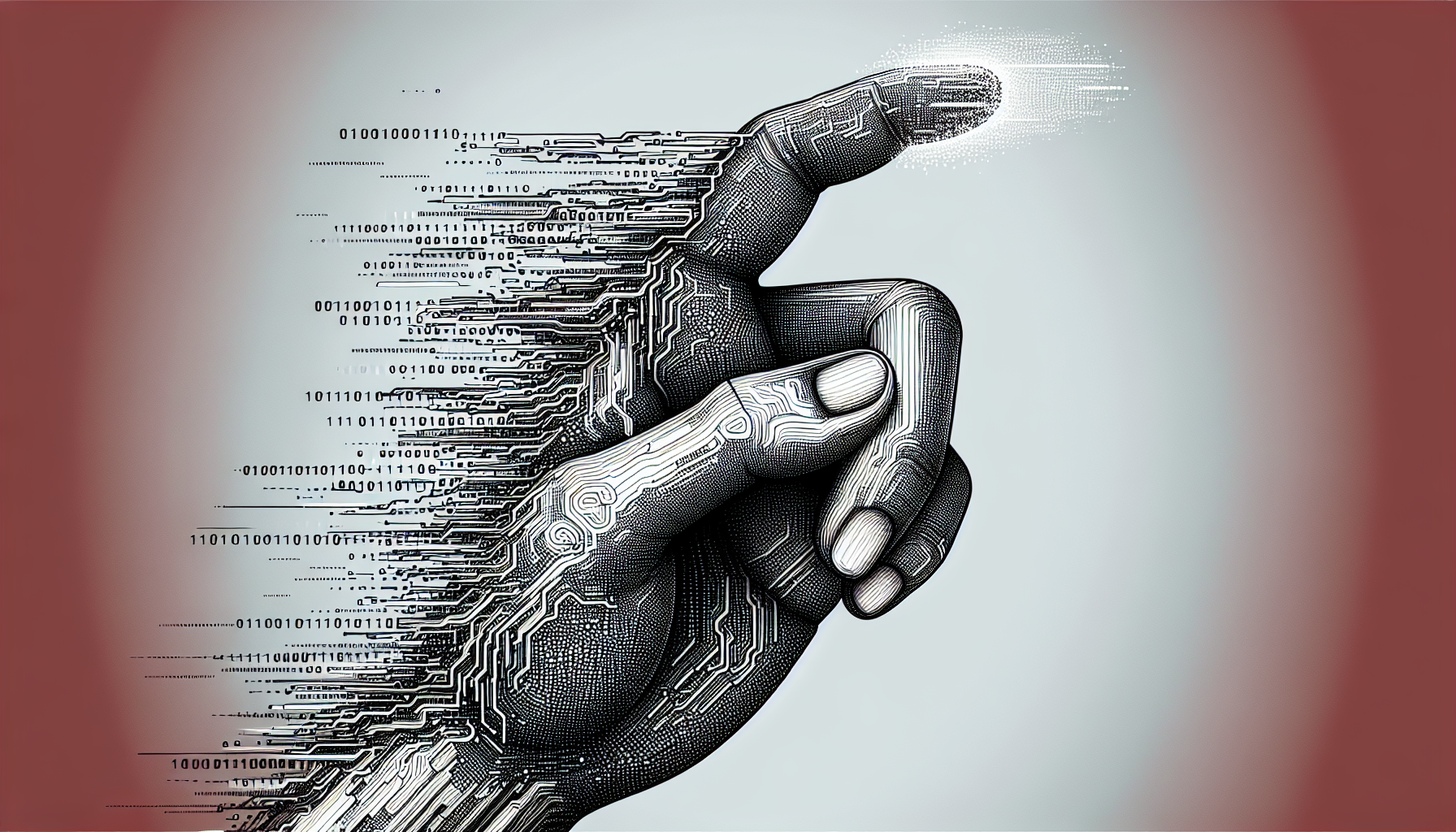
In the basement of a French tavern in 1944, a British spy orders three glasses of scotch. He holds up three fingers: his index, middle, and ring.
**In that one-second gesture, he signs his death warrant.**
To the German officer across the table, the mistake is electric. A "real" German would have started with the thumb.
That tiny, subconscious cultural tell revealed the spy was an outsider, leading to one of the most violent shootouts in cinema history.
I’ve spent the last decade in the high-pressure boiler rooms of Silicon Valley and the London fintech scene.
I’ve seen the "three-finger tell" happen in boardrooms, on Zoom calls, and during frantic 2 a.m. production outages.
It isn't about how you hold your scotch; it’s about **the 1-second linguistic or behavioral glitch** that proves you don't belong in the room you’ve fought so hard to enter.
The Pub in Northern France — And Your Last Sprint Review
We all live with the fear of being "found out." In 2026, with AI agents like Claude 4.6 writing half our boilerplate and ChatGPT 5 generating our strategic roadmaps, the "outsider" fear has reached a fever pitch.
We are all, to some extent, **performing a version of ourselves** that is more competent, more "tech-native," and more "senior" than we actually feel.
I remember my own "three-finger" moment vividly. It was mid-2024, and I was leading a team of senior architects.
I used a specific term for a database sharding technique that had been deprecated for five years.
The room didn't go silent like the tavern in *Inglourious Basterds*, but **the energy shifted instantly.**
My peers didn't reach for Lugers, but they reached for their phones. They stopped listening to my strategy and started checking my credentials in their heads.
**The proof I didn't "belong" wasn't my lack of skill; it was my lack of current cultural context.**
The Modern "Three-Finger" Tell: Why Your Code Looks Like a Lie
In the world of 2026 software engineering, the "tell" has shifted. It’s no longer about knowing the latest syntax—AI handles that for everyone.
**The new "outsider" tell is how you interact with the machines.**
If you copy-paste a 200-line block of code from an LLM without adjusting the specific naming conventions used by your internal legacy system, you’ve just held up the wrong three fingers.
**It signals that you are a "renter" of knowledge, not an owner.** You are using the tools, but you don't understand the underlying soil they are planting in.
This mistake happens in a second. It’s the moment you say "Yes, the agent handled the edge cases" without being able to describe what those edge cases *actually* were.
**Seniority is now measured by the speed at which you can spot "AI slop"** in your own work. When you miss it, you reveal that you’re just a spy in the land of experts.
The $400,000 Mask: Why We’re All Exhausted by Mid-2026
The psychological cost of maintaining this "belonging" is staggering.
By now, in March 2026, the industry has moved so fast that **everyone is a junior in something.** Whether it’s quantum-classical bridge protocols or bio-synthetic neural interfaces, we are all constantly learning on the fly.
Yet, we still feel the need to wear the mask of the "complete expert." We spend 40% of our cognitive energy **masking our ignorance** instead of solving the problem.
This is the "Identity Tax"—the hidden cost of pretending we don't have a "tell."
The mistake we make isn't having the tell; it’s the **1-second hesitation** when we try to cover it up. That hesitation is what people actually smell.
It’s the scent of fear, and in a high-stakes environment, fear is the ultimate proof that you don't belong.
The "Origin Protocol": A Framework for Radical Tech Authenticity
If we want to survive the next 18 months—taking us into the chaotic tech landscape of late 2027—we have to stop trying to be the "perfect German" in the tavern. We need a new framework for belonging.
**I call this the "Origin Protocol."**
It’s a three-step mental model designed to turn your "tells" into your greatest strengths.
Instead of hiding the fact that you’re an outsider, you **lean into the perspective** that only an outsider can have.
This framework isn't about becoming "better" at faking it. It’s about **deconstructing the need to fake it at all.** When you stop performing, the 1-second mistakes lose their power to destroy you.
Phase 1: Identifying the "Glitch"
The first step is to perform a radical audit of your "tells." What are the specific moments where you feel like a fraud? Is it when discussing GPU orchestration?
Is it when the "business" folks talk about EBITDA? **Write down your 1-second glitches.**
Once you name them, they lose their power. You realize that **your "tell" is actually a map of your growth edge.** It isn't a sign of failure; it’s a sign of where you are currently expanding.
Instead of hiding your "three-finger" mistake, you acknowledge it.
"I’m using the thumb because that’s how I was trained, but I’m learning your way now." **Transparency is the ultimate pattern interrupt.** It makes you "un-killable" in the tavern because you’ve already revealed your identity.
Phase 2: Decoupling Worth from Syntax
Most developers and tech pros tie their entire self-worth to their "up-to-dateness." This is a losing game in 2026. **The half-life of tech knowledge is now measured in weeks, not years.**
If you believe your value comes from knowing the exact "correct" way to do something, you will always be a spy. You will always be terrified of the 1-second mistake.
**Real belonging comes from your ability to synthesize, not your ability to memorize.**
You belong in the room because of your **judgment, your ethics, and your ability to see patterns** across different domains. Syntax is just the "scotch" you’re ordering.
The "belonging" is the conversation you have while you drink it.
Phase 3: The Strategic "Tell"
This is the counterintuitive part.
Once you are comfortable with your outsider status, you can start using **strategic tells.** You intentionally show that you aren't "from here" to provide a fresh perspective.

In a room full of AI optimists, the person who says, "Wait, I don't understand the fundamental physics of why this scales," isn't showing they are a junior.
**They are showing they are the only one brave enough to ask the 'stupid' question.**
That "stupid" question is often the 1-second moment that saves a project from a $10 million disaster.
**By owning your "tell," you become the most valuable person in the room.** You are no longer a spy; you are the consultant they didn't know they needed.
How to Be an Outsider and Win
The truth is, **nobody "belongs" in 2026.** The world is changing too fast for anyone to be a true native of this moment.
The people you think are "experts" are just better at managing their 1-second hesitations.
I’ve found that my greatest career leaps happened right after I stopped trying to hide my "three-finger" mistakes.
When I started saying, "I don't know that acronym, can you explain it?" or "My background is in X, so I’m seeing this through a different lens," **people actually started trusting me more.**
Belonging isn't a state of being; it’s a decision. You belong in the room the moment you decide that **your unique perspective is more valuable than your ability to blend in.**
The 1-Second Pivot That Changes Everything
Next time you’re in a meeting and you realize you’ve made a "tell"—a cultural or technical mistake that marks you as an outsider—**don't flinch.** Don't try to smooth it over with a 10-minute explanation.
Instead, pause for exactly one second. **Look the "officer" in the eye and own the gap.** Say, "That’s how we did it in my previous world, and it taught me X. How does it work here?"
This pivot turns a moment of weakness into a moment of **leadership and curiosity.** It proves that you aren't a spy trying to steal secrets; you’re an ally trying to build something new.
**The proof you don't belong isn't a death sentence; it’s an invitation.** It’s the moment you stop being a character in someone else's movie and start writing your own script.
What’s the one "three-finger" mistake you’ve been terrified of making? That one term you can't quite get right, or that one protocol you’re still "faking"?
**I’d love to hear your "tavern story" in the comments — let's normalize the glitch together.**
---
Story Sources
From the Author




Hey friends, thanks heaps for reading this one! 🙏
If it resonated, sparked an idea, or just made you nod along — I'd be genuinely stoked if you'd show some love. A clap on Medium or a like on Substack helps these pieces reach more people (and keeps this little writing habit going).
→ Pythonpom on Medium ← follow, clap, or just browse more!
→ Pominaus on Substack ← like, restack, or subscribe!
Zero pressure, but if you're in a generous mood and fancy buying me a virtual coffee to fuel the next late-night draft ☕, you can do that here: Buy Me a Coffee — your support (big or tiny) means the world.
Appreciate you taking the time. Let's keep chatting about tech, life hacks, and whatever comes next! ❤️