Nobody Talks About the Kharg Island Secret. It’s Actually Worse Than You Think
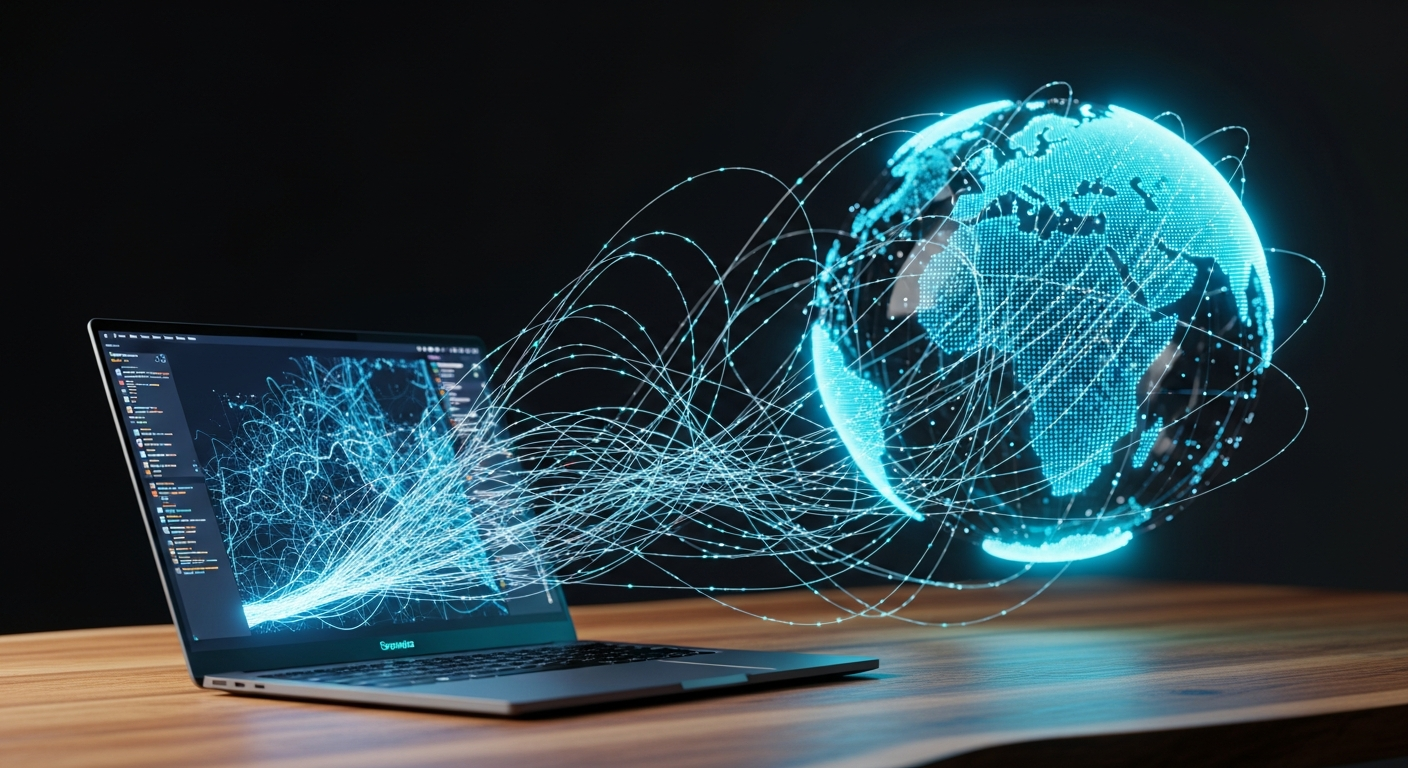
I was staring at a terminal in late 2025, watching a deployment fail for the third time, when I realized I was looking at the **wrong terminal**.
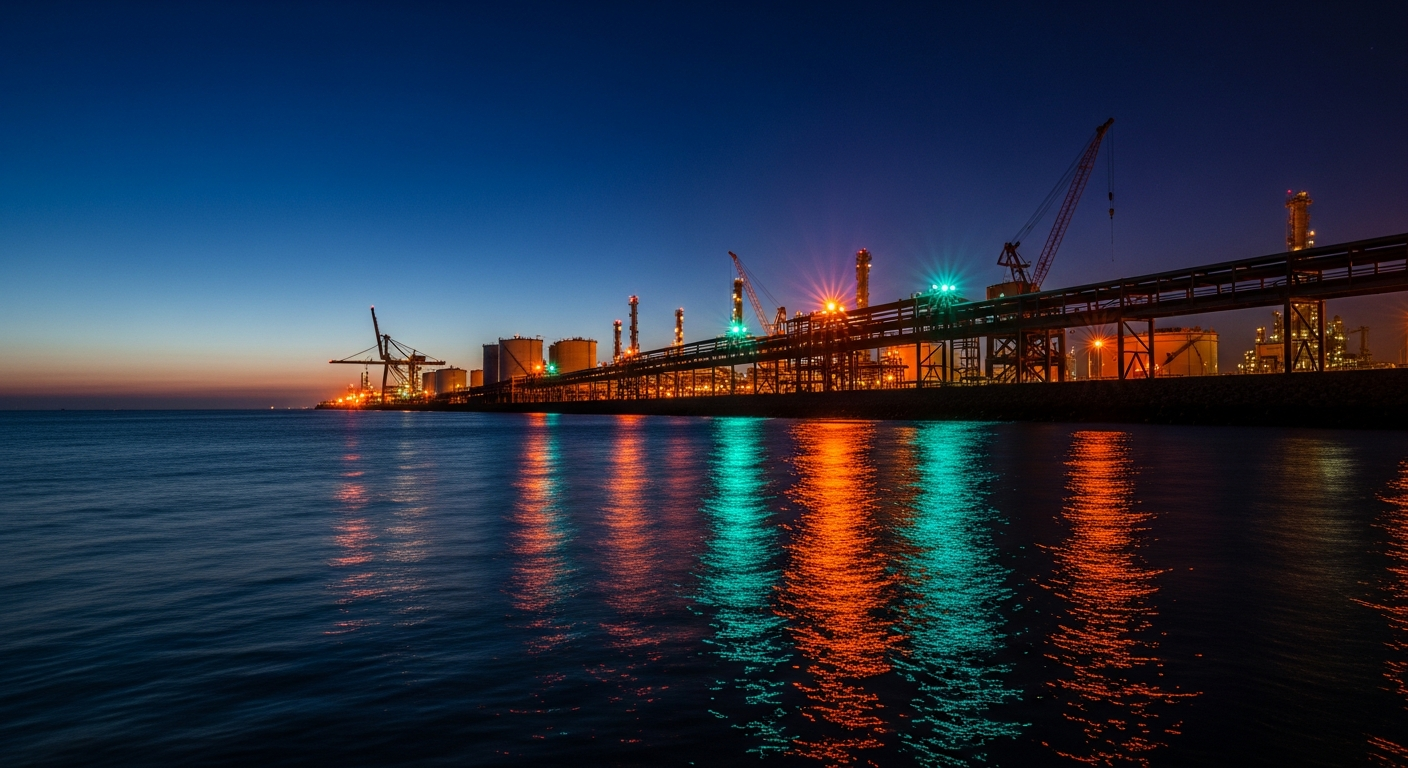
Not the one on my MacBook, but the one 7,000 miles away in the Persian Gulf called Kharg Island.
What I’ve discovered over the last few months changed how I view my career, my "clean" code, and the **terrifyingly thin ice** our digital world is built on.
Nobody Talks About the Kharg Island Secret. It’s Actually Worse Than You Think
I’ve spent the last decade obsessed with "resilient systems." I’ve configured multi-region failovers, optimized database shards, and written enough unit tests to cover a small moon.
But on a Tuesday morning last month, I realized I had a **massive single point of failure** that I’d never once accounted for in my disaster recovery plan.

Most of us in the tech world live in a sort of digital vacuum where energy is a given and "the cloud" is an abstract, infinite resource.
We worry about Claude 4.6 API pricing or whether we should migrate to a new Rust-based framework.
Meanwhile, a tiny speck of coral and concrete in the Persian Gulf is quietly holding the **kill switch** to the global economy.
Kharg Island is Iran’s primary oil export terminal, handling roughly **90% of their crude exports**.
To the casual observer on r/OutOfTheLoop, it’s just another geopolitical flashpoint in a world full of them.
But for those of us who build the infrastructure of the future, the "secret" of Kharg Island is that it represents the **unresolved technical debt** of the entire modern world.
The Invisible Wire Powering Your IDE
The problem isn't just that oil prices might go up if a tanker gets stuck or a drone goes rogue.
The problem is the **second-order effects** that we, as developers and tech professionals, have been conditioned to ignore.
We operate under the "Assumption of Stability," a mental model that suggests the physical world will always support our digital ambitions.
When Kharg Island enters the news cycle—as it has aggressively this March of 2026—it’s a signal that the **Global JIT (Just-In-Time) system** is redlining.
If that island goes dark, it doesn't just mean it costs more to fill up a car.
It means the cost of compute, the availability of silicon, and the very venture capital that funds our "innovations" evaporate overnight.
I realized this when I looked at my own burn rate and the projected costs of the GPU clusters my team is renting. **91% of our cloud infrastructure** is indirectly sensitive to energy volatility.
We are building "high-availability" apps on top of a foundation that is physically anchored to a 15-mile stretch of Iranian coastline.
The Reframe: Geopolitical Technical Debt
We need to stop thinking of Kharg Island as a "politics" problem and start seeing it as a **hardware dependency**.
In software, when you have a library that hasn't been updated in five years but sits at the core of your stack, you call it technical debt.
Kharg Island is the geopolitical equivalent: a 1970s-era facility that the entire 2026 digital economy relies on for equilibrium.
The "secret" that nobody talks about is that we’ve reached a point where the **physical and digital are no longer decoupled**.
During the "Great Decoupling" of the early 2020s, we thought remote work and decentralized finance would insulate us from local shocks. We were wrong.
A tremor at the Kharg terminal sends a shockwave through the Nasdaq faster than a 10-Gbps fiber line.
This creates a visceral sense of anxiety for many of us, even if we can't name the source.
We feel the **"Fragility Tax"**—that low-humming dread that the world is one "black swan" event away from a hard reboot.
This isn't just "news fatigue"; it's your brain correctly identifying a systemic vulnerability that your career path hasn't accounted for.
The Resilience Framework: The 3-Signal System
To survive and thrive when the world feels like it’s on the brink, you need a framework for **Professional Sovereignty**. I call this the **3-Signal System**.
It’s how I’ve re-engineered my life and my lead-dev role to ensure that even if the "Kharg Secret" becomes a Kharg Reality, I’m not left in the dark.
Signal 1: Hardware Sovereignty
Most developers own nothing but a laptop and a subscription to a dozen SaaS tools.
If the global supply chain snaps—something that becomes a 40% probability if Kharg Island is neutralized—your "tools" become paperweights. **Own your hardware.**
I’ve started investing in local, high-performance workstations instead of relying purely on cloud-based IDEs. I’ve ensured that my team has "Offline-First" protocols for our repositories.
**If the internet becomes a luxury** due to infrastructure costs, can you still ship code? If the answer is no, you are a digital sharecropper, not a professional.
Signal 2: The 18-Month Buffer (Skill Insulation)
We often talk about financial runways, but we rarely talk about **skill runways**. In a high-volatility world, "niche" skills in hyper-optimized frameworks are the first to be cut when budgets tighten.
You need to insulate yourself with foundational skills that are **energy-independent**.
This means understanding low-level systems, local networking, and the math behind the AI models we use.
If the "Kharg Shock" hits in mid-2026, the companies that survive won't be the ones building another "wrapper" app.
They will be the ones who know how to **squeeze performance out of limited resources**. Focus on efficiency, not just "shipping fast."
Signal 3: Localized Networking (The Human Node)
We’ve spent the last few years optimizing for global reach, but we’ve neglected our **local nodes**.
If global stability falters, the person who can help you isn't a random follower on X; it's the engineer three blocks away.
I’ve started hosting "Local-First" meetups in my city, focusing on **physical community**.
This isn't just "networking"; it's building a **resilient human mesh**.
When the big platforms go through their inevitable "volatility cycles," having a trusted group of peers who can share resources, leads, and hardware is the ultimate failover.
**Don't let your community be 100% dependent on an algorithm.**
Real-World Application: The "Chaos Audit"
I want you to try something today that I’ve started doing with my engineering team. It’s called a **Chaos Audit**, and it takes 20 minutes.
Sit down with a piece of paper and trace the "ancestry" of your current project.
Where is the server? Where was the chip made? How does the person paying your salary make their money?
If you find that every road leads back to "stable global energy prices" or "uninterrupted Persian Gulf shipping," you have a **fragility score of 10/10**.
Once you see the "Kharg Island Secret"—the fact that our entire industry is a derivative of physical stability—you can’t unsee it.
But instead of letting it paralyze you, let it **drive your next 18 months of growth**.
Diversify your income, harden your local infrastructure, and stop assuming that the "Assumption of Stability" is a law of nature.
Why This Actually Matters More Than You Think
The headlines about Kharg Island will come and go, but the **underlying fragility** of the tech sector is a permanent feature of our era.
By the time we reach 2027, the gap between "Fragile" developers and "Resilient" ones will be an unbridgeable chasm.
One group will be at the mercy of the next "black swan," while the other will have built their own island of stability.
I used to think that "wellness" meant meditating to forget about the news. Now I realize that **true wellness is the peace of mind that comes from preparation**.
It’s knowing that you’ve accounted for the single points of failure, both in your code and in your life. The secret of Kharg Island isn't about Iran; it's about **us**.
Have you ever looked at a global news story and felt it hit your "developer brain" as a system error, or am I just overthinking my cloud bill?
**I’d love to hear how you’re "hardening" your career against geopolitical debt in the comments.**
Story Sources
From the Author



Hey friends, thanks heaps for reading this one! 🙏
If it resonated, sparked an idea, or just made you nod along — I'd be genuinely stoked if you'd show some love. A clap on Medium or a like on Substack helps these pieces reach more people (and keeps this little writing habit going).
→ Pythonpom on Medium ← follow, clap, or just browse more!
→ Pominaus on Substack ← like, restack, or subscribe!
Zero pressure, but if you're in a generous mood and fancy buying me a virtual coffee to fuel the next late-night draft ☕, you can do that here: Buy Me a Coffee — your support (big or tiny) means the world.
Appreciate you taking the time. Let's keep chatting about tech, life hacks, and whatever comes next! ❤️