Nobody Talks About the 6-Year COVID Secret. It’s Not What You Think.
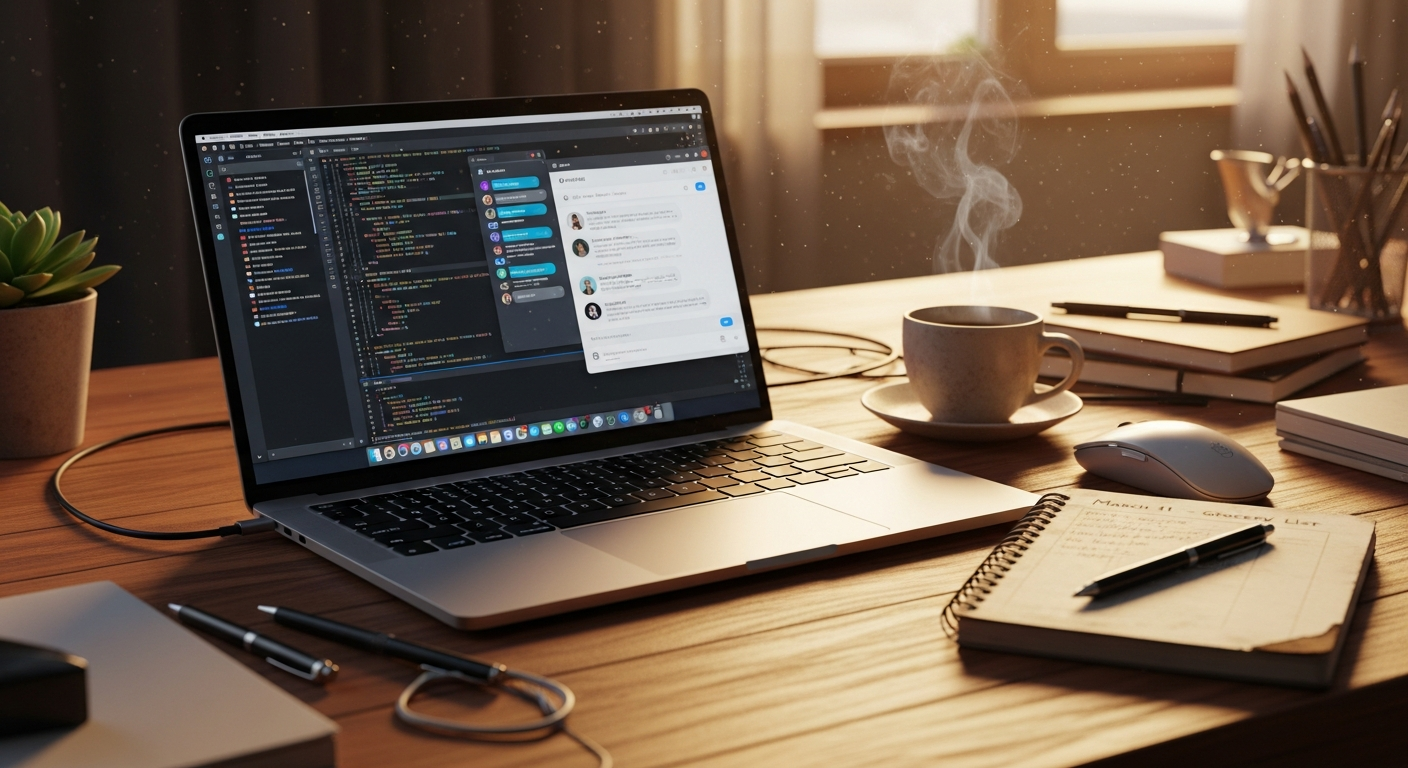
I found a notebook in the back of my desk drawer this morning. It was dated March 11, 2020. The last entry was a grocery list: *Milk, eggs, hand sanitizer (if they have it), and a 50-pack of K-cups.*
I remember writing that list with a weird, buzzing anxiety in my chest, thinking I was prepping for a long, two-week "spring break." **Six years later, on March 14, 2026, I’m still staring at that notebook and realizing we haven’t actually come back yet.**
We tell ourselves we have. We go to concerts again, we complain about traffic, and we argue about return-to-office mandates.
But there is a "6-Year Secret" that nobody in the tech world or the wellness industry wants to say out loud because it’s too uncomfortable to acknowledge.
**The secret is this: We didn’t just lose two years of our lives; we lost our ability to believe in a long-term future.**
If you feel like you’re "vibrating" at a different frequency than you were in 2019—if you feel technically productive but spiritually stagnant—you aren't alone.
We are currently living through the **Six-Year Temporal Distortion**, and it’s quietly destroying the careers and mental health of the people who build our digital world.
The Week the World Stopped (And the Memory We Buried)
Think back to this exact week, six years ago.
It was the week the NBA cancelled its season, the week Tom Hanks got sick, and the week your Jira board suddenly became a secondary concern to the price of toilet paper.
For those of us in software engineering and design, it was a moment of strange, adrenaline-fueled heroism. We moved entire companies to the cloud in 72 hours.
We patched VPNs, scaled servers, and "saved the economy" from our kitchen tables.
**But we never had a "Closing Ceremony" for that trauma.** We just kept shipping code.
We moved from the "emergency" of 2020 into the "burnout" of 2022, the "layoffs" of 2024, and now the "AI-panic" of 2026.
The human brain isn't designed to live in "Version 1.0 Emergency Mode" for 2,190 consecutive days. Yet, that is exactly what we’ve done.
We’ve traded our "Five-Year Plans" for "Five-Minute Sprints," and it has left us with a hole in our psyche that no meditation app can fill.
The "Secret" Is the Habit of Hesitation
The most profound change since March 2020 isn't remote work or Zoom fatigue. It’s the **Habit of Hesitation**.
Before the world shut down, we made big bets. We planned career pivots two years out. We moved to new cities.
We started companies. We believed that the "Server of Reality" was stable.
**COVID deleted that stability from our mental kernels.** Now, even in 2026, we live in a state of permanent "wait-and-see." We don't commit to the big project because *what if another black swan event happens?* We don't invest in deep learning because *Claude 4.6 or ChatGPT 5 might make our skills obsolete by next Tuesday.*
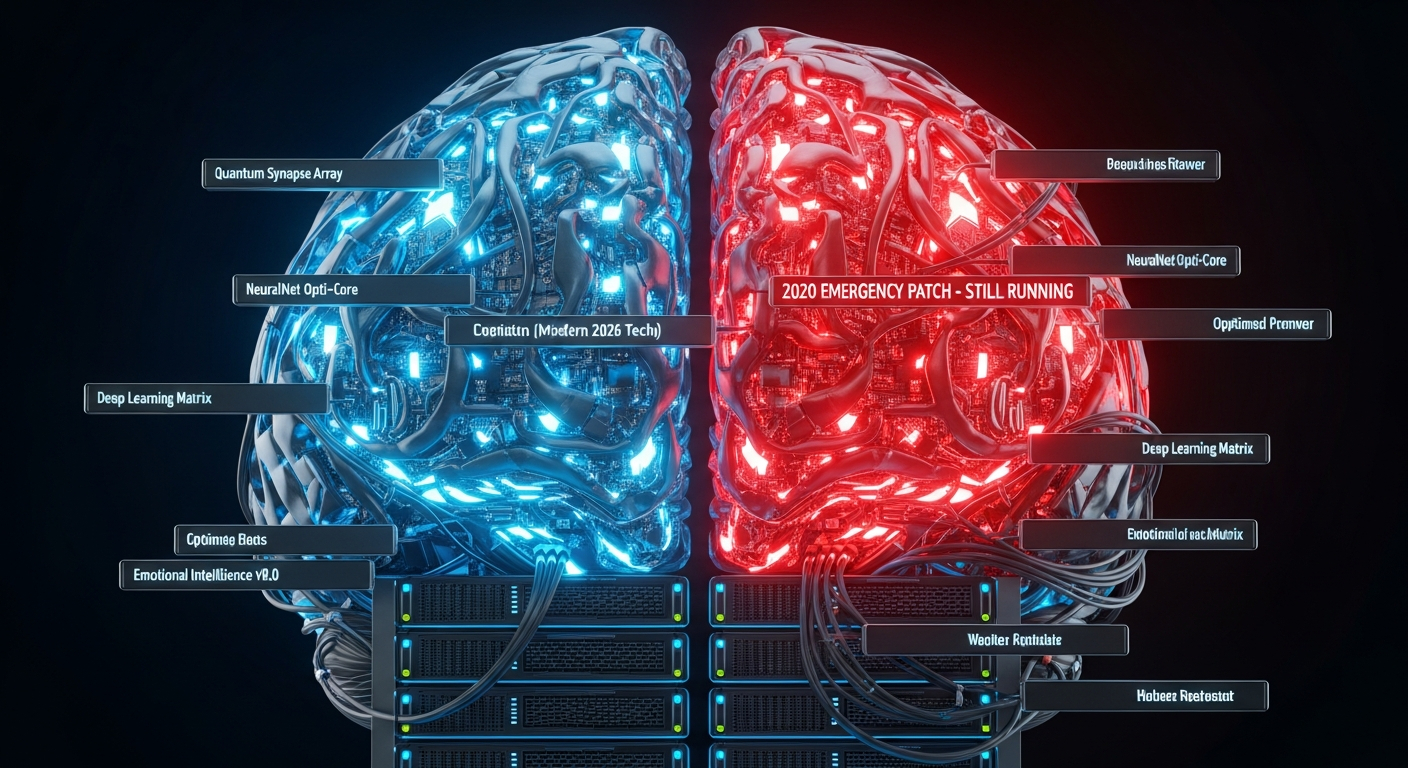
This hesitation is a survival mechanism that has overstayed its welcome. It’s a 2020-era patch that is now causing a memory leak in our 2026 lives.
We are "nested" in our homes and our habits, but we are no longer "building" toward a destination.
Why Tech Professionals Are Feeling the "6-Year Fog"
If you’re a developer, you’ve likely noticed that your relationship with work has fundamentally shifted. In 2019, we talked about "changing the world." In 2026, we talk about "surviving the cycle."
The "6-Year Fog" is the realization that we’ve spent half a decade staring at the same four walls, even if the house has changed.
**Our digital lives have become hyper-optimized while our physical lives have become hyper-compressed.**
We use Gemini 2.5 to write our unit tests and AI agents to handle our emails, which gives us back "time"—but what do we do with that time?
We spend it scrolling through r/popular, looking for the next crisis to validate our anxiety.
We are technically more efficient than ever, yet we feel like we’re running on a treadmill that’s slowly increasing its incline.
This is the "Secret" that your manager won't tell you: **The productivity gains of the last six years haven't bought us freedom; they've bought us a higher floor for expectations.**
The "Chronos Reset" Framework
To break the Six-Year Temporal Distortion, we need more than a "digital detox." We need a fundamental re-alignment of how we perceive time. I call this the **Chronos Reset Framework**.
I started using this system about six months ago when I realized I couldn't remember anything meaningful I’d done in 2025. It felt like one long, blurred Slack notification.
If you want to stop feeling like a "2020-flavored zombie" in a 2026 world, you have to manually override your brain’s emergency settings. Here is the three-part protocol for reclaiming your future.
Step 1: The Inventory of the "Temporary"
We all have "temporary" habits we picked up in March 2020 that are still running in our background processes.
Maybe it’s the way you eat lunch at your desk while reading news. Maybe it’s the fact that you haven't seen a colleague in person in three years.
Maybe it’s the "doom-scrolling" habit you developed when you were tracking infection rates.
**You need to audit your life for "Emergency Patches."** Ask yourself: "If the world was 100% stable and I was 100% safe, would I still be doing this?"
If the answer is no, you are still living in a trauma response. Delete the "temporary" code. It’s bloatware.
Step 2: The 18-Month Horizon
In 2020, we learned that looking further than two weeks out was a recipe for disappointment. So, we stopped looking.
To fix this, you must force yourself to plan for **September 2027**. Not next month. Not the next sprint.
Where do you want your nervous system to be in 18 months? What skill do you want to own that *cannot* be automated by the next iteration of Claude?
**When you plan for 18 months out, you signal to your amygdala that the emergency is over.** You are telling your brain that there is a "future" worth preparing for.
It sounds simple, but for a 2026 brain, it feels like a revolutionary act.
Step 3: The Physical Anchor Protocol
We have spent six years living in "The Abstract." Our work is code, our social life is pixels, and our "wellness" is often just another screen-based activity.
The "Secret" to curing the 6-year malaise is **Physical Friction**.
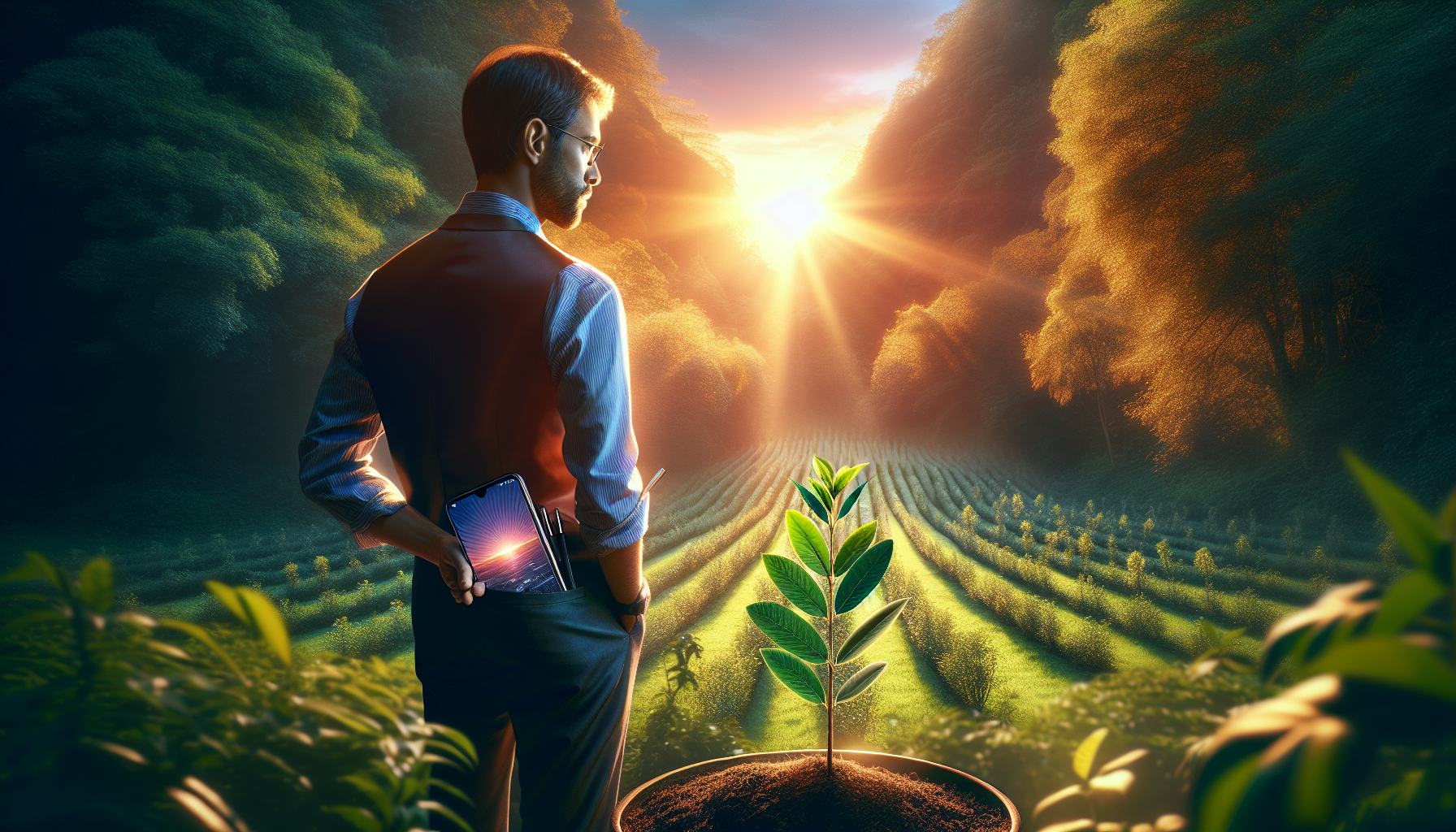
Go buy a physical book. Build something with wood. Plant a garden that won't bloom for another year. Do something that cannot be "undone" with `Cmd+Z` and cannot be accelerated by an LLM.
**Physical reality is the only thing that can anchor a distorted sense of time.** When you see a plant grow over six months, your brain regains its sense of "Natural Time" versus "Digital Time."
Moving Beyond the Great Reset
Six years ago this week, we were told to "stay home and stay safe." We did. We survived. But "safety" is a terrible place to live permanently.
The world of 2026 is vastly different from the world of 2020. The tools we use, like Gemini 2.5 and Claude 4.6, would have looked like alien technology to us six years ago.
We have evolved technologically, but we have stagnated emotionally.
**The "Secret" isn't that something bad is coming; the secret is that the "bad thing" already happened, and we are allowed to stop waiting for it to happen again.**
We are the architects of the future. But we can't build a future we don't believe in. It’s time to stop "nesting" in our 2020 trauma and start "building" toward 2030.
The Question for the Comments
I want to know: **What is the one "temporary" habit you picked up in March 2020 that you are still doing today, six years later?**
Is it the desk-lunch? The 2 AM news-checking? The fear of making long-term plans?
Let’s talk about it in the comments. Recognizing the "ghosts" of 2020 is the first step to finally moving into 2026.
***
Story Sources
From the Author




Hey friends, thanks heaps for reading this one! 🙏
If it resonated, sparked an idea, or just made you nod along — I'd be genuinely stoked if you'd show some love. A clap on Medium or a like on Substack helps these pieces reach more people (and keeps this little writing habit going).
→ Pythonpom on Medium ← follow, clap, or just browse more!
→ Pominaus on Substack ← like, restack, or subscribe!
Zero pressure, but if you're in a generous mood and fancy buying me a virtual coffee to fuel the next late-night draft ☕, you can do that here: Buy Me a Coffee — your support (big or tiny) means the world.
Appreciate you taking the time. Let's keep chatting about tech, life hacks, and whatever comes next! ❤️