Nobody Talks About My Dad’s 2-Minute Secret to Stop Procrastinating Forever

I wasted $4,200 on productivity "systems" in 2025. I bought the Notion templates, the Oura Ring Gen 4, and even a "deep work" retreat in Bali that cost more than my first car.
None of it worked. By January 2026, I was still staring at a blank cursor for three hours every morning, paralyzed by the sheer weight of my own "to-do" list.
**The more I tried to optimize my focus, the more I found myself doom-scrolling through Reddit threads about how to stop doom-scrolling.**
Last month, I finally called my dad. My dad is the kind of guy who has built three houses, restored four classic cars, and has never once "searched for his passion." He just gets things done.
"I’m stuck, Dad," I told him.
"I have the best tools in the world—Claude 4.6 is basically doing half my research and ChatGPT 5 is drafting my outlines—but I still can't seem to actually *start* the work."
He laughed, a dry, gravelly sound that made my $400 noise-canceling headphones feel like a toy. **"You’re over-engineering the start," he said.
"You're trying to fly the plane before you've even touched the controls."**
Then he told me his "2-Minute Secret." It wasn't a hack, a Chrome extension, or a bio-hack involving cold plunges.
It was a rule he learned working 40 years in a machine shop, and it has since rewired my entire brain.
The $4,200 Productivity Trap
We are currently living in the "Optimization Era," where we believe that if we just find the right combination of software and supplements, we will become frictionless.
**But the truth is that your brain doesn't want to be optimized; it wants to be safe.**
When you look at a massive project—like "Write a 10,000-word industry report" or "Rebuild the legacy codebase"—your amygdala sees a threat.
It sees a mountain of potential failure and energy expenditure.
I spent most of 2025 trying to "trick" my brain into liking the mountain. I used Pomodoro timers that made me feel like a prisoner to a ticking clock.
I used "gamified" task managers that felt like a second job. **The problem was that every one of these tools added *more* friction to the act of starting.**
My dad’s secret is built on the opposite philosophy. He doesn't try to make the mountain look smaller. **He just focuses on the first 120 seconds of "physical contact" with the work.**
The Physics of Procrastination (Why Your Brain Is a Liar)
In physics, there is a concept called **Activation Energy**. It is the minimum amount of energy required to initiate a chemical reaction. Once the reaction starts, it often becomes self-sustaining.
Human productivity works exactly the same way. The energy required to *start* a task is 10x higher than the energy required to *continue* it.
**Procrastination isn't a character flaw; it is simply a failure to overcome the initial burst of activation energy.**
Your brain lies to you during this phase.
It tells you that you need to be "in the zone" or that you need "one more cup of coffee." **These are defensive maneuvers designed to keep you in a state of rest.**

My dad understood this instinctively. He knew that if he could just get his hands on the wrench, the rest of the day would take care of itself. He called it the "Touch-and-Go" rule.
My Dad’s "Touch-and-Go" Secret
The rule is embarrassingly simple: **You are not allowed to "think" about the task until you have spent 120 seconds physically touching the environment of the work.**
If you need to write, you don't think about the plot or the word count. You sit down, open the laptop, and keep your fingers on the home row keys for 2 minutes. That's it.
**You don't even have to type; you just have to "touch" the machine.**
If you need to go to the gym, you don't think about the workout. You put on your shoes and stand on the sidewalk for 120 seconds.
**The goal is not the workout; the goal is the physical contact with the environment.**
"The secret," my dad told me, "is that you give yourself a 2-minute 'Opt-Out' clause." After the 120 seconds are up, if you still want to quit, you are legally allowed to walk away.
**No guilt, no shame, no "trying harder."**
Why the "Opt-Out" Clause Changes Everything
I’ve tried the "2-Minute Rule" popularized by productivity gurus before.
You know the one: "If it takes less than 2 minutes, do it now." That rule is great for answering emails, but it’s useless for deep, creative work.
My dad’s version is different because it focuses on **Psychological Safety**.
When you tell your brain, "We are going to do this for the next 4 hours," the brain panics and starts looking for an exit (usually Instagram).
But when you say, **"We are only going to touch the keyboard for 120 seconds, and then we can quit,"** the brain relaxes. The "threat" is removed because the commitment is tiny.
In the last three weeks, I have used the "Opt-Out" clause dozens of times. **Do you want to know how many times I actually quit after the 2 minutes were up? Exactly once.**
Once you overcome that initial 120-second friction-burn, the Zeigarnik Effect kicks in. Your brain naturally wants to finish what it has started. **The "touch" becomes a "tether."**
The 120-Second Friction-Burner Framework
To make this work in a world full of AI distractions and 2026-level digital noise, you need a specific protocol. I call it the **Friction-Burner Framework.**
Step 1: Define the "Physical Touch"
What is the literal, physical point of contact for your work? For a developer, it’s the keyboard. For a painter, it’s the brush.
For a manager, it might be the "New Meeting" button on Zoom. **Identify the one object or interface that represents the start of the task.**
Step 2: Set the "Dummy Timer"
Use a physical timer—not your phone. Putting your phone in another room is a non-negotiable part of this process. Set a kitchen timer or a desk clock for 2 minutes. **This is your "sacred window."**
Step 3: The "Zero-Output" Mandate
During these 120 seconds, you are forbidden from worrying about quality. You can type gibberish. You can stare at the code.
**The only requirement is that you do not break physical contact with the work environment.**
Why "Just Starting" Is a Bad Piece of Advice
We’ve all heard the advice: "Just start." It’s the most common phrase on r/getdisciplined, and it’s also the most useless. **It’s like telling a depressed person to "just be happy."**
"Just starting" implies that you have the willpower to jump over the friction. But willpower is a finite resource that we usually exhaust by 10:00 AM.
**My dad’s secret works because it doesn't use willpower; it uses momentum.**
It treats you like a machine. A machine doesn't "decide" to start; it responds to a physical trigger.
**By making the trigger "physical touch" instead of "mental focus," you bypass the part of your brain that is prone to overthinking.**
I used to spend my mornings "preparing" to work. I’d check my notifications on Claude, look at my metrics, and organize my tabs.
**I was confusing "preparation" with "progress."** Now, I don't allow myself to open a single tab until I’ve spent my 2 minutes with my hands on the keys.
Applying This to the "AI-Overload" of 2026
In March 2026, our biggest problem isn't a lack of information; it's an "Information Buffet." With Gemini 2.5 and ChatGPT 5 able to generate thousands of words in seconds, the "value" of our work has shifted from *output* to *direction.*
But you can't direct an AI if you're too paralyzed to open the prompt window.
**I’ve seen brilliant engineers spend weeks "researching" which LLM to use for a project, only to never actually write a single line of code.**
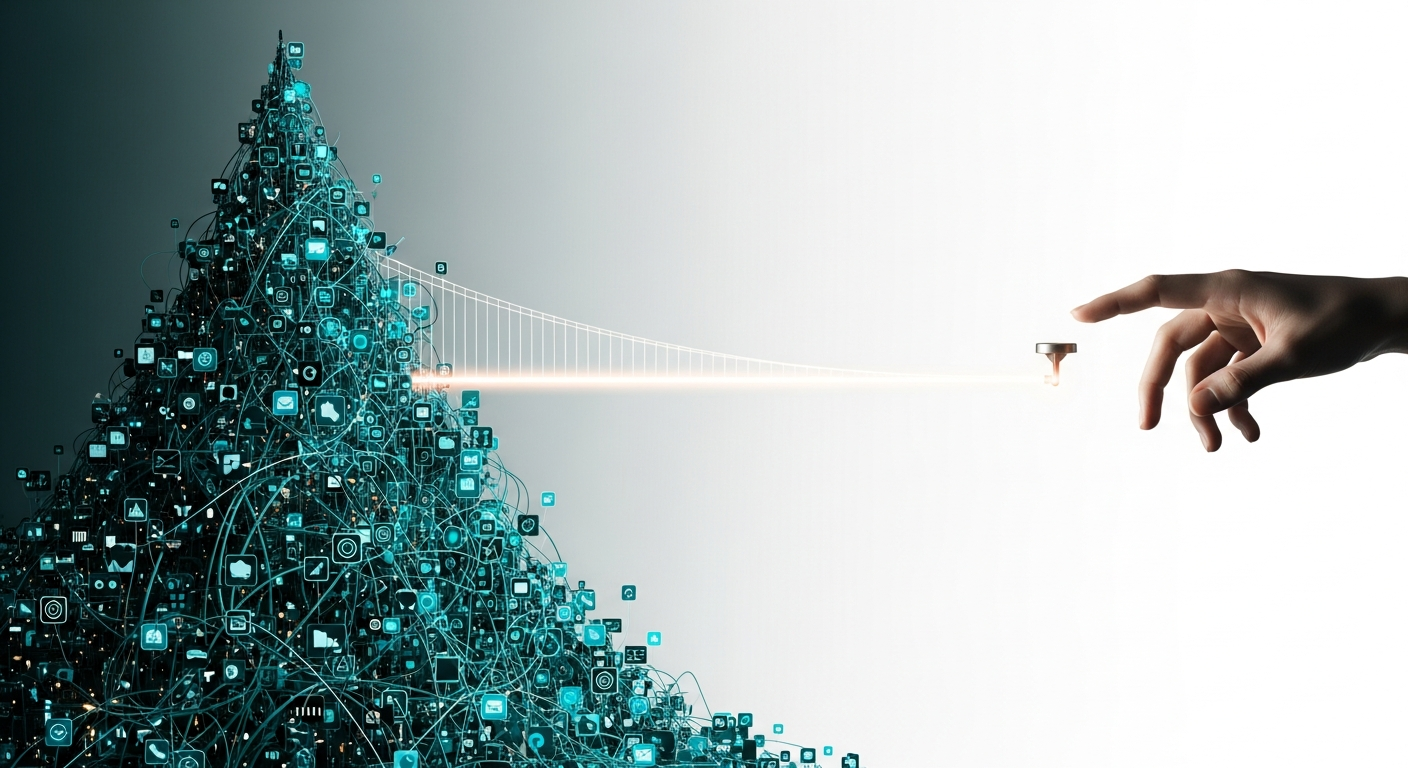
The 2-Minute Secret is the antidote to "Analysis Paralysis." It forces you to stop being a consumer of possibilities and start being a producer of reality.
**The AI can help you finish, but only a human can "touch the work" to begin.**
If you’re waiting for the "perfect" time to start that project you’ve been putting off for 18 months, I have bad news: **It’s never coming.** By this time in 2027, you’ll be exactly where you are now, just with a slightly faster phone and more regrets.
The "Touch-and-Go" Challenge
I want you to try this right now. Not tomorrow morning. Not "after you finish this article." **Right now.**
Pick the one thing you’ve been avoiding. Maybe it's an email you need to send, a bug you need to fix, or a difficult conversation you need to have. **Identify the physical point of contact.**
Put your phone in a drawer. Set a timer for 120 seconds. **Touch the work.**
Don't worry about being productive. Don't worry about being smart. Just maintain physical contact for two minutes. **If you want to stop when the timer dings, you have my permission to quit.**
But I’m betting you won't. I’m betting that once you burn off that initial friction, you’ll realize that the mountain wasn't actually that high—you were just standing too far away to see the path.
**Have you noticed that your "preparation" for work has become a form of procrastination itself, or is it just me?
I’d love to hear about the one project you’re going to "touch" today—let’s talk in the comments.**
---
Story Sources
From the Author



Hey friends, thanks heaps for reading this one! 🙏
If it resonated, sparked an idea, or just made you nod along — I'd be genuinely stoked if you'd show some love. A clap on Medium or a like on Substack helps these pieces reach more people (and keeps this little writing habit going).
→ Pythonpom on Medium ← follow, clap, or just browse more!
→ Pominaus on Substack ← like, restack, or subscribe!
Zero pressure, but if you're in a generous mood and fancy buying me a virtual coffee to fuel the next late-night draft ☕, you can do that here: Buy Me a Coffee — your support (big or tiny) means the world.
Appreciate you taking the time. Let's keep chatting about tech, life hacks, and whatever comes next! ❤️