Moltbook - A Developer's Story
The Notebook Wars Just Got Interesting: Why Moltbook's Local-First Approach Could Change How We Think About AI Development
Hook
What if the future of AI development isn't in the cloud at all?
While Silicon Valley giants push us toward subscription-based, cloud-dependent AI tools, a quiet revolution is brewing in the form of Moltbook—a deceptively simple project that's captured the imagination of over 1,000 Hacker News readers this week.
At first glance, it's just another computational notebook. Look closer, and you'll find a philosophical statement about data ownership, developer autonomy, and the future of AI-assisted programming.
The project's explosive reception isn't just about its features; it's about what it represents: a return to local-first computing at the exact moment when everyone else is racing to the cloud.

Background
The computational notebook landscape has been dominated by Jupyter for over a decade, with Google Colab and various cloud-based alternatives fighting for market share by offering GPU access and collaboration features.
This ecosystem evolved around a simple premise: notebooks are where data scientists think, experiment, and iterate.
They're the digital equivalent of a scientist's lab notebook—messy, exploratory, and essential.
But something shifted in 2023. The explosion of large language models created a new category of developer: the AI engineer.
These aren't traditional data scientists training models from scratch, nor are they software engineers building conventional applications.
They're a hybrid breed, orchestrating pre-trained models, managing prompts, and building AI-powered systems. And they need different tools.
The current notebook ecosystem wasn't built for this reality. Jupyter was designed for statistical computing and data visualization.
Colab was optimized for training neural networks on Google's hardware.
Neither was conceived in a world where a developer might want to run a 7-billion parameter language model locally while maintaining complete control over their data and workflows.

Enter the new wave of AI-first development environments. Cursor brought AI assistance directly into VS Code. Replit integrated AI throughout its cloud IDE.
OpenAI's Canvas reimagined the interface between human and AI.
Each promised to revolutionize how we write code, but they all shared one critical assumption: you need to be online, connected to their servers, paying their subscription fees.
Moltbook challenges this assumption at its core. Built as a local-first, open-source alternative, it represents a different philosophy entirely.
While the tech giants bet on a future where AI development happens in their cloud, Moltbook asks: what if developers want to own their tools, their data, and their AI interactions completely?
Key Details
Moltbook's architecture tells us everything about its priorities.
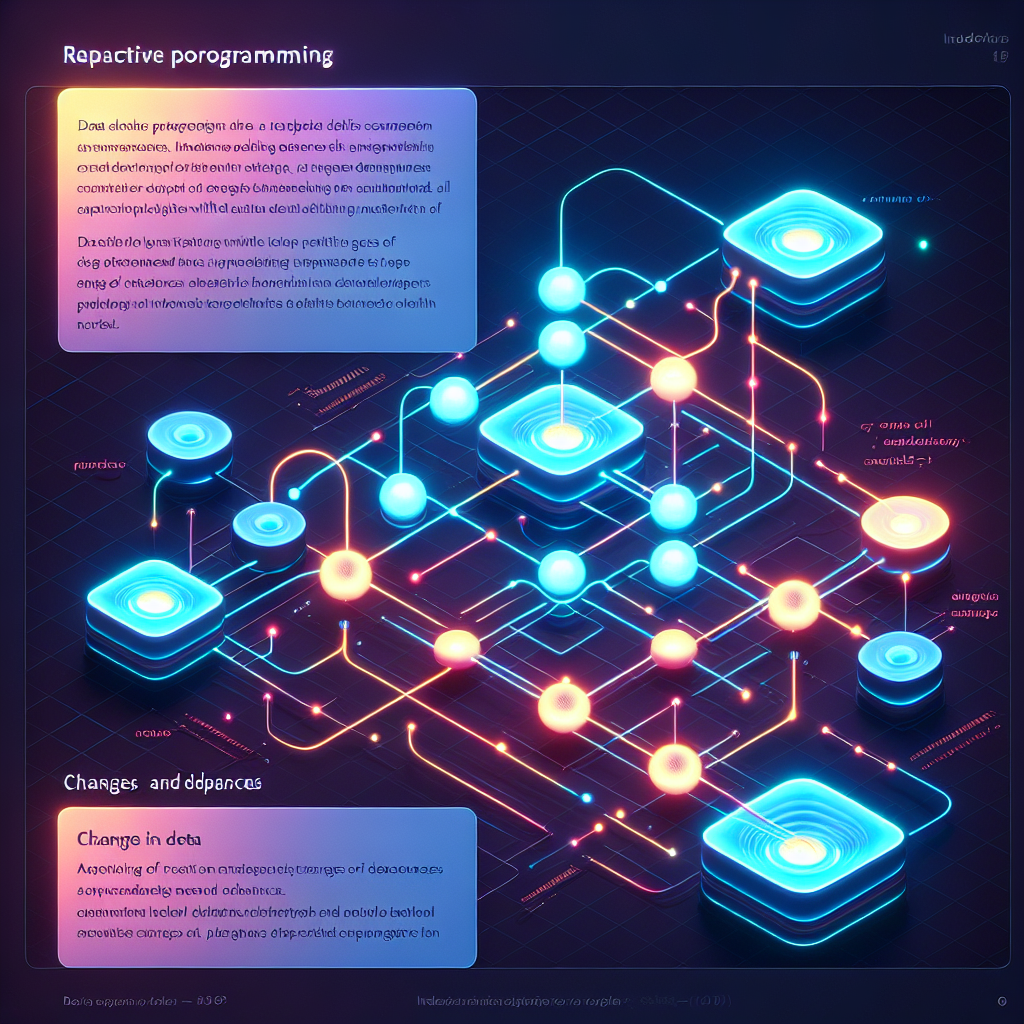
Unlike traditional notebooks that treat cells as isolated execution units, Moltbook implements a reactive programming model where cells automatically re-execute when their dependencies change.
This isn't just a technical detail—it fundamentally changes how developers interact with their code.
Imagine debugging a complex data pipeline where fixing one transformation automatically propagates through your entire analysis.
No more manually re-running cells in the right order, no more hidden state bugs that plague traditional notebooks.
The project's most controversial decision is its commitment to local execution. In an era where even simple text editors want cloud connectivity, Moltbook runs entirely on your machine.
This means you can work on sensitive data without privacy concerns, develop offline without interruption, and most importantly, integrate local language models without sending a single token to external servers.
The LLM integration is where Moltbook really shines. Rather than hardcoding support for OpenAI's API or another cloud provider, it provides a flexible interface for any model that can run locally.
Connect Ollama, LLaMA.cpp, or any GGUF-compatible model, and suddenly you have an AI assistant that knows your entire notebook context without any data leaving your machine.
For developers working with proprietary code or sensitive data, this isn't just a feature—it's the difference between being able to use AI assistance and being locked out entirely.
Performance has clearly been a priority. The reactive engine is implemented in Rust, providing near-instantaneous updates even with complex dependency graphs.
The frontend, built with modern web technologies, feels responsive and native despite running in a browser.
This isn't the sluggish, memory-hungry experience many associate with Electron apps or Jupyter notebooks with too many outputs.
But perhaps the most intriguing aspect is what Moltbook doesn't do. There's no built-in cloud sync, no collaboration features, no GPU marketplace.
These omissions aren't oversights—they're deliberate choices that reflect a specific vision of how development should work.
By resisting the temptation to add every possible feature, Moltbook maintains a clarity of purpose that's increasingly rare in developer tools.
The community response has been telling. Within hours of appearing on Hacker News, developers began contributing integrations, fixing edge cases, and proposing extensions.
The project's Discord already has hundreds of members sharing workflows, debugging issues, and planning features.
This organic growth suggests Moltbook has tapped into a real need that wasn't being served by existing tools.
Implications
The success of Moltbook signals something larger happening in the developer ecosystem: a growing resistance to the "cloud-first, privacy-later" approach that's dominated the last decade.
When even a computational notebook can generate this much excitement by simply running locally, it suggests developers are reconsidering what they've given up in exchange for convenience.
For enterprises, Moltbook offers a compelling solution to a growing problem.
As companies rush to adopt AI, they're discovering that sending proprietary code and data to cloud-based AI services creates massive security and compliance headaches.
A local-first notebook that can leverage on-premise models suddenly makes AI-assisted development feasible for industries like healthcare, finance, and government that have strict data residency requirements.
The implications for the AI industry are even more profound. If developers embrace local-first tools like Moltbook, it could accelerate the adoption of open-source language models.
Why pay for GPT-4 API calls when you can run Mixtral or LLaMA 3 locally with comparable results for many tasks?
This shift could democratize AI development, breaking the current oligopoly where a few companies control access to capable models.
There's also a sustainability angle that's been largely ignored in the AI boom.
Running models locally on existing hardware is far more efficient than the current model of sending every request to a massive data center.
If Moltbook's approach catches on, it could significantly reduce the carbon footprint of AI development—though this benefit only materializes if developers resist the temptation to run ever-larger models locally.
The tool also raises important questions about the future of collaborative development.
While Moltbook's local-first approach provides privacy and control, it potentially sacrifices the collaborative features that make tools like Colab so powerful for teams.
This trade-off might split the market: collaborative cloud tools for team projects and local tools for individual exploration and sensitive work.
What's Next
The roadmap for Moltbook will be crucial. The temptation to add cloud features will be immense—investors love SaaS metrics, and users will inevitably request sync and collaboration features.
How the project navigates these pressures while maintaining its local-first philosophy will determine whether it remains a power tool for privacy-conscious developers or evolves into yet another cloud service.
The broader trend toward local-first development tools is likely just beginning.
As local models become more capable and hardware acceleration improves, the performance gap between cloud and local execution will continue to narrow.
Apple's recent focus on on-device AI, combined with increasingly powerful consumer GPUs, suggests the infrastructure for local-first AI development is falling into place.
We're likely to see established players respond to this trend. JetBrains might add local LLM support to their IDEs. Microsoft could offer a local-first version of VS Code with Copilot running on-device.
Even Jupyter might evolve to better support the reactive, AI-integrated workflows that Moltbook pioneered.
The ultimate test for Moltbook and similar tools will be whether they can maintain simplicity while adding necessary features.
The graveyard of developer tools is full of projects that started with clarity of vision but became bloated trying to be everything to everyone.
If Moltbook can resist this fate, it might just catalyze a broader shift in how we think about development tools in an AI-saturated world.
---
Story Sources
From the Author


Hey friends, thanks heaps for reading this one! 🙏
If it resonated, sparked an idea, or just made you nod along — I'd be genuinely stoked if you'd show some love. A clap on Medium or a like on Substack helps these pieces reach more people (and keeps this little writing habit going).
→ Pythonpom on Medium ← follow, clap, or just browse more!
→ Pominaus on Substack ← like, restack, or subscribe!
Zero pressure, but if you're in a generous mood and fancy buying me a virtual coffee to fuel the next late-night draft ☕, you can do that here: Buy Me a Coffee — your support (big or tiny) means the world.
Appreciate you taking the time. Let's keep chatting about tech, life hacks, and whatever comes next! ❤️