Microsoft Just Quietly Vaporized $1 Trillion. It’s Worse Than You Think.
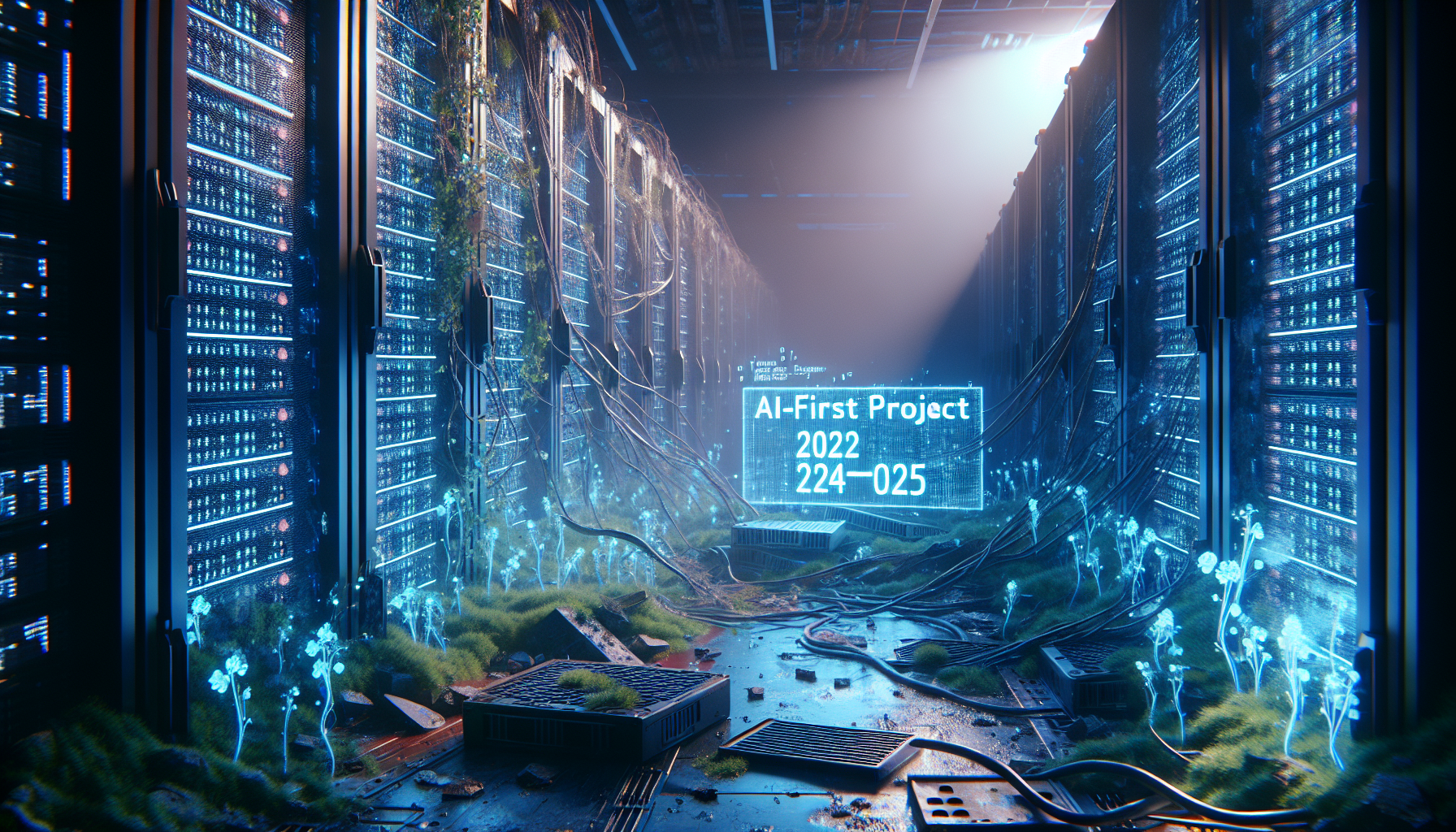
**Microsoft Just Quietly Vaporized $1 Trillion. It’s Worse Than You Think.**
Microsoft just quietly vaporized $1 trillion. And no, it wasn’t because of a bad earnings report or a hardware recall.
It was the moment the world realized that "AI-generated productivity" was actually just "High-interest technical debt" in a fancy wrapper.
I’ve been a developer for twelve years, and I’m telling you — we are currently living through the most expensive engineering mistake in human history.
If you’re still relying on GitHub Copilot to write your unit tests or using Windows 12 “AI-Core” to manage your workflow, you aren’t just behind the curve.
You’re the one holding the bill for a trillion-dollar hallucination.
The $1 Trillion Pattern Interrupt
On Tuesday, the market finally did the math that Microsoft hoped we’d never do.
For two years, we were told that AI would make us 10x faster, that "coding was dead," and that Azure’s GPU farms were the new oil wells.
But as of April 2026, the data is in. Companies that went "AI-first" in 2024 are now spending 80% of their engineering budget on the "Great Refactor."
They shipped features at lightning speed, but they shipped them with architectural rot that Claude 4.6 can’t fix and ChatGPT 5 didn’t see coming.
Microsoft bet the entire company on the *volume* of code, and they forgot that in software, volume is often the enemy of value.
The Sacred Cow: The "10x Developer" Myth
We all fell for it. Every tech influencer and "thought leader" on r/programming told you the same thing: if you aren't using AI to generate 90% of your boilerplate, you're a dinosaur.
The promise was simple.
AI would handle the "boring" parts — the CRUD apps, the CSS centering, the repetitive middleware — so you could focus on "high-level logic." It sounds great in a keynote, but in the trenches, it’s been a disaster.
I get it. I used Copilot too. I remember the rush of hitting "Tab" and seeing a 40-line function appear out of thin air.
It felt like magic. But magic always has a price, and we’re seeing that price realized in the $1 trillion market cap evaporation we just witnessed.
The Evidence: The Maintenance Crisis of 2026
Here is the data that Microsoft didn't want to show at their last Build conference.
According to a leaked internal audit from three Fortune 500 firms, **software maintenance costs have tripled since 2024.**

Why?
Because AI-generated code is "statistically likely" but "architecturally blind." It writes code that looks like it works, passes the current test suite, but lacks the mental model of the human who (should have) written it.
1. The "Ghost Dependency" Problem
In early 2025, a major fintech firm realized their AI-generated microservices had created a circular dependency graph so complex that a single update to a logging library crashed their entire staging environment.
The AI didn't "know" the system; it just knew what the next token should be.
2. The Hallucinated Security Debt
We’re now seeing the first wave of "AI-Native" exploits.
Hackers aren't looking for human mistakes anymore; they're looking for the specific, repeatable patterns that Gemini 2.5 and Claude 4.5 inject into Express.js middleware.
It’s not just a bug; it’s a systemic vulnerability baked into the foundation of millions of repos.
3. The Energy-Efficiency Lie
Azure’s "AI-Optimized" instances were supposed to save money. Instead, the sheer compute required to run "Recall" and "Co-pilot System-Wide" has driven enterprise cloud costs up by 40%.
Microsoft vaporized $1 trillion because they built a world where you need a nuclear reactor just to open an IDE.
The Real Problem: We Commodity-fied the Wrong Thing
The real problem isn't the AI. The problem is that Microsoft convinced C-suite executives that coding is a commodity.
They convinced them that a developer's value is measured in "Lines of Code Per Hour."
**When you turn code into a commodity, its value drops to zero.** If anyone can generate a React component in three seconds, that component is worth nothing.
The value of a senior engineer was never about typing speed. It was about knowing which 90% of the code *not* to write.
By incentivizing us to generate mountains of "good enough" code, Microsoft effectively flooded the market with sub-prime software. And just like 2008, the bubble just burst.
What You Should Do Instead: The Surgical Developer
Stop trying to be a "10x AI Prompt Engineer." That career path died three days ago when the stock price tanked.
If you want to survive the next eighteen months (by late 2027), you need to become what I call a **Surgical Developer.**
Instead of spending $15K on an "AI Mastery" bootcamp, here are three things that will actually make you indispensable in 2026:
1. Master "Human-in-the-Loop" Verification
Stop asking the AI to "write this." Start asking it to "find the edge cases in this code I wrote." Use the AI as a hostile reviewer, not a ghostwriter.
The developers who can *verify* code are now 100x more valuable than the ones who can *generate* it.
2. Go Low-Level or Go Home
The AI is great at high-level abstractions because that’s where the most training data lives. You know where it struggles?
Systems programming, eBPF, custom memory allocators, and hardware-level optimization.
If the AI can do it, your salary will trend toward the cost of the API call. If it can’t, you set the price.
3. Prioritize Architectural Simplicity
The "Great Refactor" is happening because systems became too complex for any one human to understand.
Your job is now to **delete code.** The most productive thing you can do for your company in 2026 is to take a 10,000-line AI-generated mess and turn it into 500 lines of clean, human-readable logic.
The Uncomfortable Truth
How many hours have you spent "prompting" a model to fix a bug that you could have solved in ten minutes if you actually understood the underlying library?
We’ve spent two years delegating our thinking to machines, and we’re surprised that the result is a trillion-dollar mess.
Microsoft didn't just lose money; they lost the trust of an entire generation of engineers who realized they were being sold a shortcut to a dead end.
Coding isn't about the syntax. It never was. It’s about the mental model.
It's about the ability to hold a complex system in your head and predict how it will fail. You can't outsource that to a transformer model, no matter how many trillions of dollars you throw at it.
**Have you noticed your "productivity" feeling more like a treadmill lately, or are you actually shipping better software? Let’s talk about the AI debt in the comments.**
---
Story Sources
From the Author




Hey friends, thanks heaps for reading this one! 🙏
Appreciate you taking the time. If it resonated, sparked an idea, or just made you nod along — let's keep the conversation going in the comments! ❤️