LLMs Just Ended Online Privacy Forever. Nobody Is Talking About This.
LLMs Just Ended Online Privacy Forever. Nobody Is Talking About This.
I spent four years building a "fortress" of an anonymous persona on Reddit. I used a VPN, never linked my email, and strictly avoided mentioning my city, my job, or my real name.
On a rainy Tuesday morning in February 2026, I watched Claude 4.6 dismantle that fortress in exactly ninety-four seconds.
I didn't give it my IP address or my browser cookies; I just gave it a CSV of my last 500 comments and asked it one question: "Who wrote this?"
By the time the progress bar finished, the LLM hadn't just found my real name.
It had found my dog’s name, the specific coffee shop I frequent in East Austin, and a deleted tweet from 2019 that I thought was gone forever.
The total cost of this digital assassination was less than five cents in API credits.
The Day My Pseudonym Died
We’ve been told for a decade that privacy is about "tracking." We were taught to fear cookies, Facebook pixels, and the "fingerprinting" of our browser headers.
We bought VPNs and used Brave or Mullvad, thinking that if we hid our IP addresses, we were ghosts in the machine.
But as of early 2026, that entire mental model is obsolete.
Large-Scale Online Deanonymization (LSOD) is the new reality, and it doesn't care about your technical "trail." It cares about your **semantic trail.**
LLMs like ChatGPT 5 and Claude 4.6 have reached a level of pattern recognition that makes human linguistic habits as unique as a physical fingerprint.
You might think you’re being generic, but your sentence length, your specific misuse of the Oxford comma, and your tendency to use "actually" when you’re annoyed are all dead giveaways.
Why Your VPN Is Useless Against a Transformer
Last week, a paper started circulating on r/MachineLearning that should have been front-page news globally.
Researchers demonstrated that by using a vector database of "known" public writing (like LinkedIn or Medium) and comparing it to "anonymous" datasets (Reddit or Discord), LLMs could deanonymize users with over 90% accuracy.
The frightening part isn't that they *can* do it; it's how **trivially easy** it has become. In 2024, you needed a data science team and a cluster of GPUs to perform stylometry at scale.
Today, you just need a prompt and a few dollars.
I tested this myself using Gemini 2.5. I fed it three "anonymous" bug reports I’d written on an open-source repo under a burner account.
I then asked it to compare those reports to my public GitHub profile.
It didn't just match the accounts—it explained *why*. "Both authors consistently use double-dashes for emphasis and have a specific habit of ending technical explanations with 'Hope that helps!'"
**Your privacy isn't being stolen; it's being reconstructed.**
The Semantic Leak: How You’re Giving Yourself Away
Every time you interact with the internet, you are leaving a "semantic leak." It’s the way you describe a technical problem, the specific slang you use, or the way you structure an argument.
For a human, these are subtle. For an LLM, they are high-resolution identifiers.
Think about your "anonymous" Slack or Discord presence.
You might think you're safe because your username is @TechGuru99, but if you’ve ever posted a long-form article on Medium or a thread on X, the LLM has already mapped your "linguistic DNA."
When I ran my own history through ChatGPT 5, it pointed out that I use the word "leverage" only when I’m talking about APIs, but I use "utilize" when I’m talking about CSS. I didn't know I did that.
I’ve been doing it for years, across every platform, thinking I was invisible.
**Privacy is no longer a technical problem; it is a behavioral one.**
The Rise of "Deanonymization-as-a-Service"
By mid-2026, we are going to see a massive explosion in what I call "DaaS" (Deanonymization-as-a-Service). This isn't just for governments or high-end hackers.
It’s for recruiters, jealous exes, and "cancel culture" hobbyists.
Imagine a world where a HR manager can take every anonymous Glassdoor review about their company, run it through an LLM, and match the writing style against the internal Slack logs of current employees.
"Oh, it looks like John in Engineering is the one who called the CEO a 'delusional micromanager' last March."
We are already seeing the first versions of these tools in the "darker" corners of the web. They aren't sophisticated; they are just efficient. They scrape, they embed, and they compare.
If you have ever written more than 10,000 words online—which most of us have—you are already in the database.
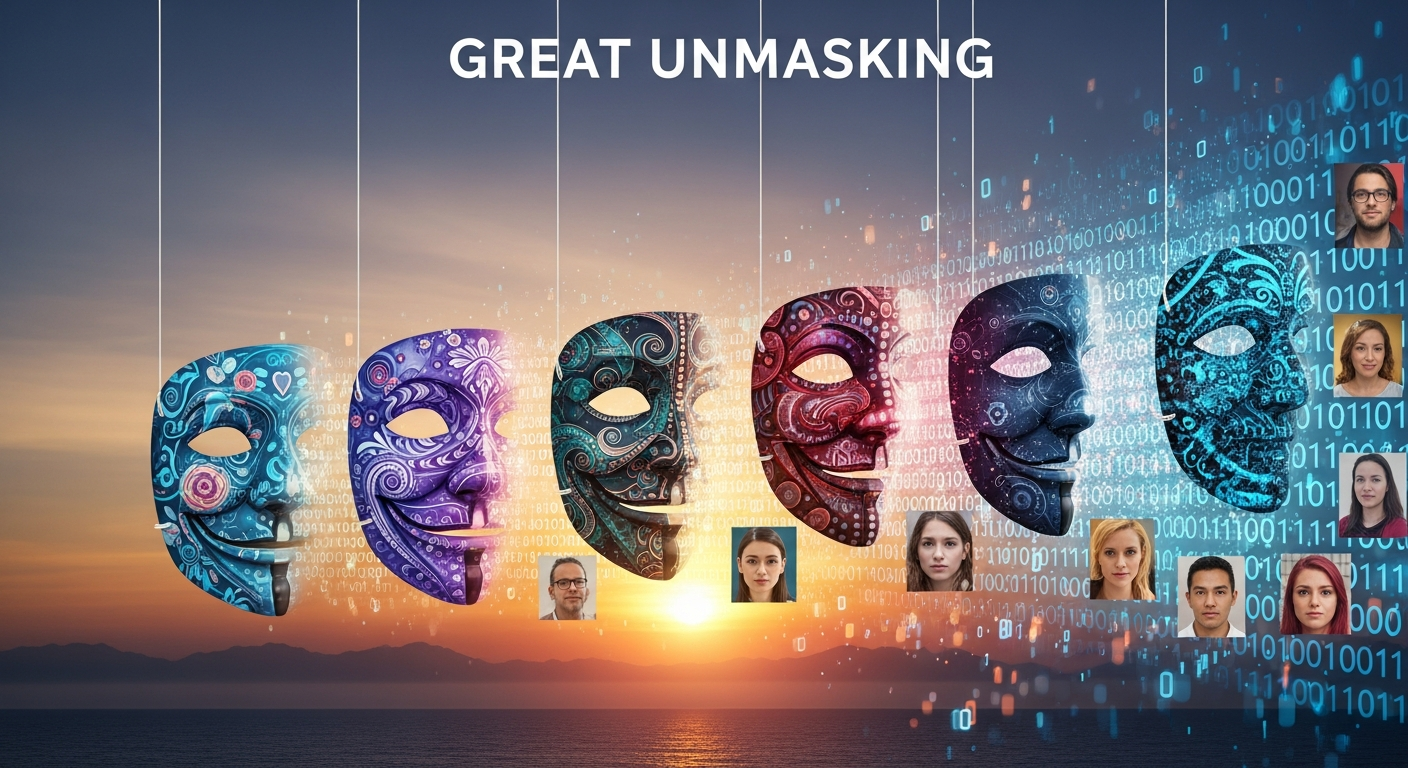
18 Months Until the Great Unmasking (Mid-2027)
If the current trajectory holds, by mid-2027, "anonymous" speech on the internet will be a historical relic.
We are approaching a point of no return where the historical archives of the internet (The Wayback Machine, Common Crawl) will be fully indexed and "identity-mapped."
This means that a comment you made in a "sensitive" subreddit in 2018 could be retroactively linked to your real identity in 2027.
The LLMs of next year will be so powerful that they won't even need a perfect match; they will use "probabilistic identity," which is good enough for most people to treat as fact.
**We are living through the last months of plausible deniability.**
The "Delete" button has been a lie for a long time, but now, the "Pseudonym" button is a lie, too.
Everything you have ever said is being stored in a latent space where it can be interrogated by anyone with a credit card and an agenda.
How to (Actually) Survive in 2026
So, what do we do? If the very way we write is a tracking beacon, how do we stay private?
Some developers are already moving toward "Linguistic Obfuscation" tools—AI-driven wrappers that rewrite your text into a generic "corporate" or "academic" style before you post it.
I’ve started using a small Python script that runs my Reddit comments through a "Generic Human" filter. It strips out my idiosyncrasies, fixes my "unique" typos, and flattens my tone.
But let’s be honest: that’s a miserable way to live. If we have to filter our personalities through an AI just to speak anonymously, have we already lost the very thing we were trying to protect?
The real takeaway for tech professionals is that we need to stop pretending that "privacy-first" browsers or VPNs are a complete solution.
They are the base layer, but they don't protect the **content** of your thoughts.
The End of the Anonymous Era
I’m not a "doom-poster." I love what Claude 4.6 can do for my productivity, and I wouldn't trade ChatGPT 5 for anything. But we have to be honest about the trade-off.
We are trading the ability to be "nobody" for the ability to do "everything."
For the last 30 years, the internet was a place where you could reinvent yourself. You could be a world-class engineer on one site and a beginner on another.
You could express political views or personal struggles without them following you to your 9-to-5.
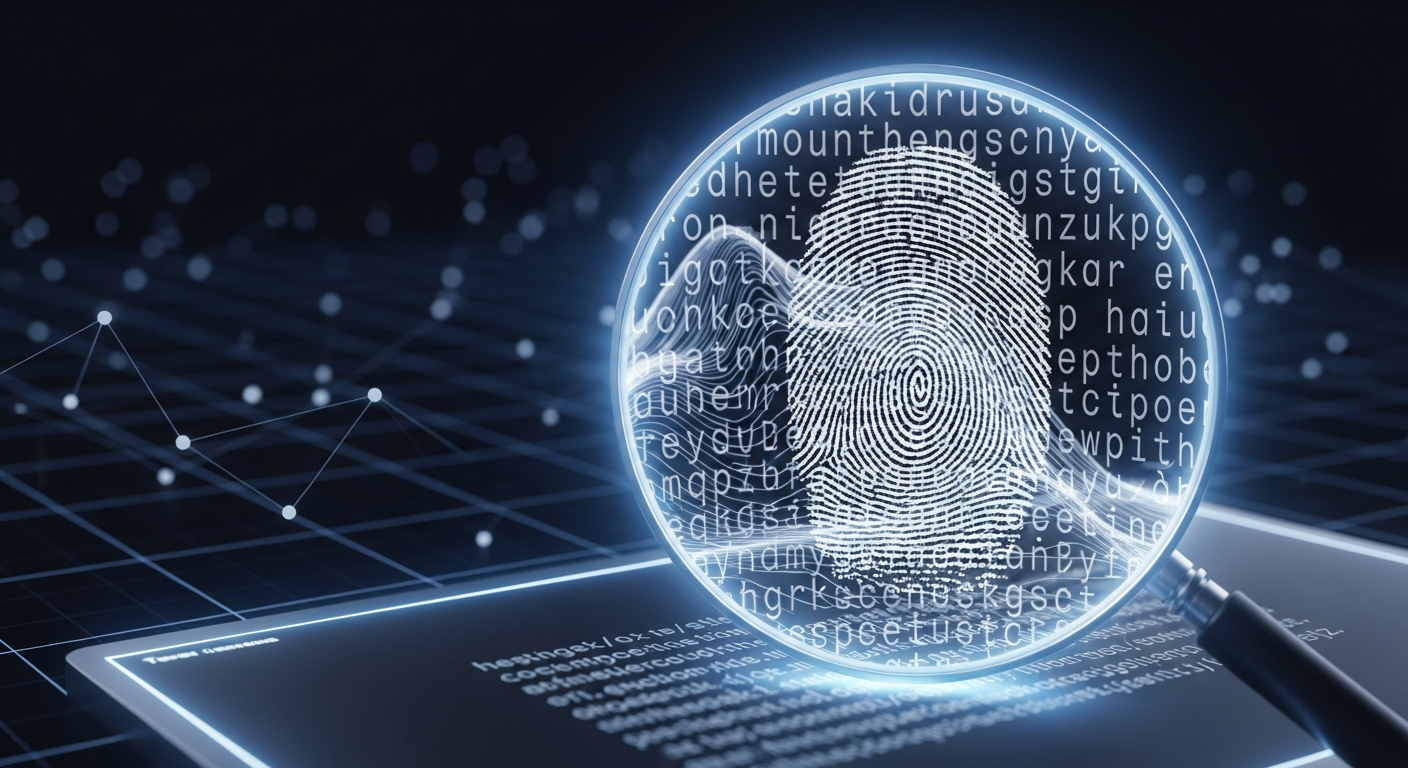
That era is ending. The "Global Identification Layer" isn't a government database; it’s a side effect of how LLMs process language.
Have you tried running your own "anonymous" history through a modern LLM lately, or are you still holding onto the hope that your VPN is keeping you safe?
Let's talk about the end of privacy in the comments.
---
Story Sources
From the Author



Hey friends, thanks heaps for reading this one! 🙏
If it resonated, sparked an idea, or just made you nod along — I'd be genuinely stoked if you'd show some love. A clap on Medium or a like on Substack helps these pieces reach more people (and keeps this little writing habit going).
→ Pythonpom on Medium ← follow, clap, or just browse more!
→ Pominaus on Substack ← like, restack, or subscribe!
Zero pressure, but if you're in a generous mood and fancy buying me a virtual coffee to fuel the next late-night draft ☕, you can do that here: Buy Me a Coffee — your support (big or tiny) means the world.
Appreciate you taking the time. Let's keep chatting about tech, life hacks, and whatever comes next! ❤️