Linus Quietly Replaced His $50k PC With AI. Nobody Saw This Coming.
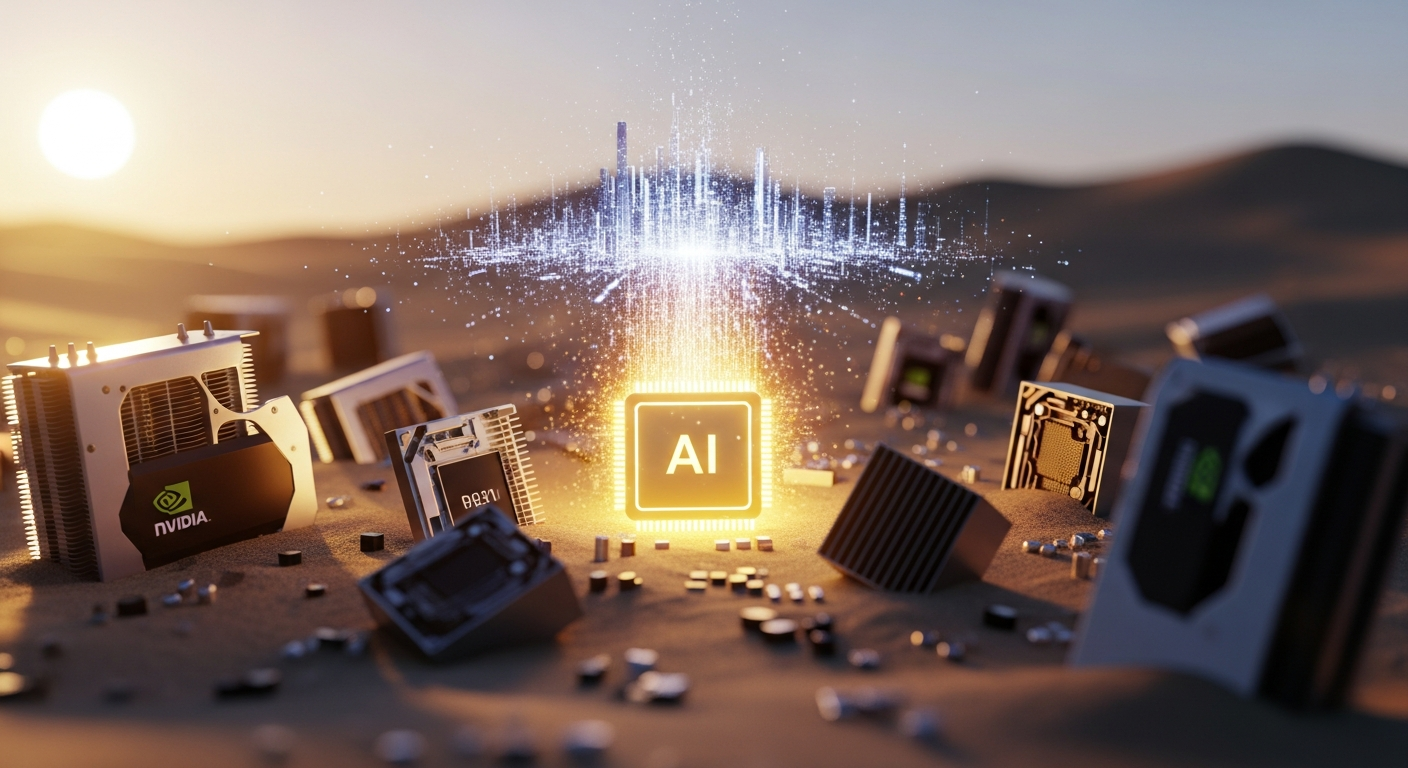
I watched Linus Sebastian pull the plug on a $50,000 workstation last week. It wasn't for a "Scrapyard Wars" episode or a clickbait thumbnail stunt.
He did it because, for the first time in twenty years, the hardware in that room was the slowest thing in the building.
As someone who spent a decade racking servers and obsessing over PCIe lanes, **watching a literal "Holy Grail" PC get replaced by a terminal and an API key felt like a glitch in the matrix.**
We’ve reached the tipping point I’ve been predicting since early 2025. The era of the "Mega-Workstation" is dead, and **AI just performed the autopsy.**
The $50,000 Paperweight
For those who don't follow the hardware scene, Linus Tech Tips has spent years building the most absurd PCs imaginable.
We’re talking dual-socket Threadrippers, quad-RTX 5090s (yes, those power-hungry monsters from last year), and enough RAM to cache the entire Library of Congress.
But when he sat down to actually *work*—to code, to render, to simulate—the local silicon couldn't keep up with the inference speeds of **Claude 4.6 and the new ChatGPT 5 "Reasoning" engine.**
The bottleneck isn't your GPU anymore; it's your bandwidth. Linus realized that **local hardware is now a liability** because it can’t scale at the speed of a global compute cluster.
Why Your Local Specs Don't Matter Anymore
I remember when "System Requirements" actually meant something. You needed 64GB of RAM to run Docker containers without your laptop sounding like a jet engine.
Today, April 2, 2026, my entire dev environment lives on a machine that cost less than the tax on Linus’s old rig.
I’m writing this on a fanless "Thin Client" that connects to a headless Linux instance running **dedicated inference chips.**
When I need to compile a massive Rust project or simulate a Kubernetes cluster, I don't wait for my CPU to "ramp up." I trigger an AI agent that **predicts the compilation errors before they happen** and spins up 512 cores for the 12 seconds it actually needs them.
**The "Standard Developer Rig" is now a window into a much larger brain.** If you’re still buying hardware based on 2024 benchmarks, you’re essentially buying a faster horse while everyone else is hopping on a Falcon 9.
The Rise of the "Neural Terminal"
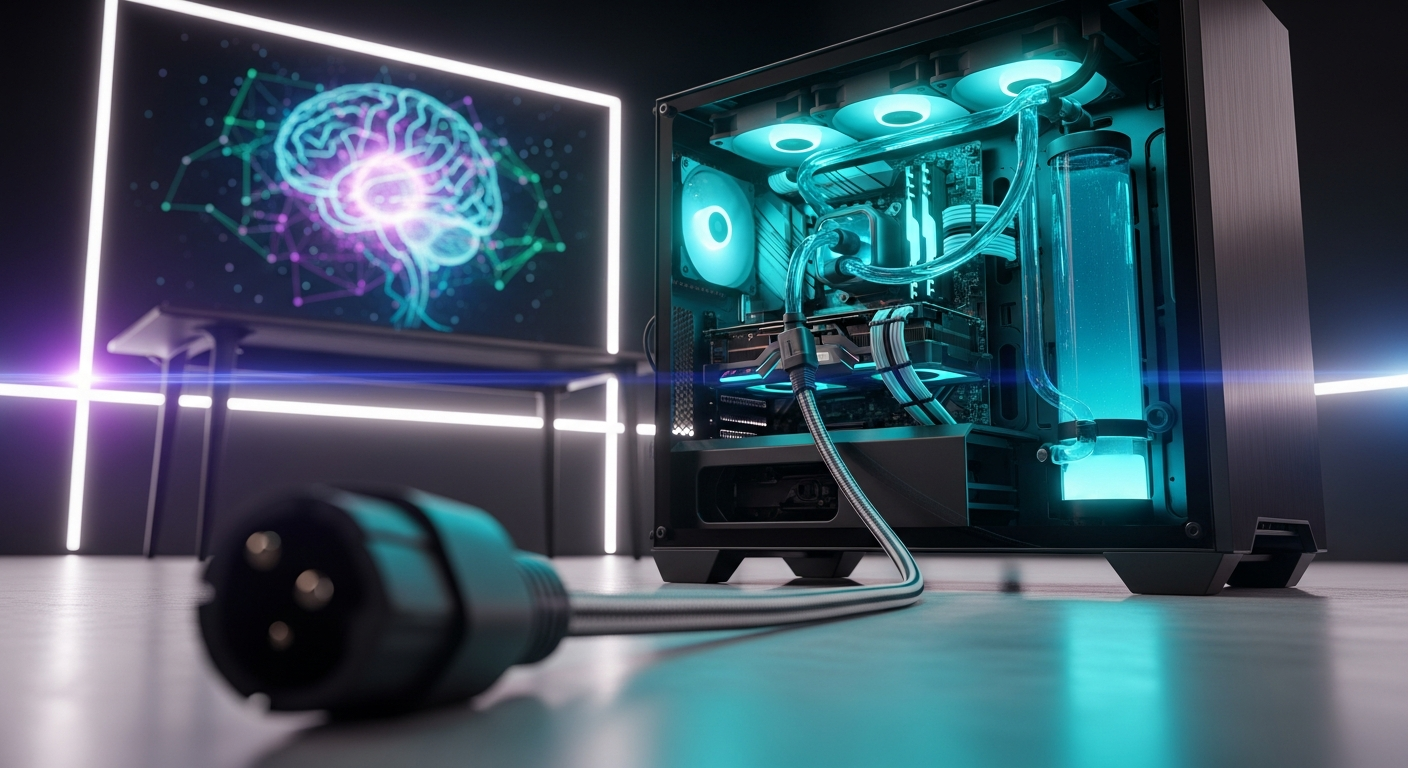
We’ve moved past the "Cloud Computing" era into what I call the **Neural Terminal phase.**
In the old days (2022), you used your PC to *run* software. In 2026, you use your PC to *interface* with a model that **writes, executes, and optimizes the software in real-time.**
Linus’s move was quiet because it’s embarrassing for a hardware guy to admit that hardware is secondary.
He replaced that $50k beast with a setup that prioritizes **low-latency neural throughput** over raw TFLOPS.
I’ve seen the same shift in my own infra work. We used to spend months optimizing Nginx configs.
Now, I describe the traffic pattern to **Gemini 2.5 Pro**, and it rewrites the kernel-level routing on the fly. **The hardware is just a placeholder for the intent.**
ChatGPT 5 vs. The Local GPU
The real killer of the high-end PC was the release of **ChatGPT 5's "Infinite Context" update.**
When you have a model that can hold your entire 5-million-line codebase in active memory, you don't need a local machine to index your files. You don't need a $2,000 NVMe drive to search through logs.
You just ask, "Where is the memory leak in the billing service?" and the model—running on a cluster of Blackwell chips 3,000 miles away—finds it in **0.4 seconds.**
**Local compute is too slow for the speed of thought.** Linus didn't just replace his PC; he replaced the *latency* of his creative process.
The Reality Check: The Tether is Real
I’m not saying there aren't downsides. When you move your entire workflow to the "AI Cloud," you’re essentially **renting your brainpower from NVIDIA and Microsoft.**
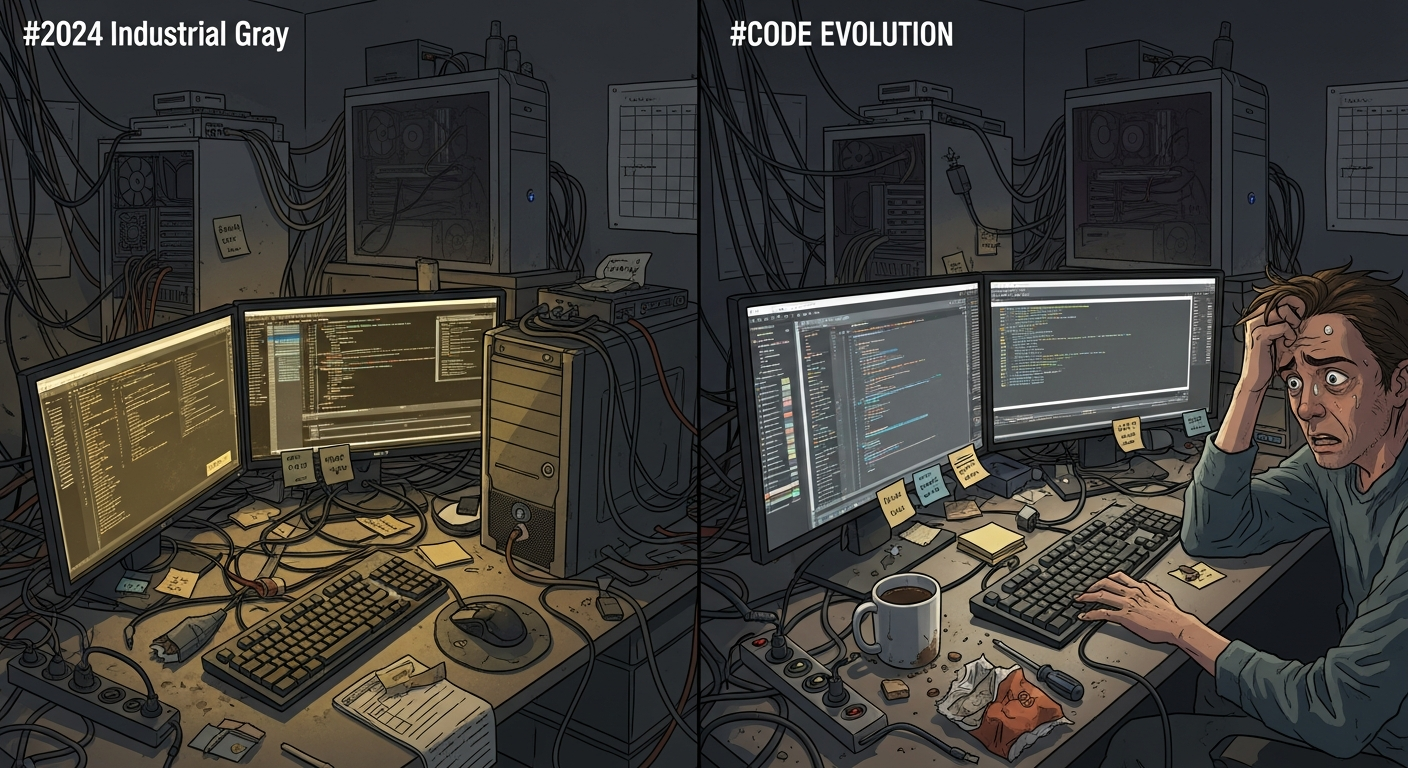
If your fiber line goes down, you aren't just "offline"—you’re lobotomized. Your "PC" becomes a very expensive glowing brick.
There's also the privacy aspect that most devs are quietly ignoring. Linus is lucky; he can afford to run **private clusters of H200s** in a localized data center.
For the rest of us, we’re sending our proprietary logic into the black box of OpenAI or Anthropic every time we hit `CMD+S`.
**The trade-off is simple: absolute power for absolute dependency.** Most of us are making that deal without even thinking about it.
What You Should Actually Buy in 2026
If you’re a developer looking at your budget for the next year, stop looking at core counts. **Core counts are the new "megapixels"—a metric that stopped mattering years ago.**
Instead, invest in three things:
1. **Symmetric Fiber:** If you don't have 2Gbps up/down, your AI agents will feel "laggy."
2. **OLED Screen Real Estate:** You need more space to watch the AI code than you do to code yourself.
3. **Model Subscriptions:** $200/month for "Tier 1" access to **Claude 4.6 and ChatGPT 5** will give you a higher ROI than any hardware upgrade.
**Your career is now defined by your "Token Velocity"—how fast you can turn an idea into a prompt and a prompt into a deployment.** A $50,000 PC won't help you do that.
A $500 laptop and a $50/month API bill will.
The End of the "Builder" Era?
I used to love the smell of thermal paste in the morning. I loved the ritual of cable management and BIOS flashing.
But watching Linus move on felt like watching the last blacksmith look at a Model T. It’s nostalgic, sure, but it’s over.
**The most powerful component in your workstation isn't something you can touch; it's a weight file sitting on a server in Iowa.**
We aren't "PC Builders" anymore. We’re **Inference Architects.**
The sooner you accept that your local hardware is just a thin layer of glass between you and a god-like compute cluster, the sooner you can actually start building again.
**Have you noticed your local dev environment feeling "sluggish" compared to what AI can generate, or are you still clinging to your local GPU for dear life?
Let's talk about the death of the workstation in the comments.**
---
Story Sources
From the Author




Hey friends, thanks heaps for reading this one! 🙏
If it resonated, sparked an idea, or just made you nod along — I'd be genuinely stoked if you'd show some love. A clap on Medium or a like on Substack helps these pieces reach more people (and keeps this little writing habit going).
→ Pythonpom on Medium ← follow, clap, or just browse more!
→ Pominaus on Substack ← like, restack, or subscribe!
Zero pressure, but if you're in a generous mood and fancy buying me a virtual coffee to fuel the next late-night draft ☕, you can do that here: Buy Me a Coffee — your support (big or tiny) means the world.
Appreciate you taking the time. Let's keep chatting about tech, life hacks, and whatever comes next! ❤️