Kitten TTS V0.8: The 25MB SOTA Model Redefining Local AI & Voice Synthesis
I Was Wrong About Tiny AI. This 25MB TTS Model Just Revolutionized My Workflow.
For years, I’ve wasted countless hours wrestling with cloud APIs for basic AI tasks.
I genuinely believed the future of state-of-the-art AI inherently meant massive models, GPU clusters, and an endless stream of subscription fees.
My "expert" advice often centered on scaling up, optimizing cloud costs, and building complex serverless architectures just to achieve decent Text-to-Speech (TTS) output.
Then, Kitten TTS V0.8 arrived – a truly SOTA model under 25 megabytes – and it forced me to confront a stark reality: I'd been chasing the wrong dragon entirely.
My past recommendations were costing developers precious time, money, and privacy.
The promise of local AI has always been tantalizing: instant responses, ironclad privacy, and the freedom to deploy anywhere, even offline.
Yet, until now, that promise felt like a distant dream, especially for high-quality voice generation.
While communities like r/LocalLLaMA have driven impressive leaps in local large language models, the audio space has noticeably lagged.
Achieving truly natural-sounding speech previously demanded either massive, unwieldy models or a constant handshake with a cloud provider.
Each option brought its own baggage: latency, data leakage concerns, and the infuriating drip-drip of API costs.
Kitten TTS V0.8 isn't just a new model; it's a defiant challenge to the notion that cutting-edge AI must be cloud-bound and gargantuan.
It’s here, it’s tiny, and it’s about to fundamentally reshape how we think about edge AI.
The Myth of "Bigger is Better" in AI is Dead
For too long, the AI industry has been trapped in a relentless pursuit of scale.
Every new breakthrough, from hypothetical models like ChatGPT 5 to Claude 4.6, often seems to arrive with an exponentially heavier parameter count, demanding more compute, more memory, and ultimately, more reliance on hyperscalers.
This obsession has led us to believe that "state-of-the-art" is synonymous with "colossal," that true intelligence can only emerge from models too large for individual developers or small companies to manage without significant investment.
We've been conditioned to accept that if you want the best, you have to pay the cloud toll and compromise on privacy.
This is the conventional wisdom that Kitten TTS V0.8, at a mere 25 MB, utterly demolishes.
While the power of massive foundation models for their incredible generalizability is rightly celebrated, many are missing the profound implications of SOTA performance arriving in an impossibly small package.
The mainstream view often positions local AI as a compromise – a "good enough" solution for those who can't afford the cloud. Kitten TTS unequivocally proves this perception is fundamentally flawed.
It demonstrates that through clever architecture and optimization, *efficiency* can be a direct pathway to SOTA, not a sacrifice of it.
This isn't just a niche optimization for hobbyists; it's a paradigm shift poised to democratize high-quality voice synthesis and unlock entirely new categories of applications, free from the constraints of network dependency and corporate data policies.
The next wave of innovation won't solely come from bigger models; it will emerge from smarter, smaller ones that empower everyone.
The Edge-Native AI Triad: Redefining SOTA
Kitten TTS V0.8 doesn't just offer excellent voice quality; it embodies a revolutionary definition of "state-of-the-art" tailored for practical, real-world deployment.
I call this **The Edge-Native AI Triad**: a powerful combination of Privacy, Portability, and Performance that was previously unattainable for high-fidelity voice generation.
This framework isn't merely about technical specifications; it’s about the strategic advantages and novel possibilities unlocked when SOTA models can live directly on the device.
Privacy: Your Data Stays Yours
Imagine an AI voice assistant that never sends your commands, your conversations, or your personal data to a remote server.
With Kitten TTS, this is no longer a futuristic fantasy but an immediate reality. Cloud-based TTS, by its very nature, requires sending audio or text data off-device for processing.
Even with robust encryption, this introduces a vulnerability – a point of potential interception or storage by a third party.
For industries handling sensitive information – healthcare, finance, legal – or for individuals simply concerned about their digital footprint, this is often a non-starter.
A 25MB SOTA model means you can embed high-quality voice generation directly into an application, a smart device, or even a browser, ensuring that all processing happens locally.
Your data remains on *your* device, under *your* control.
This fundamental shift isn't just a feature; it's a significant competitive advantage for any product or service prioritizing user trust and data sovereignty.
Portability: Deploy Anywhere, Offline
The true magic of a sub-25MB SOTA model lies in its ubiquitous deployability.
We’re talking about voice synthesis that can run natively on a Raspberry Pi, an older smartphone, an embedded system in a car, or even a smart speaker without an internet connection.
Previously, deploying high-quality TTS on edge devices meant significant compromises in naturalness or a constant tether to the cloud.

Kitten TTS shatters these limitations.
Developers can now integrate sophisticated voice capabilities into applications that operate entirely offline – think field service apps, educational tools in remote areas, or emergency communication systems.
This level of portability is a game-changer for independent developers and startups, leveling the playing field against resource-rich incumbents.
It means less infrastructure to manage, fewer dependencies, and the ability to build truly resilient, self-contained AI products that aren't beholden to network availability or cloud provider outages.
Performance: Instant, Low-Resource Response
The "P" in the Triad isn't just about speed; it's about unparalleled efficiency. A 25MB model consumes dramatically less memory and CPU cycles than its larger, cloud-dependent counterparts.
This translates directly into lower latency for voice generation – practically instantaneous responses, crucial for real-time interactive applications and seamless user experiences.
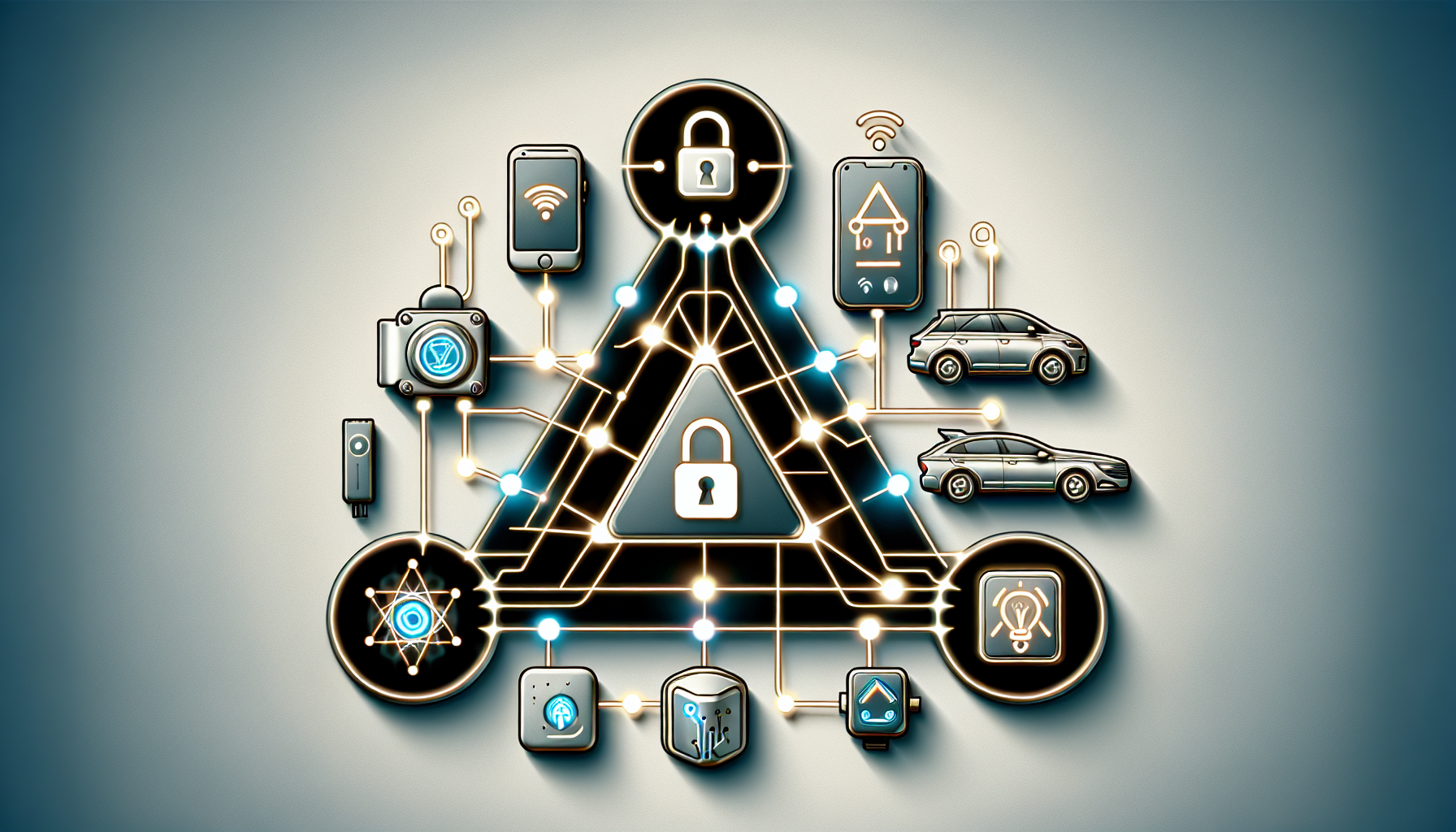
For developers, this means faster development cycles, easier debugging, and less operational overhead.
For users, it means a seamless, natural interaction experience where the AI feels truly responsive, not like it’s waiting for a distant server.
Furthermore, the low resource footprint opens up possibilities for battery-constrained devices, extending their operational life while still offering premium voice features.
This isn't just about making things "fast enough"; it's about enabling a new class of AI applications where real-time, on-device processing is a fundamental requirement, not a luxury.
Hey friends, thanks heaps for reading this one! 🙏
If it resonated, sparked an idea, or just made you nod along — I'd be genuinely stoked if you'd show some love. A clap on Medium or a like on Substack helps these pieces reach more people (and keeps this little writing habit going).
→ Pythonpom on Medium ← follow, clap, or just browse more!
→ Pominaus on Substack ← like, restack, or subscribe!
Zero pressure, but if you're in a generous mood and fancy buying me a virtual coffee to fuel the next late-night draft ☕, you can do that here: Buy Me a Coffee — your support (big or tiny) means the world.
Appreciate you taking the time. Let's keep chatting about tech, life hacks, and whatever comes next! ❤️