I Tried This Uncomfortable 2-Minute Fix. My Productivity Actually Doubled.

Stop waiting for the "flow state" to find you. It’s a myth sold to us by people who have never had to meet a deadline on a Tuesday in London when the Northern Line is down and the coffee is burnt.
After watching my productivity crater in the first quarter of 2026 despite having a dozen AI agents at my beck and call, I realized that "optimization" is just a high-end word for procrastination—and it’s costing us our sanity.
The Luxury of Paralysis
I spent the better part of April 2026 staring at a Notion dashboard that was, frankly, a work of art.
It had nested databases, automated reminders from my Claude 4.6 assistant, and a color-coded "energy tracker" that looked like a sunset over the Thames.
I was the most organized person in London who wasn't actually doing anything.
The problem wasn't a lack of tools; it was the weight of the start.
Every time I looked at a major project—a long-form feature, a brand strategy, even a complex dinner party menu—my brain did this peculiar thing where it treated the task like a physical threat.
I would find myself cleaning the baseboards of my flat or reorganizing my spice rack by "closeness to the Mediterranean" just to avoid the first five minutes of real work.
We’ve been told for years that the secret to productivity is "breaking things down," but in 2026, we’ve broken things down so much they’ve become dust.
We are paralyzed by the expectation that the beginning of a task should feel as seamless as the AI-generated summaries we read every morning.
The truth is that the start is supposed to be "ugly," and we’ve lost our tolerance for that discomfort.
The Lie of the Perfect Morning
There is a $4.7 billion industry dedicated to telling you that if you just get your morning routine right, your work will flow like silk.
You’ve seen the videos on YouTube: the 5 AM cold plunge, the matcha whisked to a precise froth, the thirty minutes of non-linear journaling.
I tried it all, and all it did was make me a very hydrated, very cold person who still couldn't write a decent opening paragraph.
The "Morning Routine Industrial Complex" is a distraction from the visceral reality of creative friction. We use these rituals to buffer ourselves against the "ouch" of starting something new.
When we fail to achieve that perfect state of zen before opening our laptops, we give ourselves permission to write the whole day off.
I reached my breaking point last week. I had three deadlines looming, a mounting pile of "admin" that felt like a physical weight, and the familiar urge to go buy a new notebook to "reset" my system.
Instead, I tried something I’d seen floating around a niche productivity forum—a "fix" so simple and so irritatingly uncomfortable that I initially dismissed it as a joke.
The 120-Second Ugly Start
The protocol is this: You pick the one task you are most avoiding—the one that makes your stomach do a little flip of dread—and you commit to doing it for exactly two minutes.
But here is the catch, the part that makes it "uncomfortable": You are not allowed to try to do it well. In fact, you are encouraged to do it as poorly as humanly possible.

I call it the "120-Second Ugly Start." It’s not about "The 2-Minute Rule" (which says if it takes two minutes, do it now). This is about the "Micro-Exposure" to the discomfort of the beginning.
You set a timer, you open the document, and you write the most garbled, nonsensical, grammatically offensive sentences you can manage. You don't "outline"; you "vomit" onto the page.
Why is this so hard? Because our egos are tied to our output. Even in a private draft, we hate seeing ourselves be mediocre.
By forcing myself to be intentionally terrible for 120 seconds, I bypassed the "perfectionist's gatekeeper" in my brain.
The goal isn't progress; the goal is to break the seal of the "blank page" through sheer, intentional clumsiness.
The Friction-to-Flow Framework
After a week of testing this on everything from client emails to my tax returns, my productivity didn't just increase—it doubled.
I wasn't working more hours; I was simply spending less time in the "pre-work" purgatory. I’ve codified this into a four-step system I call The Friction-to-Flow Sequence.
1. Identify the "Ugly Task"
Look at your list and find the task that has been "migrating" for more than three days. It’s usually the one that requires the most original thought and offers the least immediate dopamine.
This is your target. Don't try to "ease into it" with emails; go straight to the friction.
2. The "Permission to Fail" Timer
Set a physical timer for 120 seconds. During this time, your only job is to generate "trash." If you’re a developer, write the sloppiest code that technically runs.
If you’re a writer, write like a ten-year-old. The "uncomfortable" part is staying in the seat while your brain screams at you that this isn't "quality work."
3. The 120-Second Hard Stop
When the timer goes off, you have a choice: You can stop, or you can keep going. But you must actually pause for five seconds to make the decision.
Usually, because the "seal" is broken and the document is no longer empty, the momentum of the "ugly start" carries you into a more refined second stage.
4. The Momentum Pivot
Once the initial 120 seconds are over, you’ll find that the "threat" of the task has diminished. The Zeigarnik Effect kicks in—our brains naturally want to finish what we’ve started.
You move from the "Ugly Start" to the "Refinement Phase," where your actual skills and tools (like Claude 4.6 or GPT-5) can help you polish the raw material you’ve just created.
Why This Works in 2026
We live in an era where AI can produce "polished" content in seconds.
This has created a psychological side effect: we feel that if our own first drafts aren't as clean as a ChatGPT output, we are failing.
We’ve become "consumers of our own potential" rather than creators of our own work.
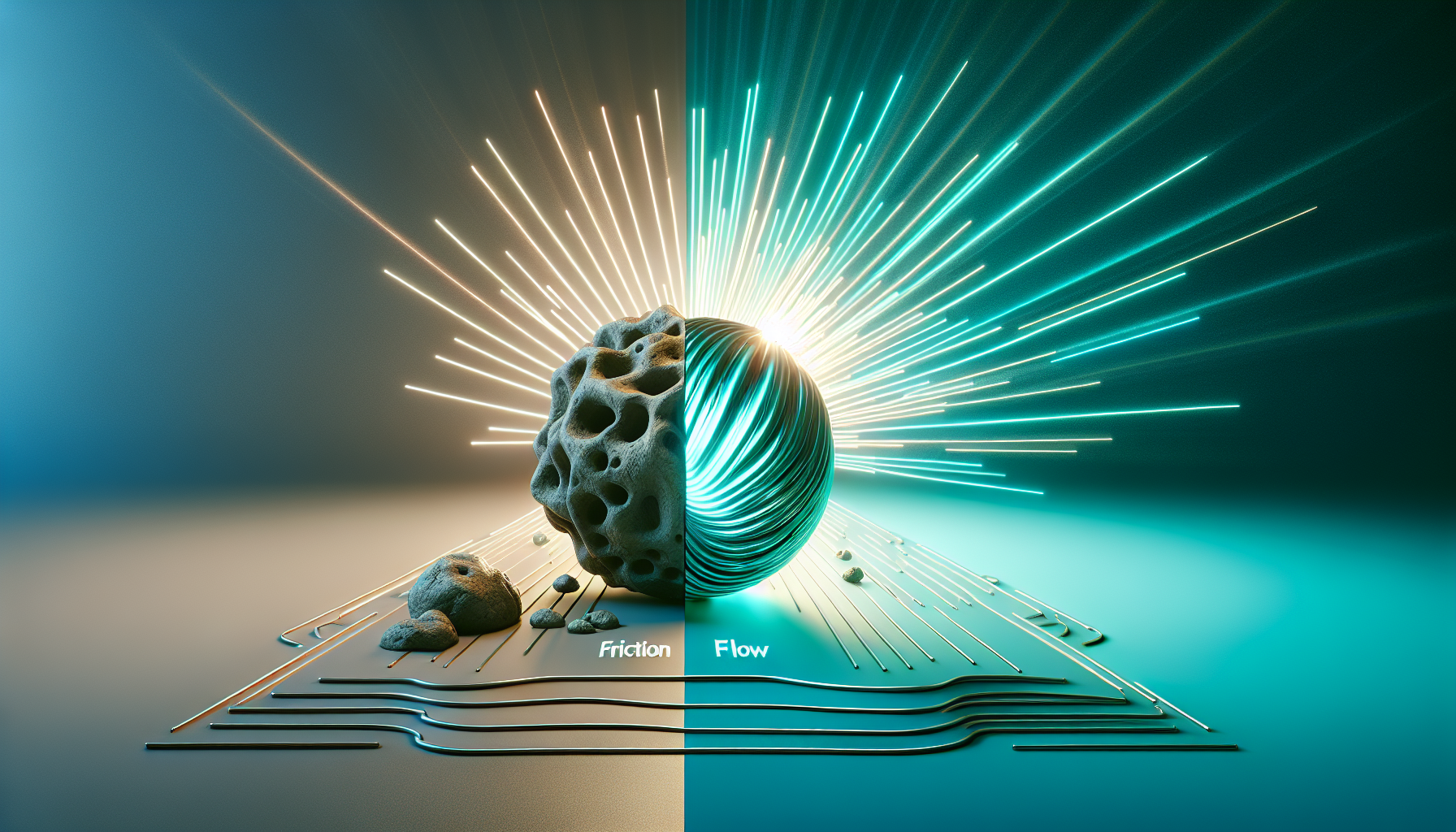
The "120-Second Ugly Start" works because it reclaims the "human" part of the process—the messy, intuitive, and often frustrating spark of an idea.
By leaning into the discomfort of being "worse than the machine" for two minutes, you eventually find the unique angle that the machine could never replicate.
I tried this yesterday with a feature I’d been avoiding for ten days. For the first two minutes, I wrote about how much I hated the topic and how the weather in Marylebone was making me grumpy.
By minute three, I was writing the best paragraph I’ve produced all year. The "trash" provided the soil for the insight to grow.
Reclaiming Your Attention
We don't need more "productivity hacks." We need to stop being afraid of the "itch" of a new task.
Productivity isn't about how much you do; it’s about the gap between "thinking about it" and "doing it." The smaller that gap, the more "alive" your day feels.
When you stop trying to "optimize" the start, you realize that the discomfort is actually the signal that you're doing something worth doing.
If it doesn't feel a little bit "ugly" at the beginning, you're probably just rearranging the furniture in a room you've already lived in.
I’ve deleted the "Energy Trackers" and the "Mood Journals" from my Notion. Now, my dashboard just has a list of things I’m going to start "badly" tomorrow morning.
It’s not as pretty to look at, but for the first time in 2026, I’m actually ahead of my deadlines.
Have you noticed your focus slipping since we started relying on AI to "polish" our thoughts, or is it just me? I’d love to hear how you handle the "ugly" part of starting—let’s talk in the comments.