I Tried Thiccboiyoga for 30 Days. The Results are Actually Shocking.
I Tried Thiccboiyoga for 30 Days. The Results are Actually Shocking.
I’ve spent the last decade treating my body like a glorified vessel for transporting my brain from one meeting to the next.
As a developer, my "optimal state" was usually hunched over a mechanical keyboard, surviving on cold brew and the adrenaline of a failing production deploy.
By February 2026, my back didn’t just hurt; it felt like a legacy codebase that hadn't been refactored since 2012—stiff, brittle, and prone to catastrophic failure if I moved too quickly.
Then I found a thread on r/yoga about "Thiccboiyoga." At first, I thought it was a meme, a TikTok trend designed for people who look like they belong in a gym supplement ad.
But as I scrolled through the stories of guys who looked exactly like me—broad-shouldered, carrying a "desk-job gut," and possessing the flexibility of a dry twig—I realized this wasn't a joke.
It was a movement for the rest of us who felt alienated by the $100-leggings-and-green-juice version of wellness.
I decided to commit to 30 days of this specific practice. I didn't tell my coworkers, and I certainly didn't post a "Day 1" photo on Instagram.
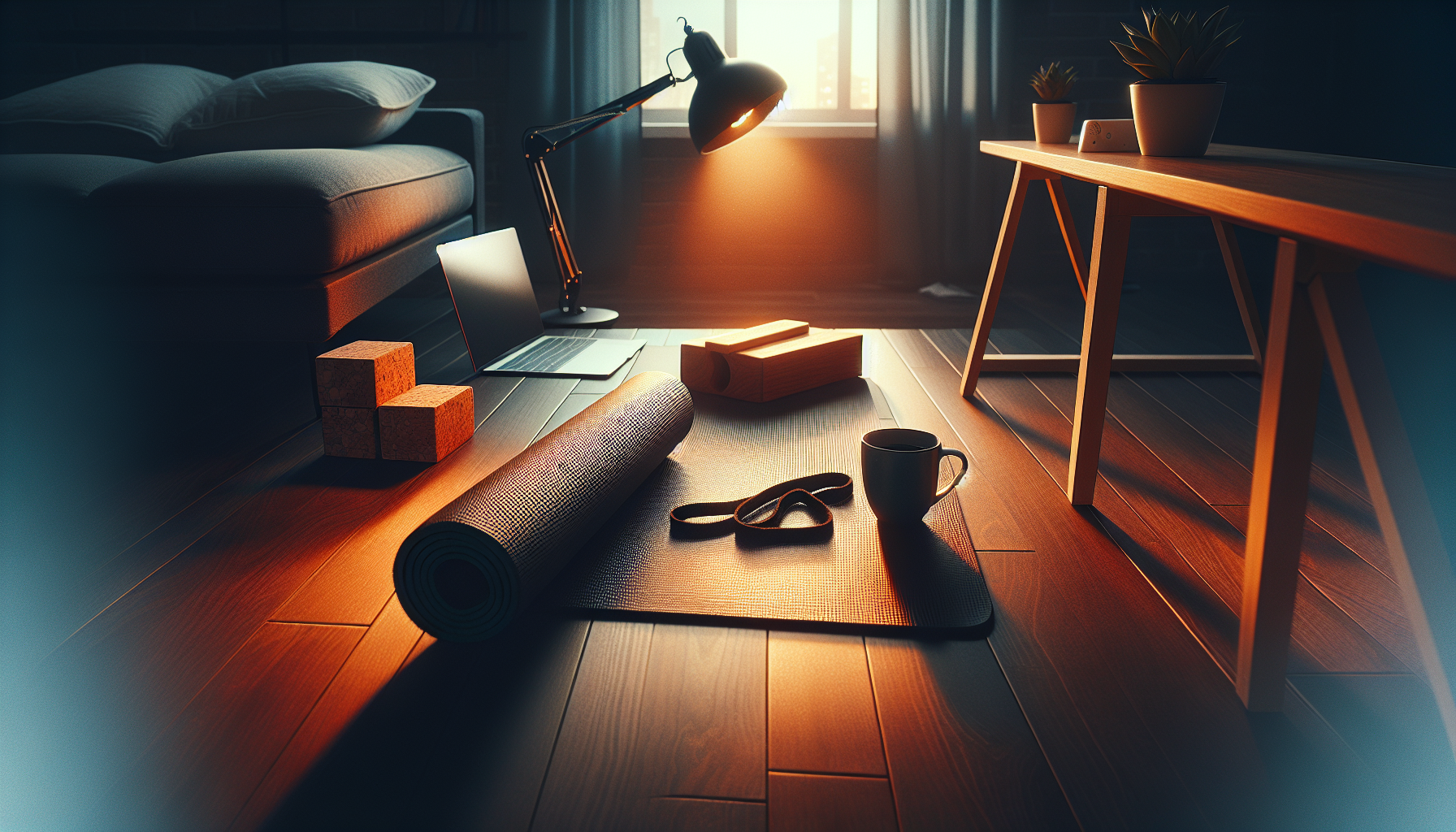
I just rolled out a mat in the corner of my home office and prepared to fail.
What happened over the next four weeks didn't just change my posture; **it rewired how my brain handles the high-pressure environment of modern software engineering.**
The High Cost of the "Tech Neck" Economy
Before we talk about the yoga, we have to talk about the damage. By 2026, the average software engineer spends roughly 9.5 hours a day in a seated position.
We call it "Flow State," but our nervous systems call it "Chronic Compression." We are literally **fusing our vertebrae together while we optimize our CI/CD pipelines**, and the mental toll is even higher than the physical one.
I realized my "brain fog" wasn't a lack of caffeine; it was a lack of oxygen. My chest was so tight from hunching over my laptop that I was taking shallow, "anxiety breaths" for eight hours straight.
When you live in a constant state of low-grade fight-or-flight, your code quality suffers, your patience for junior devs evaporates, and your "creative spark" is extinguished by 2:00 PM.
The "Thiccboiyoga" approach appealed to me because it focused on **mechanics over aesthetics.** It acknowledged that if you have a larger frame or a stiff posterior chain, a standard "Downward Dog" feels less like a stretch and more like a slow-motion car crash.
It gave me permission to use blocks, straps, and modifications that the "yoga influencers" usually hide from their feeds.
Week 1: The Ego Death and the "Snap-Crackle-Pop"
The first seven days were an absolute disaster. If you've ever tried to run a complex Docker container on a machine with 4GB of RAM, you know what my body felt like.
I was shaky, I was sweating within three minutes, and my hamstrings felt like they were made of rusted steel cables. **I spent more time falling out of poses than I did holding them.**
The hardest part wasn't the physical strain; it was the ego. As engineers, we like to be "good" at things immediately. We like systems that are logical and predictable.
Yoga is neither. It’s a messy, iterative process of failing until you suddenly find a millimetre of new space.
I had to learn to **debug my own movement patterns without judging the "errors" I was seeing in the mirror.**
By Day 5, something weird happened. I was in a modified "Cobra" pose, and my spine made a sound like a bag of potato chips being crushed.
For the first time in three years, the dull ache between my shoulder blades—my "permanent stress knot"—simply vanished.
I went back to my desk and wrote 300 lines of clean, bug-free Python without needing a single break.
The Gravity-Assisted Protocol: A Framework for Stiff Humans
Through trial and error, I developed what I call **The Gravity-Assisted Protocol.** This isn't about being a "yogi"; it's about using physics to reclaim your range of motion.
If you’re a developer who feels like a "thicc boy" (even if it's just in spirit), this is the mental model you need to follow. Forget the fancy names; focus on the data points of your own body.
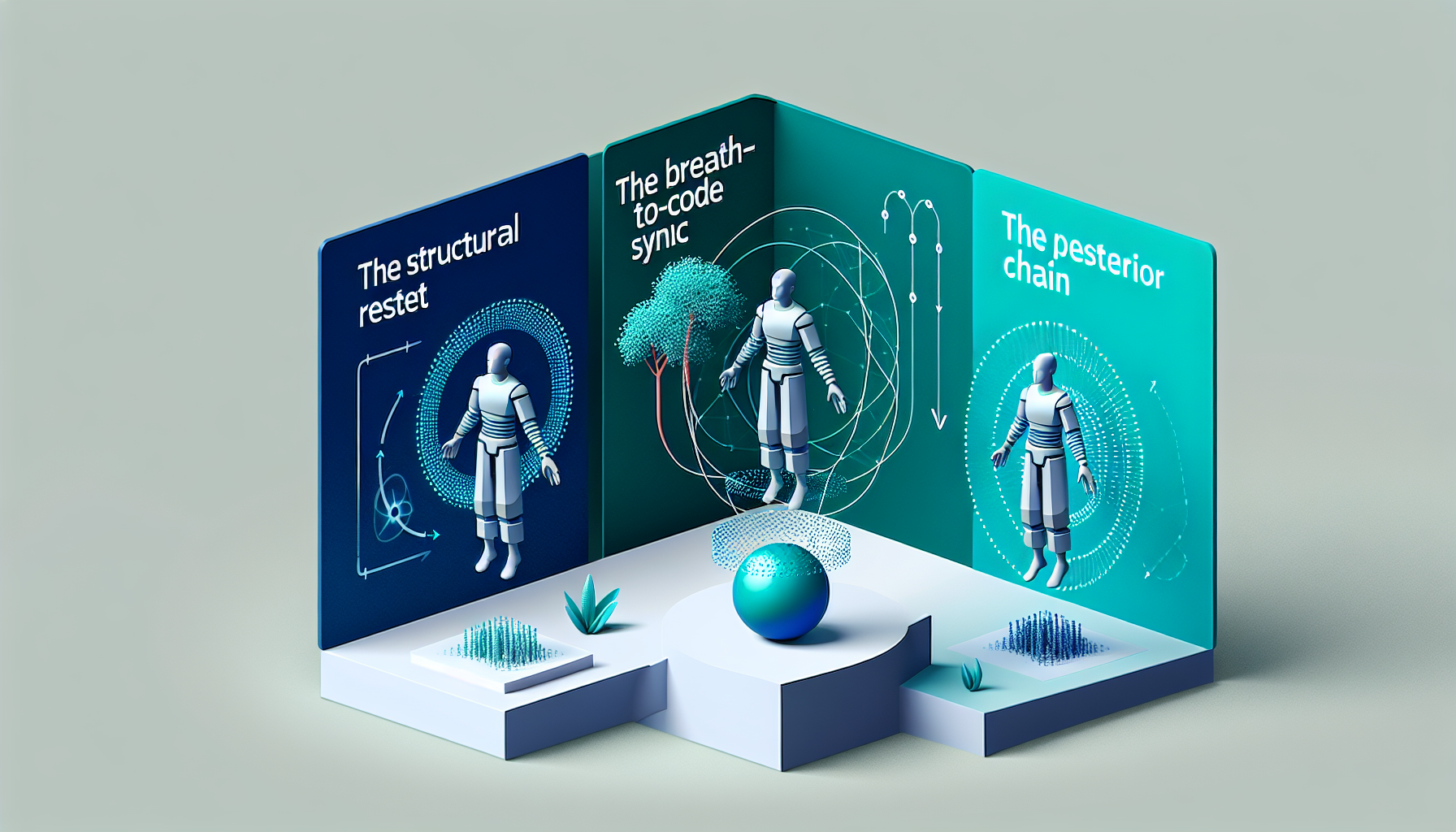
Step 1: The Structural Reset (Compression Management)
Most of our pain comes from compression. We compress our spines while sitting, our wrists while typing, and our thoughts while multitasking.
The first step of the protocol is **de-loading the system.** This means using props—books, blocks, or even the edge of your couch—to take the weight off your joints so the muscles can actually relax.
Instead of trying to touch your toes, you put your hands on a chair and let your head hang.
**The goal is to create space between your vertebrae, not to win a flexibility contest.** In my 30-day trial, I found that five minutes of "passive hanging" in the morning reduced my afternoon back pain by nearly 70%.
It’s the physical equivalent of clearing your cache before starting a new build.
Step 2: The Breath-to-Code Sync (Nervous System Regulation)
This was the "shocking" part of the results. I started practicing "box breathing" while holding difficult poses.
If I could breathe calmly while my quads were screaming, I could breathe calmly when a deployment failed in production. I began to see **yoga as a sandbox for stress testing my nervous system.**
I noticed that during "Thiccboiyoga," I was forced to focus on the present moment because the physical sensation was so intense. I couldn't think about my backlog or my 4:00 PM meeting.
For 20 minutes a day, my brain was totally offline from the "Grid." This **mandatory mental downtime** acted as a hard reboot for my cognitive functions, leading to a massive spike in my problem-solving speed.
Step 3: The Posterior Chain Refactor
As "thicc" guys, we tend to be front-dominant. We have strong quads and chests, but our backs and glutes are "asleep" from sitting on them all day.
This protocol focuses on **waking up the dormant muscles** that are supposed to be holding us upright. It’s not about getting "big"; it’s about getting "stable."
By Week 3, I wasn't just more flexible—I was standing differently. I felt taller, more centered, and less "fragile." I stopped reaching for ibuprofen at noon.
When your "chassis" is aligned, the "engine" (your brain) can run at much higher RPMs without overheating.
**The data was clear: my physical stability was directly correlated to my emotional resilience at work.**
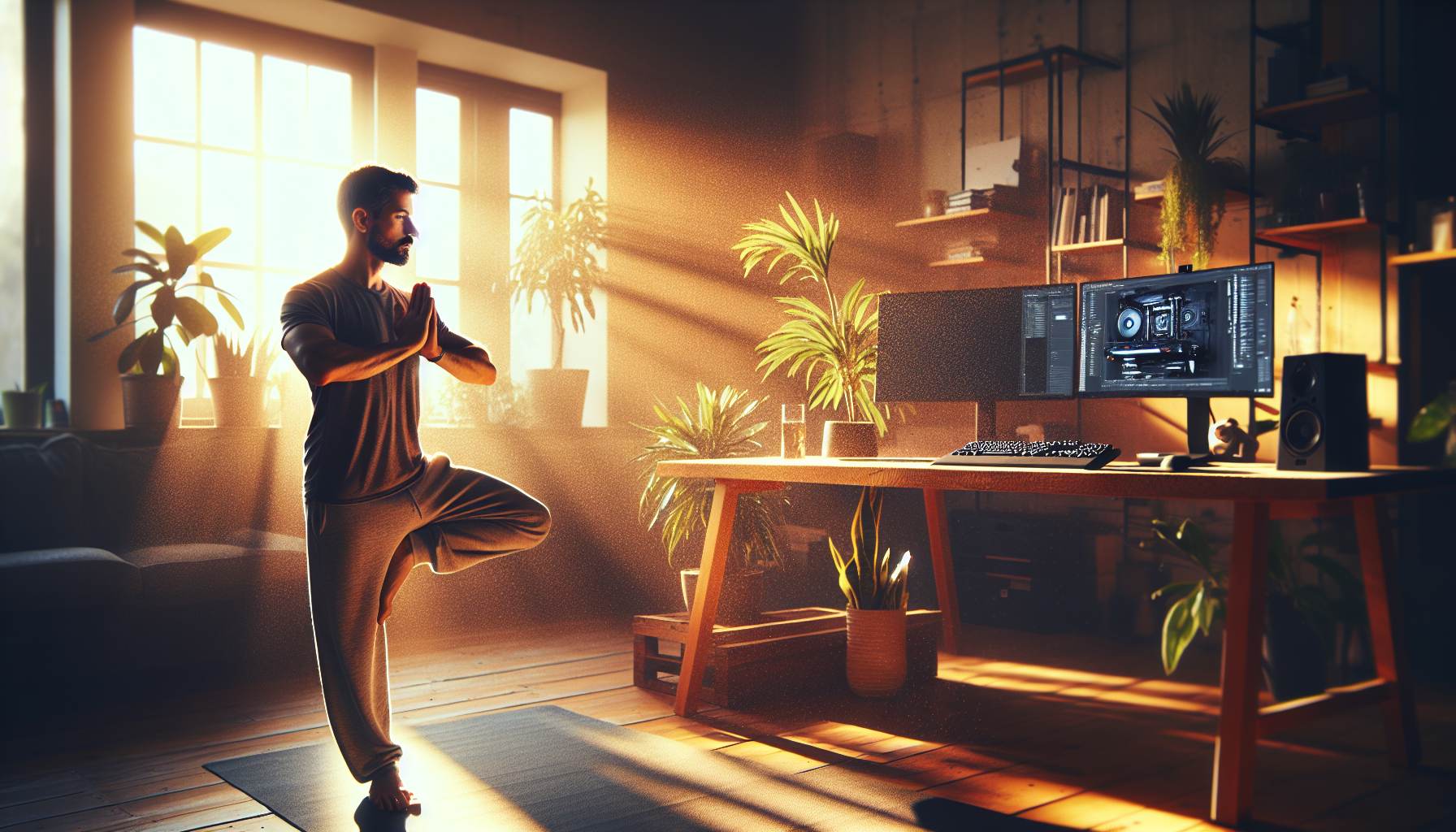
The 30-Day Data Dump: What Actually Changed?
Let’s look at the "Before and After" metrics, because that’s what we care about. By March 12, 2026—exactly 30 days after I started—the results were undeniable.
I hadn't lost a ton of weight (maybe 4 lbs), but the **composition of my daily experience had shifted entirely.**
* **Sleep Quality:** My Oura ring showed a 22% increase in REM sleep. I wasn't tossing and turning to find a "painless" position anymore.
* **Focus Duration:** I could sit in a deep work session for 90 minutes without the "fidget-factor" kicking in. My body was finally comfortable being still.
* **The "Vibe" Shift:** My partner noticed I was less "snappy" after work. I wasn't carrying the physical tension of the office into our dinner conversations.
The most shocking result? **I actually looked forward to it.** For a guy who hated "traditional" exercise, the 20 minutes on the mat became my favorite part of the day.
It was the only time I wasn't being asked for a feature, a fix, or a status update. It was just me, gravity, and the slow, steady progress of a body being reclaimed.
Real-World Application: Try the "10-Minute Debug" Today
You don't need a 30-day retreat or a $200 membership to start this. If you’re reading this at your desk right now, you can start "refactoring" your body in the next ten minutes.
**The barrier to entry is zero; the cost of inaction is a lifetime of chronic pain.**
1. **The Desk-Edge Down Dog:** Stand up, place your hands on your desk, and walk your feet back until your body forms an "L" shape. Let your chest sink toward the floor. Hold for 60 seconds.
2. **The Seated Spinal Twist:** While sitting in your chair, grab the armrest and look over your shoulder. Imagine you’re wringing out a wet towel. Breathe into your belly.
3. **The 4-7-8 Breath:** Breathe in for 4, hold for 7, exhale for 8. Do this three times. **This is the "emergency stop" button for your stress response.**
These aren't "yoga poses"; they are **maintenance scripts for your biology.** We spend so much time optimizing our code, our hardware, and our workflows, but we ignore the primary machine we use to interact with the world.
If your body is "lagging," your life is lagging.
Reclaiming the "Thicc" Identity
"Thiccboiyoga" taught me that wellness isn't a destination—it’s a commitment to your own "up-time." It’s about admitting that you’ve been neglecting the hardware in favor of the software.
I’m still a "thicc boy," and I still sit at a desk for most of the day, but **I am no longer a prisoner of my own stiffness.**
The "shocking" results weren't about touching my toes or getting a six-pack.
They were about the realization that **physical ease is a prerequisite for mental excellence.** If you want to be a top-tier engineer in 2026 and beyond, you have to stop treating your body like an afterthought.
You have to start the refactor today.
Have you noticed your focus slipping as you spend more time hunched over your screen, or have you found a "weird" movement habit that keeps you sharp?
**I’d love to hear your "body-hacks" in the comments—let’s talk about how we're staying functional in the age of AI.**
Story Sources
From the Author




Hey friends, thanks heaps for reading this one! 🙏
If it resonated, sparked an idea, or just made you nod along — I'd be genuinely stoked if you'd show some love. A clap on Medium or a like on Substack helps these pieces reach more people (and keeps this little writing habit going).
→ Pythonpom on Medium ← follow, clap, or just browse more!
→ Pominaus on Substack ← like, restack, or subscribe!
Zero pressure, but if you're in a generous mood and fancy buying me a virtual coffee to fuel the next late-night draft ☕, you can do that here: Buy Me a Coffee — your support (big or tiny) means the world.
Appreciate you taking the time. Let's keep chatting about tech, life hacks, and whatever comes next! ❤️