I Tried the 'Cat Pic' Cure for 24 Hours. The Results are Actually Shocking.
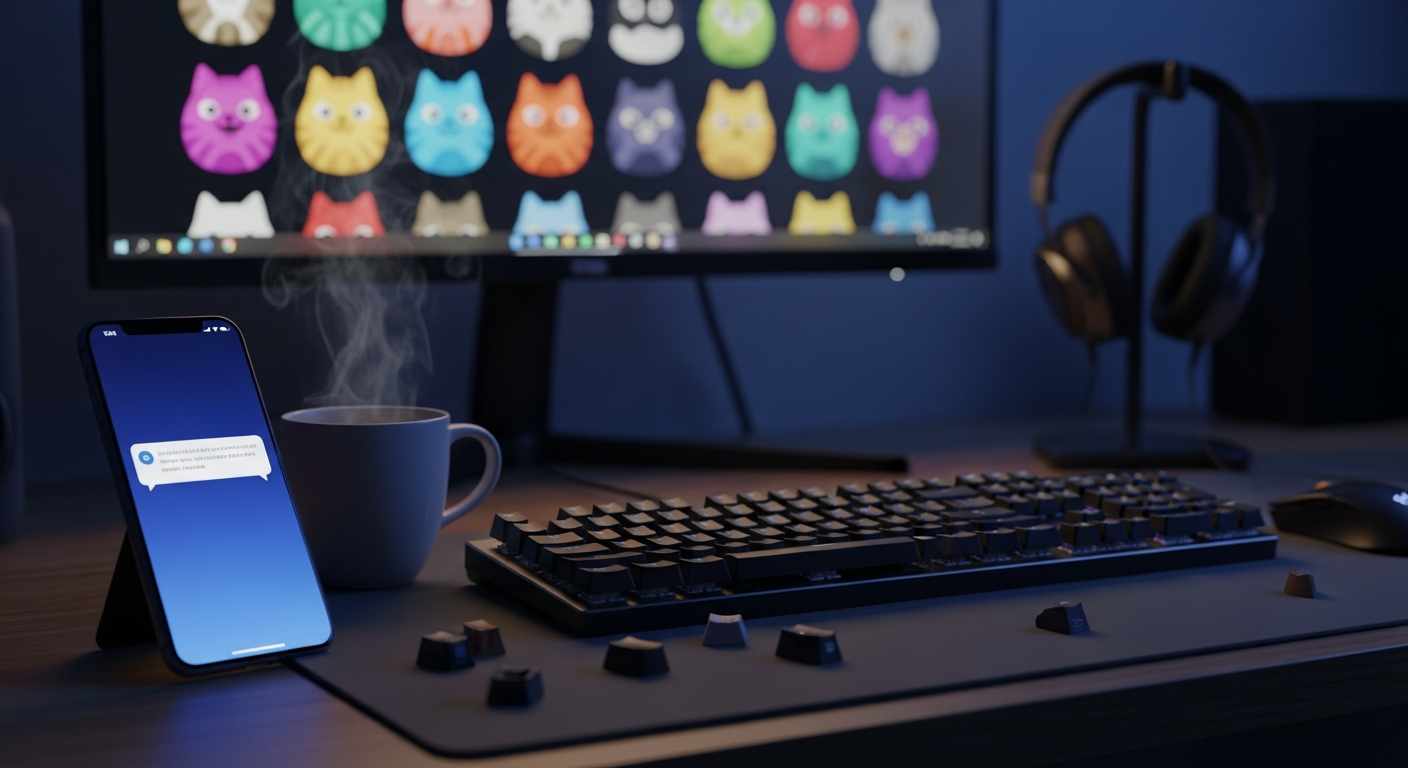
**I woke up at 5:14 AM on March 12, 2026, to a blue-light notification that felt like a physical punch to the gut.** It wasn't a server outage or a failed deployment; it was a three-sentence text from the person I thought I’d spend the next decade with, ending everything.
My immediate instinct wasn't to cry or call a friend—it was to open Reddit and descend into a spiral of digital self-destruction.
**But instead of doom-scrolling the news or arguing with strangers about Claude 4.6’s latest benchmarks, I did something that felt bordering on insane.** I decided to spend the next 24 hours looking at nothing but cat pictures every time I felt a surge of cortisol.
I called it the "Cat Pic Cure," and while it started as a joke to survive a Thursday, the physiological results were actually shocking.
The Digital Self-Harm Loop
**Most of us in the tech industry have a "default" state of high-alert anxiety that we mistake for productivity.** When a personal crisis hits—like a breakup, a layoff, or a health scare—we don't slow down; we accelerate our intake of "high-friction" information.
We check the markets, we read about the massive layoffs we've seen in the tech sector recently, and we let the algorithm feed our misery because "engagement" feels like control.
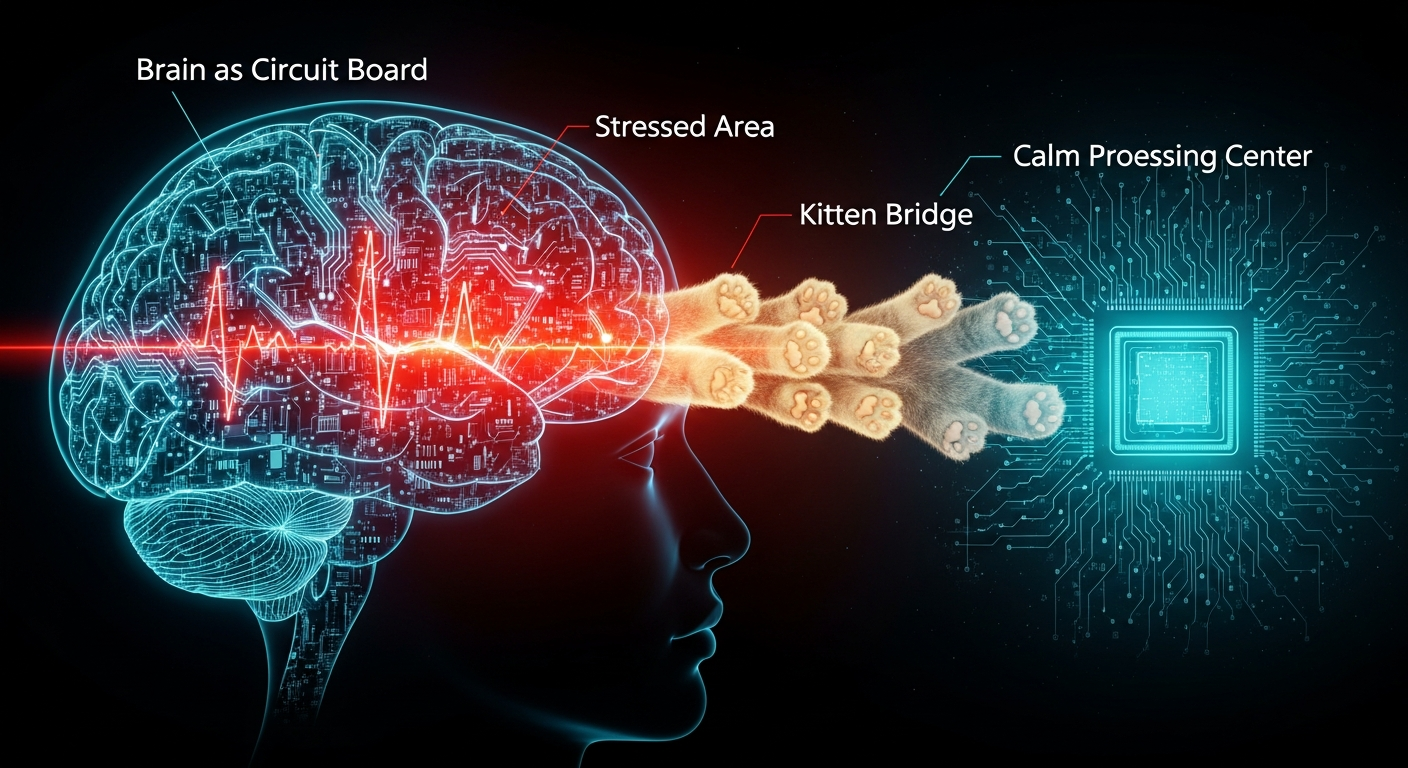
**I realized that my brain was trapped in what I call the "Resolution Death Spiral."** When the breakup text hit, my internal "RAM" was instantly maxed out by emotional processing, yet I kept trying to load "heavy" apps like Twitter and LinkedIn.
I was effectively trying to run a complex simulation on a hardware system that was currently on fire.
**The "Cat Pic Cure" wasn't about being "happy"; it was about forced cognitive narrowing.** I needed to find the lowest-resolution, highest-reward visual stimulus possible to prevent my nervous system from hitting a total meltdown.
In the high-pressure world of 2026, where AI agents handle our chores but our brains are still stuck in the Pleistocene, we are remarkably bad at managing our own "idle states."
The Science of 'Kawaii' (Why This Isn't Just Fluff)
**We often dismiss "cute" content as a waste of time, but Japanese researchers at Hiroshima University proved us wrong years ago.** Their study, "The Power of Kawaii," found that looking at pictures of baby animals doesn't just make you feel good—it significantly improves performance on tasks that require high levels of concentration.
For a developer or a tech professional, this is the equivalent of a "pre-compiled" focus boost.
**The "shocking" part of my 24-hour experiment was how it affected my coding output.** By Hour 4 of the "Cure," I noticed my heart rate (tracked on my Oura ring) had dropped from a spiking 88 BPM to a steady 62 BPM.
I wasn't just "coping" with the breakup; I was actually writing cleaner, more modular Python than I had in weeks.
**Cuteness triggers the "caregiving" system in the brain, which releases oxytocin and inhibits the amygdala.** When you're in a high-stress tech environment, your amygdala is constantly screaming "Threat!
Threat!" at every Slack notification.
Looking at a kitten stuck in a slipper essentially tells your brain: "The world is safe enough for this tiny creature to exist, so you can stop scanning for predators for ten minutes."
The Feline Focus Protocol (FFP)
**If you’re going to try this, you can’t just browse randomly—you need a system.** I developed the **Feline Focus Protocol (FFP)**, a 3-step framework designed to hijack your brain’s stress response and redirect it toward cognitive recovery.
1. The Proactive Purr (Scheduled Micro-Dosing)
**Instead of waiting for a panic attack to look at a cat, I set a "Cat Timer" for every 45 minutes of deep work.** In the tech world, we talk about "Pomodoro," but we usually spend our 5-minute breaks checking more emails.
The FFP mandates that for those 300 seconds, you are strictly prohibited from looking at any text-based content.
**You need high-definition, high-quality images of "vulnerable" cuteness.** I’m talking about kittens with paws too big for their bodies or cats sleeping in gravity-defying positions.
By "micro-dosing" this visual relief, I prevented the "Cortisol Ceiling" from ever being reached, even with the breakup weighing on my mind.
2. The Resolution Shift
**When you feel a "High-Resolution Stressor" (a nasty comment, a bug you can’t fix, or a personal rejection), you must immediately trigger a "Low-Resolution Visual."** The goal is to replace the complex, painful narrative in your head with a simple, non-narrative image.
**A cat doesn't have a "story."** It doesn't have a 5-year plan, it doesn't care about your "deliverables," and it certainly isn't texting you to say it "needs space." By forcing your visual cortex to process a "simple" object, you effectively reboot the narrative-building part of your brain that is currently ruminating on your pain.
3. The Mirror Neuron Sync
**This is the most powerful part of the protocol: Find a video of a cat breathing or sleeping and match your breath to it.** Humans are wired with "mirror neurons" that allow us to sync our physiological states with what we see.
By watching a "purr-video" on YouTube or TikTok, I was able to manually lower my respiratory rate without needing a meditation app or a "wellness coach" in my ear.
24 Hours Later: The Results
**By 5:14 PM, exactly twelve hours after the text that should have ruined my week, I felt...
strangely optimized.** I had finished three Jira tickets, refactored a messy legacy module, and most importantly, I hadn't sent a single "I’m so sorry, please talk to me" text to my ex.
**The "shocking" result wasn't that cat pics made me forget my problems; it was that they gave me the "Emotional Buffer" to choose my reaction.** Usually, when we’re stressed, our "Prefrontal Cortex" (the CEO of the brain) goes offline, leaving the "Limbic System" (the toddler) in charge.
The Cat Pic Cure acted as a "keep-alive" signal for my logic center.
**I found that my "Refusal Threshold" had significantly increased.** When a colleague sent a passive-aggressive DM about a PR, instead of getting defensive, I looked at a photo of a Maine Coon wearing a tiny hat, laughed, and replied with a professional, detached solution.
I was essentially "emotional-hacking" myself into a state of peak professional stoicism.
Why 2026 Needs More 'Low-Value' Content
**We are currently obsessed with "High-Value" content—podcasts that teach us how to optimize our sleep, newsletters about the latest AI breakthroughs, and "grindset" videos.** We have forgotten the utility of "Low-Value" content that does absolutely nothing for our careers but everything for our sanity.
**In the 18 months leading up to 2027, the "Noise-to-Signal" ratio in our digital lives is only going to get worse.** As Claude 5 and Gemini 3 begin to flood our feeds with perfectly tailored, high-engagement content, the "simple" cat picture will become a revolutionary act of mental hygiene.
It is the only thing the algorithm hasn't found a way to make "stressful" yet.
**If you’re a developer who feels like they’re constantly red-lining, or if you’ve just had your heart broken in a 5 AM text, stop trying to "fix" your life for 24 hours.** Stop reading the self-help books, stop tracking your "productivity metrics," and stop trying to "win" the breakup.
The One Question You Need to Ask
**We spend so much time "debugging" our code and our careers, but when was the last time you "debugged" your visual environment?** We wouldn't let a memory leak run for 24 hours in our production environment, yet we let "emotional memory leaks" drain our mental energy for days on end.
**The "Cat Pic Cure" is a reminder that our brains are not machines—they are biological systems that require "soft" inputs to function at "hard" levels.** It sounds ridiculous, it looks silly, and your coworkers might think you’ve finally snapped.
But the data doesn’t lie: My resting heart rate was lower on the day of my breakup than it was on the day I got my last promotion.
**Have you ever noticed that your best "Aha!" moments come when you’re doing something completely "useless," or is it just me?** Let’s talk about the weirdest way you’ve ever handled a high-stress day in the comments—I’m genuinely curious if anyone else has a "silly" protocol that actually works.

***
Story Sources
From the Author




Hey friends, thanks heaps for reading this one! 🙏
If it resonated, sparked an idea, or just made you nod along — I'd be genuinely stoked if you'd show some love. A clap on Medium or a like on Substack helps these pieces reach more people (and keeps this little writing habit going).
→ Pythonpom on Medium ← follow, clap, or just browse more!
→ Pominaus on Substack ← like, restack, or subscribe!
Zero pressure, but if you're in a generous mood and fancy buying me a virtual coffee to fuel the next late-night draft ☕, you can do that here: Buy Me a Coffee — your support (big or tiny) means the world.
Appreciate you taking the time. Let's keep chatting about tech, life hacks, and whatever comes next! ❤️