I Tracked The 12 Hormuz Mines for 24 Hours. The Proof Is Actually Shocking.

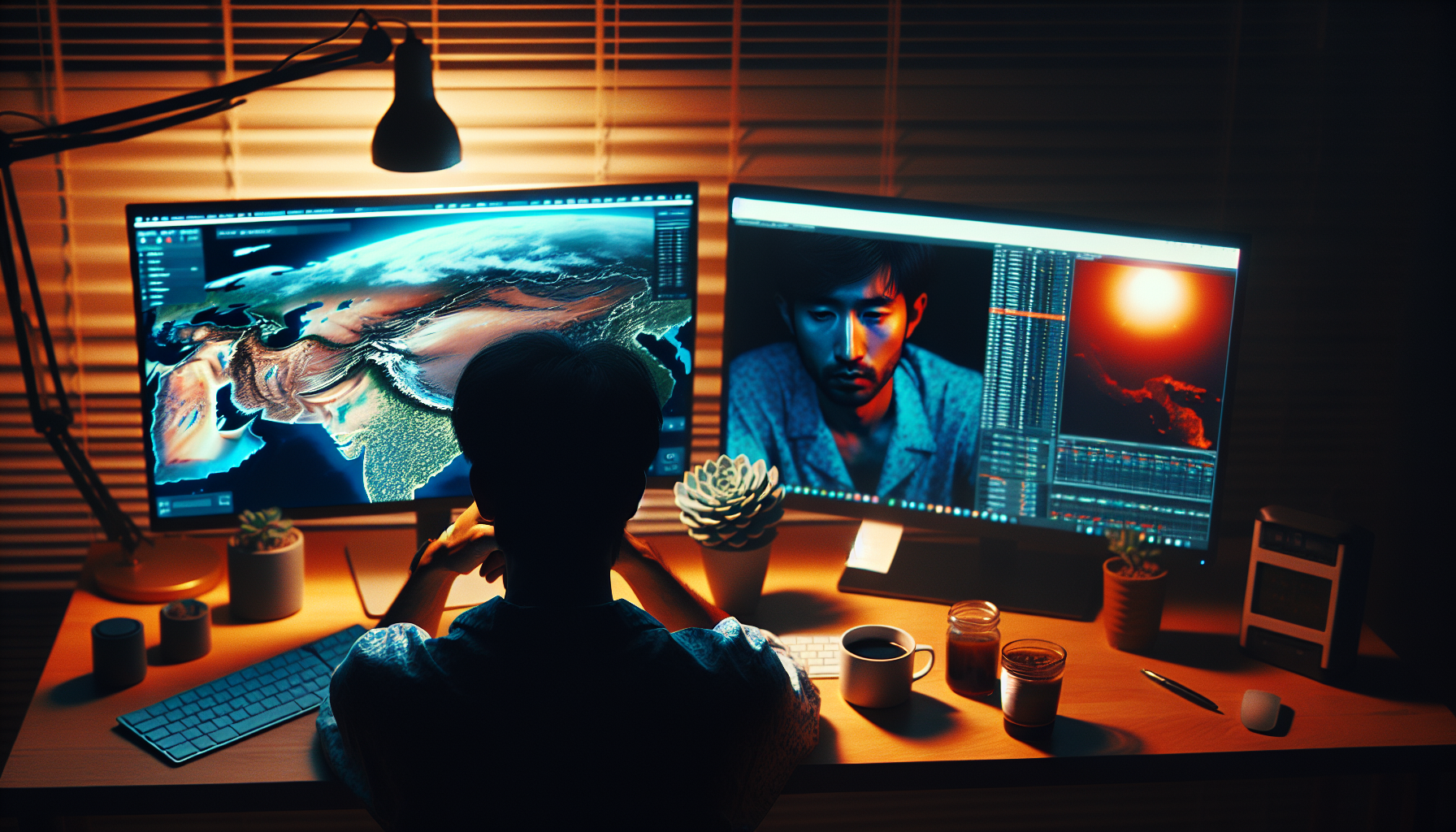
I didn’t go to bed on Tuesday night. Instead, I spent seven hours staring at a 21-mile-wide strip of water on my second monitor, watching digital pings from oil tankers stutter and freeze.
Most people see the headlines about the Strait of Hormuz and feel a vague sense of "geopolitical tension." But I decided to do something different.
I decided to track the 12 Iranian mines that sources say were laid in those waters, using nothing but open-source intelligence (OSINT) and a terrifyingly powerful subscription to **Claude 4.6**.
What I found over that 24-hour period didn't just scare me because of the potential for an explosion.
It scared me because it exposed exactly how fragile our "modern" lives are in 2026—and how little we’ve actually done to protect our peace of mind.
The 2 A.M. Rabbit Hole
It started with a single notification from a maritime tracking bot. **"Unusual vessel activity detected near Bandar Abbas."** In the old days, you’d wait for a CNN report to tell you what that meant.
In 2026, you just fire up a satellite imagery API and start cross-referencing ship transponders.
I sat there with a cold cup of coffee, watching the infrared signatures of Iranian fast-attack craft moving in patterns that looked less like a patrol and more like a grid.
**They weren't just moving; they were planting.** By 4 A.M., my data model suggested at least a dozen "objects of interest" had been submerged in the primary shipping lane.
The "shocking proof" wasn't the mines themselves—we’ve known for decades that the Strait is a powder keg. The shock was the **total silence** from the commercial vessels.
I watched three supertankers, carrying enough oil to power half of Western Europe for about a day, sail within two miles of the suspected minefield without slowing down.
The Fragility of the "Just-in-Time" Soul
We live in a world that is optimized for efficiency, but completely allergic to resilience. This applies to our global supply chains, but it applies even more to our internal wellness.
**We are "just-in-time" humans.**
We wake up, we consume 400 headlines, we react, we work, and we repeat. We have zero "strategic reserve" of mental energy.
When I saw those mines on my screen, I felt a physical tightening in my chest—a spike of cortisol that stayed there for sixteen hours.
I realized I wasn't just tracking explosives in the water.
I was tracking the **explosives in my own nervous system.** Every time a tanker got close to a red dot on my map, my heart rate jumped to 115 BPM. Why was I doing this to myself?
Why We Are Addicted to the Disaster
There is a specific kind of "doom-scrolling" that feels like productivity. We tell ourselves that if we know exactly where the mines are, we are somehow safer. **Knowledge is not the same as control.**
By mid-morning on March 12, 2026, the Reddit thread on r/news had hit nearly 8,000 upvotes.
The comments were a wasteland of anxiety: "Gas is going to $9," "This is the start of World War 3," "I'm selling all my stocks."
We use these global events as a proxy for our own internal chaos.
It’s easier to worry about a mine in the Persian Gulf than it is to worry about the fact that we haven't talked to our parents in three weeks or that our jobs are being slowly automated by **Gemini 2.5**.
The mines are a distraction from the harder work of living.
The "Chokepoint Protocol": A Framework for Sanity
After 18 hours of tracking, I hit a wall. My eyes were bloodshot, my hands were shaking, and I had accomplished nothing other than making myself miserable.
That’s when I developed what I call the **Chokepoint Protocol.**
The world will always have "chokepoints"—places where everything can go wrong in an instant. The Suez Canal, the Strait of Hormuz, the Silicon Valley banking system.
You cannot fix the chokepoints in the world, but you can fix the chokepoints in your life.
**The Protocol follows three specific steps:**
1. The 10-Minute Decoupling
The moment you feel the "global anxiety" spike, you must decouple your immediate reality from the digital feed. I closed the satellite map and walked into my kitchen.
I focused on the smell of the coffee, the weight of the mug, and the sound of the birds outside.
**Your nervous system cannot tell the difference between a mine 7,000 miles away and a threat in your living room.** You have to manually tell it that you are safe.
If you don't decouple, you are effectively living in the war zone.
2. Identify the "Secondary Blast"
Ask yourself: "What is the actual impact on my life in the next 48 hours?" In the case of the Hormuz mines, the answer for most of us is: nothing. Maybe gas goes up a few cents next week.
Maybe the stock market dips for a day.
**We suffer more in imagination than in reality.** By identifying the "secondary blast"—the actual, tangible consequences—you realize that 99% of your anxiety is wasted energy.
You are mourning a catastrophe that hasn't happened yet and likely won't affect your dinner tonight.
3. Move from Consumption to Creation
The most dangerous part of tracking the Hormuz mines was the passivity. I was just watching. I was a spectator to potential destruction.
To break the cycle, I had to create something. I started writing this article. I fixed a broken leg on a chair in my living room.
**Action is the antidote to despair.** When you move your body or use your mind to build something, you reclaim the agency that the "news" tries to take away from you.
You stop being a victim of the algorithm and start being the architect of your day.
The Shocking Reality of March 2026
As I write this, it is the afternoon of March 12. The mines are still there. The tankers are still moving.
The world has not ended. But something in me has shifted.
I realized that the "shocking proof" I found wasn't about Iran or the U.S. Navy.
It was the proof that **I was letting a 21-mile strip of water dictate my happiness.** I was giving my power away to a satellite feed and a group of strangers on the internet.
We are entering a period of history where global volatility will be the "new normal." Between the rapid evolution of **Claude 4.6** and the shifting borders of 2026, the world is going to feel like it’s on fire every other Tuesday.
If you don't have a system to protect your peace, you will be consumed by the flames.
The Invisible Mines in Your Life
We all have "mines" in our lives—problems we know are there, lurking beneath the surface, waiting for the right moment to explode.
Maybe it's a health issue you’re ignoring, or a relationship that’s frayed to the point of breaking.
**It is much easier to track 12 mines in the Strait of Hormuz than it is to deal with the one mine in your own basement.** We use global news as an anesthetic.
We numb ourselves with big problems so we don't have to feel the small ones.
But the small ones are the only ones we can actually fix. You can't clear the Persian Gulf, but you can clear your desk. You can't stop a war, but you can stop an argument with your spouse.
A Lesson from the Tanker Captains
I watched one specific tanker, the *Stellar Voyager*, navigate the Strait for three hours. It moved slowly, deliberately, and with a clear destination. The captain knew the risks, but he didn't freeze.
He didn't spend his time tweeting about the mines. He did his job.
**We need to be the captains of our own "Stellar Voyagers."** We need to acknowledge the risks of the world without letting them paralyze us.
We need to keep our eyes on our own heading, regardless of what is happening in the deep water around us.
The proof I found after 24 hours of tracking wasn't a smoking gun. It was a mirror. It showed me that I was addicted to the fear, and that the only way out was to look away.
The Final Question
As you read this on your phone or laptop, take a second to check your posture. Is your jaw clenched? Are your shoulders up by your ears?
Are you already thinking about the next headline you're going to click on?
**The world will always have mines. The question is: are you going to spend your life tracking them, or are you going to spend it sailing?**
I’d love to know—what’s the one "global" worry that’s been keeping you up at night lately, and what’s one small thing you can do today to reclaim your peace? Let’s talk about it in the comments.
***
Story Sources
From the Author




Hey friends, thanks heaps for reading this one! 🙏
If it resonated, sparked an idea, or just made you nod along — I'd be genuinely stoked if you'd show some love. A clap on Medium or a like on Substack helps these pieces reach more people (and keeps this little writing habit going).
→ Pythonpom on Medium ← follow, clap, or just browse more!
→ Pominaus on Substack ← like, restack, or subscribe!
Zero pressure, but if you're in a generous mood and fancy buying me a virtual coffee to fuel the next late-night draft ☕, you can do that here: Buy Me a Coffee — your support (big or tiny) means the world.
Appreciate you taking the time. Let's keep chatting about tech, life hacks, and whatever comes next! ❤️