I Swapped My Bed for a 'Magic Rug' for 7 Days. I Wasn’t Ready For This.

I spent $3,400 on a smart mattress that tracks my REM cycles, adjusts its firmness via an app, and probably knows more about my heart rate than my doctor does.
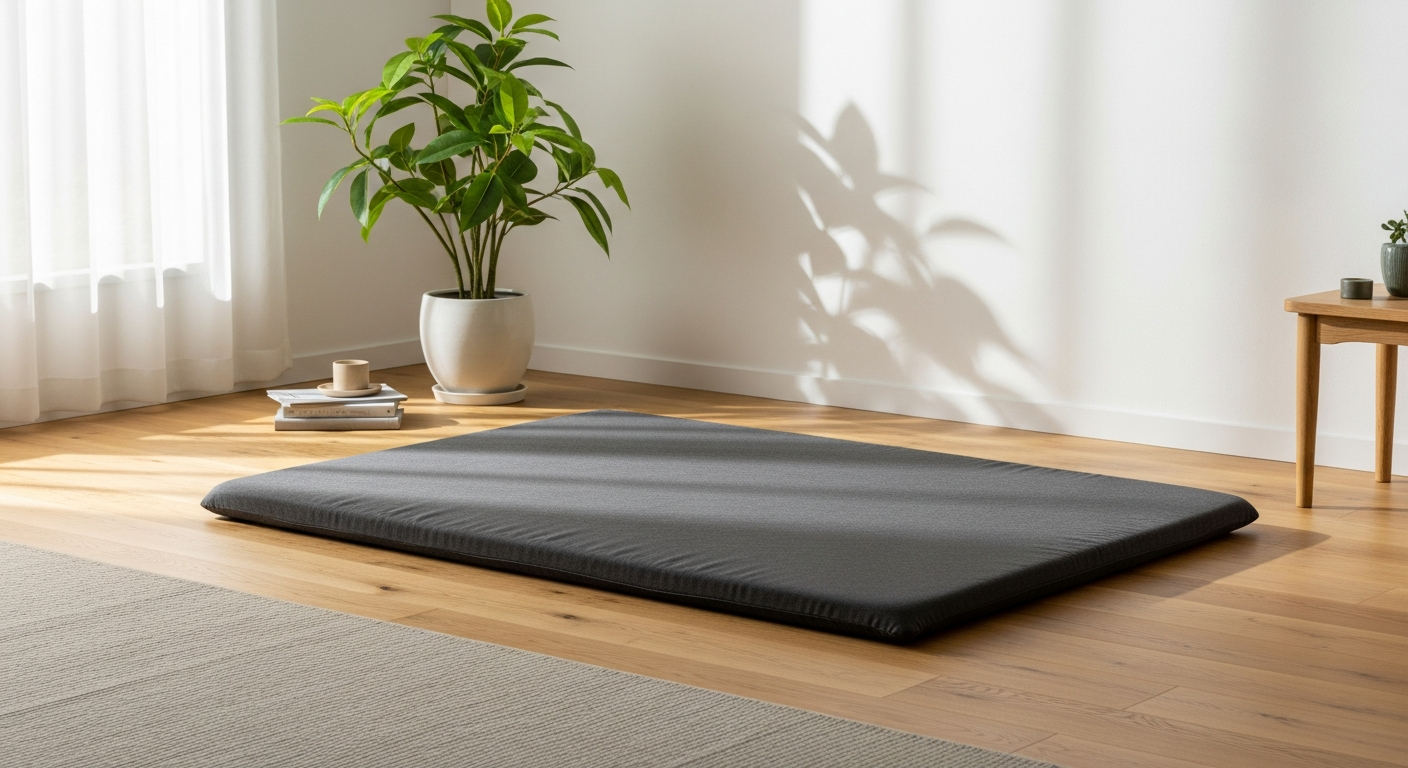
Tuesday last week, I dragged it into the hallway and replaced it with a $140 'Magic Rug' I found on a Reddit thread with 8,000 upvotes.
**I thought I was being a minimalist hero; by 3 AM on the first night, I was convinced I’d made the biggest mistake of my adult life.**
The "Magic Rug" isn't actually magical, of course.
In the corners of r/popular and the biohacking subreddits, it’s known as a Bio-Adaptive Shikibuton—a high-density, charcoal-infused floor pallet that promises to "realign your ancestral posture." **To the rest of us, it’s just a very expensive piece of floor padding.** But after 18 months of waking up feeling like a folded piece of cardboard, I was desperate enough to try anything.
We live in an era where "comfort" is a multi-billion dollar industry, yet we’ve never been more physically miserable.
**As of April 2026, the average office worker spends 11 hours a day in a seated position**, and our beds have become the final, plush cushion in a life that has lost its structural integrity.
I decided to see what happens when you remove the cushion entirely.
The $3,000 Memory Foam Lie
For years, I bought into the idea that a "good" bed was one that felt like a cloud. I wanted to sink in. I wanted the mattress to hug my Every.
Single. Vertebrae. **But here’s the truth I learned the hard way: a bed that hugs you is also a bed that traps you.** When you sink into memory foam, your muscles don't have to do anything.
They go completely slack.
This sounds great in theory, but in practice, it’s like wearing a neck brace when your neck isn't broken.
**Your stabilizing muscles—the tiny ones that keep your spine from turning into a question mark—atrophy from lack of use.** I wasn't resting; I was decaying in a very expensive, very soft tomb.
My body had forgotten how to support itself because it never had to.
I even asked **Claude 4.6** to analyze my sleep data from the last six months of using my "smart" bed.
The AI’s summary was chillingly clinical: "Your sleep architecture shows high frequency of micro-adjustments, likely due to a lack of skeletal feedback.
**Your body is searching for a floor that isn't there.**" That was the "aha" moment that led me to the rug.
Night One: The 'What Have I Done?' Phase
If you decide to try floor sleeping, don't expect a peaceful transition.
**The first night on the Magic Rug felt less like "wellness" and more like a medieval torture session.** Without the 12 inches of foam to distribute my weight, I became acutely aware of every bony prominence in my body.
My hips, my shoulders, my heels—they were all screaming at the floor.
I spent four hours staring at the ceiling, wondering why I had paid $140 to feel like I was sleeping in a parking lot.
**The "comfort trap" is real, and the withdrawal symptoms are physical.** We are so used to artificial softness that the literal Earth feels like an assault.
I almost quit at 4:15 AM, dragging my duvet toward the couch, but I stopped myself.
I realized that the pain wasn't coming from the floor.
**The pain was coming from my own tight hip flexors and weak core finally being forced to stretch against a flat surface.** The rug wasn't hurting me; it was exposing how much I had already hurt myself through years of "comfortable" living.
I stayed on the floor.
Why Your Spine Hates Your Soft Life
By Day 3, something weird happened. I woke up, and for the first time in 2026, I didn't do the "Old Man Groan." You know the one—the series of grunts and pops as you try to unkink your lower back.
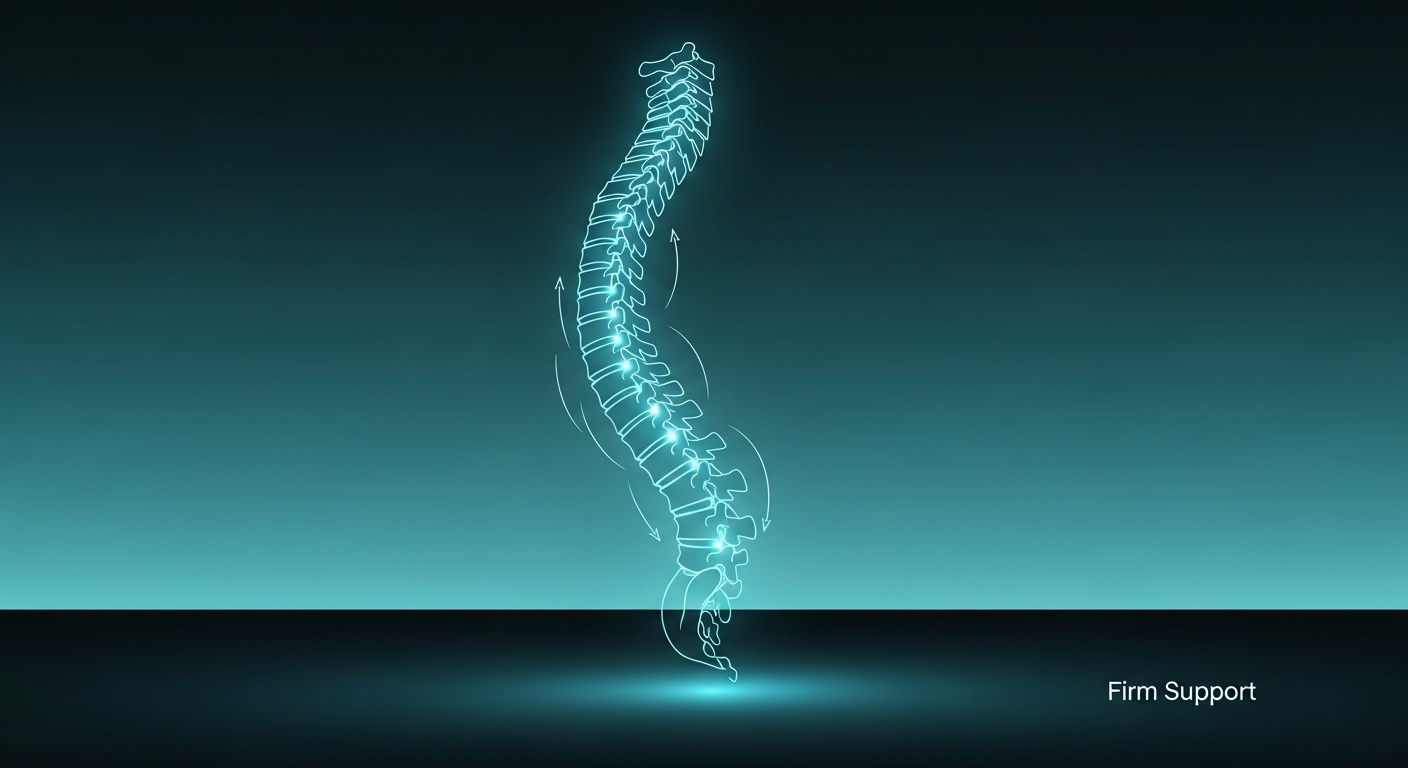
**The Magic Rug had forced my spine into a neutral alignment that my luxury mattress simply couldn't provide.**
When you sleep on a firm surface, your bones take the weight, not your soft tissues.
This allows your muscles to actually relax because they aren't fighting to keep you from rolling into a foam-created "hammock." **It turns out that "firm" isn't a preference; it’s a biological requirement for spinal decompression.**
We've been told that we need "support," but we've confused support with "cradling." **Cradling is for babies; support is for structures.** By providing a zero-give surface, the rug allowed my joints to "reset" into their natural pockets.
It was the most uncomfortable physical therapy I’ve ever had, and it was working.
The 'Grounded Spine' Framework: How to Reclaim Your Posture
If you’re tempted to ditch your bed, don't just throw a towel on the hardwood and hope for the best.
**There is a system to this, and if you skip the steps, you’ll end up back in your memory foam grave within 48 hours.** I’ve distilled my experience into what I call the Grounded Spine Framework.
1. The Surface Tension Gradient
Don't go straight to the floor. Use a transition layer.
**The "Magic Rug" works because it’s high-density but has a 1-inch "give" of organic fiber.** It provides skeletal feedback without bruising your skin.
If you’re starting out, put your new "rug" on top of your old mattress for two nights, then move it to the floor.
2. The Pillow Audit
Everything changes when the floor is flat. **Your 6-inch lofted pillow will now feel like a brick under your neck.** On a firm surface, you need significantly less head elevation.
I swapped my standard pillow for a rolled-up Japanese buckwheat hull pillow. It supports the curve of the neck without tilting the head forward.
3. The 90-Degree Rule
When you’re on the rug, your movement is restricted in a good way.
**You’ll find yourself naturally gravitating toward back-sleeping or a very specific "soldier" side-pose.** This is your body finding the 90-degree alignment it needs. Let it happen.
Don't fight to get back into your "fetal curl"—that curl is what's killing your posture during the day.
The Turning Point: Day 5 and the 'Floor Clarity'
By the fifth morning, the "Magic" finally kicked in. I woke up at 6:00 AM—without an alarm—feeling bizarrely electric.
**There is a theory in some wellness circles called "Grounding," and while the science is still being debated in 2026, the psychological effect is undeniable.**
When you sleep close to the ground, your relationship with your room changes. The ceiling feels higher. The air feels cooler.
**You feel less like a consumer of "sleep products" and more like a biological entity in a habitat.** It sounds "woo-woo" until you feel the clarity that comes from not being buried in polyester and foam.
I also noticed that my "tech neck" (that persistent ache at the base of the skull from staring at **Gemini 2.5** outputs all day) had vanished.
**Because my spine was forced to be straight for 8 hours, my body had "remembered" how to hold my head up during the 16 hours I was awake.** My standing posture improved so much that a colleague asked if I’d grown an inch.
Real-World Application: Can You Actually Do This?
Look, I’m not saying everyone needs to go out and buy a Japanese floor mat tomorrow.
**If you have chronic joint conditions or severe scoliosis, please don't take medical advice from a writer on the internet.** But for the 90% of us who are just "vaguely achy" all the time, the experiment is worth the temporary discomfort.
You don't have to throw away your $3,000 mattress yet. **Try the "Floor Reset" for just one weekend.** Put a firm comforter on the floor, use a thin pillow, and see how you feel on Sunday morning.
You’ll likely feel like you’ve been hit by a truck on Saturday, but by Sunday, you might catch a glimpse of the "Floor Clarity" I'm talking about.
**The Magic Rug isn't about the rug; it’s about the floor.** It’s about the willingness to be uncomfortable for a few nights in exchange for a decade of better movement.
We’ve optimized our lives for "ease," but our bodies were built for "effort." Sometimes, the best way to move forward is to get back down to earth.
The Final Question: Are You Too Comfortable?
We spend thousands of dollars trying to buy our way out of the consequences of our lifestyle.
**We buy expensive chairs to fix our sitting, and expensive beds to fix our sleeping, and expensive shoes to fix our walking.** But what if the fix isn't a better product, but less of it?
I’m on Day 14 now, and the smart mattress is officially in the guest room.
**I don't think I can ever go back to being "cradled" again.** There is a rugged, quiet confidence that comes from knowing you can sleep anywhere and wake up ready to go.
My "Magic Rug" taught me that the best support I could ever have was the support I already possessed.
**Have you noticed your back pain getting worse the "better" your mattress gets, or have you found another "weird" fix that actually worked?
Let's talk about the comfort trap in the comments—I'm curious if I'm the only one who had to hit rock bottom (literally) to feel better.**
---
Story Sources
From the Author




Hey friends, thanks heaps for reading this one! 🙏
If it resonated, sparked an idea, or just made you nod along — I'd be genuinely stoked if you'd show some love. A clap on Medium or a like on Substack helps these pieces reach more people (and keeps this little writing habit going).
→ Pythonpom on Medium ← follow, clap, or just browse more!
→ Pominaus on Substack ← like, restack, or subscribe!
Zero pressure, but if you're in a generous mood and fancy buying me a virtual coffee to fuel the next late-night draft ☕, you can do that here: Buy Me a Coffee — your support (big or tiny) means the world.
Appreciate you taking the time. Let's keep chatting about tech, life hacks, and whatever comes next! ❤️