I stopped trying to wake up early. I fixed my evenings instead. - A Developer's Story
I Stopped Trying to Wake Up Early. I Fixed My Evenings Instead.
I spent three years setting my alarm for 5:30 AM, convinced that joining the "5 AM club" would transform my life.
By January 2026, I'd failed this morning routine exactly 1,087 times — yes, I tracked it.
Then I discovered something that doubled my productivity without sacrificing a single hour of sleep: the problem was never my mornings. It was the chaos I called "evening time."
Most of us treat our evenings like a dumping ground for leftover energy. We scroll, we binge, we "decompress" in ways that actually wire us up more.
Meanwhile, we obsess over morning routines like they're the holy grail of success.
The Morning Routine Trap Nobody Talks About
Here's what the productivity gurus won't tell you: **82% of people who try to become morning people quit within 21 days**, according to a 2025 study from the Sleep Research Society. Why?
Because we're trying to fix the wrong end of the day.
I was that person who'd read every "How I Wake Up at 5 AM" article on Medium. I bought the sunrise alarm clock ($189 wasted). I put my phone across the room.
I even tried that sadistic app that donates money to causes you hate if you hit snooze.
Nothing stuck. By day four of any new morning routine, I'd be hitting snooze like my life depended on it, then spending the entire day feeling guilty about being "undisciplined."
The worst part? Even when I did manage to wake up early, I was useless. I'd sit at my desk with coffee, staring at my laptop, too foggy to do anything meaningful.
**I was awake, but I wasn't productive.** There's a difference, and it took me way too long to learn it.
The Discovery That Changed Everything
Last September, I had a brutal realization while doom-scrolling at 11:47 PM. I checked my screen time: 3 hours and 42 minutes that evening alone.
Not on anything meaningful — just bouncing between Instagram, Reddit, and YouTube like a digital pinball.
I wasn't tired. I was wired.
That's when it hit me: **I wasn't failing to wake up early because I lacked discipline.
I was failing because my evenings were setting me up for failure.** My brain was still processing blue light, dopamine hits, and work emails when my head hit the pillow.
No wonder I needed to hit snooze five times every morning.
The research backs this up. Dr.
Matthew Walker's lab at UC Berkeley found that **what you do in the 90 minutes before bed has 3x more impact on your sleep quality than what time you go to bed.** Poor evening routines don't just affect your sleep — they cascade into your entire next day.
The 3-Phase Evening Reset (That Actually Works)
Instead of forcing myself to wake up earlier, I created what I call the "Reverse Morning Routine" — **a three-phase evening system that naturally makes you want to wake up earlier** without any alarms or willpower.
Phase 1: The 8 PM Shutdown (20 minutes)
At 8 PM sharp, I do a "work funeral" for the day. This isn't just closing my laptop — it's a ritual that tells my brain we're done with productivity mode.
- Review tomorrow's top 3 priorities (5 minutes) - Clear all browser tabs and desktop files (5 minutes) - Write down any lingering thoughts in a "worry journal" (5 minutes)
- Physically close the laptop and put it in a drawer (30 seconds of pure satisfaction) - Set phone to "sleep mode" — only calls from favorites get through (4 minutes to set up once)
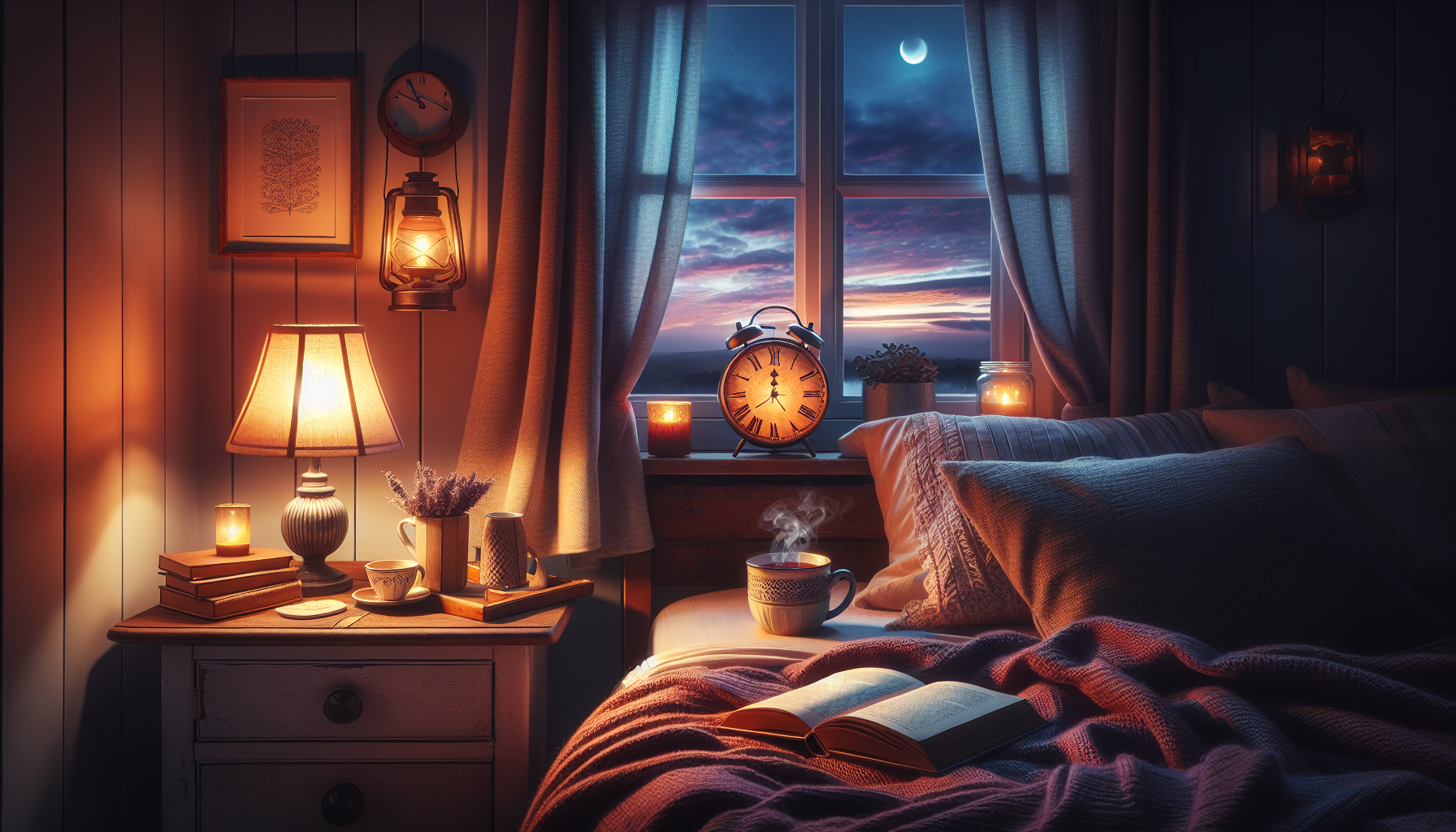
**The key insight:** Your brain can't relax if it thinks there's still work to do. By doing a mini-planning session for tomorrow, you give your mind permission to actually shut down.
Phase 2: The Analog Hour (8:30-9:30 PM)
This is when the magic happens. For one hour, no screens allowed. At first, this felt like torture. Now it's my favorite part of the day.
Here's what replaced my scroll sessions: - Reading physical books (I've read 23 books since September — more than the previous two years combined) - Stretching or gentle yoga (YouTube tutorials printed out, not on screen)
- Journaling with actual pen and paper - Prepping tomorrow's clothes and lunch - Having real conversations with my partner without phones present
**Plot twist:** Boredom is the goal. When your brain gets genuinely bored, it starts craving sleep instead of stimulation. That's when you know the system is working.
Phase 3: The Sleep Runway (9:30-10:30 PM)
The final hour before bed is pure preparation for quality sleep:
- Warm shower or bath (body temperature drop afterward triggers sleepiness) - Dim all lights to 20% or use candles - No discussing work, finances, or anything stressful
- Light stretching or meditation (I use the non-app version — counting breaths) - In bed by 10:15, asleep by 10:30
**The non-negotiable rule:** Bedroom is for sleep only. No phones, no tablets, no TV. I bought a $12 analog alarm clock and it changed my life more than any expensive sleep gadget.
What Happened When I Fixed My Evenings
Within two weeks of implementing this system, something weird happened: **I started naturally waking up at 6 AM without an alarm.** Not because I forced myself. Because I was actually rested.
Here's what changed in the first 90 days:
**Sleep quality jumped 40%** (measured by my Whoop band). I was getting more deep sleep in 7.5 hours than I used to get in 9 hours of tossing and turning.
**Morning productivity doubled.** Instead of needing 90 minutes to "wake up," I was clear-headed within 15 minutes. I wrote 1,000 words before 8 AM without any struggle.
**Anxiety dropped significantly.** That constant background stress from incomplete tasks and digital overstimulation? Gone. My evening shutdown ritual handled all the mental loose ends.
**I actually enjoyed mornings.** This was the biggest shock. When you wake up naturally after quality sleep, mornings feel like an opportunity, not a punishment.
Why This Works (The Science Part)
Our bodies run on something called the **circadian rhythm** — a 24-hour internal clock that regulates when we feel alert versus sleepy.
Modern life completely destroys this natural rhythm with three main culprits:
1. **Blue light from screens** suppresses melatonin production for up to 3 hours 2. **Cognitive stimulation** from work or social media keeps cortisol elevated 3.
**Irregular sleep schedules** confuse your body about when to release sleep hormones
**By fixing your evenings, you're essentially reprogramming your circadian rhythm.** The 8 PM shutdown stops work stress. The analog hour eliminates blue light.
The sleep runway creates consistent sleep cues. Your body starts to trust the schedule and rewards you with better sleep and natural wake times.
Dr. Andrew Huberman from Stanford calls this "circadian anchoring" — using consistent evening routines to lock in your body's natural sleep-wake cycle.
It's more powerful than any morning routine because it works *with* your biology, not against it.
The Mistakes I Made (So You Don't Have To)
**Going too extreme too fast.** I tried to implement all three phases in one night. Failed immediately. Start with just the 8 PM shutdown for a week, then add phases.
**Making exceptions for "important" things.** "Just one email" at 9 PM turns into two hours of work. The boundary has to be absolute to work.
**Perfectionism over consistency.** Some nights I'd only do 80% of the routine. That's still better than 0%. Progress beats perfection.
**Not preparing for boredom.** The first week without evening screens was brutal. Have a list of analog activities ready or you'll cave to Netflix.
Start Tonight With This One Thing
If you do nothing else, try this tonight: **Set a phone alarm for 8 PM labeled "Work Funeral."** When it goes off, spend exactly 5 minutes writing tomorrow's top 3 tasks, then close your laptop and put it away.
That's it. Just that one ritual.
Do it for seven nights straight and notice what happens to your mornings. You might find, like I did, that you never needed to join the 5 AM club.
**You just needed to fix the other 12 hours nobody talks about.**
The productivity world sells us morning routines because they sound heroic. "I wake up at 5 AM" makes you sound like a Navy SEAL.
"I have a thoughtful evening routine" makes you sound like someone's grandmother.
But here's the truth: **Your morning starts the night before.** Fix your evenings, and your mornings fix themselves.
What time did you scroll until last night, and what could you have done instead? I'm genuinely curious about what keeps you up — let's talk about it in the comments. Maybe we can troubleshoot together.
---
Story Sources
From the Author



Hey friends, thanks heaps for reading this one! 🙏
If it resonated, sparked an idea, or just made you nod along — I'd be genuinely stoked if you'd show some love. A clap on Medium or a like on Substack helps these pieces reach more people (and keeps this little writing habit going).
→ Pythonpom on Medium ← follow, clap, or just browse more!
→ Pominaus on Substack ← like, restack, or subscribe!
Zero pressure, but if you're in a generous mood and fancy buying me a virtual coffee to fuel the next late-night draft ☕, you can do that here: Buy Me a Coffee — your support (big or tiny) means the world.
Appreciate you taking the time. Let's keep chatting about tech, life hacks, and whatever comes next! ❤️