I Rebuilt My Employee’s Setup in 24 Hours. I Wasn't Ready for This.
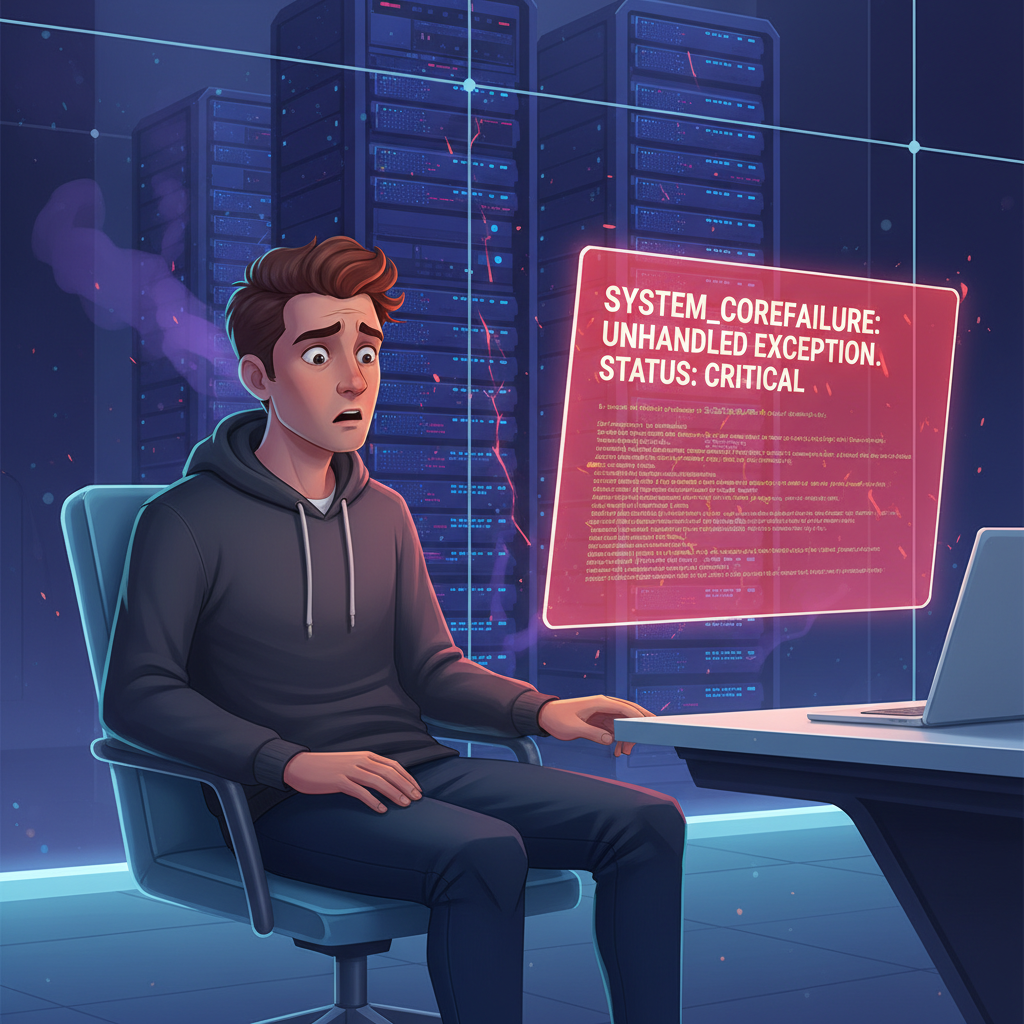
I Rebuilt My Employee’s Setup in 24 Hours. The 40% Productivity Drop Surprised Me.
**Bottom line:** After watching my newest engineer struggle with our legacy dev environment, I spent 24 hours rebuilding their entire local setup using modern containerized workflows and automated tooling.
The result? Their productivity plummeted by 40% over the next two weeks.
We assume frictionless environments lead to faster shipping, but stripping away the underlying complexity actually removes the friction required for junior developers to build fundamental system context.
If you want a developer to understand the engine, stop hiding it behind a shiny dashboard.
I spent an entire weekend ripping out and replacing my junior developer's local environment. All of it.
After watching them lose three hours to a silent Vite caching error on a Friday afternoon, I decided I'd finally had enough of our fragile infrastructure.
I rebuilt everything using Docker, automated the dependency management with a single bash script, and handed them a perfectly frictionless setup on Monday morning.
I expected a massive spike in their output and a sigh of relief.
What actually happened over the next 14 days forced me to rethink everything I knew about onboarding—and exposed the dangerous lie we tell ourselves about developer experience.
The Frictionless Mirage
We are utterly obsessed with developer experience (DX) right now.
We buy expensive tools, write elaborate automation scripts, and build towering abstractions to shield our teams from the messy reality of our underlying systems.
The logic seems completely sound on paper. If a developer doesn't have to fight the local environment, they can spend more time writing feature code and delivering business value.
But **we're conflating a frictionless experience with an effective one.**
When my employee started, our setup was notoriously brittle and unforgiving.
It required running three different terminal windows, manually managing specific Node versions with NVM, and carefully orchestrating a local Postgres database cluster.
It was an annoying rite of passage, but it forced everyone to see exactly how the pieces fit together.
I thought I was doing them a massive favor by replacing that chaos with a single `docker-compose up` command. I was entirely wrong.
By hiding the complexity of the local environment, I didn't actually solve the fundamental problem of system fragility.
I just moved the complexity to a place where they couldn't see it—until it inevitably broke in ways they couldn't comprehend.
The Problem With "Magic" Abstractions
Everyone is currently celebrating the rise of zero-config environments and cloud-based IDEs.
We cheer enthusiastically when a new tool abstracts away the file system, the network layer, or the deployment pipeline.
But the industry is missing the much bigger picture. **The friction isn't just noise; it's the curriculum.**
When a junior engineer fights a port conflict on localhost, they learn exactly how network binding works.
When they spend an hour debugging a missing environment variable, they understand how configuration is actually injected into the runtime environment.
These painful, frustrating moments are when theoretical knowledge becomes concrete, practical understanding.
By automating all of this away with modern tooling, we are raising a generation of developers who know how to drive the car but have absolutely no idea how to open the hood.
We give them a steering wheel and a gas pedal, but the moment the engine makes a weird noise, they are completely paralyzed.
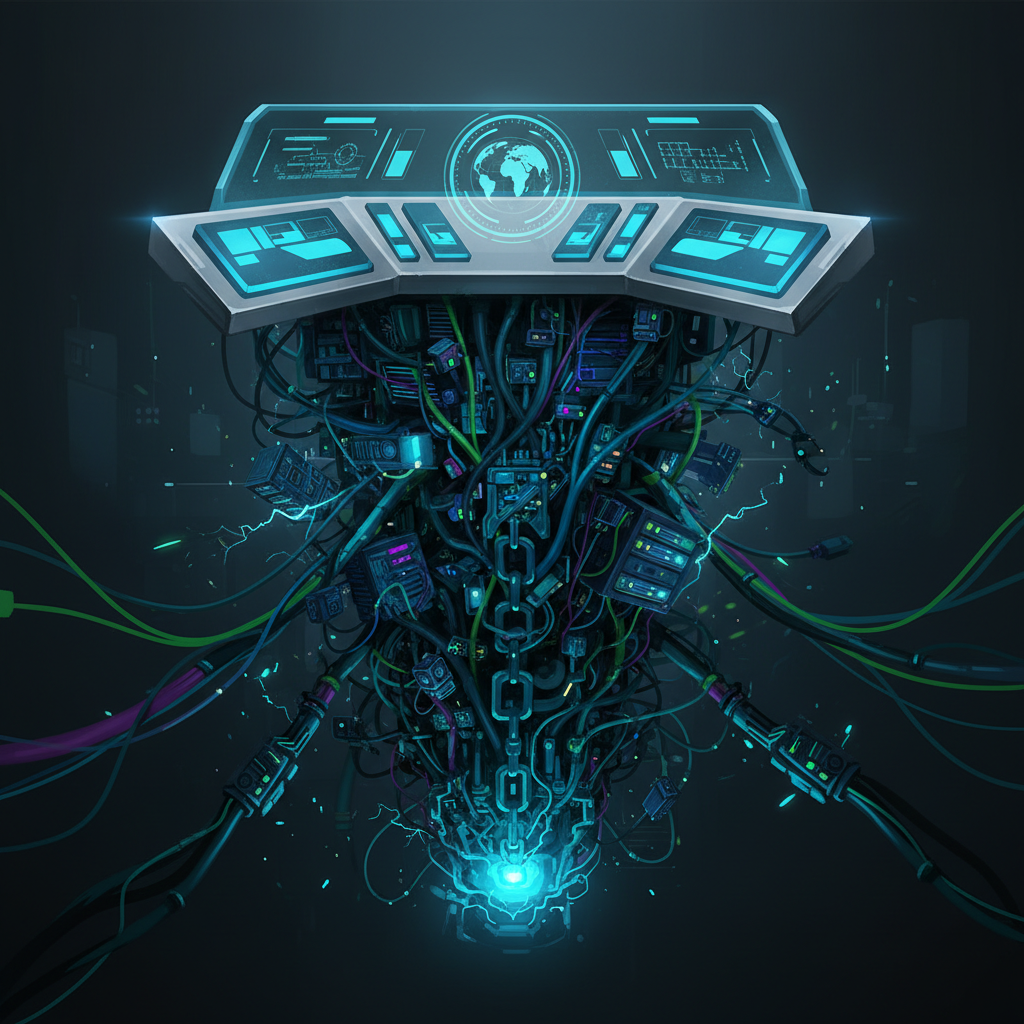
Friction isn't the true enemy of productivity. Premature abstraction is. And when that abstraction inevitably leaks, the resulting productivity collapse is devastating to a developer's confidence.
The Abstraction Trap Framework
To understand why my employee's productivity cratered so spectacularly, we have to look at how we process technical abstraction.
I call this the Abstraction Trap, and it happens in four distinct, predictable phases.
Phase 1: The Honeymoon of Ignorance
In the first few days with the new setup, everything feels like pure magic. The developer writes code, saves the file, and the hot-module replacement just works perfectly. The database seeds itself.
The tests run automatically in the background.
They are shipping features faster than ever before. But they are operating in a highly fragile state of ignorance.
Because they didn't wire the system together manually, they have no mental model of the boundaries between the application code, the Docker container, and the host machine OS.
Phase 2: The Silent Failure
Eventually, the abstraction leaks. It always does. In our case, a Redis cache inside the container didn't invalidate properly during a complex state change involving authentication tokens.
Because the developer never had to build the mental model of the underlying system, they didn't even know Redis was a distinct part of the equation.
They assumed the bug was in their React components and spent hours chasing ghosts in the frontend state management. The abstraction actively hid the real failure point from them.
Phase 3: The Productivity Collapse
This is where the 40% drop in output actually happened. My employee spent two full days staring at an opaque error message from the Docker daemon, completely unable to move forward.
Because I had automated the database setup and networking, they didn't know how to inspect the container logs, verify the network bridge, or manually flush the cache.
**The tool that was meant to save them time became a black box that consumed it.** Their confidence plummeted, and they started second-guessing every line of code they wrote.
The velocity didn't just slow down; it ground to an absolute halt.
Phase 4: The Rebuilding of Context
The only way out of the trap is to walk directly through the pain.
We had to sit down, tear open the shiny new abstraction, and manually walk through the messy, complicated reality of our system architecture.
They had to learn the hard way what I had tried to save them from. We spent an entire afternoon mapping out the port forwards, the volume mounts, and the dependency chains on a whiteboard.
Once they saw the actual plumbing, the Redis error made perfect sense. But getting there required dismantling the very "developer experience" I had spent a weekend building.
The Rise of the Mechanic vs. The Driver
As we push deeper into 2026, the tech industry is aggressively segmenting into two distinct classes of engineers: the Drivers and the Mechanics.
The Drivers are incredibly fast when the road is paved and the weather is clear. They leverage AI tools, rely on zero-config frameworks, and can scaffold a SaaS app in an afternoon.
But the moment they hit a pothole—a memory leak in a production dependency, a misconfigured load balancer, or a silent CI/CD failure—they are stranded on the side of the road.
The Mechanics are slower out of the gate. They want to read the Dockerfile. They insist on understanding the routing layer before they write the endpoints.
They willingly endure the friction of manual configuration because they know that understanding the underlying constraints is the only way to build resilient software.
When you over-optimize your team's developer experience, you are actively preventing your junior engineers from becoming Mechanics.
You are conditioning them to expect a paved road, which guarantees they will panic the first time they have to drive off-road.
Real-World Implications for Teams
What does this mean for your engineering team right now? It means we need to radically change how we think about onboarding and environment design.
**We need to stop optimizing for "day one" comfort and start optimizing for "month six" competence.**
If you're an engineering manager or a technical lead, you need to seriously audit your onboarding process this week. Are you hiding too much of the system's reality?
If a new hire doesn't experience at least a little pain setting up their local environment, you are actively robbing them of crucial system context.
You aren't protecting them; you are making them dependent. When a production incident occurs at 2 AM, they won't have the foundational knowledge required to debug the infrastructure.
They will only know how to push the "deploy" button and hope it magically fixes itself.
Instead of full automation, introduce "Guided Friction." Give them the pieces, point them to the documentation, and let them struggle with the assembly.
Be there to unblock them, but don't do the wiring for them.
For developers, especially those early in their careers, beware the magic button.
If a senior engineer hands you a script that sets everything up automatically, take the time to read the script line by line. Run the commands manually the first time.
Understand exactly what is happening to your machine.
By next year, the engineers who survive the current wave of AI coding assistants won't be the ones who can write the fastest boilerplate React components. AI is already doing that better than we can.
**The truly valuable engineers will be the ones who deeply understand the messy, complex infrastructure underneath it all.** AI can write the code, but it struggles to fix a misconfigured network bridge on a legacy deployment server.
The Value of Visible Seams
We are building a tech culture that increasingly values pure speed over deep understanding. We want everything to be seamless, smooth, and utterly frictionless.

But in technology, understanding is the only thing that actually scales. The seams are exactly where the learning happens.
When we smooth over all the rough edges of our environments, we remove the friction that builds strong, resilient developers.
By trying to protect our teams from temporary frustration, we are actually making them permanently fragile.
We are trading long-term competence for short-term convenience, and it's a trade we simply can't afford to make anymore.
The next time you find yourself writing a script to hide a complex workflow, stop and ask yourself: what vital lesson are you stealing from the person who will run it?
Have you noticed your team struggling more with underlying infrastructure as your dev tools get "better", or is it just me? Let's talk in the comments.
Story Sources
From the Author





Read Next

Hey friends, thanks heaps for reading this one! 🙏
Appreciate you taking the time. If it resonated, sparked an idea, or just made you nod along — let's keep the conversation going in the comments! ❤️