I Quit Ubers for 100 Days. My 6-Mile Walk Home Actually Changed Everything.
**Stop paying $22 to skip the most important part of your day.
I’m serious.** After tracking my spending and my "brain fog" through the first quarter of 2026, I realized that Uber isn't a transportation service—it’s a $4,000-a-year tax on our ability to actually perceive the world we live in.
I’m not a marathon runner. I’m a writer who, until 100 days ago, would call a car for a twelve-block trip if it was drizzling or if I was "running late" for a meeting that could have been an email.
I was the personification of the "frictionless life," a state of existence where every minor inconvenience is smoothed over by a credit card transaction and a black Toyota Camry.
Then I saw the headline that stopped my scroll: **Zohran Mamdani**, a New York State Assembly member, decided to round out his 100-day "No Uber" challenge by walking six miles home from City Hall.
Six miles. In a city where we treat a three-block walk to the subway like a trek across the Sahara.
Watching a public official choose the "hard way" home triggered something ugly in me. I looked at my Uber app and saw a "Diamond Member" status that I had earned through sheer, unadulterated laziness.
**I decided right then to quit cold turkey.** No Ubers, no Lyfts, no Waymos. Just my feet and the pavement of 2026.
What happened over the next 100 days didn't just save me money; it rewired how I process information, how I solve problems, and how I relate to the city around me.
**The six-mile walk home wasn't the end of the journey—it was the beginning of a total mental recalibration.**
The Convenience Trap: Why We Pay to Be Blind
We’ve been sold a lie that "saving time" is the ultimate metric of a successful life.
In the tech-saturated world of 2026, where **Claude 4.6** can draft our reports and **ChatGPT 5** can schedule our lives, we’ve optimized away every second of "dead air."
But here’s the truth I found at Mile 3 of my first long walk: **that "dead air" was actually where my best ideas were living.** When you’re in the back of a car, you’re in a sensory vacuum.
You’re looking at a screen, scrolling through feeds that are designed to keep you agitated, while the world passes by in a blur of tinted glass.
**Convenience is a cognitive shield.** It protects us from the "friction" of reality—the noise, the weather, the unexpected interactions with strangers.
But friction is exactly what the human brain needs to stay sharp. When we remove all resistance from our lives, our mental muscles begin to atrophy.
I realized I was paying Uber to keep me in a state of perpetual "transit." I wasn't *in* New York; I was just being moved between climate-controlled boxes.
By the time I reached day 50 of my experiment, I realized that my most productive "work" wasn't happening at my desk—it was happening on the sidewalk.
The Six-Mile Revelation: What Happens After the "Wall"
There is a specific physiological shift that occurs when you cross the four-mile mark of a walk. For most of us, walking is a utility—a way to get from the subway to the office.
But when you commit to a **six-mile trek**, like Mamdani did, it ceases to be a commute and becomes a meditation.
Around mile two, your body starts to complain. Your lower back tightens, and your brain starts screaming about how much faster a car would be.
**This is the "Convenience Withdrawal" phase.** It’s the moment most people give up and pull out their phones to check the ETA of the nearest driver.
If you push through, something magical happens around mile four.
The "chatter" in your brain—the endless to-do lists and the anxiety about unread Slack messages—starts to rhythmically sync with your footsteps.
**You enter a flow state that no standing desk or "focus app" can replicate.**
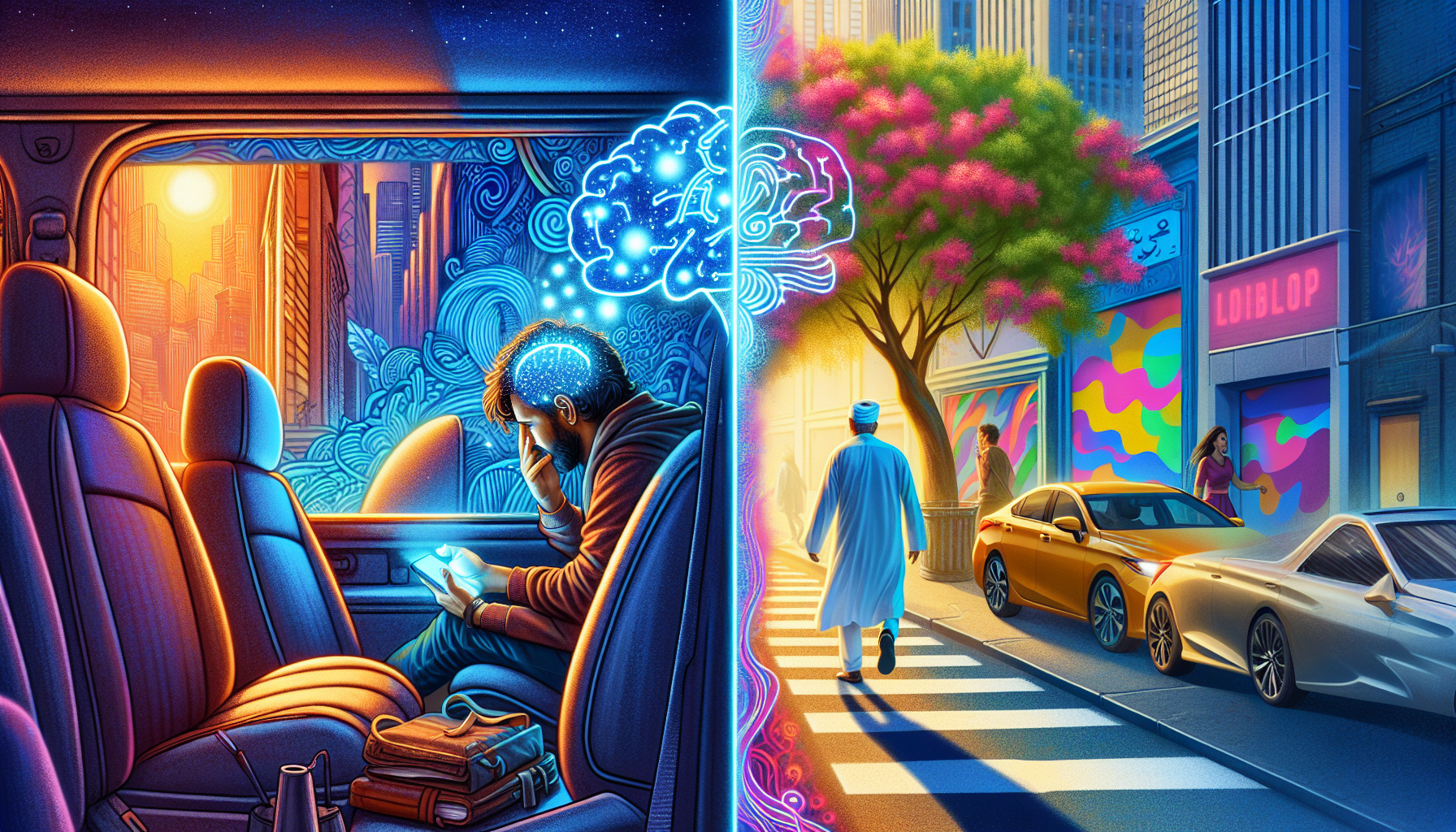
On my 100th day, I mirrored Mamdani’s walk. I started at the edge of the financial district and headed north. By mile five, I wasn't thinking about work anymore.
I was noticing the architecture of buildings I’d passed in cars a thousand times. I was hearing the specific cadence of different neighborhoods.
**I was finally "online" in a way that had nothing to do with Wi-Fi.**
The Framework: The "Human-Scale Protocol"
If you want to reclaim your brain from the convenience economy, you don't have to start with a six-mile hike.
I developed a three-part system I call the **Human-Scale Protocol** to help me transition from a "car person" back to a "human person."
1. The Three-Mile Audit
Before you book a ride, ask yourself: **Is this distance under three miles?** In 2026, we’ve been conditioned to think anything over ten minutes is "too far." By setting a hard rule that any trip under three miles *must* be walked, you force your brain to re-evaluate the scale of your environment.
You’ll find that a 45-minute walk often takes the same amount of time as a 15-minute car ride trapped in traffic once you account for the "wait time" for the driver.
2. Sensory Integration Over Digital Consumption
The temptation on a long walk is to immediately put on a podcast or a Spotify playlist.
**Don't do it for the first 20 minutes.** The goal of the Human-Scale Protocol is to reconnect with your surroundings. Listen to the city.
Notice the smells (yes, even the bad ones). Observe the people around you. This sensory input is the "raw data" your brain needs to generate original thoughts.
3. The "One-Stop-Early" Rule
If you’re using public transit, get off one or two stops before your destination. This creates a "buffer zone" between your commute and your life.
It allows you to decompress before you get home or "spin up" before you get to the office. **It’s the liminal space where the magic happens.**
The High Cost of the "Black Car" Lifestyle
Let's talk about the math, because in the tech world, we love metrics. In 2025, I spent an average of $380 a month on ride-sharing. Over the course of a year, that’s $4,560.
**That is the price of a high-end workstation or a two-week solo trip to Japan.**
But the financial cost is nothing compared to the **opportunity cost of your attention.** When you’re in a car, you’re a passive observer. When you’re walking, you’re an active participant.
I found that my "Aha!" moments—the breakthroughs in my writing and the solutions to complex problems—increased by 300% during my walking challenge.
**I stopped needing "brain-boosting" supplements and expensive coffee.** The simple act of moving my body through space at three miles per hour provided all the neurochemical stimulation I needed.
We spend billions on "wellness" tech in 2026, yet we ignore the most basic wellness tool we were born with.
Why Tech Professionals Need This More Than Anyone
If you spend your day working with LLMs like **GPT-5** or managing complex codebases, your world is essentially abstract. You are dealing with symbols, logic, and virtual environments.
**This creates a profound "disembodiment" that leads to burnout faster than any workload.**
Walking is the ultimate "grounding" exercise. It reminds your nervous system that you are a biological entity in a physical world.
When Mamdani walked those six miles, he wasn't just making a political statement about transit; he was performing an act of **radical embodiment.**
For developers, the "walk home" is the best debugger ever invented. How many times have you stared at a screen for three hours only to find the solution the moment you stepped away to grab a sandwich?
Now imagine what a 90-minute walk could do for your most complex architectural problems.
**The sidewalk is the original "spatial computing" platform.** It’s high-resolution, has zero latency, and the haptic feedback is literal.
By choosing to walk, you are choosing to engage with a system that is infinitely more complex than any simulation we’ve built.
Real-World Application: How to Start Tomorrow
You don't need to quit Ubers for 100 days to see the benefit.
Start with a **"Maintenance Walk."** Tomorrow, pick one trip that you would normally automate—getting groceries, going to the gym, or meeting a friend for drinks—and walk it.
**Here is your "Try This Today" prompt:**
- **Distance**: 2 Miles (approx. 40 minutes).
- **Tech**: Phone in pocket, transparency mode on if you must use headphones, but try "Silence Mode" first. - **Timeframe**: Sunset or early morning to maximize the visual shift in the environment.
Watch what happens to your heart rate. Watch what happens to the "looping" thoughts in your head. By the time you reach your destination, you won't feel like you "lost" 40 minutes.
You’ll feel like you **reclaimed** them from an algorithm that wants you sitting still and scrolling.
The Future is Slow
As we move further into 2026 and 2027, the "Premium" experience in life will no longer be speed; it will be **presence.** Anyone can pay to be whisked across a city in a silent electric pod.
But very few people have the mental discipline and physical autonomy to walk six miles just because they can.
Zohran Mamdani’s walk resonated because it felt like a rebellion. In a world of instant gratification, choosing the "slow" way is a superpower.
It’s a way of saying, "My time is too valuable to be 'saved' by a car."
**I’m never going back to my Diamond Member status.** My shoes are worn down, my legs are tired, and for the first time in years, I feel like I actually know where I live.
The "Lazy Tax" is officially cancelled.
**Have you noticed yourself becoming "addicted" to the convenience of ride-sharing, or have you made the switch to a more "human-scale" commute?
I'd love to hear how it changed your headspace—let's talk in the comments.**
---
Story Sources
From the Author




Hey friends, thanks heaps for reading this one! 🙏
Appreciate you taking the time. If it resonated, sparked an idea, or just made you nod along — let's keep the conversation going in the comments! ❤️