I Quit the 'Meirl' Lifestyle for 30 Days. I Wasn't Ready For This.

I spent three years actively cultivating my identity around being chronically exhausted.
My entire online presence—and eventually my offline personality—was just an endless loop of *me irl* memes about needing a nap, avoiding human contact, and surviving entirely on overpriced iced coffee and anxiety.
I thought I was just participating in the cultural zeitgeist, bonding with the internet over our shared modern malaise. I didn’t realize **I was slowly programming my brain to expect failure.**
It started innocently enough as a coping mechanism.
When the world feels heavy, posting a picture of a raccoon eating a discarded slice of pizza with the caption "my weekend plans" feels like a harmless release valve.
But over time, the algorithm rewarded my dysfunction, and misery loves company.
Before long, my digital avatar became my actual reality, and my baseline state was a performative, ironic exhaustion that I couldn't shake off.
I decided to quit the "meirl" lifestyle cold turkey for 30 days.
I deleted the bookmarks to my favorite cynical subreddits, muted the meme pages, and banned myself from making a single self-deprecating joke.
What happened over the next month completely rewired how I think about identity, focus, and happiness—and exposed **the toxic comfort zone of performative incompetence.**
The Invisible Trap of 'Relatable' Dysfunction
By April 2026, performative incompetence had become my native language.
If someone asked how my week was going, my default response was a manufactured sigh and a joke about my last two brain cells fighting for dominance.
We have completely normalized this behavior across tech culture and beyond, trading genuine connection for the cheap dopamine of shared cynicism.
The problem is a psychological concept known as self-verification theory. Humans have a deep, subconscious need to act in ways that align with their stated identity, even if that identity is negative.
**When you constantly joke about being a chaotic mess, your brain unconsciously nudges you to make choices that keep you a chaotic mess.** You become the punchline you write for yourself.
I realized this trap during a Tuesday afternoon meeting. A colleague asked if I wanted to take point on a new creative project—something I actually really wanted to do.
Instead of saying yes, my mouth went on autopilot: "Oh, you don't want me in charge, my life is held together by duct tape and caffeine right now." I watched the opportunity evaporate.
I had actively sabotaged my own career to stay "on brand."
The Irony Shield: Why We're Terrified of Sincerity
We use "meirl" humor because it feels safe. It is the ultimate preemptive defense mechanism against trying and failing.
If you announce to the world that you are trash, nobody can be disappointed when you deliver a garbage result.
**Self-deprecation isn't humility; it’s a bulletproof vest against the vulnerability of genuine effort.**
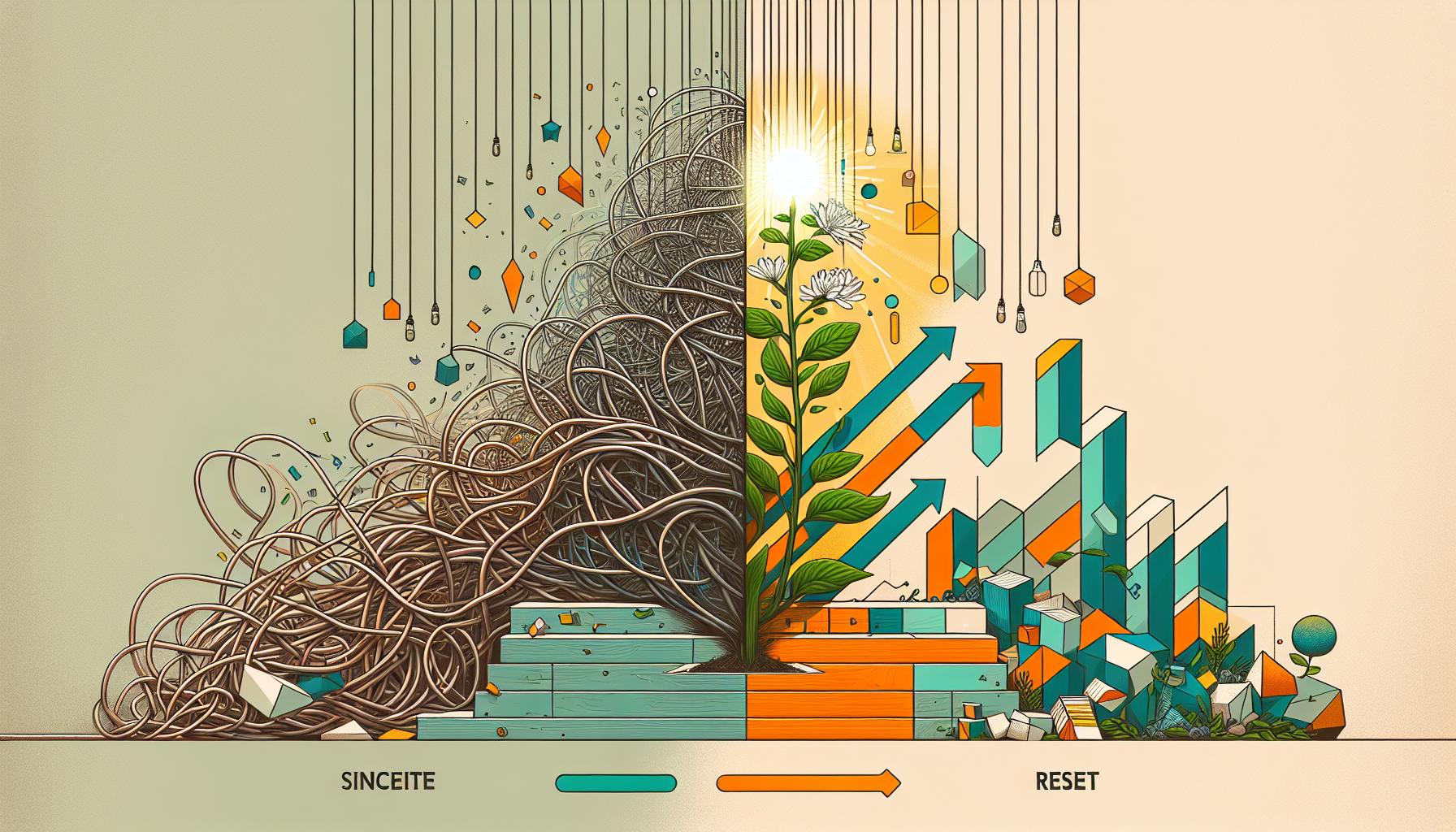
I realized that if I didn't change my narrative right then, 18 months from now—by late 2027—I would still be sitting in the exact same chair, making the exact same jokes about my unwashed laundry and chronic burnout.
I was terrified to actually *try*, because if you try your hardest and still fail, the failure belongs to you.
If you simply refuse to try and laugh about your lack of motivation, you retain a twisted sense of control.
The internet has taught us that sincerity is "cringe." To care deeply about something, to try hard, to admit that you want to be successful, healthy, and happy—that is the most vulnerable thing you can do online today.
But living behind an iron wall of irony is exhausting, and it was quietly draining the color out of my life.
The Sincerity Reset: A 3-Part Framework
I needed a system to break my addiction to my own dysfunction.
I couldn't just tell myself to "be positive"—that kind of toxic positivity feels completely unnatural when your brain is wired for sarcasm.
Instead, I developed what I now call **The Sincerity Reset**, a three-step protocol designed to slowly introduce genuine effort back into my daily routine.
This wasn't about becoming a relentless productivity guru who wakes up at 4:00 AM to take ice baths. It was simply about reclaiming my agency from the memes I consumed.
If you find yourself trapped in the "meirl" doom-loop, here is exactly how I broke out of it over 30 days.
Phase 1: The Irony Fast
For the first ten days, my only rule was a strict prohibition on self-deprecating language, both out loud and online.
I wasn't allowed to call myself a disaster, joke about my lack of sleep, or post memes about wanting to merge with my mattress. If I couldn't say something sincere, I had to stay silent.
The first three days were agonizingly awkward. I realized I literally didn't know how to reply to a simple "How are you?" without defaulting to a joke about my impending mental breakdown.
When someone complimented my work, I had to physically bite my tongue to stop myself from saying, "Thanks, I did it in a blind panic at 2 AM."
Instead, I forced myself to say, "Thank you, I worked really hard on it." **Saying those words out loud felt incredibly uncomfortable, almost arrogant.** But by the end of the first week, I noticed a subtle shift: because I was no longer speaking my exhaustion into existence, I actually felt physically lighter.
Phase 2: Eating the 'Cringe'
Days 11 through 20 were about actively embracing the things I had previously mocked or dismissed as "too earnest." Irony culture teaches us to detach from our hobbies and interests, enjoying things only with a layer of protective sarcasm.
I decided it was time to eat the cringe and let myself openly care.
I started talking about the projects I was genuinely excited about, without downplaying them.
I admitted to my friends that I was trying to learn a new language, and I didn't immediately follow it up with a joke about how I was probably going to quit by Friday.
**I allowed myself to be a beginner, openly and without apology.**
This phase exposed who my real friends were. The people who only wanted to trauma-bond over shared misery found my new sincerity deeply off-putting.
But the friends who actually wanted to see me grow stepped up, offering genuine encouragement instead of just linking another TikTok about giving up.
Phase 3: The Micro-Competence Pivot
The final ten days were focused on rebuilding my identity around capability rather than chaos.
The "meirl" lifestyle thrives on the narrative of "I can't adult today." To counter this, I implemented the Micro-Competence Pivot: deliberately completing one small, entirely manageable task perfectly, and then explicitly acknowledging my own competence.
It started with just making my bed.
Not making it ironically, or making it while complaining about the futility of existence, but simply making it well and thinking, "I am capable of maintaining my environment." **I replaced the dopamine hit of viral complaints with the quiet satisfaction of completed actions.**
I applied this to my work as well. Instead of viewing my inbox as an insurmountable mountain of dread to tweet about, I viewed it as a neutral administrative task.
I began to realize that I wasn't actually a chaotic disaster of a human being; I was just a normal person who had adopted the internet's worst coping mechanism as a personality trait.
The Reality of Day 30 and Beyond
By the end of the 30 days, the transformation in my daily lived experience was profound. I didn't magically become a millionaire, and I didn't suddenly possess boundless energy.
I was still tired sometimes, I still felt anxious, and I still occasionally burned my dinner.
The difference was how I reacted to those moments.
**I no longer viewed my mistakes as permanent character flaws to be broadcasted for internet points.** A burnt dinner was just a burnt dinner, not a defining "meirl" moment that proved my inherent inability to function in society.
When I finally allowed myself to look at the meme pages I had muted, the content didn't feel funny anymore. It just looked incredibly sad.
I saw thousands of brilliant, capable people actively convincing themselves that they were broken, simply because it was the easiest way to get a like and a laugh.
The Cost of the Joke
We are living in an era where our attention and our identities are commodified by algorithms that thrive on our collective fatigue.
Every time we lean into the "meirl" aesthetic, we are giving away a tiny piece of our agency. We are agreeing to the terms and conditions of our own stagnation.
Quitting the performative exhaustion didn't fix the state of the world. The economy is still weird, tech is still volatile, and the future is still uncertain.
But facing those challenges with sincerity, rather than hiding behind a shield of ironic detachment, gave me back my power. **I traded being relatable for being real, and I am never going back.**
I still slip up. Just yesterday, I almost fired off a tweet about how my coffee is the only thing keeping my skeleton from collapsing into dust.
But I caught myself, deleted the draft, and just drank the coffee instead. Sometimes, a cup of coffee is just a cup of coffee.
What about you? What’s the one self-deprecating joke you tell about yourself so often that you’ve actually started to believe it? I'd love to hear about it—drop it in the comments.
***
Story Sources
From the Author




Hey friends, thanks heaps for reading this one! 🙏
Appreciate you taking the time. If it resonated, sparked an idea, or just made you nod along — let's keep the conversation going in the comments! ❤️