I Quit "Bed Rotting" Cold Turkey. I Wasn't Ready For This.
**Riley Park** — Generalist writer. Covers tech culture, trends, and the things everyone's talking about.
I Quit "Bed Rotting" Cold Turkey. I Wasn't Ready For This.
I spent 47 hours in my bed the weekend before last without a single fever.
I wasn't sick, I wasn't recovering from surgery, and I wasn't even particularly tired — I was just **"bed rotting,"** the $0 hobby that has quietly dismantled our collective ability to feel anything at all.
By Monday morning, I realized I hadn't just wasted 48 hours; I had effectively **deleted a piece of my personality** in exchange for a temporary numbing of the world.
The term "bed rotting" isn't new, but by March 2026, it has evolved from a niche TikTok joke into a **global coping mechanism.** It’s the ultimate "meirl" moment—a shared, ironic celebration of complete surrender to the mattress.
We call it "radical rest," but after quitting cold turkey last Tuesday, I’ve realized it’s something much more sinister: it's the **modern equivalent of a lobotomy**, delivered via 120Hz refresh rates and high-thread-count sheets.
I thought quitting would feel like a productivity hack or a "glow-up" moment. I was wrong.
Quitting cold turkey felt like **learning how to be a human being again**, and the withdrawal symptoms were more visceral than anything I’ve experienced in my decade of covering tech culture.
The Lie of "Radical Rest"
We’ve been sold a narrative that staying in bed for 14 hours straight, scrolling through Claude 4.6 summaries and 15-second "corecore" videos, is a form of **self-care.** In a world where the economy is volatile and AI is rewriting our job descriptions every six months, the bed feels like the only safe territory left.
It’s the one place where the **demands of the "real world"** can’t reach you—or so we tell ourselves.
But there is a massive difference between **rest and dissociation.** Rest is restorative; it leaves you with more energy to face the world. Dissociation is a slow-motion exit from your own life.
When you "rot," you aren't recharging your batteries; you’re **draining the acid** until there’s nothing left to power the system.
I realized the "self-care" label was a trap when I looked at my Screen Time report the Sunday before I quit. I had spent **nine hours on Reddit and TikTok** without leaving my duvet.
I wasn't rested; I was vibrating with a strange, hollow anxiety.
My brain felt like it had been **sandblasted by a billion micro-interactions**, and the thought of standing up felt as daunting as climbing Everest.
The 72-Hour Withdrawal
When I decided to quit cold turkey on Tuesday morning, I expected to feel an immediate surge of "Main Character" energy.
Instead, I felt **physically heavy**, as if gravity had been turned up by 20% just for my apartment.
The first 72 hours were a brutal revelation of how much my nervous system had become **dependent on the rot.**
Without the constant stream of low-effort dopamine to distract me, my brain began to "reboot" in ways that were incredibly uncomfortable.
Every repressed thought, every minor stressor about 2027, and every awkward social interaction from 2025 came **rushing back to the surface.** Bed rotting had been my "mute" button, and I had just accidentally turned the volume to 100.
I found myself standing in the middle of my kitchen on Thursday afternoon, staring at a toaster, literally **forgetting how to exist** without a screen in front of my face. The silence was deafening.
This is the part the "productivity gurus" never tell you: when you stop numbing yourself, you have to **deal with the person you've been hiding from.**
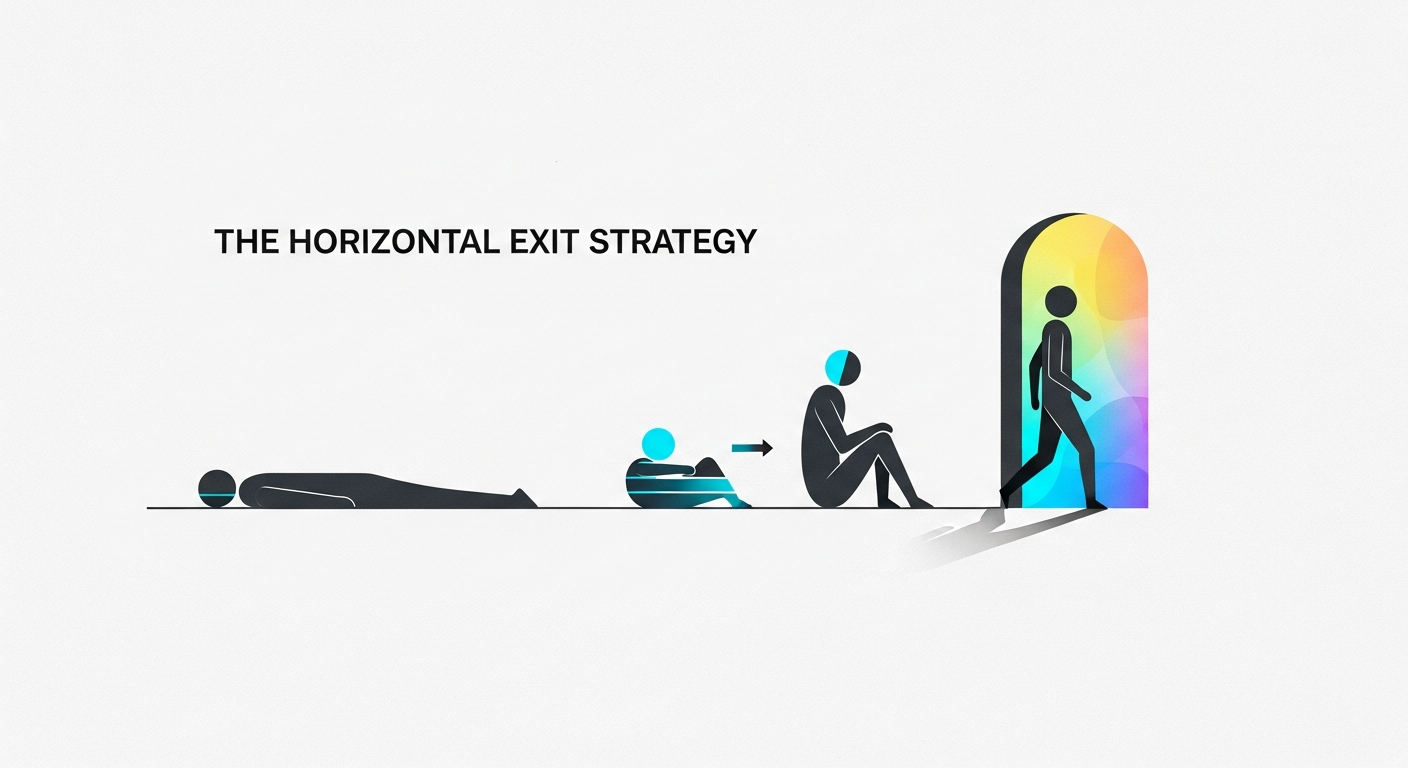
The Horizontal Exit Strategy (HES)
By Friday, I realized that "just getting up" wasn't enough. I needed a framework to bridge the gap between the rot and the real world.
I developed what I call the **Horizontal Exit Strategy (HES)**—a three-part protocol designed to rewire the brain’s relationship with the bedroom.
If you’re currently reading this from under a weighted blanket, feeling like you’ll never be "that person" who goes for a 6 AM run, this system is for you.
It’s not about optimization; it’s about **reclaiming your autonomy.**
Phase 1: The Analog Anchor
The biggest catalyst for a rot session is the **phone-in-bed loop.** If the phone is the first thing you touch, you’ve already lost the day. To break this, I implemented the **Analog Anchor.**
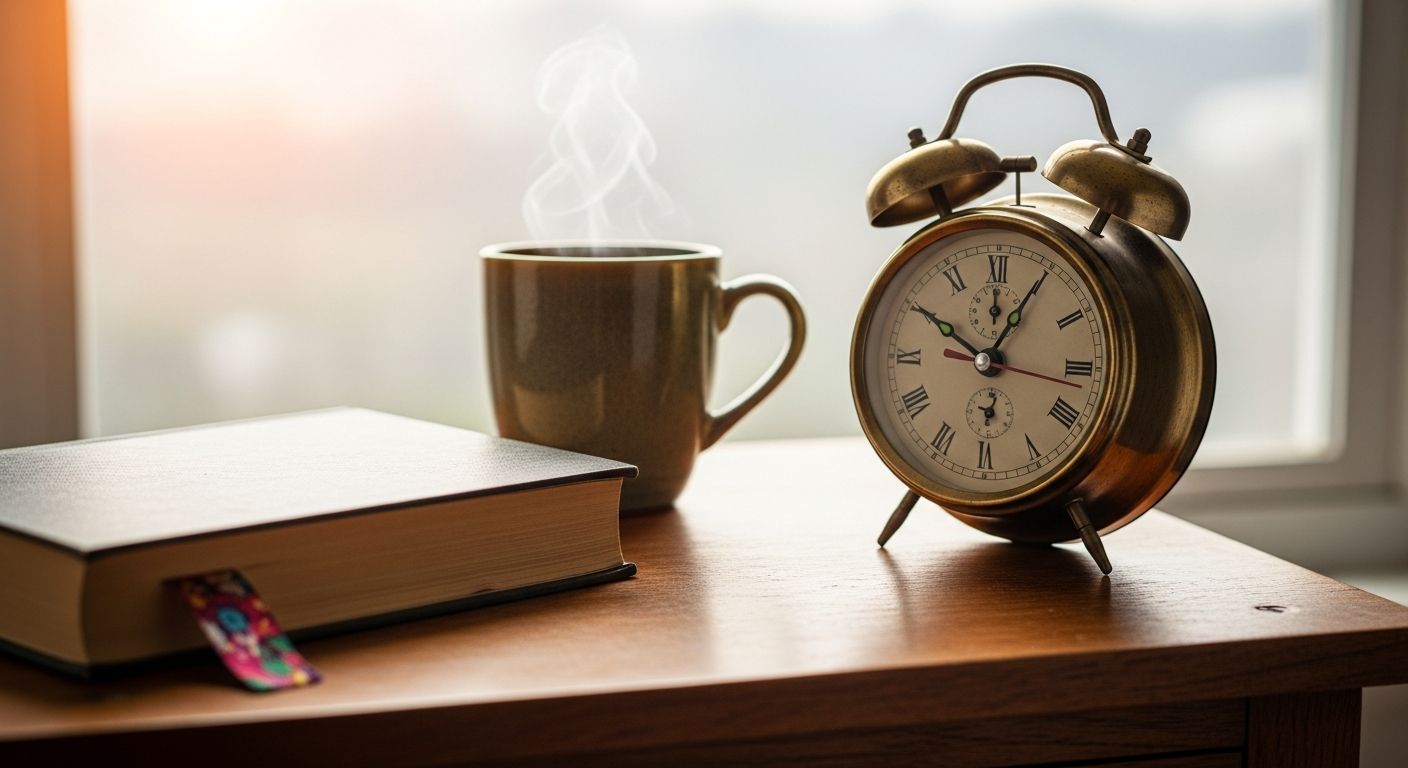
Every night, my phone is moved to the kitchen at 10:00 PM. In its place on the nightstand, I put one physical book, one notebook, and one **mechanical alarm clock.** No "smart" devices.
If I wake up and feel the urge to rot, I have to physically leave the room to find the dopamine. **Distance is the only defense** against the algorithm.
Phase 2: The 5-Minute Friction Rule
The hardest part of quitting the rot isn't the staying up; it's the **initial transition to verticality.** Your brain will tell you that you need "just five more minutes." The 5-Minute Friction Rule flips this.
The goal isn't to be productive; it’s just to be **not in bed.** For five minutes, you must do something that involves physical friction. Wash three dishes. Fold five shirts.
Walk to the mailbox. **Movement is the antidote to the rot**, but it has to be small enough that your brain doesn't view it as a threat.
Once those five minutes are up, the "gravitational pull" of the mattress is usually broken.
Phase 3: The Sunlight Mandate
Bed rotting thrives in the dark. It’s a creature of dim lighting and closed curtains. The Sunlight Mandate requires you to **open every blind in your home** within ten minutes of waking up.
There is actual science here—light hitting your retinas signals your body to stop producing melatonin and start producing cortisol.
By **flooding the "rot zone" with light**, you make it physically uncomfortable to stay there.
You are literally "shining a light" on the habit, making it impossible to ignore the reality of your surroundings.
Why "MeIRL" Culture is Killing Us
The reason bed rotting is so addictive is that it’s **socially validated.** Every time we upvote a meme about "not leaving the house all weekend" or "rotting in the sheets," we are reinforcing a **culture of defeatism.** We’ve made it "relatable" to be miserable, and in doing so, we’ve lowered the bar for what a "good day" looks like.
I’m not saying we don't need rest. We are living through one of the most stressful periods in human history. But we have to stop pretending that **total withdrawal** is a solution.
When we rot, we aren't fighting the system; we’re just becoming **easier to ignore.**
Since quitting, my "Screen Time" has dropped by 60%. But more importantly, my **"Real Time"** has increased. I’m noticing the way the light hits the buildings in my neighborhood.
I’m having actual conversations with the barista. I’m **feeling the boredom**, and in that boredom, I’m finding the spark to actually create things again.
The Return of the Real World
If you feel like you’re stuck in a loop of "sleep, scroll, rot, repeat," I want you to know that the world outside the duvet is **actually worth the effort.** It’s messy, it’s expensive, and it’s occasionally exhausting—but it’s where your life is actually happening.
Quitting cold turkey was the hardest thing I’ve done all year. I wasn't ready for the **vulnerability of being awake**, or the discomfort of having nothing to do but think.
But I also wasn't ready for the clarity. I wasn't ready for the way a simple walk in the park would feel like a **re-entry into a vibrant, high-definition reality.**
The bed will always be there. It’s a great place to sleep. But it’s a **terrible place to live.** Stop rotting, start moving, and remember that "radical rest" shouldn't feel like a prison sentence.
**Have you noticed your sense of time slipping away during "rot" weekends, or have you found a way to balance the rest without the dissociation? Let's talk in the comments.**
---
Story Sources
From the Author




Hey friends, thanks heaps for reading this one! 🙏
If it resonated, sparked an idea, or just made you nod along — I'd be genuinely stoked if you'd show some love. A clap on Medium or a like on Substack helps these pieces reach more people (and keeps this little writing habit going).
→ Pythonpom on Medium ← follow, clap, or just browse more!
→ Pominaus on Substack ← like, restack, or subscribe!
Zero pressure, but if you're in a generous mood and fancy buying me a virtual coffee to fuel the next late-night draft ☕, you can do that here: Buy Me a Coffee — your support (big or tiny) means the world.
Appreciate you taking the time. Let's keep chatting about tech, life hacks, and whatever comes next! ❤️