I Quit Aging for 30 Days. Here's What Nobody Actually Tells You.

**Stop trying to "reverse" your age.
I’m serious.** After thirty days of following a strict $4,200 "biological immortality" protocol this March, I realized that the anti-aging industry isn't actually selling health—it’s selling a high-priced form of dissociation that is quietly eroding our mental clarity.
I spent the last month living like a lab rat.
I took 42 supplements a day, wore a continuous glucose monitor like a tech-bro badge of honor, and tracked my "biological age" using three different AI-driven apps.
By the third week of March 2026, my data said I was twenty-four. My reflection, however, looked like a woman who had forgotten how to actually live a life worth extending.
As a former therapist, I’ve spent thousands of hours helping people navigate the "Anxiety of the Peak"—that terrifying moment when you realize you have more years behind you than in front of you.
We are currently living through a $4.5 trillion global obsession with "fixing" time, but nobody is talking about the psychological debt we're accruing in the process.
The Lie of the "Biological Reset"
We’ve been told that aging is a "disease" that can be cured with enough NAD+ infusions and red-light therapy.
This narrative is a masterclass in marketing, but it’s a disaster for the human psyche because it frames the most natural process on earth as a personal failure.
If you wake up with a stiff neck or a new fine line around your eyes, the industry wants you to feel like you’ve "glitched." **When we treat our bodies like software that needs an update, we lose the ability to inhabit them as homes.** This creates a state of perpetual hyper-vigilance that actually spikes cortisol—the very hormone that accelerates cellular aging.
I see this daily in my clinical work and my writing: people who are so obsessed with "optimizing" their future selves that they are essentially dead in the present.
They aren't eating dinner with friends because of the "glucose spike," and they aren't staying up late to watch the stars because it will "ruin their deep sleep architecture."
Why 2026 is the Loneliest Year to Get Old
We are living in an era of unprecedented technological "solutions" for our mortality.
With the release of Gemini 2.5 and Claude 4.6, we can now simulate our health trajectories with terrifying precision.
We can see exactly how our lifestyle choices today will impact our mobility in 2045.
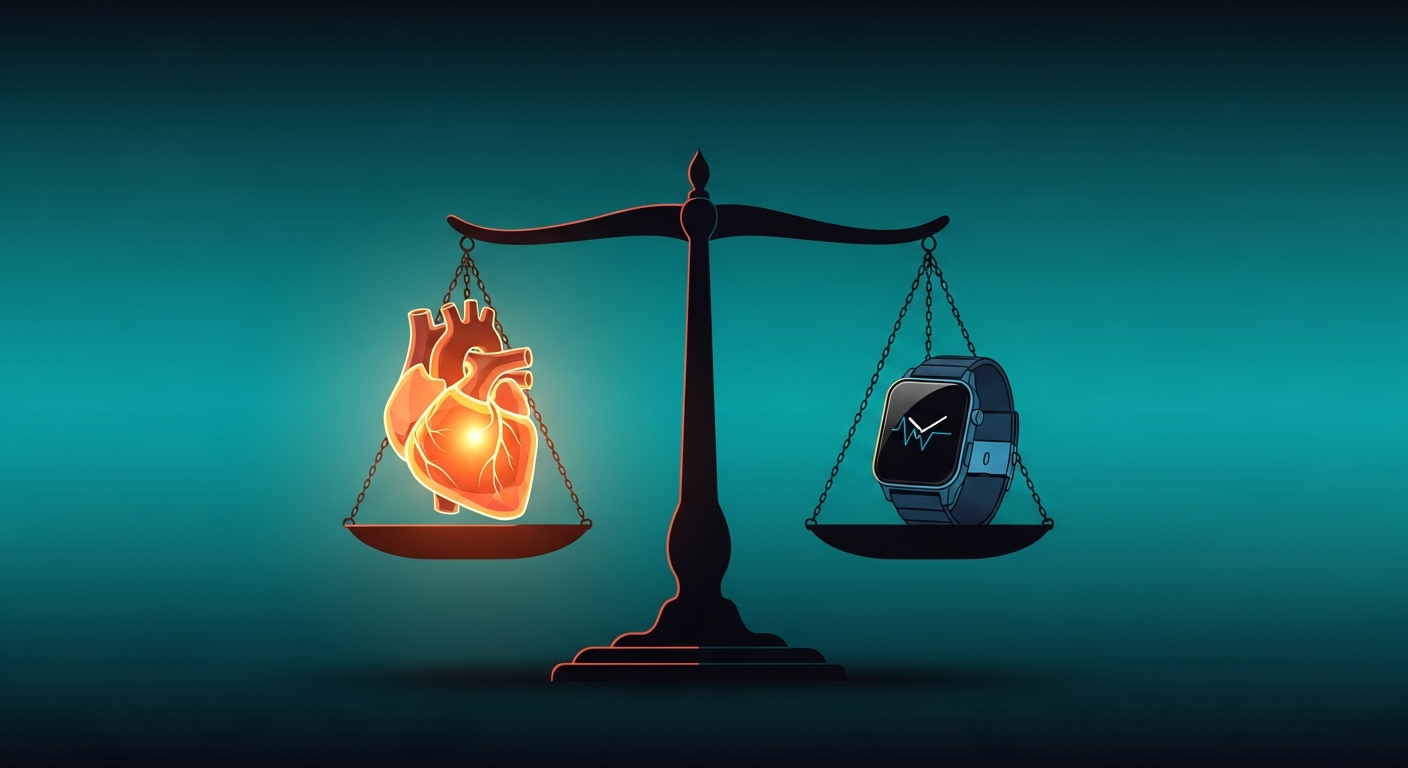
But this "data-fication" of the self has a dark side: it removes the mystery and the grace of growing older.
**The more we measure, the less we feel.** During my 30-day experiment, I found myself checking my Oura ring before I even checked in with my own heart.
I let a piece of titanium tell me if I was "ready" for the day, rather than trusting my own internal wisdom.
This is the hidden tax of the anti-aging movement. It replaces intuition with algorithms and turns the gift of a long life into a high-stakes management project.
We are becoming "biological accountants," obsessively balancing the books of our own decay while the actual experience of joy goes bankrupt.
The Reframe: Aging as Identity, Not Pathology
The most profound realization I had during my "month of immortality" didn't come from a blood test.
It came from a conversation with an 84-year-old former client who told me, "Lena, the tragedy isn't that I'm old.
The tragedy is that I spent my fifties trying to stay forty, and I missed the best decade of my life."
**Aging is not a bug; it is a feature of a life actually lived.** Those lines around your mouth?
They are the physical evidence of every laugh, every hard-won argument, and every "I love you" you’ve ever spoken. When we try to "erase" them, we are essentially trying to delete our own history.
As a therapist, I look at aging through the lens of *Erikson’s Stages of Development*. We are supposed to move from "Stagnation" to "Generativity"—the act of giving back and building a legacy.
The anti-aging industry keeps us stuck in a loop of "Intimacy vs. Isolation," obsessing over our own attractiveness and viability rather than our contribution to the world.
The Framework: The Vitality Triad
If you want to live longer, stop trying to live forever. Instead, I want to propose a framework I call **The Vitality Triad**.
This isn't about supplements or biohacks; it’s about the three psychological pillars that actually correlate with a high-quality, long-duration life.
1. Radical Metabolic Respect (Not Optimization)
Instead of "optimizing" your body like a machine, practice Metabolic Respect. This means moving because it feels good to be alive, not because you’re "burning off" a croissant.
It means eating foods that nourish your cells *and* your soul.
**The goal is to move from "Tracking" to "Tuning."** Spend one week without your wearable tech. Eat when you’re hungry, sleep when you’re tired, and move when you feel restless.
You’ll find that your body has a much better "OS" than any app you can download in 2026.
When we respect our metabolism, we stop fighting it. We acknowledge that it will slow down, that it will change, and that this change is a sign of survival, not a sign of defeat.
2. Cognitive Plasticity Through "Useful Hardship"
Longevity experts talk a lot about "hormetic stress"—short bursts of physical stress like cold plunges or high-intensity intervals. But we rarely talk about **Cognitive Hormesis.**
To keep your brain "young," you don't need "brain games" or apps. You need to do things that make you feel like a "clumsy idiot" again.
Learn a new language, pick up a musical instrument, or try to understand how the latest decentralized AI protocols actually work.
**True vitality comes from the discomfort of the "Beginner’s Mind."** When we stop being experts and start being students, our neuroplasticity skyrockets.
The "anti-aging" secret isn't a pill; it’s the willingness to be bad at something new for a very long time.
3. The Legacy Loop (Social Anchoring)
The Harvard Study of Adult Development—the longest study on happiness ever conducted—found that the number one predictor of health and longevity wasn't cholesterol levels or "biological age." It was the quality of your relationships.
In my 30-day experiment, I was so focused on my "longevity protocol" that I became a terrible friend. I was "too busy" for coffee because I had a red-light session.
I was "too tired" for a late-night phone call because I needed to optimize my REM sleep.
**Longevity is worthless if you are alone.** We need a "Legacy Loop"—a consistent practice of investing in people who will be there when the tech fails and the supplements run out.
Vitality is a communal resource, not a private stash.
Real-World Application: The "Anti-Optimization" Audit
If you’re feeling the "Status Quo Anxiety" of getting older, I want you to try a different kind of 30-day experiment. Instead of adding a new hack, I want you to perform an **Anti-Optimization Audit**.

For the next four weeks, pick one "optimization" you’re currently obsessed with and let it go. Stop tracking your steps.
Eat a meal without checking the "macros." Stay up an hour past your "perfect" bedtime to talk to someone you love.
**Observe the "Recovery Gap."** Notice how much mental energy returns to your life when you stop treating your body like a project.
You’ll likely find that your "perceived age"—how old you actually *feel*—drops significantly when you stop obsessing over your "measured age."
I realized by March 29, 2026, that I felt younger the moment I threw my continuous glucose monitor in the trash. The relief was palpable.
My "biological age" might have ticked up a few months on paper, but my capacity for joy expanded by years.
The One Thing Nobody Tells You
Here is the hard truth that no $4 trillion industry will ever put on a billboard: **You are going to die, and that is exactly why your life is beautiful.**
When we try to "quit aging," we are trying to quit the very thing that gives our days urgency and meaning. If we had five hundred years to live, we would never appreciate a single sunset.
If we were "biologically immortal," we would never feel the bittersweet ache of a child growing up or the quiet grace of a long-term marriage.
**The secret to "aging well" is to stop fighting the clock and start living in the time you have.** We don't need more years; we need more life in our years.
I’m done with the 42 supplements. I’m done with the $4k protocols. I’m going to go for a walk, feel the March air on my skin, and enjoy the fact that I am exactly the age I am supposed to be.
My "biological age" is irrelevant. My "vitality age"—the measure of how much I am actually showing up for my life—is the only metric that matters.
**Have you noticed yourself becoming a "biological accountant" lately, or have you found a way to embrace the "glitch" of getting older?
I’d love to hear how you’re navigating this—let’s talk in the comments.**
---
Story Sources
From the Author




Hey friends, thanks heaps for reading this one! 🙏
If it resonated, sparked an idea, or just made you nod along — I'd be genuinely stoked if you'd show some love. A clap on Medium or a like on Substack helps these pieces reach more people (and keeps this little writing habit going).
→ Pythonpom on Medium ← follow, clap, or just browse more!
→ Pominaus on Substack ← like, restack, or subscribe!
Zero pressure, but if you're in a generous mood and fancy buying me a virtual coffee to fuel the next late-night draft ☕, you can do that here: Buy Me a Coffee — your support (big or tiny) means the world.
Appreciate you taking the time. Let's keep chatting about tech, life hacks, and whatever comes next! ❤️