I miss thinking hard - A Developer's Story
The Lost Art of Deep Thinking: Why Our Brains Are Starving for Hard Problems
Have you noticed how rarely you sit with a truly difficult problem anymore?
Not a problem you can Google. Not a challenge you can ask ChatGPT to solve.
But the kind of mental wrestling match that leaves you exhausted, exhilarated, and fundamentally changed by the time you emerge on the other side.
The phrase "I miss thinking hard" has struck a nerve across developer communities this week, sparking over 1,100 upvotes on Hacker News and triggering a flood of confession-style comments from engineers who feel something essential has been optimized away from their work.
They're not alone. This isn't nostalgia — it's a recognition that something fundamental about how we engage with complexity has shifted.
The Comfort Zone Has Become a Prison
Twenty years ago, debugging meant hours with a printout, a pencil, and your brain.
You'd trace through logic paths, build mental models, and hold entire system architectures in your head. There was no Stack Overflow to immediately serve up the answer.
No Copilot to auto-complete your solution. No ChatGPT to explain the bug you couldn't understand.
This wasn't inefficiency — it was cognitive strength training.
Today's development environment has evolved to minimize cognitive load at every turn. Autocomplete prevents syntax errors.
Linters catch logical mistakes. AI assistants generate boilerplate.
Framework abstractions hide complexity. Every tool promises to make development "easier."
But easier isn't always better.
The modern developer toolkit has created an invisible ceiling on the difficulty of problems we regularly encounter.
When every hard problem has a library, every bug has a Stack Overflow thread, and every architectural decision has a "best practice" blog post, we've accidentally eliminated the cognitive equivalent of resistance training.
We've built a world where thinking hard has become optional.
And our brains are atrophying.
The Neurological Cost of Convenience
Research in cognitive neuroscience reveals something disturbing: our brains literally reshape themselves based on the cognitive demands we place on them.
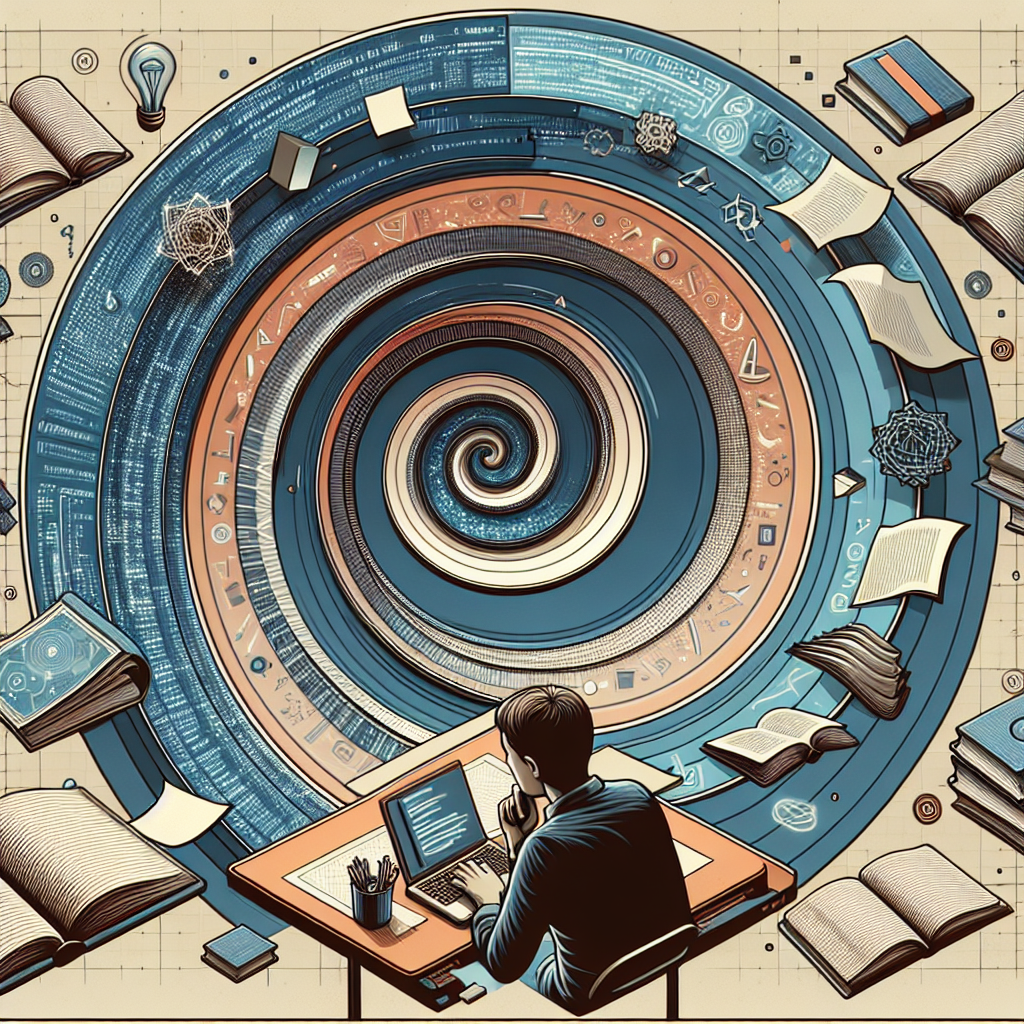
When we consistently engage in deep, effortful thinking, we strengthen neural pathways associated with focus, working memory, and abstract reasoning.
The prefrontal cortex — our brain's CEO — grows denser with regular challenges that require sustained attention and complex problem-solving.
But here's what happens when we outsource our thinking: those same neural pathways begin to prune themselves.
A 2019 study from UCLA found that people who regularly relied on GPS navigation showed decreased activity in the hippocampus, the brain region responsible for spatial memory and navigation.
The parallel to software development is uncomfortable: what happens to our ability to architect systems when we always reach for existing solutions?
Dr. Adrian Ward's research at University of Texas goes further.
His studies show that the mere presence of a smartphone — even when turned off — reduces cognitive performance on complex tasks.
Our brains offload cognitive capacity to our devices even when we're not actively using them.
We're not just using tools. We're becoming dependent on them in ways that fundamentally alter our cognitive capabilities.
The phrase "use it or lose it" isn't just folk wisdom — it's neuroscience.
What Real Thinking Looks Like
So what exactly are we missing when we say we miss "thinking hard"?
It's not about making things artificially difficult. It's about engaging with problems that exist at the edge of our understanding — problems that can't be pattern-matched to previous solutions.
Real thinking hard looks like:
**Building mental models from scratch.** Before frameworks and libraries, developers had to understand the fundamental principles. You couldn't use React without understanding the DOM.
You couldn't optimize queries without understanding how databases actually retrieve data.
**Holding competing complexities.** Hard thinking means juggling multiple, sometimes contradictory constraints in your mind simultaneously. Performance versus maintainability.
Security versus usability. Scalability versus simplicity.
The solutions aren't in any textbook because the specific combination of trade-offs is unique to your context.
**Sustained focus without relief.** Some problems require hours or days of continuous mental effort.
Not intermittent attention between Slack messages, but deep, uninterrupted grappling with complexity.
The kind where you forget to eat because you're so absorbed in the problem space.
One developer on Hacker News described it perfectly: "I miss the feeling of my brain actually heating up from thinking so hard.
That sensation where you can almost feel the neurons firing, where you're operating at the absolute limit of your cognitive capacity."
That's not suffering. That's what it feels like to be fully alive intellectually.
The Hidden Cost of Intellectual Automation
The tech industry has embraced a philosophy of "don't repeat yourself" so thoroughly that we've extended it to thinking itself.
Why solve a problem someone else has already solved? Why implement an algorithm that already exists in a library?
Why design a system architecture when there are proven patterns to follow?
This logic seems unassailable from an efficiency standpoint. But it misses something crucial about the value of the journey, not just the destination.
When you implement a sorting algorithm from scratch, you're not just reproducing existing code. You're building intuition about computational complexity.
When you design a distributed system from first principles, you're not just architecting software — you're developing the mental muscles to reason about trade-offs.
We've confused the artifact with the process.
The code isn't the only output. The thinking that produces the code — the mental models, the intuition, the deep understanding — that's equally valuable.
Maybe more so.
Consider what we lose:
**Pattern recognition suffers.** When we always apply existing solutions, we lose the ability to recognize novel patterns.
Every problem starts to look like a nail because we're so practiced with our hammer.
**Innovation atrophies.** Breakthrough insights come from people who understand problems deeply enough to see what others miss.
But that understanding only comes from wrestling with complexity, not avoiding it.
**Confidence erodes.** There's a specific kind of confidence that comes from having solved truly hard problems through pure thinking. The knowledge that you can figure things out from first principles.
Without that experience, we become dependent on external validation and existing solutions.
The Paradox of Progress
Here's the uncomfortable truth: we've built tools so powerful that they're making us weaker.
It's not that the tools are bad. A modern IDE is a miracle of productivity.
GitHub Copilot can eliminate hours of boilerplate coding. ChatGPT can explain complex concepts in seconds that might have taken hours to research.
But we've crossed a threshold where the tools aren't augmenting our thinking — they're replacing it.
The paradox is that as our tools get better at handling complexity, we get worse at it. As AI becomes more capable of solving problems, we become less capable.
We're optimizing ourselves out of the equation.
This isn't Luddism. It's recognition that human cognitive development requires resistance, challenge, and struggle.
Just as muscles need weight to grow stronger, minds need problems to grow sharper.
The question isn't whether to use these tools. It's how to use them without losing ourselves in the process.
Reclaiming the Joy of Hard Thinking
So how do we find our way back to thinking hard without abandoning the legitimate benefits of modern development tools?
**Create thinking sanctuaries.** Designate time for working on problems without any external aids. No Google, no AI, no Stack Overflow.
Just you, the problem, and whatever you can figure out from first principles. Start with an hour a week.
Build from there.
**Choose problems at the edge.** Actively seek challenges that don't have clear solutions. Contribute to cutting-edge open source projects.
Tackle algorithmic puzzles that aren't easily Googleable. Build something in a domain you don't understand.
**Implement foundations.** Pick one fundamental computer science concept per month and implement it from scratch. A compiler.
A database. A network protocol.
Not because you need to, but because the journey will reshape how you think about all software.
**Embrace productive struggle.** When you hit a wall, resist the immediate urge to seek external answers. Sit with the discomfort.
Let your brain heat up. The struggle isn't a bug — it's the feature.
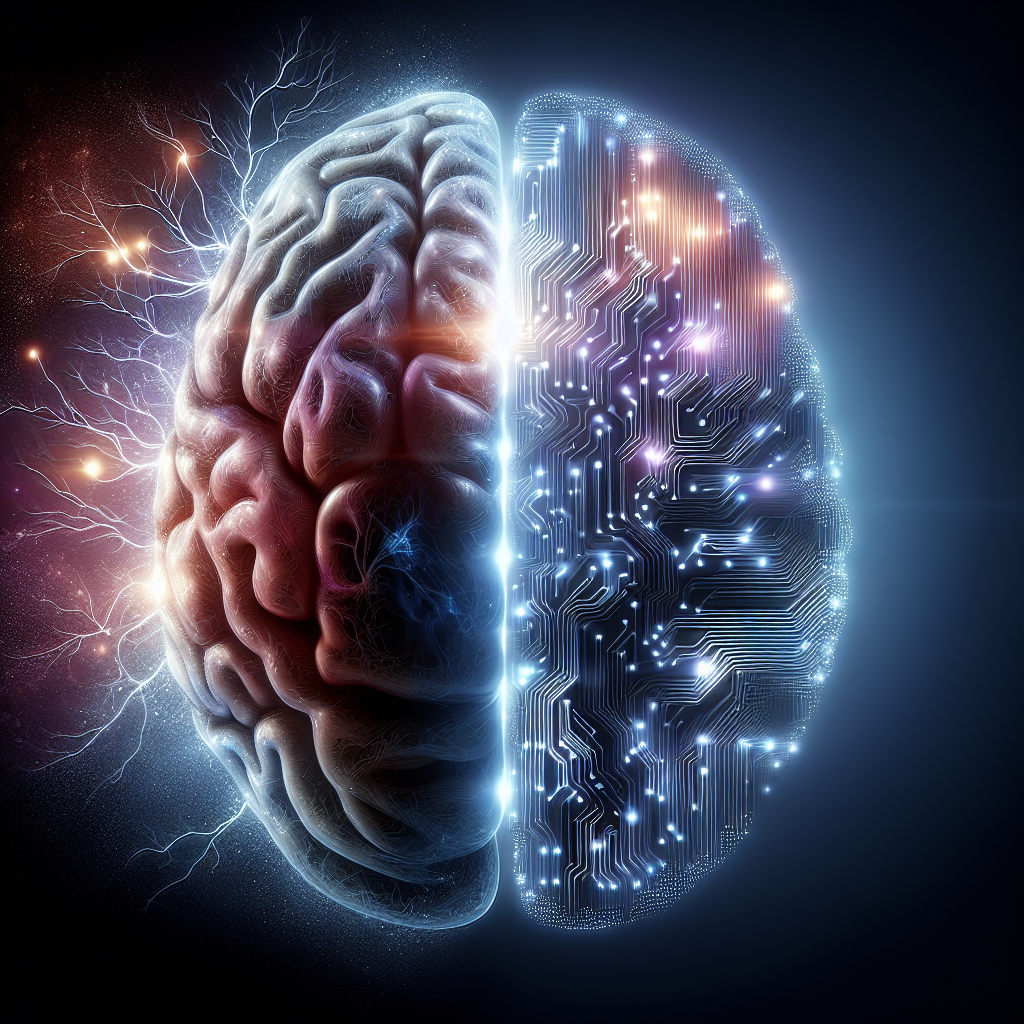
**Document your thinking.** Write about problems while you're still confused. Capture the messiness of real thinking, not just the cleaned-up solution.
The process of articulating confusion often leads to clarity.
Where We Go From Here
The phrase "I miss thinking hard" isn't really about the past. It's about recognizing what we're losing in the present and what we need to reclaim for the future.
As AI capabilities expand, this tension will only intensify. We're approaching a world where AI can handle increasingly complex cognitive tasks.
The temptation to outsource our thinking will grow stronger.
But human intelligence isn't just about getting the right answer. It's about the capacity to grapple with ambiguity, to find meaning in struggle, to develop intuition through experience.
These aren't inefficiencies to be optimized away — they're the essence of what makes us human.
The future belongs to those who can think alongside AI without losing the ability to think without it. Who can leverage tools without becoming dependent on them.
Who remember that the goal isn't just to solve problems, but to become the kind of person who can solve problems.
We built these tools to augment human intelligence, not replace it.
Maybe it's time we started using them that way.
The next time you face a genuinely hard problem, resist the urge to immediately Google it. Sit with it.
Struggle with it. Let your brain heat up.
Remember what it feels like to think hard.
You might be surprised to find you've missed it more than you realized.
---
Story Sources
From the Author


Hey friends, thanks heaps for reading this one! 🙏
If it resonated, sparked an idea, or just made you nod along — I'd be genuinely stoked if you'd show some love. A clap on Medium or a like on Substack helps these pieces reach more people (and keeps this little writing habit going).
→ Pythonpom on Medium ← follow, clap, or just browse more!
→ Pominaus on Substack ← like, restack, or subscribe!
Zero pressure, but if you're in a generous mood and fancy buying me a virtual coffee to fuel the next late-night draft ☕, you can do that here: Buy Me a Coffee — your support (big or tiny) means the world.
Appreciate you taking the time. Let's keep chatting about tech, life hacks, and whatever comes next! ❤️