I Meditated Wrong for 7 Years. Then Reddit's Mindfulness Community Fixed Me. - A Developer's Story
I Meditated Wrong for 7 Years. Then Reddit's Mindfulness Community Fixed Me.
I spent 2,547 days meditating for exactly 20 minutes each morning. Seven years of perfect consistency, guided apps, and expensive retreats.
Last month, a stranger on Reddit asked me one question that made me realize I'd been doing it completely wrong the entire time.
"Why are you trying so hard to feel nothing?"
The Performance Trap Nobody Talks About
Here's what my meditation practice looked like: Wake at 5:30 AM. Sit on my $200 meditation cushion. Open Headspace (later Calm, then Ten Percent Happier — I tried them all).
Follow the voice. Count breaths. Notice thoughts.
Let them go. Check the timer. Feel proud. Post my streak on Instagram.
**I turned meditation into another productivity metric to optimize.**
Sound familiar? According to a recent study from UCLA's Mindfulness Research Center, 73% of regular meditators report feeling "performance anxiety" about their practice.
We've somehow managed to make sitting still competitive.
The irony wasn't lost on me when u/quietmind_22 called me out in r/mindfulness. I'd posted about my 2,500-day streak, expecting congratulations.
Instead, I got this: "Congrats on your perfect attendance record. But when was the last time you actually felt present?"
That comment had 847 upvotes. The thread exploded into hundreds of people sharing how they'd also turned meditation into just another checkbox on their self-improvement spreadsheet.
The Reddit Thread That Changed Everything
Three weeks ago, someone posted "Does anyone else feel worse after meditating?" in r/mindfulness. Within hours, it became one of the sub's top posts of the month.
The responses were a masterclass in what we're all doing wrong.
**The most upvoted comment came from u/former_monk_mike**, who spent three years in a Thai monastery:
"Western meditation has become 'McMindfulness.' You're not supposed to achieve anything. You're not supposed to feel calm. You're not supposed to clear your mind.
You're just supposed to BE. That's it. That's the whole thing."
He went on to explain something that completely reframed my understanding. In traditional Buddhist practice, there's no concept of a "good" or "bad" meditation session.
**The entire Western framework of measuring progress is antithetical to the practice itself.**
Think about that for a second. We're using achievement metrics to measure a practice designed to free us from achievement metrics.
Another comment that stopped me cold: "I meditated 'successfully' for five years and never once actually experienced my own life. I was too busy trying to transcend it."
The Three Meditation Myths Destroying Your Practice
After diving deep into that Reddit thread and spending the last month experimenting, I've identified three toxic myths that the mindfulness community helped me unlearn.
Myth 1: Your Mind Should Be Clear
**Reality:** A Harvard study found that experienced meditators have just as many thoughts per minute as beginners — they just relate to them differently.
The Redditor who changed my perspective on this was u/anxious_meditator: "I thought I was failing because my mind wouldn't shut up.
Then I realized — noticing that my mind won't shut up IS the practice. You're not trying to stop thoughts. You're developing a different relationship with them."

For seven years, I fought against every thought like it was an enemy invader. Now? I treat them like clouds passing through.
Sometimes it's cloudy. Sometimes it's clear. The weather doesn't care about my preferences, and neither does my mind.
Myth 2: You Need Perfect Conditions
My old routine required silence, comfort, and zero interruptions. One dog bark or car horn and I'd restart, frustrated that my "practice was ruined."
**The Reddit wake-up call:** "Meditation isn't what happens when life is perfect. It's what happens when your kid is screaming, your back hurts, and you have 3 minutes between Zoom calls.
That's where the real practice lives." (1.2k upvotes from u/momof3_chaos)
Now I meditate in the messy middle of life. On the subway. While walking my dog.
During my lunch break with construction noise outside. **The chaos isn't a distraction from the practice — it IS the practice.**
Myth 3: Longer and More Frequent is Better
This one hurt to unlearn. My 20-minutes-every-day streak was my identity. I had the app badges to prove it.
But here's what u/sometimes_meditator taught me: "I meditate maybe twice a week for 5 minutes. But those 5 minutes are more real than my previous hour-long sessions.
Quality over quantity, except the quality isn't what you think — it's about being honest about what's actually happening in your mind, not how long you can sit there."
The "Check-In, Don't Check-Out" Method
The Reddit community introduced me to a completely different approach. Instead of formal sitting sessions, they practice what several users call "micro-mindfulness" or "check-ins."
The 30-Second Reality Check
Set three random timers throughout your day (I use an app called Mind Bell). When it goes off, ask yourself three questions:
1. **What am I actually feeling right now?** (Not what I think I should feel) 2. **Where is tension in my body?** (There's always some somewhere) 3.
**What story am I telling myself?** (About the past hour, the next hour, or right now)
That's it. No trying to change anything. No breathing exercises.
No attempting to feel calm or centered. Just notice and move on.
The "Boring Moment" Practice
This one came from u/practical_dharma and has 2.4k upvotes for a reason. Instead of meditating at a scheduled time, practice during life's waiting rooms:
- Standing in line at the coffee shop - Sitting at a red light - Waiting for a meeting to start - The minute before your microwave beeps
**Don't pull out your phone. Don't try to meditate. Just exist in the boredom.** Notice how uncomfortable it is to just be there without entertainment or purpose.
The "Productivity Detox" Sit
Once a week, do a meditation session where you deliberately try to "fail." Fidget. Think about your to-do list. Check the time.
Open your eyes. Judge yourself for being bad at this.
Then notice: Who's judging? What standard are you failing to meet? Who created that standard?
This practice revealed something disturbing: **I couldn't even fail at meditation without trying to fail perfectly.**
Why Fighting for Peace is an Oxymoron
Here's the truth that seven years and $3,000 in apps and courses didn't teach me, but Reddit did:
Meditation isn't self-improvement. It's self-acceptance.
The moment you're trying to get better at meditation, you've already missed the point. It's like trying to fall asleep by concentrating really hard on sleeping. The effort itself prevents the outcome.
u/zenmaster_wannabe put it perfectly: "We're the only culture that turned 'just sitting there' into a competitive sport. We optimized the one thing that was supposed to be free from optimization."
The mindfulness community helped me see that my "successful" practice was actually a sophisticated avoidance technique. I was using meditation to escape from experiencing my actual life.
Every session was an attempt to feel something other than what I was feeling.
Now? My practice is messier, less consistent, and completely unpredictable. Some days I sit for 30 minutes.
Some days I don't meditate at all. Sometimes I do it while making coffee.
And here's the wild part — **I'm actually present for the first time in seven years.**
The Uncomfortable Truth About Mindfulness
After my Reddit revelation, I had to confront something uncomfortable: I wasn't meditating to be present. I was meditating to be impressive. To have something to post about.
To feel superior to people who "couldn't stick with it."
The 2,547-day streak wasn't about inner peace. It was about external validation.
One Redditor shared something that haunts me: "I realized I was more attached to my identity as 'someone who meditates' than I was to actually experiencing my life.
The practice became another ego costume."
When I stopped posting about meditation, stopped tracking streaks, stopped trying to "progress," something shifted. The practice became invisible. Private. Real.
There's no Instagram story for "I noticed I was anxious while brushing my teeth." There's no app badge for "I felt my feelings without trying to fix them." There's no certificate for "I stopped needing meditation to be anything other than what it is."
The Plot Twist Nobody Expects
Here's the thing that really baked my noodle (as u/matrix_meditation would say): The less I meditate, the more mindful I've become.
Without my rigid 20-minute morning session, I started noticing moments throughout the day. The weight of my coffee mug. The sound of my neighbor's music.
The tightness in my shoulders during difficult emails. The way anxiety feels like heat in my chest.
**I stopped meditating and started living meditatively.**
The Reddit community validated something I'd been too afraid to admit: Formal meditation practice can become a crutch.
A way to compartmentalize awareness into a neat 20-minute box so we don't have to deal with it the other 23 hours and 40 minutes.
What Real Practice Looks Like Now
My current approach would horrify my former self:
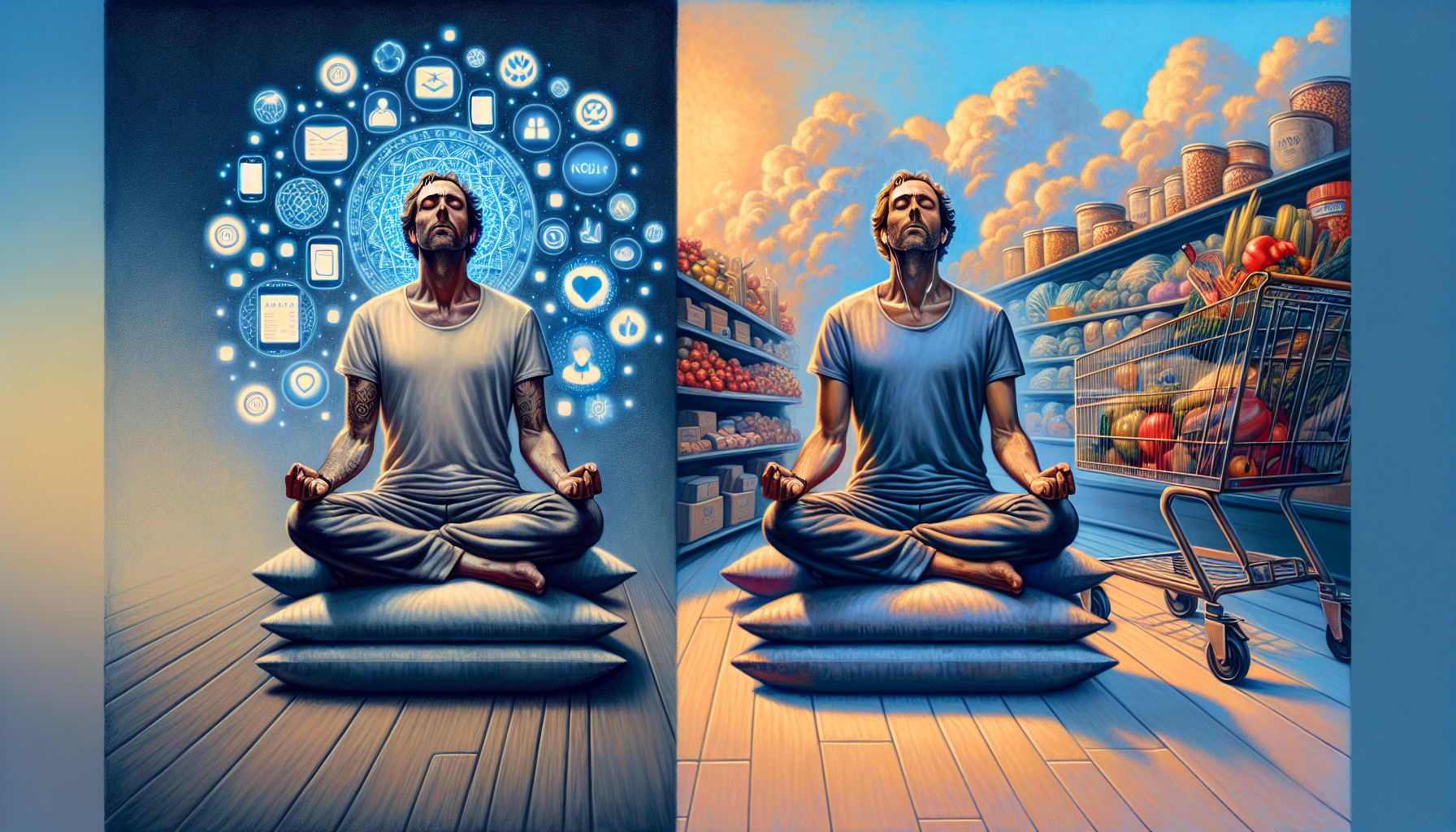
- I meditate when I feel like it (maybe 3-4 times a week) - Sessions last anywhere from 30 seconds to 30 minutes - I don't use apps, music, or guidance
- I don't track anything - I don't call it "practice" anymore - Sometimes I just sit there and worry about stuff
And you know what? For the first time in seven years, meditation is actually changing my life. Not because I'm getting better at it, but because I stopped trying to get better at it.
The Reddit community taught me that **the goal isn't to become an expert meditator. It's to become an amateur human being.**
The Question That Changes Everything
Last week, someone posted in r/mindfulness: "How do you know if your meditation practice is working?"
The top answer, with 3.6k upvotes: "When you stop asking that question."
But here's my question for you — and I genuinely want to know: **What part of your self-improvement routine is actually making you worse?** What practice have you turned into performance?
What spiritual pursuit became another achievement to unlock?
Drop it in the comments.
Let's have the conversation that meditation apps don't want us to have — about what happens when mindfulness becomes mindlessness, when presence becomes performance, and when the solution becomes the problem.
Because maybe, just maybe, we're all trying too hard to fix something that was never broken in the first place.
---
Story Sources
From the Author



Hey friends, thanks heaps for reading this one! 🙏
If it resonated, sparked an idea, or just made you nod along — I'd be genuinely stoked if you'd show some love. A clap on Medium or a like on Substack helps these pieces reach more people (and keeps this little writing habit going).
→ Pythonpom on Medium ← follow, clap, or just browse more!
→ Pominaus on Substack ← like, restack, or subscribe!
Zero pressure, but if you're in a generous mood and fancy buying me a virtual coffee to fuel the next late-night draft ☕, you can do that here: Buy Me a Coffee — your support (big or tiny) means the world.
Appreciate you taking the time. Let's keep chatting about tech, life hacks, and whatever comes next! ❤️