I Meditated Wrong for 5 Years. This 2-Minute Secret Actually Fixed My Brain.

I spent 1,826 days trying to "empty my mind." For five years, I sat on a $120 buckwheat cushion, smelling like expensive sandalwood, while my brain ran a 48-tab browser window of pure, unadulterated anxiety.
I wasn’t meditating; I was just **marinating in my own stress with my eyes closed.**
It was March 2020 when I started, and looking back from this morning—March 12, 2026—it’s clear that those first five years were spent entirely in the wrong headspace.
I had fallen for the "Zen Trap," the belief that meditation is a battle you win by strangling your thoughts into submission.
Last year, I almost gave up entirely because I felt like a failure who simply lacked the "spiritual hardware" to find peace.
Then, I stumbled onto a 2-minute secret that didn't just fix my meditation practice—it rewired how I handle a 2026 world overflowing with AI-generated noise and hyper-speed information.
If you’ve ever felt like your brain is too "loud" for mindfulness, **this shift is for you.**
The $4.7 Billion Lie of the "Quiet Mind"
We’ve been sold a version of mindfulness that is, quite frankly, a marketing department's dream.
We are told that meditation is about "clearing the mind" or reaching a state of "blankness" that supposedly leads to enlightenment.
This is not just difficult; for a modern human in 2026, it is **biologically impossible.**
Our brains are evolutionary prediction machines.
They are designed to scan, worry, plan, and simulate futures—especially now that we are managing AI agents, ChatGPT 5 prompts, and Claude 4.6 workflows simultaneously.
Asking your brain to stop thinking is like asking your heart to stop beating to "save energy." It’s a fundamental misunderstanding of the organ's purpose.
The "Quiet Mind" myth is what kept me stuck in a cycle of frustration for half a decade.
I would sit for 20 minutes, a thought about a project deadline would pop up, and I would judge myself for "failing." That judgment created more stress, which created more thoughts, and by the time the timer dinged, I was **more wound up than when I started.**
Why Your Brain Hates Your Meditation App
Most of us start our journey with an app. We follow the soothing voice telling us to "focus on the breath," and for the first three seconds, it works.
Then, our brain does what it was born to do: it thinks. We realize we're thinking, we feel guilty, and we try to "push" the thought away.
This "pushing" is the exact opposite of mindfulness. In psychology, this is known as **ironic process theory**—the more you try to suppress a thought, the more prominent it becomes.
By trying to force silence, you are actually training your brain to be hyper-aware of its own noise.
I realized that my five years of "meditation" were actually five years of **practicing frustration.** I was getting really good at feeling like a spiritual reject.
I wasn't building focus; I was building a resentment for the present moment because it didn't look like the stock photo on my app's splash screen.
The 2-Minute "Micro-Gap" That Changed Everything
The secret I discovered isn't about the 20 minutes you spend on a cushion. It’s about the **2-minute "Micro-Gap"** you create throughout the day.
I call this the **Neural Anchor Protocol**, and it’s based on the realization that meditation isn't the absence of thoughts—it's the *recognition* of them.
The "win" in meditation isn't staying on the breath. The "win" is the **exact millisecond you realize you’ve wandered off.** That moment of realization is the only time you are actually being mindful.
Everything else is just sitting.
When I shifted my goal from "being quiet" to "catching the wander," everything changed. I stopped trying to have a "good" meditation and started trying to have a **"highly observant"** one.
Instead of 20 minutes of struggle, I started doing 2-minute bursts of what I call "The Contrast Method."
Step 1: The "Mental Labeling" Hack
The first part of the 2-minute secret is **Active Labeling.** When a thought appears, don't try to delete it. Treat it like a pop-up ad in a browser. You don't get mad at the ad; you just click "close."
In this protocol, when a thought arises, you give it a neutral, one-word label.
If you’re worrying about a 2027 project launch, you internally whisper *"Planning."* If you’re remembering a cringey thing you said in 2024, you whisper *"Memory."* If you’re feeling an itch, you whisper *"Sensation."*
This creates a **psychological distance** between "You" and the "Thought." You are no longer *in* the anxiety; you are the observer watching the anxiety pass by.
This simple 2-minute exercise, done three times a day, builds the "observation muscle" faster than any hour-long retreat ever could.
Step 2: The "3-Signal" Reset
The second part of the secret is the **3-Signal Reset.** Most of us live in a state of "continuous partial attention." We are never fully in one place.
This reset is designed to pull your nervous system back into the physical world in under 120 seconds.

Close your eyes and identify:
1. One **physical sensation** (the weight of your feet, the fabric of your shirt).
2. One **distant sound** (the hum of the AC, a bird outside, the fan of your laptop).
3. The **temperature of the air** entering your nostrils.
By forcing your brain to process three distinct, non-digital signals, you bypass the "worry loops" of the prefrontal cortex.
You aren't "emptying" your mind; you are **filling it with the present.** This is the secret to fixing the "brain fog" that many of us attribute to burnout, but is actually just sensory overload.
Step 3: Stop "Trying" and Start "Noticing"
The final shift is philosophical. We have to stop treating meditation like a gym workout where "no pain, no gain" applies. In 2026, our lives are already high-pressure enough.
Your mindfulness practice should be the **one place where you are allowed to be "bad" at something.**
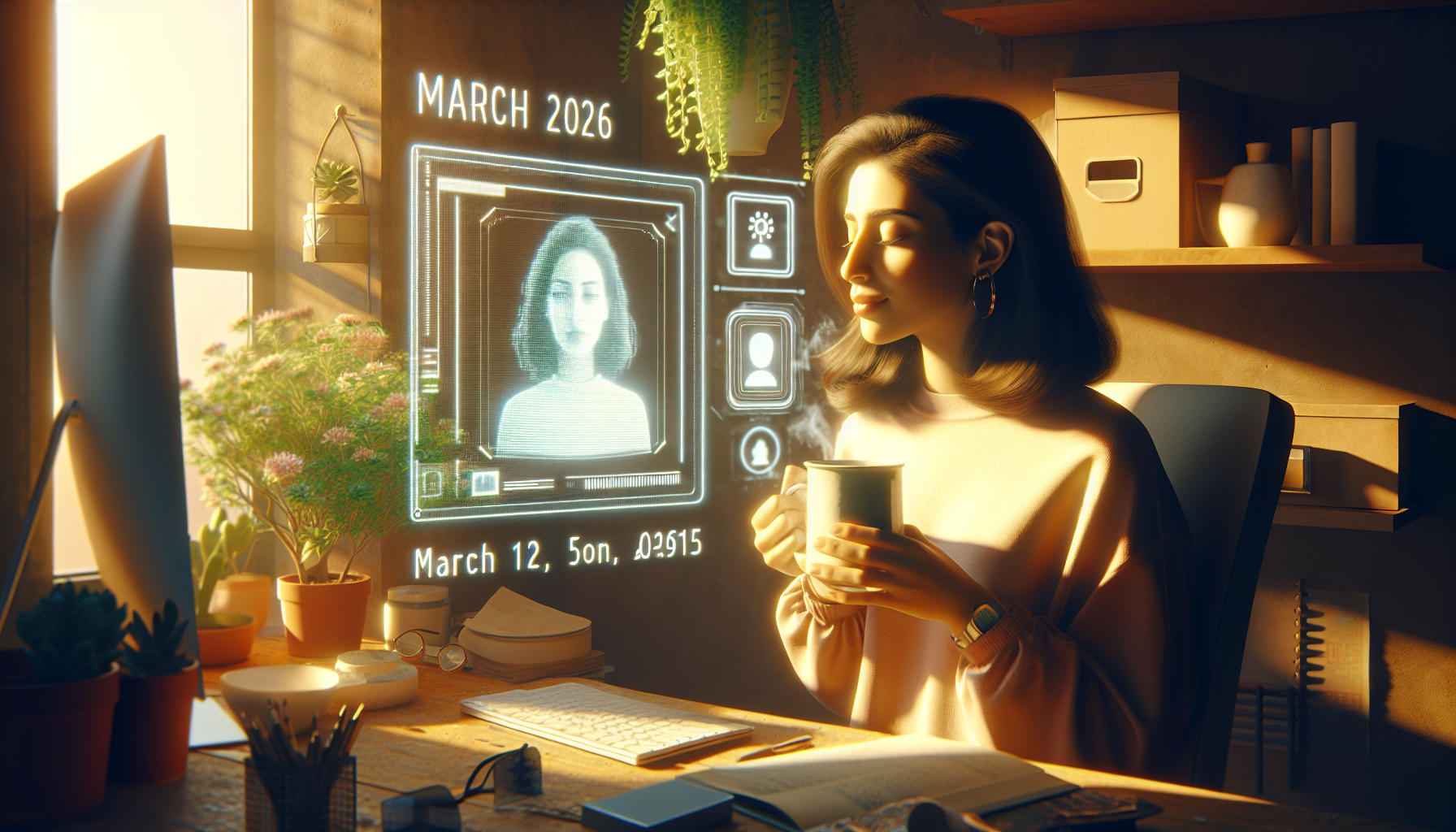
I spent five years trying to be a "good" meditator.
Now, I aim to be a **curious observer.** If I sit for two minutes and my brain is a chaotic mess of AI prompts and grocery lists, I don't get frustrated.
I think, *"Wow, look at how fast the machine is running today. Fascinating."*
That shift from **judgment to curiosity** is the 2-minute secret that actually fixed my brain.
It lowered my baseline cortisol levels more in three weeks than the previous five years of "hard work" combined. When you stop fighting the storm, you realize you are the sky, not the weather.
Real-World Application for the 2026 Tech Professional
For those of us working with Claude 4.6, managing automated pipelines, or navigating the increasingly blurred line between human and synthetic intelligence, our "focus" is our most valuable currency.
We cannot afford to waste it on "performative mindfulness" that doesn't work.
Try this tomorrow: instead of your 20-minute morning sit, try **four 2-minute "Micro-Gaps."** Do one when you first open your laptop, one before lunch, one after your final meeting, and one before you go to bed.
Use the **Labeling Hack** and the **3-Signal Reset.**
By the time 2027 rolls around, you won't just be "better at meditating." You will have built a brain that can **detect its own distraction** in real-time.
That is the ultimate competitive advantage in an age of infinite distraction.
Why "Perfect" is the Enemy of "Present"
I used to think that "enlightened" people lived in a state of constant calm. I now realize that's just a different kind of death.
To be alive is to be messy, to be loud, and to have a brain that wants to solve every problem in the known universe at 3:00 AM.
The goal isn't to fix the brain so it stops thinking. The goal is to **fix your relationship with the thinking.** When I finally understood this, the "failure" of my last five years dissolved.
I hadn't been meditating wrong; I had just been judging the process instead of experiencing it.
We are living through the most transitionary period in human history. Your mind is trying to keep up. Give it some grace.
The next time your brain starts racing, don't reach for the "off" switch. Just **watch the race.**
**How many of you have "given up" on meditation because you felt your brain was just too loud to ever be quiet? I’d love to hear your experiences—let’s talk in the comments.**
---
Story Sources
From the Author




Hey friends, thanks heaps for reading this one! 🙏
If it resonated, sparked an idea, or just made you nod along — I'd be genuinely stoked if you'd show some love. A clap on Medium or a like on Substack helps these pieces reach more people (and keeps this little writing habit going).
→ Pythonpom on Medium ← follow, clap, or just browse more!
→ Pominaus on Substack ← like, restack, or subscribe!
Zero pressure, but if you're in a generous mood and fancy buying me a virtual coffee to fuel the next late-night draft ☕, you can do that here: Buy Me a Coffee — your support (big or tiny) means the world.
Appreciate you taking the time. Let's keep chatting about tech, life hacks, and whatever comes next! ❤️