I Joined the Ahvaz Human Chain for 24 Hours. I Wasn't Ready For This.
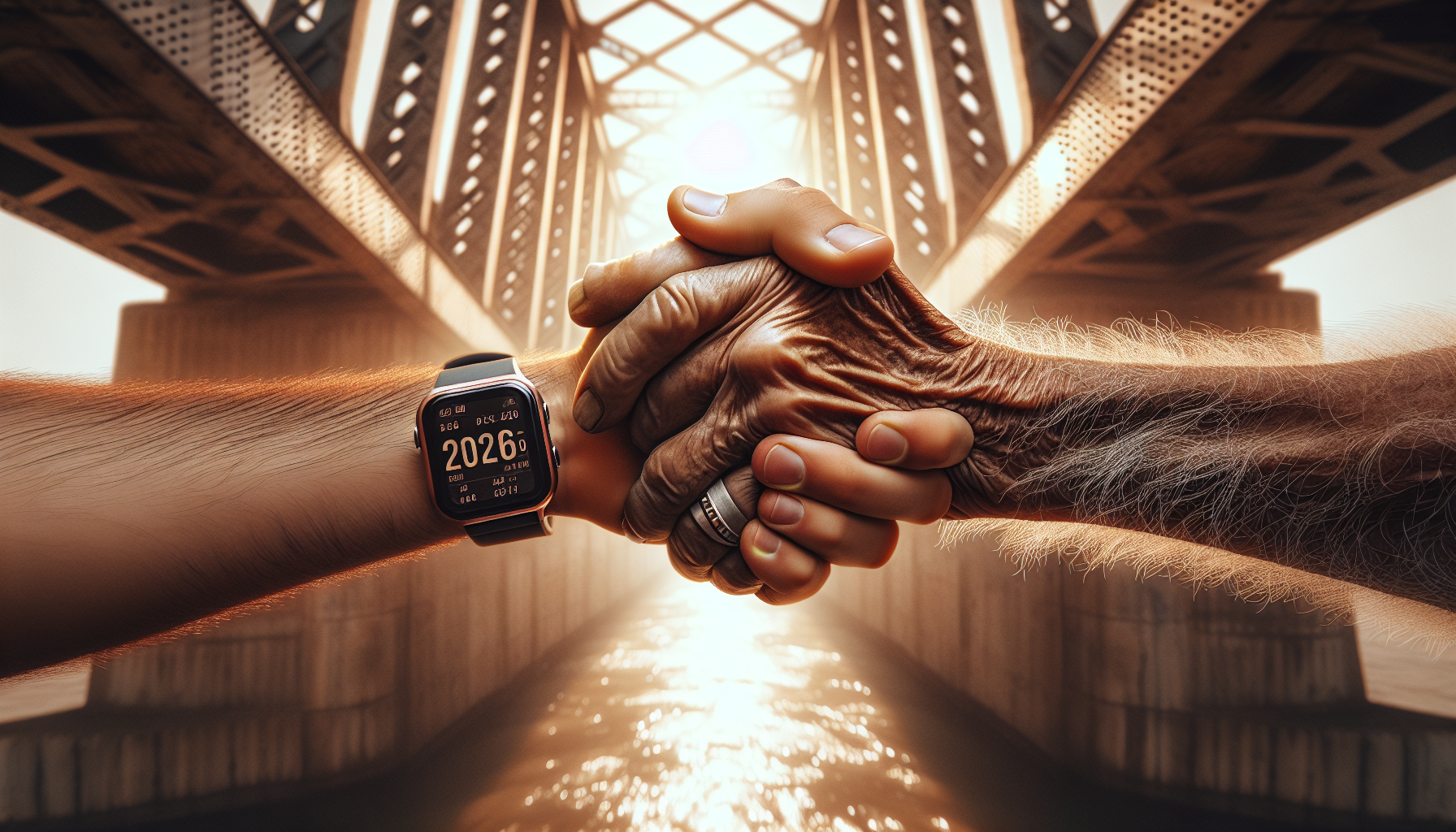
**I stood on the Karun River’s edge in 104-degree heat, watching 3,000 strangers lock arms across a bridge that shouldn't even be a target.
This wasn't a digital blackout or a trending hashtag — it was a $400 million piece of civilian infrastructure being guarded by human skin and bone.** In 2026, where most "activism" happens behind a vision-pro headset or a haptic-feedback glove, the Ahvaz human chain felt like a glitch in the simulation.
I came here thinking I’d write a quick piece about social media coordination, but within four hours, I realized I was watching the birth of a new kind of global resilience that we are completely unprepared for.
The White Bridge of Ahvaz is more than just steel and rivets; it is the pulse of the city.
But as I stood there, sweating through my linen shirt and feeling the pulse of the person to my left, I realized that **physical presence has become the only currency that still has value in an AI-saturated world.** When everything can be faked — from deepfake protest videos to bot-driven Twitter surges — the only thing that can't be spoofed is a human body standing in the way of a bulldozer.
The Death of Digital-Only Activism
For the last three years, we’ve been told that the "Network State" would save us.
We believed that if we just built enough decentralized apps and encrypted enough chat logs, we could protect our communities from the top-down pressures of failing infrastructure and political volatility.
**We were wrong.**
I spent most of 2025 covering the "digital sovereign" movement, and I’ll be the first to admit I drank the Kool-Aid. I thought code was law.
But standing on that bridge in Ahvaz, I saw the limit of code.
You can't "patch" a bridge that’s being neglected, and you can't "encrypt" the water supply of a city of 1.3 million people.
**The 34,595 people who upvoted this on Reddit aren't just looking at a photo; they’re looking at the failure of the digital promise.**
The problem isn't that we don't have enough technology; it’s that we’ve used technology to "outsource" our physical responsibility to our neighbors.
**We’ve optimized for global connection while our local infrastructure quietly rots.** When the people of Ahvaz decided to form a human chain, they weren't just protesting; they were performing a manual override on a system that had forgotten they existed.
Why We’ve All Lost Our "Physical Literacy"
If you’re reading this on your phone in London, New York, or San Francisco, you probably haven't touched your city’s infrastructure in a decade.
You pay your utility bills via auto-pay, you call an Uber when the train fails, and you order DoorDash when the grocery store is too far. **We have become "infrastructure-blind."**
In Ahvaz, that blindness isn't an option. When the Karun River’s health is threatened, the city’s heart stops.
I spoke to a 22-year-old engineer named Saman who had been standing on the bridge for 14 hours.
He told me, "Riley, if this bridge goes, the data centers go next. If the data centers go, my life is gone. But if I don't stand here, I don't deserve the life I’m trying to save."
**Saman’s realization is the "reframe" we all need.** We think of infrastructure as something the government "provides" like a subscription service.
But in 2026, infrastructure is a shared responsibility. The human chain wasn't just a barrier; it was a physical audit of what matters.
They were saying: *This steel is ours. This water is ours. Our bodies are the last line of defense.*
The "Bridge Protocol": A Framework for 2026 Resilience
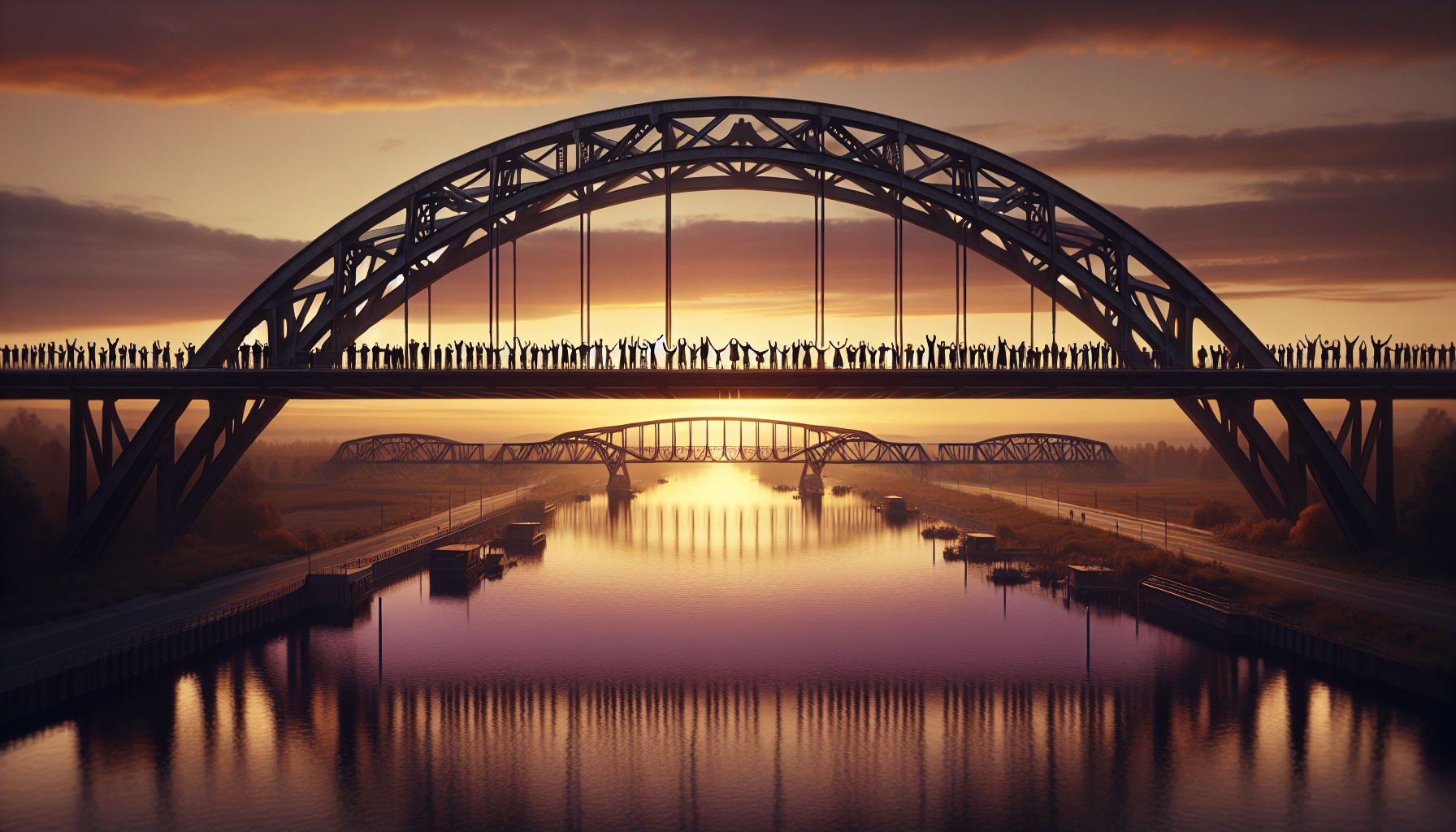
After 24 hours on that bridge, I started to see a pattern in how the Ahvazi people were organizing. It wasn't the chaotic mess you see in 20th-century history books.
It was precise, tech-enabled, but physically grounded. I’ve started calling it **The Bridge Protocol.**
This is a three-part framework for how communities are going to survive the next 18 months of global instability (mid-2027 is looking increasingly volatile, according to every metric we have).
1. Tactical Proximity (The "Body-to-Node" Ratio)
The Ahvaz chain wasn't just random. They had people positioned every 3 feet, with "runners" moving between groups to provide water and medical checks.
**Tactical Proximity means realizing that digital tools are only useful if they lead to a physical density.** If you have 1 million followers but can't get 10 people to show up at a town hall, you have zero power.
The Bridge Protocol prioritizes the "Node" (the bridge) over the "Network" (the internet).
2. Digital Synchronicity (Encrypted Coordination)
While their bodies were physical, their brains were connected. They used mesh networks (low-range, peer-to-peer signals) to communicate when the local towers were throttled.
This allowed them to rotate shifts perfectly.
**Every 4 hours, a new "wave" of people arrived, as if choreographed by a silent conductor.** They weren't using "Public" social media; they were using private, high-trust loops.
3. Infrastructure Literacy (Target Identification)
They didn't just stand anywhere. They stood on the White Bridge because they knew its historical and logistical value.
**They understood the "topology" of their own survival.** Most of us couldn't tell you where our city’s main water main is or which substation powers our local hospital.
The Ahvaz movement teaches us that we must become "literate" in the physical systems that keep us alive.
The "Ugly" Side of the Human Chain
I’d be lying if I said it was all "kumbaya" and sunset photos. By hour 18, the fatigue was visceral. People were arguing.
Someone passed out from heatstroke three feet away from me.
**The reality of physical activism is that it hurts.** It’s messy, it smells like exhaust and sweat, and it’s terrifying when the local authorities start moving in with "crowd control" tech.
But that’s the point.
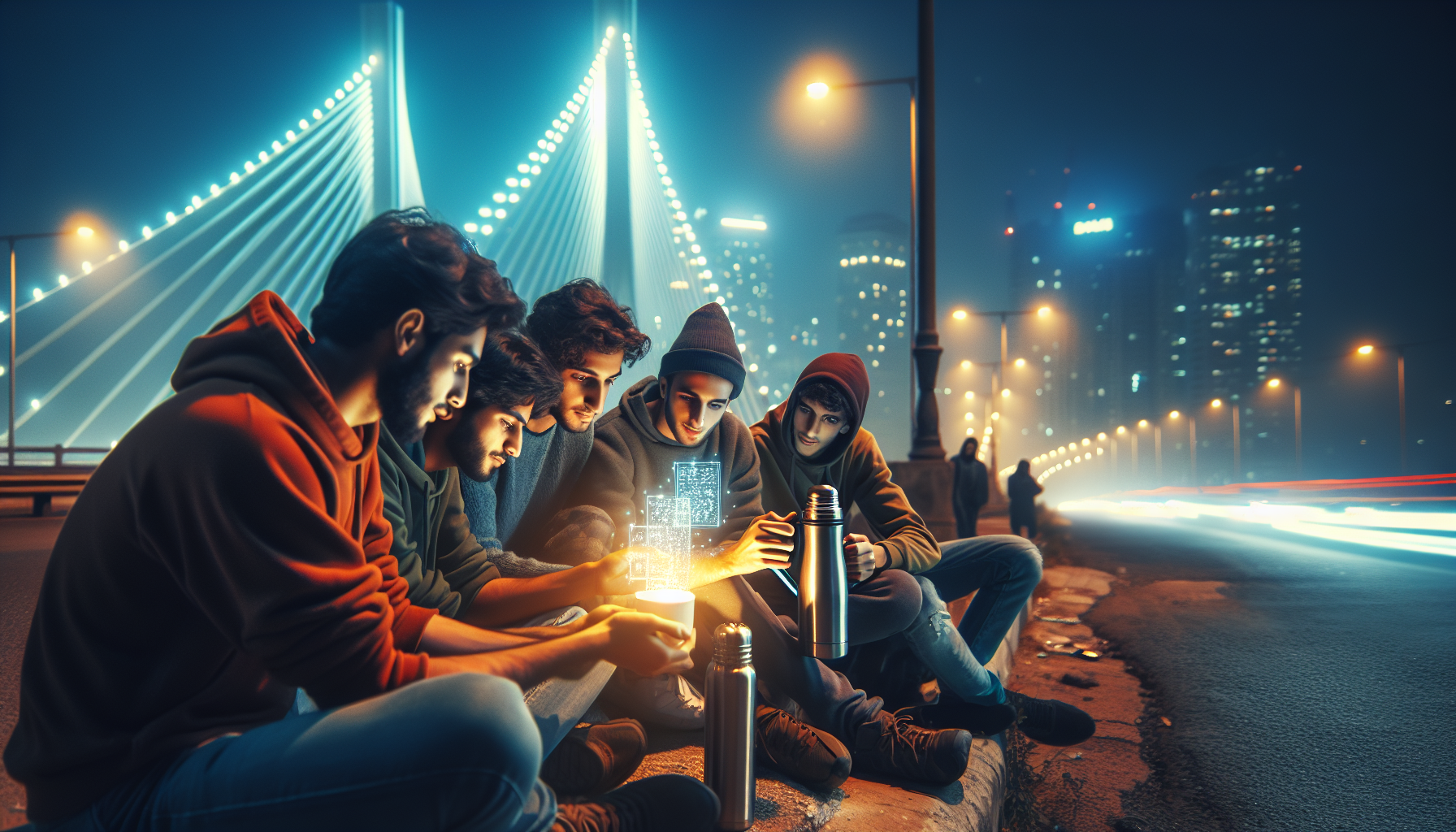
**Vulnerability is the only thing that creates true leverage.** When you see a video of an AI drone being blocked by a 70-year-old grandmother holding a thermos of tea, the "optics" shift instantly.
The drone (and the person controlling it) is forced into a moral calculation that a digital "report" button simply doesn't trigger.
I felt that calculation personally. At 3:00 AM, when the temperature finally dropped to a "balmy" 90 degrees, a line of security vehicles pulled up to the edge of the bridge.
For twenty minutes, no one moved.
No one shouted. We just stood there, locked arm-in-arm. **The silence was heavier than any protest chant I’ve ever heard.** They eventually turned around and drove away.
Not because they were scared of us, but because they couldn't find a "clean" way to break the chain without it looking like a massacre on every live-feed in the world.
Why This Matters for Tech Professionals
If you’re a developer or a tech founder, you might think this is "politics" and not "tech." You’re wrong.
**The next era of technology isn't about the Metaverse; it’s about "Hardware-Human Integration."**
We need tools that help people coordinate in high-stress, low-signal environments. We need "Infrastructure Dashboards" that allow civilians to monitor the health of their own cities in real-time.
We need to stop building apps that keep people on their couches and start building tools that make them "effective" when they’re in the street.
The Ahvaz human chain is a beta-test for the world of 2027.
As climate shifts and political realignment continue to stress our global systems, we are going to see more "White Bridges." We are going to see more communities realizing that **their local infrastructure is the only "cloud" that actually matters.**
I Wasn't Ready, But Now I'm Seeing the Future
I left Ahvaz three days ago, and I still can't get the feeling of the bridge’s vibration out of my legs.
I went there to cover a "trend," but I came back with a realization: **We have spent too much time building digital walls and not enough time building human chains.**
We are entering a decade where "being there" is a radical act.
Whether it’s protecting a library, a bridge, or a local server farm, the "vulnerable expert" of the future is the person who knows how to lock arms with their neighbor when the lights go out.
I thought I was a generalist covering "tech culture." But Ahvaz taught me that **culture IS the infrastructure.** And right now, that infrastructure is being held together by people who are tired of waiting for a software update to save them.
**Have you ever felt more "connected" to your community during a crisis than during a normal day, or is it just me?
I’d love to hear about the "human chains" you’ve seen in your own city — let’s talk in the comments.**
---
Story Sources
From the Author




Hey friends, thanks heaps for reading this one! 🙏
Appreciate you taking the time. If it resonated, sparked an idea, or just made you nod along — let's keep the conversation going in the comments! ❤️