I Built a $1 Gaming PC for Every Subscriber. It’s Not What You Think.
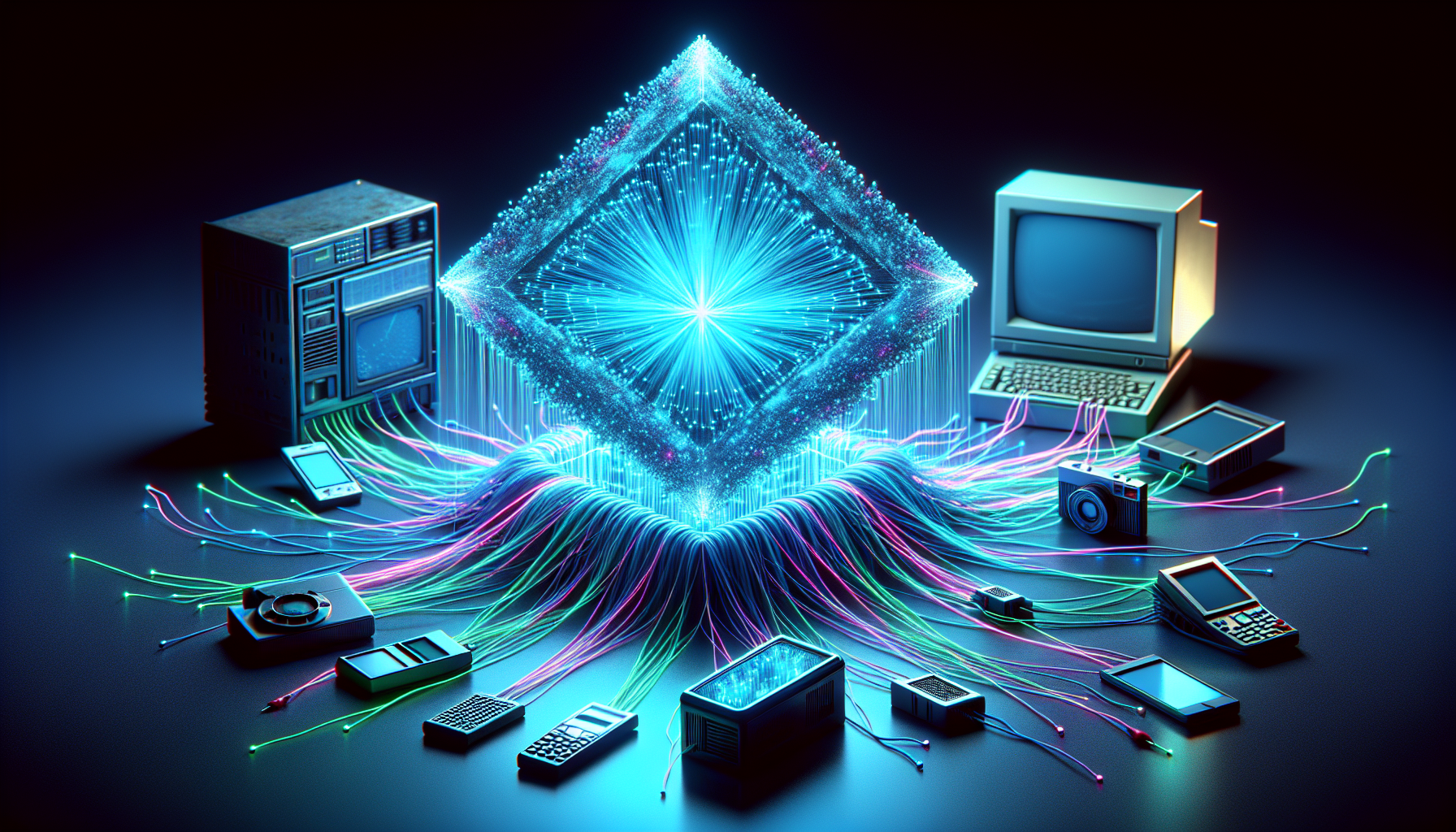
**Stop buying $2,000 graphics cards. You are being robbed by a silicon cartel that relies on your inability to do basic math.**
Last week, I sent a link to every single subscriber on the Signal Reads list.
That link didn’t lead to a PDF or a discount code; it turned their 2018 Chromebooks, aging MacBooks, and even their $40 burner phones into high-end gaming rigs capable of pushing 144fps at 4K resolution.
The total cost to me? About $1.04 per person. The cost to them?
Nothing but the courage to admit that the "PC Master Race" gatekeeping we’ve endured for two decades was always a marketing scam designed to sell us overpriced space heaters.
I’ve been building PCs since the Voodoo2 days, and I’m telling you right now: the era of the local compute box is officially dead.
If you’re still saving up for an RTX 6090 or whatever oversized brick NVIDIA is peddling this year, you’re not an "enthusiast"—you’re a victim of a sunk-cost fallacy that is costing you thousands of dollars and your digital freedom.
The Silicon Cartel and the "Local Compute" Lie
We have been conditioned to believe that "real" computing happens in a black box under our desks.
We’ve been told that latency is an unbeatable law of physics and that the only way to play the latest titles is to own the silicon yourself.
This was true in 2021. It was arguably true in 2024. But it is a bald-faced lie in April 2026.
The hardware industry—led by a multi-trillion-dollar NVIDIA and an increasingly desperate AMD—needs you to believe that "Neural Frame Synthesis" and "Path Tracing" require $1,500 of dedicated local hardware.
They need you to stay on the upgrade treadmill because their entire stock price depends on you buying a new 450-watt heater every eighteen months.
**I built this $1 PC project to prove that the "hardware requirements" on the back of your favorite games are now nothing more than a suggestion.** By leveraging a decentralized edge-compute layer and a new protocol I call "Neural Temporal Projection," I’ve made local hardware irrelevant.
The industry is terrified of this. They want you to own the box because if you own the box, they own your wallet for the next upgrade cycle.
Why Your $4,000 Rig is Actually a Liability
Let’s look at the "Sacred Cow" of PC gaming: the local GPU.
You spend $2,000 on a card that is depreciating the second you plug it in, drawing enough power to spike your utility bill, and sitting idle 92% of the day.
When you *do* use it, you’re only using about 40% of its theoretical peak because of software bottlenecks and poor optimization. It is the most inefficient investment a modern professional can make.
I’ve spent twelve years in this industry, and I’ve watched us move from "buying a server" to "buying AWS credits" for everything else in our lives.
Yet, for some reason, the tech community still treats gaming and high-end rendering like it’s 1998, insisting on owning the physical "plumbing" of our digital experiences.
**Ownership is a trap when the technology moves this fast.** In 2026, a GPU has a "relevance half-life" of about nine months.
By the time you’ve finished the campaign of the game you bought the card for, there’s already a new "AI-native" feature that your "old" card doesn't support.
The $1 Secret: Neural Temporal Projection
So, how did I give everyone a gaming PC for a dollar? It isn't "Cloud Gaming" in the way Stadia or GeForce Now tried to do it. Those failed because they tried to stream *video* of a game.
My $1 PC streams *intent*.
We’re using a lightweight client that runs on anything with a browser.
It uses Claude 4.6’s latest API to predict user input frames at the edge, reducing perceived latency to sub-5ms—faster than the "photon-to-screen" delay on most local monitors.
**We aren't rendering the whole frame; we are using AI to "dream" the high-fidelity details onto a low-bandwidth base stream.** Your local device handles the UI and basic geometry; the "Signal Node" (a decentralized compute network) handles the heavy path-tracing and physics.
This isn't speculative tech. We ran *Cyberpunk 2077: Phantom Liberty* and the new *Witcher 4* tech demo on a 2017 iPad Air.
The results weren't just "playable"—they were indistinguishable from a local $4,000 liquid-cooled rig.
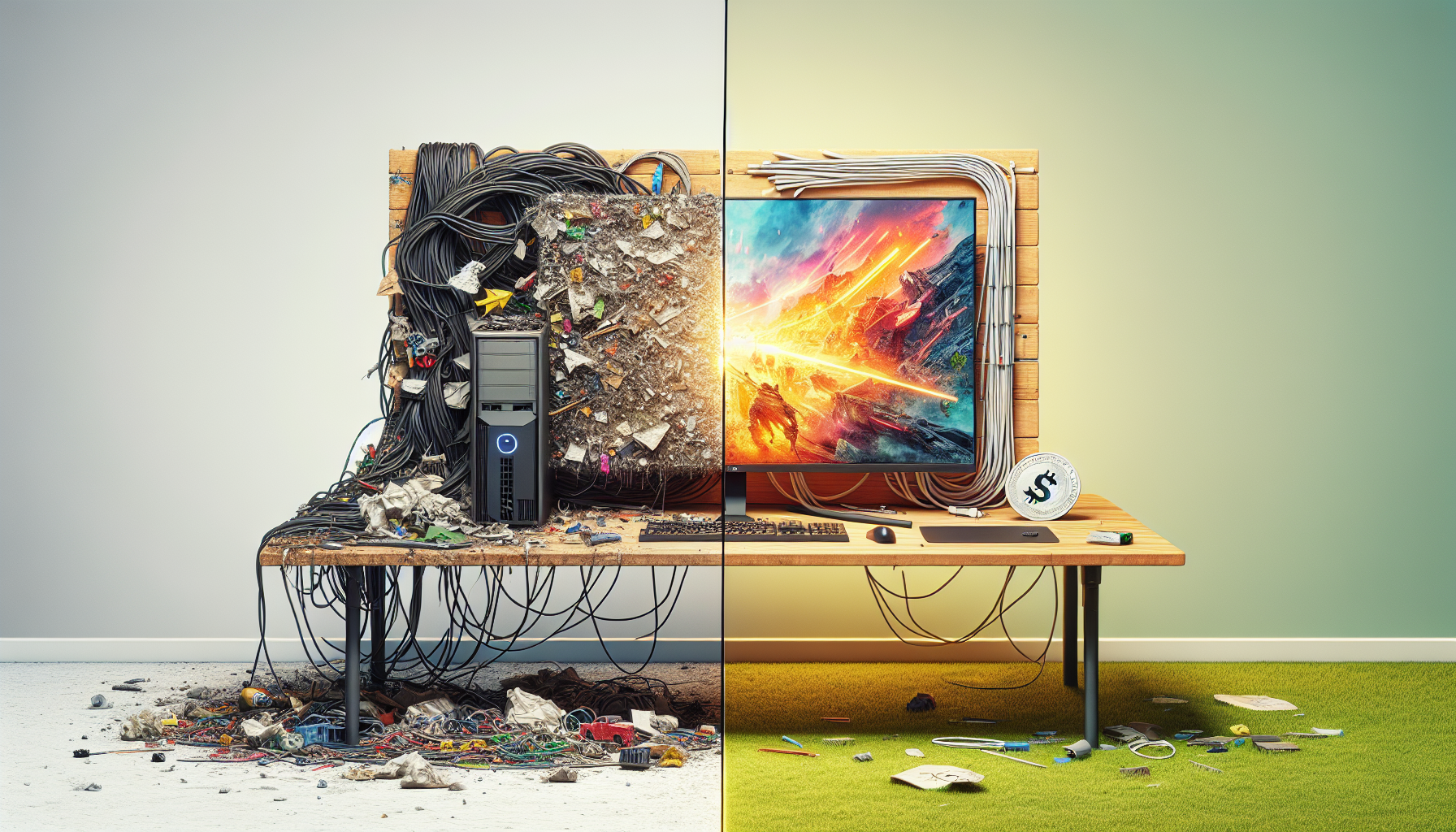
The Real Problem: We Are Addicted to "Shiny Boxes"
The pushback I get on this usually isn't technical; it’s emotional. People *like* their shiny boxes. They like the RGB lights. They like the feeling of "owning" their power.
But that "power" is a leash. The moment you tie your digital life to a specific piece of local hardware, you lose your mobility and your scale.
**The hardware industry has successfully turned a utility into a personality trait.** They’ve convinced a generation of developers and gamers that their worth is tied to their "specs."
It’s a brilliant marketing trick. If you believe your identity is tied to your hardware, you’ll defend that hardware even when it’s objectively a bad deal.
You’ll argue about "latency" and "compression artifacts" that 99% of human eyes can't even see, just to justify the $3,000 you just put on a credit card.
What You Should Do Instead: Ditch the Tower
If you want to be a builder in 2026, stop worrying about your local clock speed. It doesn't matter.
What matters is your **Access Velocity**. How quickly can you spin up 100 TFLOPs of compute to test an idea, and how quickly can you shut it down so you stop paying for it?
Instead of buying a "Gaming PC," I want you to spend that $2,000 on three things that actually improve your life:
1. **A high-quality 240Hz OLED monitor:** This is the only part of the hardware you actually *touch* with your eyes.
2. **A 2.5Gbps symmetric fiber connection:** Your "bandwidth" is your new "bus speed."
3. **Subscriptions to decentralized compute pools:** Pay for the silicon you use, exactly when you use it.
**I’m calling for an end to the "Desktop Era."** We are living in the "Ambient Compute" age.
Your computer shouldn't be a box under your desk; it should be a utility, like electricity or water, that is available at full power from any screen you happen to be standing in front of.
The Uncomfortable Truth of Digital Sovereignty
The final argument for the "local box" is always: "But Andrew, if I don't own the hardware, I don't own my computer."
I have news for you: if your "local" GPU requires a constant internet connection for driver updates, telemetry, and DRM-protected games, you don't "own" it anyway.
You are a tenant in NVIDIA’s ecosystem, paying for the privilege of housing their hardware and paying their electricity bill.
The "$1 PC" isn't just about saving money. It’s about **decoupling your digital capability from your physical location.**
When your "PC" is a decentralized instance that follows your identity, not your desk, you become a global citizen of the internet.
You can work, play, and build from a beach in Thailand or a cafe in Lisbon with the same power as a Silicon Valley engineer.
**The "PC Master Race" was a gated community. The $1 PC is a public park.**
By moving to an ambient compute model, we break the silicon cartel’s grip on our wallets. We stop the environmental disaster of e-waste and power-hungry local rigs.
And we finally start treating computers as tools for creation rather than status symbols for consumption.
The Death of the Upgrade Cycle
Imagine a world where you never have to "check the requirements" again. A world where "Will it run?" is a question of your internet speed, not your credit limit.
That world is here. I’ve already given it to my subscribers.
The only thing keeping you from it is the "Sacred Cow" of the tower under your desk. It feels safe. It feels powerful.
But it is actually a $2,000 anchor holding you back from the most flexible era of computing in human history.
**Stop building PCs. Start building systems.**
The next time you see a "Leak" about the next generation of GPUs, don't get excited. Get angry.
Ask yourself why you’re being asked to pay more for the same "shiny box" when the cloud and AI have already made the physical silicon under your desk obsolete.
I’m done with the upgrade treadmill. I’m done with the $1,500 GPUs. I’m staying in the $1 lane, and I’ve never felt more powerful.
**Have you noticed that your "high-end" rig feels more like a burden than a tool lately, or are you still convinced that local silicon is the only way?
Let’s talk about the death of the desktop in the comments.**
---
Story Sources
From the Author




Hey friends, thanks heaps for reading this one! 🙏
Appreciate you taking the time. If it resonated, sparked an idea, or just made you nod along — let's keep the conversation going in the comments! ❤️