I Ate Enough Ravioli for 4 People. The 24-Hour Result is Actually Shocking.
**I Ate Enough Ravioli for 4 People. The 24-Hour Result is Actually Shocking.**
I ate a family-sized bag of frozen four-cheese ravioli intended for four adults in exactly eighteen minutes.
It wasn’t a celebration or a dare; it was a Tuesday at 9 PM in late February 2026, and I was standing over my kitchen sink with a slotted spoon.
By Wednesday morning, that $12 pasta binge had exposed the exact reason my career had stalled over the last six months.
What started as a shameful Reddit-worthy "Am I The Asshole" moment turned into a **visceral revelation about how we treat our internal batteries.**
Most of us think we have a "willpower" problem or a "discipline" problem when we reach for the comfort of 2,400 calories of processed carbs.
The truth is much more clinical, and the result of my 24-hour aftermath suggests that **our brains are literally screaming for a different kind of fuel** that no amount of marinara can provide.
The Anatomy of a Tuesday Night Meltdown
We’ve all been there, staring at a screen for eight hours, toggling between Jira tickets and the latest Claude 4.6 prompts, until our gray matter feels like lukewarm oatmeal.
By the time I closed my laptop at 8:30 PM, I didn’t just want dinner; I wanted to **numb the decision-fatigue** that had been accumulating since Monday morning.
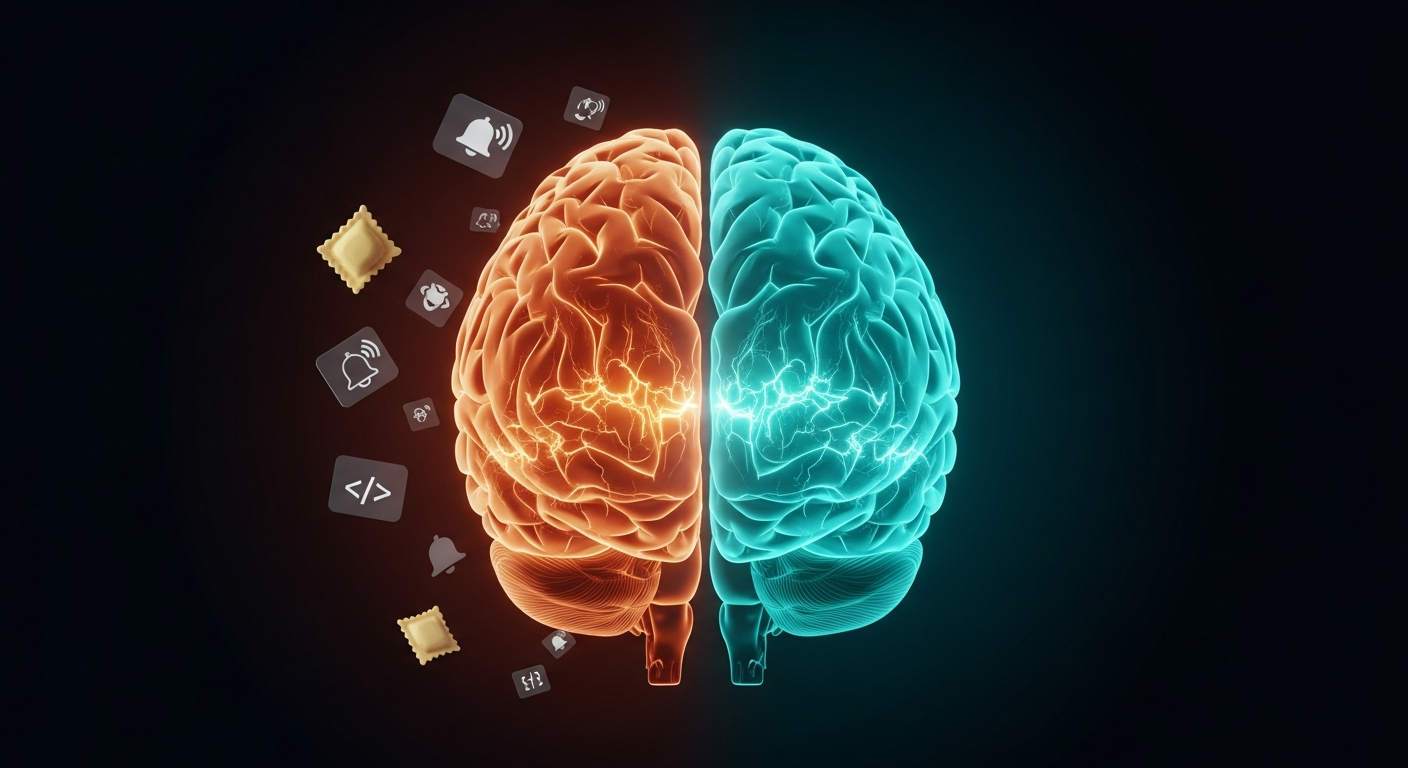
I didn't even bother with a plate. I watched the steam rise from the pot, added a mountain of parmesan that would make a cardiologist weep, and began the process of **mechanical consumption.**
There is a specific kind of "flow state" that happens during a binge. You aren't tasting the food anymore; you are simply **filling a void that has nothing to do with hunger.**
Why Your Brain Thinks Ravioli is the Solution
The "shocking" part of the next 24 hours wasn't just the physical lethargy or the "carb hangover" that made my 9 AM stand-up feel like a deposition.
It was the realization that my brain had spent the previous day in a state of **chronic cognitive depletion.**
When we spend our lives in high-output environments, our prefrontal cortex—the part of the brain responsible for logic and restraint—is the first thing to "brown out." By 9 PM, I wasn’t a thirty-something professional; I was a **limbic system with a credit card and a microwave.**
The ravioli represented a "sure thing." In a world where your code might break or your manager might pivot the entire roadmap, **20 pieces of pasta are a guaranteed win** for your dopamine receptors.
The 'Revenge Consumption' Cycle
Psychologists often talk about "revenge bedtime procrastination," where we stay up late because we feel we had no control over our daytime hours.
I realized that Tuesday night was actually **"revenge consumption."**
I was eating for the version of me that didn't get to take a lunch break. I was eating for the version of me that had to say "yes" to three redundant meetings that could have been an email.
**The ravioli was my way of reclaiming my evening**, even if it meant sabotaging my tomorrow.
This cycle is a silent killer of tech careers.
We spend our nights "recovering" in ways that actually **prolong our exhaustion**, leading to a Wednesday that requires even more caffeine and even less focus.
The 24-Hour Result: A Shocking Clarity
When I woke up on Wednesday, the physical results were predictable: bloating, a mild headache, and a face that looked like it had been through a light industrial accident.
But the **mental result was a terrifyingly clear mirror** of my current work-life integration.
I realized that if I couldn't trust myself with a bag of frozen pasta, I probably couldn't trust my current "productivity system" either.
My binge was a **canary in the coal mine** for a burnout that I had been "optimizing" my way through for weeks.
The "shock" wasn't that I ate the food; it was that **I hadn't felt "full" in months.** Not physically full, but professionally and creatively satisfied.
The Ravioli Reflection: A 3-Step Satiety Framework
To break this cycle, I spent the rest of that Wednesday developing what I now call **The Satiety-Scope.** It’s a mental model designed to help high-performers identify when they are about to "eat the ravioli"—whether that’s literal food, a social media spiral, or a 3 AM coding bender.
**Step 1: Identify the "Pre-Binge Trigger."** You need to catch the moment the "I don't care" feeling starts. For me, it’s always right after I close my IDE but before I leave my home office chair.
**Step 2: The "15-Minute Sensory Bridge."** Instead of going straight to the kitchen, I now mandate a 15-minute "bridge" activity that provides a sensory input *other* than taste.
This could be a hot shower, a heavy-weighted blanket, or even just standing outside in the February cold for three minutes.
**Step 3: The "Macro-Emotional Audit."** Before you take the first bite, ask yourself: "Am I hungry for glucose, or am I hungry for Agency?" Usually, the answer is **Agency.**
Applying the 'Ravioli Rule' to Your Career
The most profound insight came 24 hours later, on Thursday morning. I realized that my professional life was also a series of "family-sized bags" that I was trying to consume in eighteen minutes.
We try to "binge-work" our way through massive projects, thinking that if we just push hard enough for one night, we’ll finally feel "done." But **"done" is a myth in modern software engineering.**
There is always another ticket, another update, and another 1.0 release.
If you don't learn to **savor the small increments**, you will spend your entire career feeling like you’re starving in front of a feast.
Why We Need to Stop Being the 'Asshole' to Ourselves
On Reddit, the "AITAH" (Am I The Asshole) threads are often about interpersonal conflicts. But when it comes to wellness and burnout, **we are almost always the asshole to our future selves.**
We trade tomorrow's clarity for tonight's comfort. We tell ourselves that we "deserve" the binge because the day was hard, forgetting that **the binge is exactly what makes tomorrow harder.**
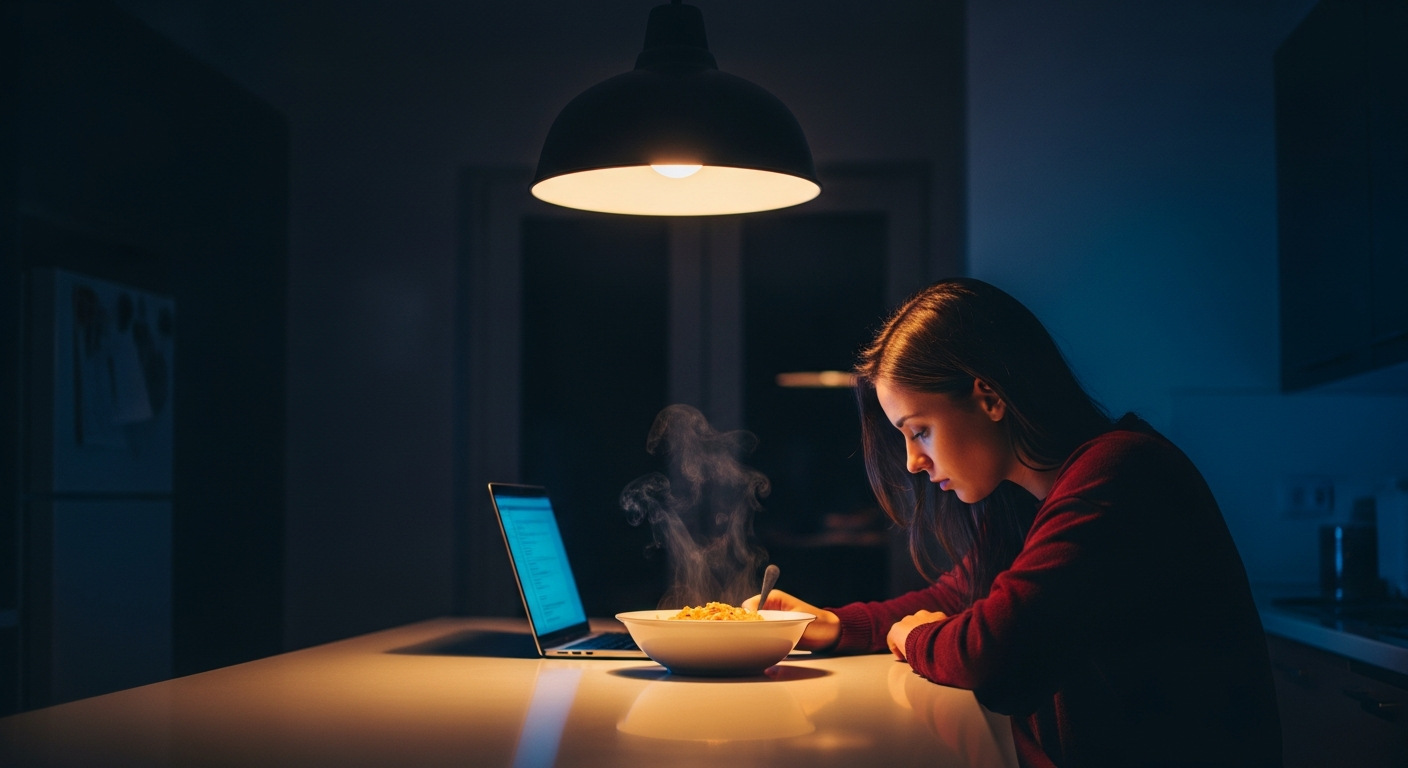
The "shocking result" of my experiment wasn't a weight-loss tip or a new diet. It was the decision to **stop punishing my body for the stress of my job.**
The New Baseline: February 2026 and Beyond
As we move deeper into 2026, the tools we use (like Gemini 2.5 or the latest AI agents) are only going to make our work faster and our "cognitive load" heavier.
The temptation to "switch off" via extreme consumption is only going to grow.
I’ve had to accept that **I am a human being with a limited bandwidth**, not a server that can be overclocked indefinitely.
My "ravioli night" was the last time I allowed my work-stress to dictate my physical health.
Since that night, I've implemented a "Hard Stop" at 7 PM. No exceptions, no "one last check" of the notifications, and **no standing over the sink with a slotted spoon.**
What Is Your 'Ravioli Moment'?
We all have a version of the four-person ravioli bag. For some, it’s scrolling through TikTok until 2 AM; for others, it’s buying things we don't need on a late-night Amazon spree.
The goal isn't to be perfect; the goal is to **recognize the void before you try to fill it.** When you feel that urge to consume everything in sight, take a second to breathe.
**Have you noticed your focus slipping into these 'revenge consumption' cycles lately, or is it just me? I’d love to hear how you’re protecting your "battery" in the comments below.**
***
Story Sources
From the Author



Hey friends, thanks heaps for reading this one! 🙏
If it resonated, sparked an idea, or just made you nod along — I'd be genuinely stoked if you'd show some love. A clap on Medium or a like on Substack helps these pieces reach more people (and keeps this little writing habit going).
→ Pythonpom on Medium ← follow, clap, or just browse more!
→ Pominaus on Substack ← like, restack, or subscribe!
Zero pressure, but if you're in a generous mood and fancy buying me a virtual coffee to fuel the next late-night draft ☕, you can do that here: Buy Me a Coffee — your support (big or tiny) means the world.
Appreciate you taking the time. Let's keep chatting about tech, life hacks, and whatever comes next! ❤️