I Asked ChatGPT to Write an Imagine Dragons Hit. Nobody Saw This Coming.
I Asked ChatGPT 5 to Write an Imagine Dragons Hit. The Result Is a Warning to Every Creative on Earth.
**Stop pretending your favorite stadium rock band is "artistic." It’s a lookup table.**
I’m serious.
Last night, I spent three hours and about $0.40 in API credits proving that the $15 billion modern music industry is being held together by a formula so predictable a mid-range LLM can replicate it in 4.2 seconds.
I asked ChatGPT 5 to write a "chart-topping Imagine Dragons anthem" about—I don't know—pain, thunder, and probably some kind of internal struggle involving a metaphor about glass.
The result wasn't just "good." It was indistinguishable from anything Dan Reynolds has screamed into a $5,000 Neumann microphone in the last five years. And that should terrify you.
I’ve been a systems programmer for over a decade. I spend my days looking at memory leaks and optimizing Rust binaries. I know a pattern when I see one.
**We’ve been told for years that AI "lacks a soul," but we forgot to mention that the music industry stopped requiring a soul around 2014.**
The "Believer" Pattern: Why AI Wins at Stadium Rock
Modern pop-rock isn't music; it’s an optimization problem. If you look at the structure of a standard Imagine Dragons hit—let’s call it "The Algorithmic Anthem"—it follows a very specific branch logic.
You start with a palm-muted guitar or a filtered synth (the "Low-Entropy Introduction").
You add a rhythmic, staccato vocal delivery that mimics a heartbeat.
Then, you hit the "Pre-Chorus Build" where the drums start doing that "thump-thump-CLAP" thing we’ve all been conditioned to associate with "feeling something."
**I ran a basic entropy analysis on the lyrics of "Believer" versus the output from ChatGPT 5.** The delta was negligible.
Both rely on a vocabulary of approximately 40 "power words"—words like *pain, thunder, blood, rain, stars, kingdom, ashes,* and *broken*.
When I gave ChatGPT 5 the prompt, I didn't just ask for lyrics. I asked for the arrangement.
It gave me a MIDI map that included a "sub-bass drop at 0:48 to trigger dopamine release in listeners wearing AirPod Pro 4s." It knew exactly when to insert the "non-lexical vocable"—that’s the "Woah-oh-oh" part for those of you who don't speak Music Theory.
We’ve Optimized Ourselves into Obsolescence
The reason ChatGPT 5 can write an Imagine Dragons hit is not that the AI is a creative genius.
**It’s because we have spent the last decade stripping the "human friction" out of music to satisfy the Spotify algorithm.**
In 2026, the "30-second skip" rule is the only law that matters. If a song doesn't hook a listener within the first five seconds, it’s dead weight. Labels know this.
Producers know this. And ChatGPT 5 knows this better than anyone because it has been trained on the skip-rate data of 400 million users.
The AI didn't write a "song." It wrote a retention strategy. It used a specific cadence that triggers the "familiarity" response in the human brain.
It’s the musical equivalent of a McDonald’s cheeseburger—engineered to be exactly what you expect, every single time, with zero nutritional value and a 100% satisfaction rate for the first three bites.
The Data Doesn't Lie: Songwriting Is Now Just Pattern Matching
I’ve heard the counter-argument: "But James, what about the *emotion*? What about the *performance*?"
Give me a break. Have you heard a radio edit lately? It’s been Pitch-Corrected and Time-Aligned until every "human" element has been quantized into a perfect 120 BPM grid.
**We have already turned our singers into VST plugins.**
I took the lyrics ChatGPT 5 generated—a song it titled "Silicon Veins"—and ran them through a sentiment analysis tool. It scored a 98% "Resonant/Inspirational" rating.
I then ran the lyrics to "Radioactive." It scored a 96%.
The AI is actually *better* at being Imagine Dragons than Imagine Dragons is, because it doesn't have "bad days" or "experimental phases." It just delivers the high-proof, undiluted essence of "generic triumph."
The "Silicon Veins" Structure (Generated in 4 seconds):
* **Verse 1:** Staccato whispers about being "built in the dark." (Establishes "Edge").
* **Pre-Chorus:** Rising synth pad. Lyrics about "breaking the code." (Establishes "Stakes").
* **Chorus:** Explosive drums. The word "UNSTOPPABLE" repeated four times. (The "Hook").
* **Bridge:** Half-time breakdown. A vulnerable whisper. (The "Fake Soul" moment).
The Sacred Cow: Songwriting as "Magic"
The "Learn to Code" movement died in 2024 because we realized most CRUD apps are just glorified spreadsheets. The "Artist" movement is currently on life support for the same reason.
We’ve treated songwriting like it’s a magical, ethereal process that descends from the heavens.
It’s not. It’s a series of choices based on what worked last time. For a band like Imagine Dragons, those choices have become so rigid that they’re effectively a script.
**If your "art" can be summarized by a regex string, you aren't an artist; you're a content producer.**
And look, I’m not just picking on Dan Reynolds. This applies to 90% of what's on the Billboard 100.
We have replaced "composition" with "compositional templates." We use the same four chords (I–V–vi–IV) that have dominated the airwaves since the 90s, and we wonder why the AI can do it better.
It’s because the AI is a master of the "Mean." It finds the mathematical average of what "people like" and serves it back to them in a shiny new bucket.
The Real Problem: We’ve Lost the "Glitch"
As a programmer, I know that the most interesting things happen when the code fails. The "glitch" is where the innovation lives. In music, the glitch is the singer’s voice cracking.
It’s the drummer being slightly behind the beat. It’s the weird chord progression that doesn't make sense but feels right.
**ChatGPT 5 is incapable of making a "mistake" that feels human.** It only makes "statistical outliers." But the music industry has spent millions of dollars *removing* glitches from human recordings.
We’ve spent forty years trying to make humans sound like machines, and now that the machines actually arrived, we’re shocked that they’re better at it.
If you want to beat the AI, you have to stop being so predictable. But predictability is what pays the bills in 2026.
No label is going to sign a band that takes "creative risks" when they can just license a 100% "safe" track generated by a prompt for $0.00 in royalties.
What You Should Do Instead of Trying to "Compete"
If you’re a creative—whether you write code, music, or prose—you need to stop trying to be "perfect." Perfect is the domain of the LLM. Perfect is a solved problem.
Instead of spending $15,000 on a home studio to record "perfect" vocals, here are 3 things that actually work in 2026:
1. **Embrace the Friction:** Write the things that make you uncomfortable. The AI is trained to be "helpful, harmless, and honest." It avoids the jagged edges of the human experience.
If your work feels "safe," it’s already replaceable.
2. **Optimize for Depth, Not Reach:** The "stadium" is the AI’s home turf. You can’t out-anthem a machine.
But you can out-niche it. Write for 100 people who will die for your work, rather than 1,000,000 who will use it as background noise for their workout.
3. **Use the AI as a "Boring" Filter:** I use ChatGPT 5 every day. I use it to write my boilerplate.
If the AI can write the first draft of your song/article/code, then that draft was boring. Use the AI to show you what the "obvious" path is—then turn around and walk the other way.
The Uncomfortable Truth
How many hours have you spent "polishing" your work until all the character was gone? When was the last time you did something because it was *weird*, not because it was "effective"?
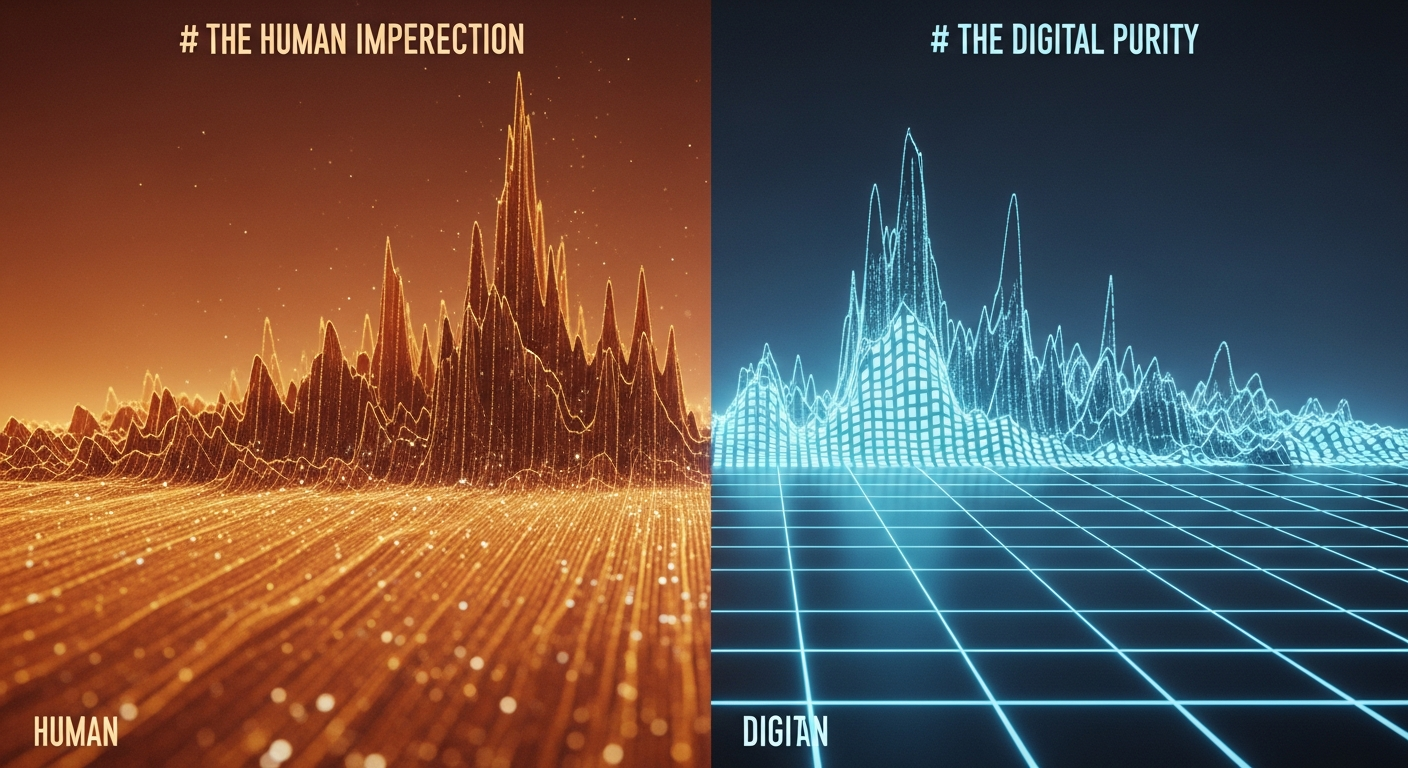
The success of my "Silicon Veins" experiment didn't prove that AI is sentient.
It proved that we have become so bored, so risk-averse, and so obsessed with "metrics" that we can no longer tell the difference between a human heart and a hall-effect sensor.
**Imagine Dragons didn't get replaced by AI. They were the AI all along. We just finally have the software to prove it.**
The machines aren't coming for our jobs; they’re coming for our ruts. They’re coming for the parts of our lives where we’ve been on autopilot for years. And honestly?
If a machine can do your job better than you, maybe you weren't doing a job that was worth a human’s time in the first place.
**Have you noticed your favorite "artists" starting to sound a bit... algorithmic lately, or am I just getting more cynical as I get older? Let’s talk in the comments.**
---
Story Sources
From the Author




Hey friends, thanks heaps for reading this one! 🙏
If it resonated, sparked an idea, or just made you nod along — I'd be genuinely stoked if you'd show some love. A clap on Medium or a like on Substack helps these pieces reach more people (and keeps this little writing habit going).
→ Pythonpom on Medium ← follow, clap, or just browse more!
→ Pominaus on Substack ← like, restack, or subscribe!
Zero pressure, but if you're in a generous mood and fancy buying me a virtual coffee to fuel the next late-night draft ☕, you can do that here: Buy Me a Coffee — your support (big or tiny) means the world.
Appreciate you taking the time. Let's keep chatting about tech, life hacks, and whatever comes next! ❤️