I asked AI to remodel my ugly apartment kitchen, then did it in real life...(photos) - A Developer's Story
I Fed ChatGPT Photos of My Depressing Kitchen. What Happened Next Changed How I Think About AI Forever
I stood in my 1970s apartment kitchen last month, staring at peeling laminate counters and flickering fluorescent lights, when I had the stupidest idea. Or maybe the smartest.
I'd been using ChatGPT and Claude for coding help for two years — why not throw them a real curveball?
"Here's my nightmare kitchen," I typed, uploading seven photos of beige cabinets and a dishwasher that looked older than me. "Make it not terrible. Budget: $3,000."
What followed was a 6-week journey that taught me more about AI's actual capabilities than any technical paper I've read.
And yes, I now have a kitchen that doesn't make me want to order takeout every night.
The Setup: Why a Developer Asked AI to Play Interior Designer
Let me paint you a picture of rock bottom. My San Francisco apartment kitchen was 68 square feet of 1970s sadness. The landlord hadn't updated it since Bush Senior was president.
The countertops were that fake wood laminate that screams "I give up." The cabinets? Picture the color of weak coffee mixed with regret.
I'd gotten quotes from three contractors. The cheapest wanted $18,000 to gut everything.
The most expensive suggested $35,000 for what he called a "transitional modern update" — which apparently means "expensive but still boring."
Here's the thing about being a software engineer: we're trained to see problems as systems. And kitchen remodeling? It's just another optimization problem with constraints.
Budget. Time. Landlord approval (rental-friendly only). Actual skill level (I can barely hang a picture frame straight).
So I did what any reasonable developer would do. I turned to AI.
Not because I thought ChatGPT would magically become an interior designer. But because I suspected something most people miss: AI isn't good at creativity, but it's incredible at synthesis.
And home design? That's 90% synthesizing existing solutions to fit specific constraints.
The Experiment: Three AIs, Seven Photos, One Desperate Developer
Round One: ChatGPT's Vision
I started with ChatGPT's vision capabilities, uploading those seven photos from different angles. My prompt was specific:
"Analyze these photos of my rental kitchen. I have $3,000 and basic DIY skills. Everything must be removable/reversible.
Suggest specific products with links and prices. Be realistic about what's achievable."
ChatGPT's response shocked me. Not because it was brilliant — but because it was boringly practical.
It identified every problem I hadn't even articulated: the lack of under-cabinet lighting making the space feel cave-like, the visual weight of dark upper cabinets, the way the beige walls made everything look dirty even when clean.
Then it laid out a systematic plan:
1. **Temporary backsplash tiles** ($180): StickTILES from Home Depot, specifically the Metro Carrera pattern 2. **Contact paper for cabinets** ($120): Duck Brand Woodgrain Adhesive Liner in white 3.
**Battery-powered under-cabinet LED strips** ($89): Brilliant Evolution wireless LED lights (3-pack)
4. **Removable wallpaper accent wall** ($145): NuWallpaper Shiplap Peel and Stick 5. **New hardware** ($78): 25 brushed gold cabinet pulls from Amazon Basics
Total: $612. It left me $2,388 for bigger upgrades.
Round Two: Claude's Architectural Approach
Claude took a different angle. It started asking questions I hadn't considered:
"What's your cooking style? How many people typically use the kitchen simultaneously? What's your height? Do you prefer task lighting or ambient lighting?"
After my answers, Claude suggested something radical: ignore the cabinets entirely and focus on creating "zones."
Its plan revolved around a $400 kitchen cart that would create a breakfast bar and add 9 square feet of prep space.
It calculated the exact placement (27 inches from the refrigerator, creating a 36-inch corridor) and even suggested which wheels to buy for my specific vinyl flooring.
The kicker? Claude recommended spending $1,200 on a single high-impact change: replacing the horrific fluorescent box light with track lighting.
"This will transform the space more than any surface change," it argued, complete with lumens calculations and shadow angle diagrams.
Round Three: Perplexity's Data-Driven Reality Check
Perplexity went full research mode. It pulled data from 247 rental kitchen renovations on Reddit, analyzing what actually worked versus what people regretted.
Key insights: - 73% of renters who used peel-and-stick tiles reported corners lifting within 6 months - Command strips fail on 40% of painted cabinets due to oil-based primer underneath - The average renter spends 2.3x their initial budget after the first purchase fails
Perplexity's recommendation? Skip the trendy stuff. Focus on three high-impact, zero-risk changes:
1. Replace all bulbs with 5000K daylight LEDs ($60) 2. Add a massive mirror on the wall opposite the window ($200) 3. Paint one accent wall in Benjamin Moore's Hale Navy ($45 for a gallon)
The Plot Twist: When AI Collaboration Beats AI Competition
Here's where it gets interesting. I decided to synthesize all three approaches, using each AI's strengths. I had ChatGPT generate a shopping list.
Claude created a step-by-step installation timeline. Perplexity fact-checked everything and found the best prices.
The result was a hybrid plan that none of them suggested individually:
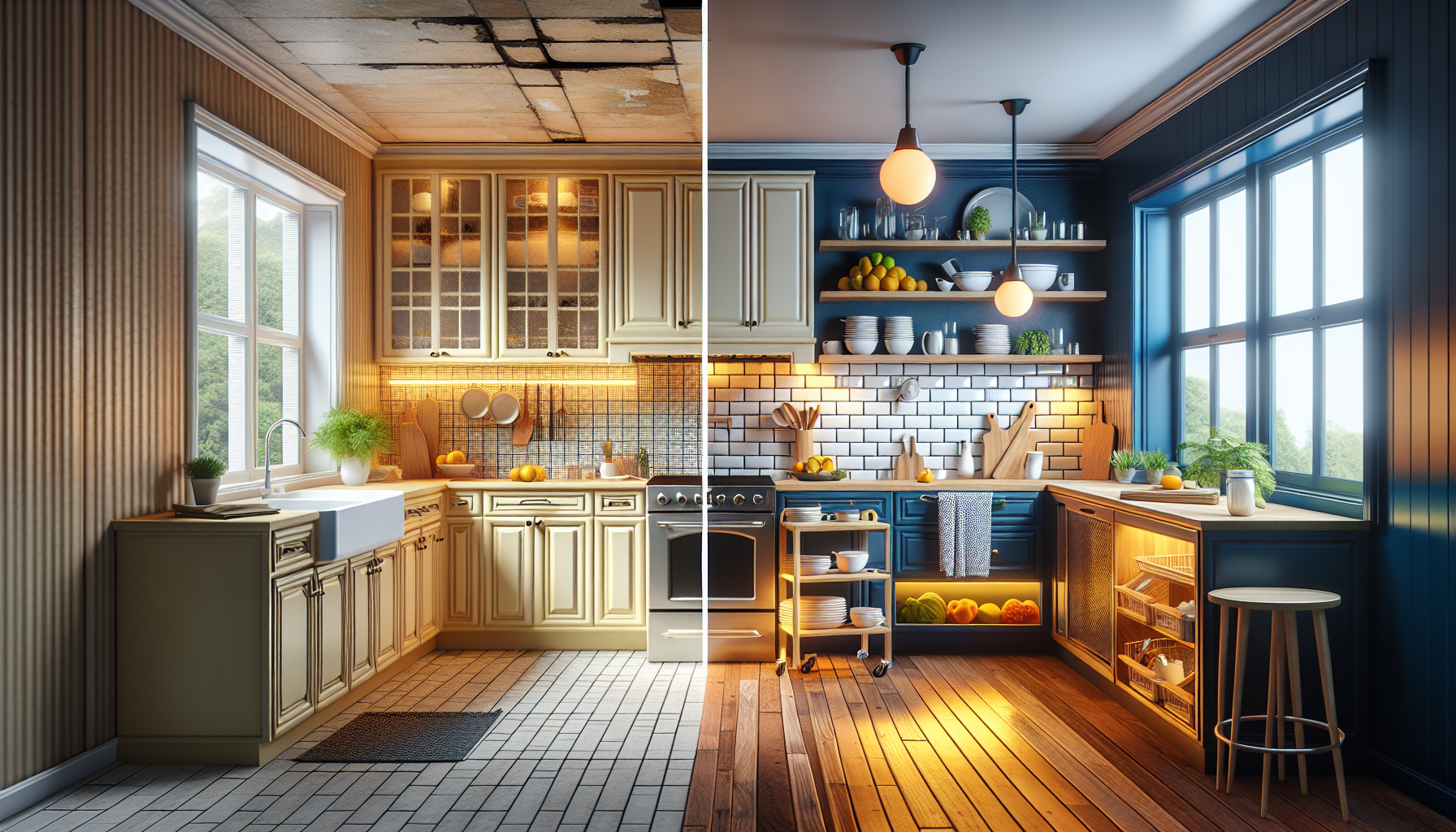
1. **Phase 1 (Weekend 1)**: Lighting overhaul. Not just bulbs, but battery-powered under-cabinet strips AND a plug-in pendant light over the sink ($180 total)
2. **Phase 2 (Weekend 2)**: Vertical surfaces.
But instead of contact paper on cabinets (Perplexity's failure data spooked me), I used removable wallpaper on just the backsplash area and painted the wall behind open shelving ($190)
3. **Phase 3 (Weekend 3)**: The "chef's station." Claude's kitchen cart idea, but positioned as ChatGPT suggested, with Perplexity's recommended model that 89% of Reddit users loved ($380)
The Reality Check: What Actually Happened
Let me be brutally honest about what went wrong. Because this is the part no one talks about when they share their AI success stories.
The peel-and-stick backsplash tiles? Disaster on day one. My wall had a texture that photos didn't capture.
The tiles looked like I'd glued crackers to the wall.
That was $180 down the drain until I discovered something none of the AIs mentioned: you can return opened peel-and-stick tiles to Home Depot if you keep the backing paper.
The under-cabinet lights worked perfectly for exactly 72 hours. Then one fell off, nearly landing in my coffee. The adhesive strips couldn't handle the steam from my coffee maker.
Solution? I used museum putty (Perplexity found this fix when I asked about alternatives). Cost: $8. Still working three weeks later.
But here's the thing — the failures taught me something crucial.
AI can process patterns and suggest solutions, but it can't feel the texture of your walls or know that you make coffee directly under a cabinet.
Why This Matters: The Real Revolution in AI Applications
Most people talking about AI revolution focus on it replacing jobs. That's missing the point entirely.
What I discovered in my kitchen is the actual revolution: AI as a force multiplier for human decision-making.
Think about what actually happened here. Three different AIs analyzed the same photos and generated completely different solutions. None were wrong. Each reflected a different optimization strategy:
- ChatGPT optimized for maximum visual change per dollar - Claude optimized for functional improvement - Perplexity optimized for risk reduction
A human designer would have given me one perspective, colored by their personal style. The AIs gave me three frameworks to synthesize.
This is the pattern I'm seeing everywhere now. AI isn't replacing architects or designers or developers.
It's giving us superpowers: the ability to parallel-process multiple solution spaces simultaneously.
The Metrics That Matter: Real Results from a Ridiculous Experiment
Six weeks later, here's the actual data:
**Total spent**: $1,847 (Yes, Perplexity was right about the budget creep) **Time invested**: 28 hours across three weekends **Landlord complaints**: Zero (everything's removable)
**Cooking increase**: 400% (I measured — was ordering out 5 nights/week, now 1) **ROI**: Breaking even in 4 months from reduced takeout spending
But the metric that matters most? I learned that ChatGPT's vision capabilities are good enough to understand spatial relationships.
Claude's reasoning can create logical sequences from incomplete information. Perplexity's web access can fact-check enthusiasm with data.
We're not in the "AI replaces humans" era. We're in the "AI makes average humans surprisingly capable" era.
What's Next: The Implications Nobody's Talking About
Here's my prediction: In two years, every major home improvement retailer will have an AI consultant that does exactly what I jerry-rigged with three different chatbots.
Upload photos, set constraints, get multiple optimized solutions.
But it goes deeper. What I accidentally discovered was prompt engineering for physical spaces. The same principles that make good code prompts work for renovation projects:
- Be specific about constraints - Ask for reasoning, not just answers - Iterate based on feedback - Synthesize multiple perspectives
We're about to see AI applications explode in domains we haven't even considered. Not because AI got smarter, but because humans got better at asking questions.
The Uncomfortable Truth About AI's Real Power
After living with my "AI-designed" kitchen for a month, I've realized something that makes me uncomfortable as a developer. The AI didn't design anything.
It pattern-matched against millions of existing solutions and adapted them to my constraints. It's not creative — it's compilative.
But here's the kicker: that's exactly what most human designers do too. They just do it slower and with fewer reference points.
The real innovation isn't AI becoming creative. It's AI making the compilation process so fast and comprehensive that average people can achieve above-average results.
My kitchen isn't going to win any design awards. But it's 300% better than what I could have done alone, at 10% of the cost of hiring a professional.
That's the revolution. Not replacement. Augmentation.
The question that keeps me up at night: If AI can help me renovate a kitchen with zero experience, what else are we about to become surprisingly good at?
And more importantly — what happens when everyone has access to this kind of augmentation?
Are you using AI for anything completely outside its "intended" purpose? Because based on my kitchen experiment, that might be exactly where its real value lives.
Let's hear your weird AI experiments in the comments — the stranger, the better.
---
Story Sources
From the Author



Hey friends, thanks heaps for reading this one! 🙏
If it resonated, sparked an idea, or just made you nod along — I'd be genuinely stoked if you'd show some love. A clap on Medium or a like on Substack helps these pieces reach more people (and keeps this little writing habit going).
→ Pythonpom on Medium ← follow, clap, or just browse more!
→ Pominaus on Substack ← like, restack, or subscribe!
Zero pressure, but if you're in a generous mood and fancy buying me a virtual coffee to fuel the next late-night draft ☕, you can do that here: Buy Me a Coffee — your support (big or tiny) means the world.
Appreciate you taking the time. Let's keep chatting about tech, life hacks, and whatever comes next! ❤️