I 100% go by what Joanna Maciejewska said. - A Developer's Story
The AI Writing Paradox: Why Joanna Maciejewska's Dream Is Already Reality (And Why That Should Terrify Us)
"I want AI to do my laundry and dishes so that I can do art and writing, not for AI to do my art and writing so that I can do my laundry and dishes."
When fantasy author Joanna Maciejewska tweeted these words, she crystallized a fear that's been brewing in creative communities since ChatGPT exploded onto the scene over three years ago.
Her message went viral because it hits at something profound: we've built AI backwards.
Instead of automating the mundane to free us for creative pursuits, we're automating creativity itself while humans still scrub toilets and fold fitted sheets.
But here's the uncomfortable truth that 10,000+ Redditors are grappling with: Maciejewska's concern isn't just valid — it's already our reality.
And the implications run deeper than most of us want to admit.
The Great Inversion: How We Got Here
The promise of automation has always been liberation from drudgery. From the washing machine to the dishwasher, technology historically freed us from physical labor so we could pursue higher callings.
That narrative shaped how we imagined AI's role in society. Science fiction promised us robot butlers and automated factories.
We'd finally have time for art, philosophy, and human connection.
Instead, we got DALL-E and ChatGPT.
In 2026, AI can write your novel, compose your symphony, and paint your masterpiece in seconds.
Meanwhile, you're still manually loading the dishwasher, wondering if the top rack items are actually getting clean.
This isn't how it was supposed to go.
The inversion happened because of a fundamental mismatch between what's computationally easy and what humans value.
It turns out that folding laundry requires sophisticated real-world manipulation, spatial reasoning, and adaptive problem-solving that makes it incredibly hard for robots.
Writing a sonnet? That's just pattern matching at scale.
"The things that are easy for humans are hard for computers, and vice versa," as Moravec's paradox tells us. We just didn't expect the "vice versa" to include our creative souls.
Why Creative AI Came First (And Physical AI Didn't)
The path to our current reality was paved by three critical factors that developers need to understand.
**First, creative work is digital-native.** Text, images, and code exist as data. They don't require mechanical actuators, sensors, or navigation through unpredictable physical spaces.
Training GPT-4 meant feeding it text. Building a laundry-folding robot means solving robotics, computer vision, material science, and safety engineering simultaneously.
**Second, the economics were irresistible.** OpenAI could build ChatGPT with servers and GPUs — infrastructure that already existed. A single model could serve millions simultaneously.
Compare that to physical automation. Boston Dynamics spent decades and hundreds of millions creating robots that can barely open doors reliably.
Even if they perfected a laundry robot tomorrow, it would cost $100,000+ per unit and serve one household.
**Third, we had the data.** The internet gave us billions of examples of human writing, art, and code. Every blog post, every GitHub commit, every DeviantArt upload became training data.
Physical tasks? We don't have datasets of humans folding every possible shirt in every possible condition.
We can't easily digitize the subtle pressure needed to handle delicate fabrics versus heavy denim.
The result is a world where AI can write a screenplay about robots doing housework faster than actual robots can match socks.
The Hidden Cost of Creative Automation
When developers on r/ChatGPT debate Maciejewska's quote, they're not just discussing preferences. They're confronting an existential question about human value.
Creative work has always been how humans assert their uniqueness. It's how we say "I exist, I matter, I have something to contribute that no one else can."
Now, AI can mimic that contribution in seconds.
A software developer spent years mastering algorithms and design patterns. Now, GitHub Copilot autocompletes entire functions.
A copywriter refined their voice through thousands of articles. ChatGPT now produces similar content in moments.
The psychological impact is profound. We're not just being replaced — we're being replaced at the very things we thought made us irreplaceable.
"I don't want to compete with AI for creative work," one Reddit commenter wrote. "I want AI to handle the boring stuff so I can be more creative."
But that's not the timeline we're living in.
The economics ensure creative AI will only accelerate. Every company wants content, code, and design.
Few companies care if your laundry is folded. The market has spoken, and it values automated creativity over automated chores.
What This Means for Developers
For the software development community, this inversion creates unique challenges and opportunities.
**The immediate reality is augmentation, not replacement.** Despite the fear, most developers aren't being replaced — they're becoming AI-assisted.
The developer who masters GitHub Copilot isn't competing against it; they're leveraging it to ship code faster.
But this creates a new divide: developers who adapt to AI assistance versus those who resist it.
The resisters argue that AI-generated code lacks elegance, understanding, and craftsmanship. They're not wrong.
But the market increasingly doesn't care. "Good enough" code that ships beats perfect code that doesn't.
**The skills that matter are shifting.** Pure coding ability matters less when AI can generate boilerplate.
What matters now is system design, requirement analysis, and knowing what to build — not just how to build it.
Developers need to move up the abstraction ladder. Instead of writing the code, you're reviewing AI-generated code.
Instead of implementing algorithms, you're architecting systems that AI helps construct.
This isn't the creative freedom Maciejewska envisioned. It's a different kind of creative work — less about crafting perfect functions, more about orchestrating AI tools to build complex systems.
The Security and Trust Crisis
There's another dimension to this inversion that the Reddit community is grappling with: trust.
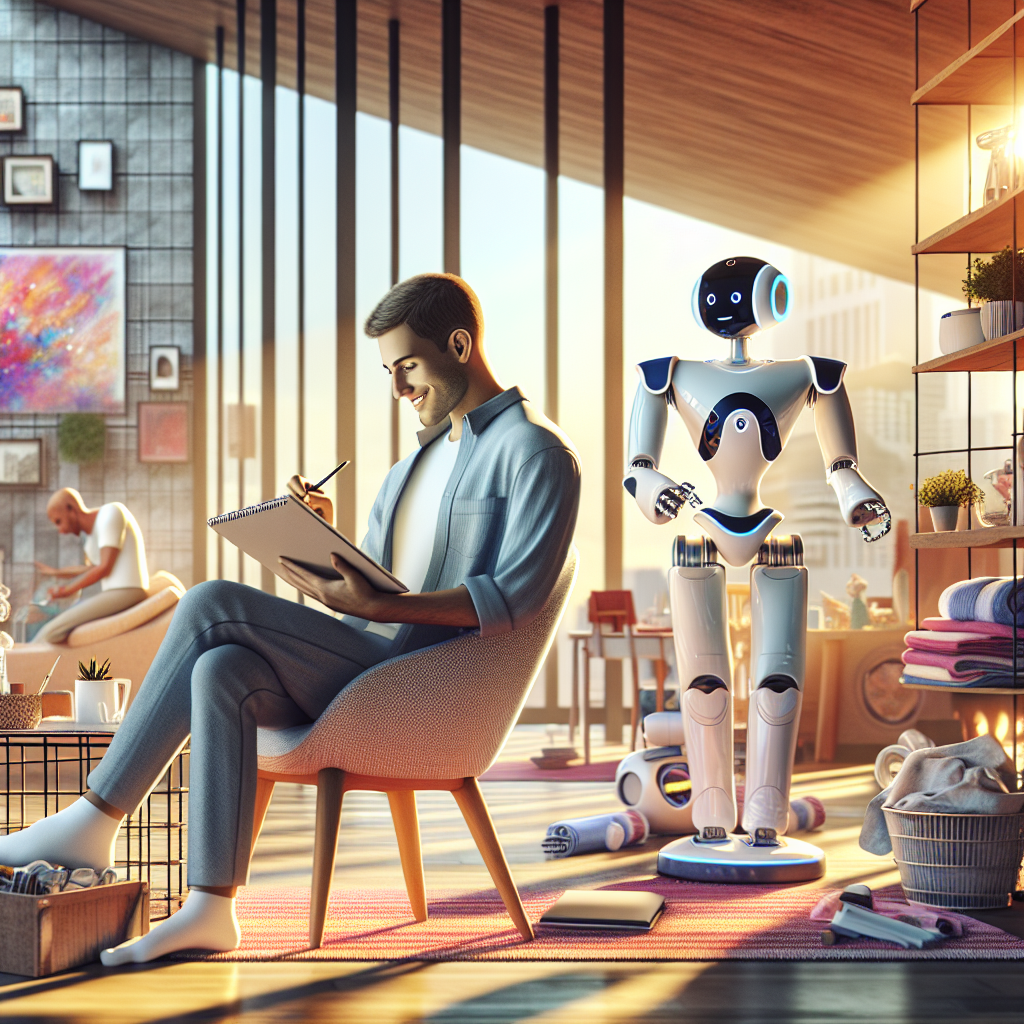
When AI does physical tasks, failures are visible. A robot that can't fold shirts properly is obviously broken.
You see the wrinkled laundry.
When AI does creative and intellectual tasks, failures hide in plain sight. AI-generated code might have subtle security vulnerabilities.
AI-written articles might contain convincing-sounding misinformation. AI art might perpetuate biases we don't even recognize.
We're automating the very tasks where human judgment and accountability matter most, while leaving the low-stakes physical tasks to humans.
A badly folded shirt never crashed a production database or spread conspiracy theories.
This trust crisis will only deepen as creative AI improves. When AI writing becomes indistinguishable from human writing, how do we maintain authentic human communication?
When AI can perfectly mimic any artist's style, what happens to artistic attribution?
The developers building these systems need to grapple with these questions now, not after the technology is deployed at scale.
Where This All Leads
The trajectory is clear, even if we don't like it. Creative AI will continue advancing faster than physical robotics.
The economics are too compelling, the technical barriers too different.
But this doesn't mean Maciejewska's dream is dead — it means we need to be intentional about preserving human creativity.
**Some developers are already building this future.** They're creating tools that augment rather than replace human creativity. AI that helps writers overcome block, not AI that writes for them.
AI that suggests color palettes, not AI that paints the entire picture.
The key is maintaining human agency and intention in the creative process.
**Physical automation is coming, just slower.** Robotics is advancing, just on a different timeline. Companies like Tesla and Figure are pushing toward general-purpose humanoid robots.
In 10-15 years, we might finally have that laundry-folding robot.
But by then, creative AI will have advanced even further. The gap between digital and physical automation will persist.
**The real solution might be economic, not technical.** If we value human creativity, we need economic systems that reward it even when AI can produce similar outputs cheaper.
Universal Basic Income, creative grants, and new economic models might be necessary to preserve human creative work.
The Reddit community's 10,000+ upvotes on Maciejewska's sentiment shows there's massive demand for a different path.
The question is whether we can build economic structures that support human creativity when AI can create "good enough" content for free.
The uncomfortable reality is that we're living through an inversion of the future we expected. AI is conquering our creative spaces while leaving us with the mundane physical tasks.
Joanna Maciejewska articulated what millions are feeling: this isn't the AI revolution we wanted.
But perhaps the answer isn't to resist creative AI or wait for physical automation to catch up.
Perhaps it's to fundamentally reconsider what human creativity means in an age of artificial intelligence.
If AI can write, paint, and compose, maybe human creativity isn't about the output anymore. Maybe it's about the intention, the meaning, the choice to create despite having alternatives.
The developers building these systems have a choice. Build AI that replaces human creativity, or build AI that amplifies it.
Build systems that make humans obsolete, or systems that make humans more capable.
Maciejewska's dream — AI doing laundry so humans can make art — might still be possible. But only if we actively choose to build that future instead of accepting the one that's easiest to code.
Story Sources
From the Author


Hey friends, thanks heaps for reading this one! 🙏
If it resonated, sparked an idea, or just made you nod along — I'd be genuinely stoked if you'd show some love. A clap on Medium or a like on Substack helps these pieces reach more people (and keeps this little writing habit going).
→ Pythonpom on Medium ← follow, clap, or just browse more!
→ Pominaus on Substack ← like, restack, or subscribe!
Zero pressure, but if you're in a generous mood and fancy buying me a virtual coffee to fuel the next late-night draft ☕, you can do that here: Buy Me a Coffee — your support (big or tiny) means the world.
Appreciate you taking the time. Let's keep chatting about tech, life hacks, and whatever comes next! ❤️