Heathrow scraps liquid container limit - A Developer's Story
The Tech Behind Heathrow's Liquid Limit Reversal: Why Advanced CT Scanners Couldn't Deliver on Their Promise
Hook
When Heathrow Airport announced it would scrap its 100ml liquid container limit using next-generation CT scanning technology, it felt like the future had finally arrived.
For two decades, travelers have performed the ritualistic dance of decanting shampoo into tiny bottles and tossing perfectly good toiletries at security checkpoints.
The promise was simple: advanced AI-powered scanners would make these restrictions obsolete.
Yet just months after implementation, the UK's busiest airport has reversed course, reimposing the very limits they claimed to have conquered.
This isn't just a story about airport security—it's a cautionary tale about the gap between AI's laboratory prowess and real-world deployment, and what happens when cutting-edge technology meets the immovable object of operational reality.
Project visualization
Background
The 100ml liquid restriction has been aviation's most visible security theater since 2006, when British authorities foiled a plot to use liquid explosives disguised as soft drinks to destroy transatlantic flights.
Overnight, airports worldwide implemented stringent rules: liquids in containers no larger than 100ml, all fitting in a single, transparent, resealable plastic bag no bigger than 20cm x 20cm.
For nearly two decades, this rule has remained largely unchanged, becoming as much a part of air travel as delayed flights and overpriced coffee.
But the technology to detect liquid explosives has evolved dramatically since 2006.
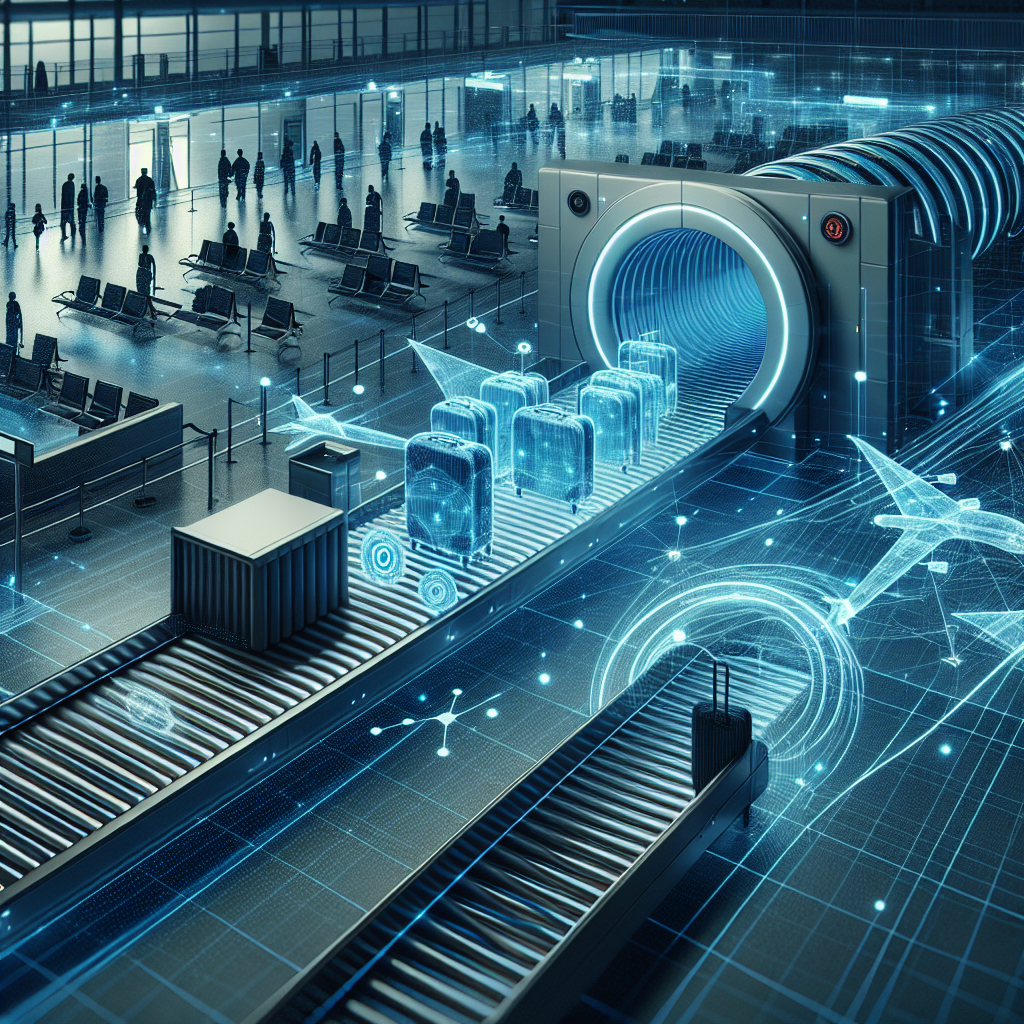
Modern Computed Tomography (CT) scanners—the same technology used in medical imaging—can create detailed 3D images of luggage contents.
Unlike traditional X-ray machines that produce flat, 2D images requiring human interpretation, CT scanners generate volumetric data that algorithms can analyze at the molecular level.
These machines can theoretically distinguish between water and hydrogen peroxide, shampoo and nitroglycerin, by analyzing density patterns and chemical signatures.
The UK government invested over £1 billion in rolling out these scanners across major airports, with a June 2024 deadline for implementation.
The Department for Transport promoted it as a "game-changer" that would simultaneously enhance security and improve passenger experience.
Early trials at airports like Shannon and Teesside showed promising results, with passengers breezing through security without removing laptops or liquids from their bags.

Project visualization
Heathrow, processing over 80 million passengers annually, began its rollout in 2022.
By early 2024 (two years ago), Terminal 3 had fully transitioned to the new system, allowing passengers to keep liquids up to 2 liters in their bags.
The airport's CEO called it "the start of a revolution in airport security." Tech publications heralded it as AI finally delivering on its promise to make life easier.
Security experts praised the dual benefits: better threat detection and improved passenger flow.
Key Details
The reversal came suddenly.
In June 2024 (about 20 months ago), just as the system was gaining passenger trust, the Department for Transport mandated that all UK airports revert to the 100ml limit, citing "operational considerations." The vague language sparked immediate speculation, but industry insiders paint a picture of a perfect storm of technical, operational, and human challenges that even the most sophisticated AI couldn't overcome.
The CT scanners themselves are engineering marvels.
Each machine costs between £500,000 and £1 million, weighs several tons, and requires specialized installation including reinforced flooring and enhanced power supplies.
They use sophisticated algorithms trained on millions of luggage scans to identify potential threats.
The AI can detect density anomalies, recognize object shapes, and flag suspicious material compositions in real-time.
But here's where laboratory conditions met airport chaos. The scanners' AI models, while impressive in controlled testing, struggled with the sheer variety of real-world luggage.
False positive rates, though lower than traditional X-rays in percentage terms, created absolute numbers that overwhelmed security staff.
When you're processing 100,000 passengers daily, even a 2% false positive rate means 2,000 additional manual bag checks.
The computational requirements proved staggering. Each scan generates gigabytes of data that must be processed in under 10 seconds to maintain passenger flow.
The AI models need to run inference on this data while comparing it against threat databases, requiring either powerful on-device computing or low-latency cloud connections.
Heathrow's infrastructure, despite significant upgrades, struggled during peak periods. System slowdowns created cascading delays that rippled through the entire airport.
Training data presented another challenge.
While the AI models were trained on extensive datasets of potential threats, the creative chaos of actual passenger luggage proved more diverse than anticipated.
Homemade beauty products, artisanal liquors, cultural items with unusual densities—all triggered investigations.
The models needed constant retraining, but each update risked introducing new edge cases or regression in previously solved scenarios.
Perhaps most critically, the human element proved irreplaceable. Security staff, accustomed to visual inspection protocols developed over decades, needed extensive retraining for the new system.
The CT scanners didn't eliminate human judgment; they shifted it from primary screening to adjudicating AI decisions.
This required a different skillset—understanding why the AI flagged certain items, interpreting 3D visualizations, and making rapid decisions with less familiar visual cues.
Implications
The Heathrow reversal sends ripples through multiple industries relying on AI for critical operations.
For developers building AI systems for high-stakes environments, it's a masterclass in the challenges of production deployment.
The gap between "works in testing" and "works at scale" has never been more starkly illustrated.
Consider the parallels with autonomous vehicles, another domain where AI must make split-second decisions in unpredictable environments.
Like airport scanners, self-driving cars work brilliantly in controlled conditions but struggle with edge cases—construction zones, unusual weather, unpredictable human behavior.
Both domains highlight a fundamental challenge: training AI on historical data doesn't guarantee performance on novel situations.
The security industry faces a credibility crisis. After years of promoting AI as the solution to aviation security challenges, this high-profile failure provides ammunition to skeptics.
It raises questions about other AI-powered security systems being deployed globally, from facial recognition at borders to behavioral detection systems.
If we can't reliably distinguish shampoo from explosives with million-dollar machines, how much should we trust AI with more complex security decisions?
For passengers, the reversal represents another broken promise of technology making travel easier.
The brief glimpse of convenience—keeping liquids and laptops in bags—makes the return to restrictions feel more onerous.
Trust in future technological improvements erodes when highly publicized advances get rolled back.
The financial implications are substantial. Airports invested billions in these systems expecting operational savings from faster processing and reduced staff requirements.
Instead, they're maintaining expensive new equipment while reverting to labor-intensive old procedures.
Some airports may delay or cancel planned scanner deployments, questioning the return on investment.
This situation also highlights the importance of gradual rollouts and robust fallback systems.
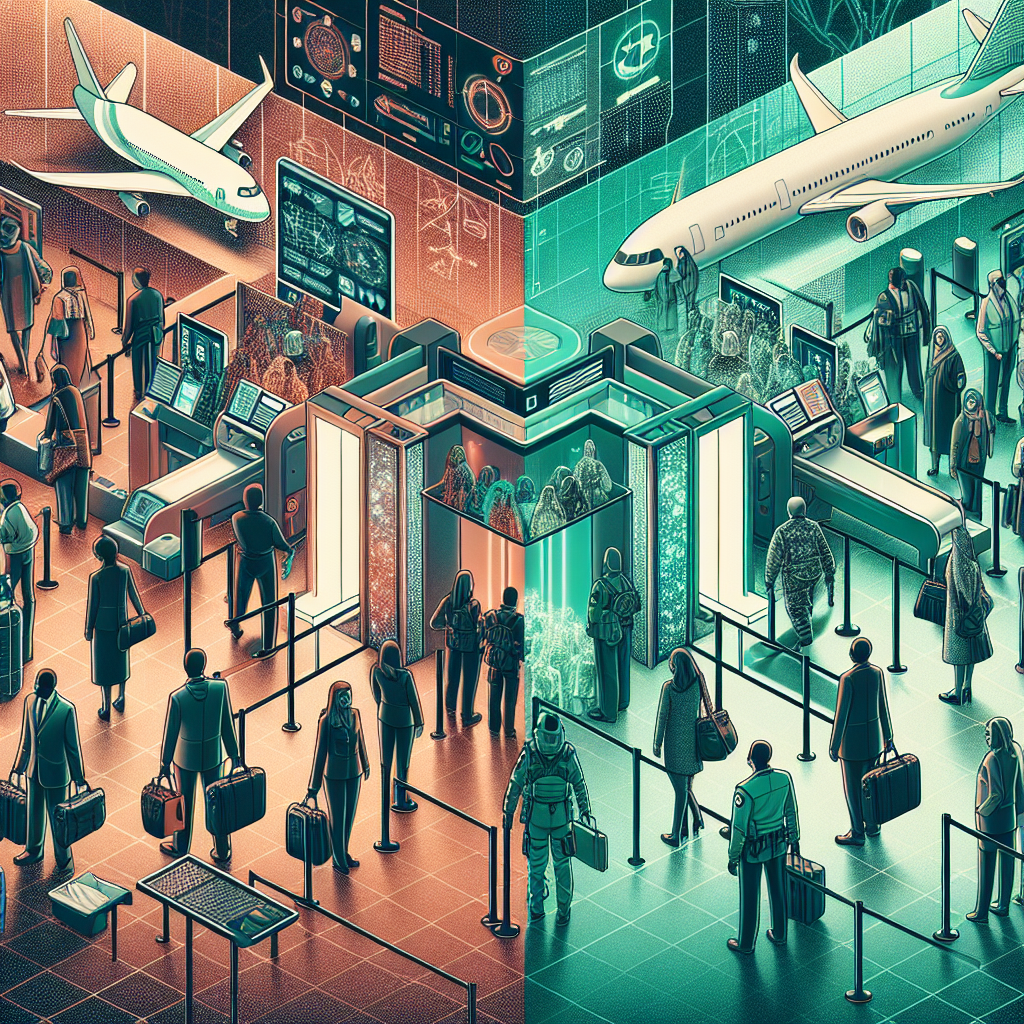
Heathrow's partial implementation—only certain terminals had the new scanners—created confusion when the rules changed. Passengers couldn't predict which security protocol they'd encounter.
A more cautious, systematic approach might have identified issues before full commitment.
Project visualization
What's Next
The immediate future sees UK airports in an awkward transition period.
The expensive CT scanners remain in place but operate under old restrictions, essentially serving as very expensive traditional X-ray machines.
The Department for Transport suggests the restrictions are temporary while they "review operational procedures," but no timeline exists for lifting them again.
Technical improvements will certainly come. AI models will become more sophisticated, training datasets more comprehensive, and hardware more powerful.
Edge computing advances might enable faster on-device processing, reducing latency. Federated learning could allow airports to improve models collectively without sharing sensitive security data.
The industry is exploring hybrid approaches—using AI for initial screening but maintaining traditional procedures for flagged items.
This acknowledges AI's current limitations while leveraging its strengths.
Some propose seasonal adjustments, using relaxed rules during low-traffic periods when systems can handle the computational load.
Internationally, airports are watching closely. Several European airports planning similar upgrades have paused deployments, awaiting lessons from the UK experience.
American airports, with even higher passenger volumes, are reconsidering their modernization timelines.
The technology vendors, meanwhile, are scrambling to address identified weaknesses before losing market confidence entirely.
The longer-term question is whether the 100ml limit itself remains relevant.
If advanced scanners can't reliably detect liquid explosives regardless of volume, perhaps the restriction is security theater.
Conversely, if small quantities are genuinely easier to verify as safe, the limit might persist indefinitely, with technology augmenting rather than replacing it.
This reversal might ultimately advance AI deployment practices across industries.
The public nature of the failure forces transparent discussion about AI limitations often hidden in proprietary systems.
It emphasizes the importance of robust testing, gradual deployment, and maintaining human oversight in critical systems.
For developers and technologists, Heathrow's experience offers valuable lessons: impressive technology isn't enough without considering operational complexity, human factors, and the messy reality of production environments.
---
From the Author


Hey friends, thanks heaps for reading this one! 🙏
If it resonated, sparked an idea, or just made you nod along — I'd be genuinely stoked if you'd show some love. A clap on Medium or a like on Substack helps these pieces reach more people (and keeps this little writing habit going).
→ Pythonpom on Medium ← follow, clap, or just browse more!
→ Pominaus on Substack ← like, restack, or subscribe!
Zero pressure, but if you're in a generous mood and fancy buying me a virtual coffee to fuel the next late-night draft ☕, you can do that here: Buy Me a Coffee — your support (big or tiny) means the world.
Appreciate you taking the time. Let's keep chatting about tech, life hacks, and whatever comes next! ❤️