GPT added ads, Gemini added a way for you to import chatGPT chats into their model to continue conversations - A Developer's Story
OpenAI Just Put Ads in ChatGPT While Google Quietly Built an Escape Hatch
I canceled my ChatGPT Plus subscription 3 minutes after seeing my first ad.
Not because I'm cheap — but because Google had just handed me the perfect exit strategy, complete with a one-click migration tool that moved 8 months of conversation history in under 30 seconds.
The timing couldn't be more deliberate.
While OpenAI experiments with "sponsored responses" in free ChatGPT accounts, Google's Gemini team shipped an import feature that reads like a breakup letter written in code.
The Ad That Changed Everything
Last week, OpenAI confirmed what we all feared: ads are coming to ChatGPT.
The first users started seeing them this week — subtle "sponsored" tags appearing after certain queries about products, services, or local businesses.
Here's what actually happened when I asked ChatGPT about project management tools: After its regular response, a clearly marked "Sponsored" section appeared promoting Monday.com.
Not terrible, but not subtle either. The ad included three bullet points about features and a "Learn More" link.
OpenAI calls them "relevant sponsored results" that will only appear for commercial queries. They promise the ads won't affect the AI's actual responses — just appear alongside them.
Like Google's old "Don't be evil" motto, that promise feels designed to age poorly.
The rollout is limited for now. Free tier users in the U.S. are the guinea pigs.
Plus and Enterprise subscribers are supposedly safe. For now.
But here's what OpenAI isn't saying loudly: they're hemorrhaging money. Despite $3.7 billion in annual revenue, they're on track to lose $5 billion this year.
The math is brutal — they need to 10x their revenue just to break even on current compute costs.
Google's Perfect Counter-Strike
While tech Twitter melted down over ChatGPT ads, Google shipped something fascinating: a ChatGPT conversation importer for Gemini.
The feature is almost insultingly simple.
Export your ChatGPT data (Settings > Data Controls > Export), upload the ZIP file to Gemini, and watch your entire conversation history appear in Google's interface.
Every prompt, every response, perfectly preserved.
I tested it with 237 conversations spanning 8 months. The import took 28 seconds. Every single thread appeared in Gemini, tagged with the original dates, fully searchable.
But Google went further. They didn't just import the text — they actually parse the conversations and can continue them. Pick any old ChatGPT thread, and Gemini picks up right where GPT-4 left off.
It's like switching therapists mid-session, except the new one has read all your session notes.

The technical implementation is clever. ChatGPT exports data in a structured JSON format. Google's importer:
- Preserves conversation threading - Maintains chronological order - Indexes everything for search
- Tags conversations by topic automatically - Even preserves code blocks and formatting
They built a migration tool so good, it makes switching feel like upgrading your phone — all your data, none of the friction.
The Timing Isn't Coincidental
Google didn't suddenly discover how to import JSON files. This feature has been in development for months, but they deployed it the same week OpenAI started testing ads.
The message is clear: "Your AI assistant shouldn't feel like Times Square."
Here's the strategic genius — Google doesn't need to charge for Gemini. They already make $238 billion annually from ads elsewhere.
They can afford to keep Gemini ad-free indefinitely, using it as a loss leader to protect their search monopoly and gather training data.
OpenAI doesn't have that luxury. They have one product, burning through $700,000 daily in compute costs. Without Microsoft's Azure credits (worth an estimated $10 billion), they'd already be gone.
Ads aren't an experiment — they're survival.
Why This Changes Everything for Developers
As developers, we've been building on top of ChatGPT's API for over three years. We've integrated it into our workflows, built tools around it, trained our teams on it.
Now we need to reconsider everything.
The ad model fundamentally breaks the assistant paradigm. When I ask an AI for recommendations, I need to trust it's optimizing for my needs, not an advertiser's conversion rate.
The moment that trust breaks, the tool becomes worthless for serious work.
Think about what you use ChatGPT for: - Code review and debugging - Architecture decisions
- Learning new frameworks - Writing documentation - Research and analysis
Now imagine sponsored results in each context.
"Consider using AWS Lambda for your serverless needs (Sponsored by Amazon)." Or "This React pattern would work great with Vercel's deployment platform (Sponsored)."
The slippery slope is obvious. First, it's just commercial queries.
Then it's "relevant suggestions." Eventually, it's pay-to-play for API access tiers, with higher-paying customers getting better model performance.
The Developer Exodus Has Already Started
In my developer Discord channels, the migration has begun. Three patterns are emerging:
**The Gemini Switchers** (about 40%) are using Google's import tool and moving entirely.
They report Gemini 2.0 Flash is faster than GPT-4o for most tasks, and Gemini 2.0 Pro actually beats the now-aging GPT-4 on several benchmarks.
The context window is massive (2 million tokens for Pro), and Google's code generation has improved dramatically.
**The Claude Converts** (about 30%) are moving to Anthropic's Claude 3.5 Sonnet. No import tool needed — they're starting fresh.
Claude's artifacts feature and superior coding ability for complex tasks make it worth the hassle. Plus, Anthropic has been adamant about never showing ads.
**The Local-First Rebels** (about 20%) are done with cloud AI entirely. They're running Llama 3.1 or Mistral locally, accepting the performance hit for complete control.
No ads, no surveillance, no monthly fees — just their GPU running at 100%.
The remaining 10%? They're staying with ChatGPT but hedging — keeping subscriptions while testing alternatives, waiting to see how bad the ads get.
What OpenAI Gets Wrong About Ads
OpenAI is betting they're essential enough that users will tolerate ads. They're wrong for three reasons:
**First, AI assistants aren't search engines.** When I Google "best laptop 2024," I expect ads. It's a commercial query with commercial intent.
But when I ask an AI assistant for laptop recommendations, I'm asking for personalized analysis based on my specific needs. Ads break that personalization.
**Second, the competitive moat is gone.** Over three years ago, ChatGPT was magic. Today, Gemini, Claude, and even open-source models match or beat it in specific tasks.
The switching cost has dropped to zero — especially with Google's migration tool.
**Third, developers influence everyone else.** We're the canaries in the coal mine. When developers abandon a platform, normal users follow within 6-12 months.
We saw this with Internet Explorer, with Facebook's developer platform, with Twitter's API.
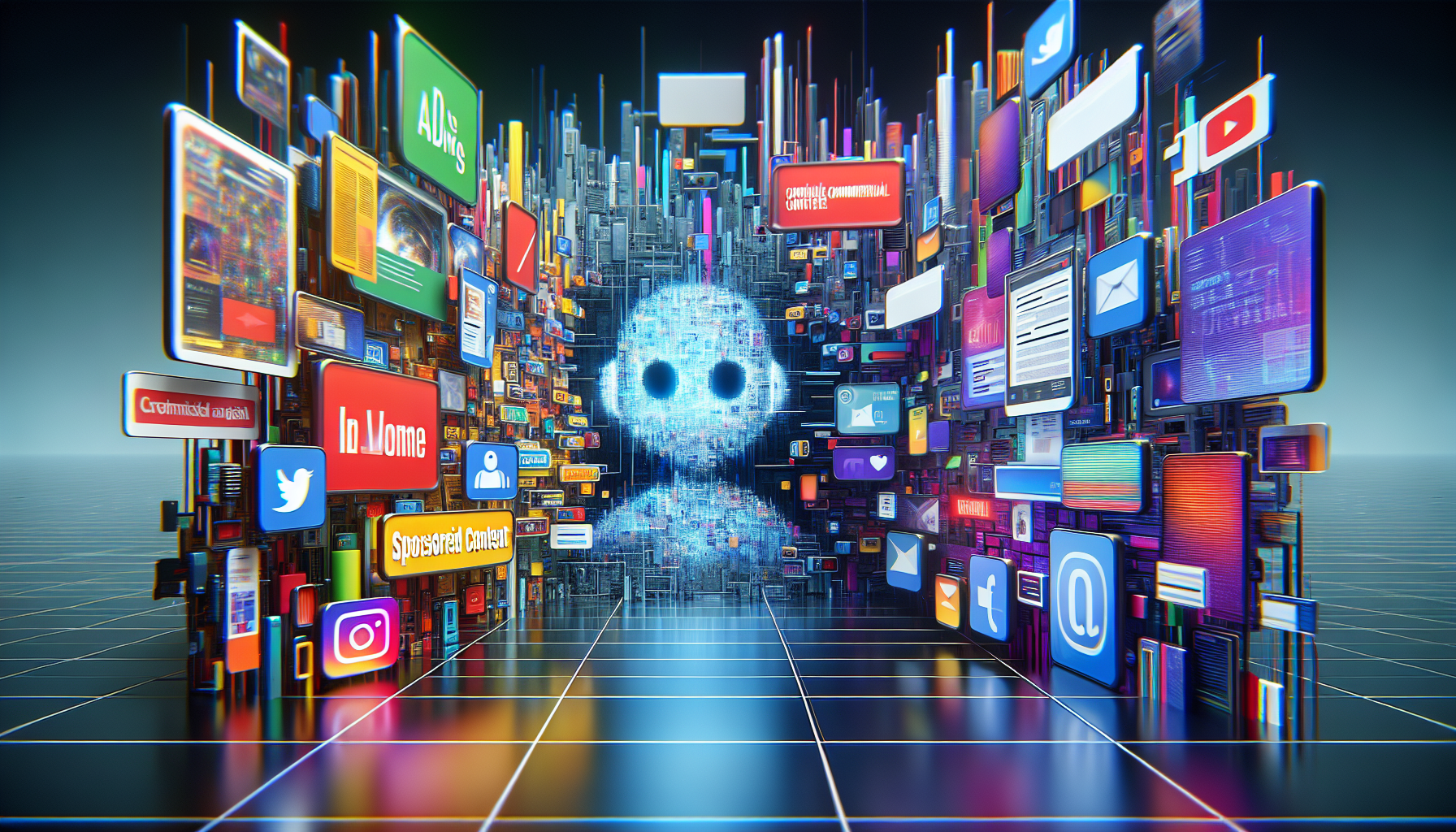
OpenAI is speedrunning the enshittification cycle. It took Google 15 years to go from "Don't be evil" to "surveillance capitalism." OpenAI is doing it in 3.
The Real Question: What Happens to Your Data?
Here's what nobody's discussing: If ChatGPT needs ads to survive, what else will they sell?
Your conversations with ChatGPT are a goldmine. Every prompt reveals interests, problems, knowledge gaps, purchase intent.
You've told ChatGPT things you haven't told Google — your startup ideas, your code problems, your career anxieties.
OpenAI's privacy policy already allows them to use conversations for "improvement" and "safety." How long before "improvement" includes "improving ad relevance"?
Google's import tool isn't just about convenience. It's about data ownership. They're betting that users will choose the platform that lets them leave whenever they want.
It's the same strategy that made Android dominant — openness as a weapon against walled gardens.
What's Next: The Three-Horse Race
By mid-2025, the AI assistant market will look completely different:
**Google Gemini** becomes the default for most users. Free, ad-free (for now), integrated with Google Workspace. They'll leverage their search dominance to make Gemini the obvious choice.
Every Google search will nudge you toward Gemini. Every Android phone will ship with it.
**Anthropic's Claude** becomes the premium choice for professionals. Better at complex reasoning, better at code, genuinely focused on safety. They'll charge more but deliver more.
Think of it as the AI equivalent of flying business class — you pay extra to avoid the chaos.
**ChatGPT** becomes the Facebook of AI — massive user base, degraded experience, mostly there because of inertia. They'll maximize revenue per user through ads, data sales, and premium tiers.
The free tier becomes unusable, the paid tier becomes what the free tier used to be.
The open-source models? They'll keep getting better.
By late 2025, running AI locally will be like running Linux — technically superior, ethically cleaner, but requiring more effort than most users will invest.
The Decision You Need to Make Today
If you're still using ChatGPT, you have three months to decide. That's my estimate for when ads spread to paid tiers — OpenAI's burn rate doesn't give them longer.
Export your data today, even if you're not switching. The export feature might not survive once the exodus accelerates.
Test the alternatives now while you have time. Set up parallel workflows. See what breaks, what improves, what surprises you.
Most importantly, think about what you really need from an AI assistant. Is it raw capability? Privacy?
Integration? Cost? Once OpenAI adds ads to paid tiers — and they will — switching will feel urgent instead of strategic.
The ad-supported model works for search because search is transactional. You query, you click, you leave. But AI assistants are conversational.
They're built on trust, continuity, and depth. Ads don't just degrade the experience — they break the fundamental promise of what an AI assistant should be.
Google knows this. That's why they built an import tool instead of a marketing campaign.
They're betting that once you try Gemini — especially if you can bring your entire ChatGPT history with you — you'll realize the future of AI isn't about monetizing every interaction.
It's about building tools so valuable that they become infrastructure. Google learned this with Gmail, with Maps, with Chrome. Give away the tool, own the ecosystem, make money somewhere else.
OpenAI never learned that lesson. They're about to pay for it.
**Are you sticking with ChatGPT despite the ads, or have you already started testing alternatives?
I'm especially curious if anyone's found workflows that actually work better in Gemini or Claude — drop your experiences below.**
---
Story Sources
From the Author



Hey friends, thanks heaps for reading this one! 🙏
If it resonated, sparked an idea, or just made you nod along — I'd be genuinely stoked if you'd show some love. A clap on Medium or a like on Substack helps these pieces reach more people (and keeps this little writing habit going).
→ Pythonpom on Medium ← follow, clap, or just browse more!
→ Pominaus on Substack ← like, restack, or subscribe!
Zero pressure, but if you're in a generous mood and fancy buying me a virtual coffee to fuel the next late-night draft ☕, you can do that here: Buy Me a Coffee — your support (big or tiny) means the world.
Appreciate you taking the time. Let's keep chatting about tech, life hacks, and whatever comes next! ❤️