Google Quietly Just Killed Android Sideloading. It’s Worse Than You Think
Stop telling me Android is the "open" platform. It’s over. I’ve been an Android user since the Nexus One era, back when the platform felt like the Wild West of mobile computing.
I stayed through the fragmented years and the "Material You" redesigns specifically because of one feature: the ability to run whatever code I wanted on a device I paid $1,200 for.
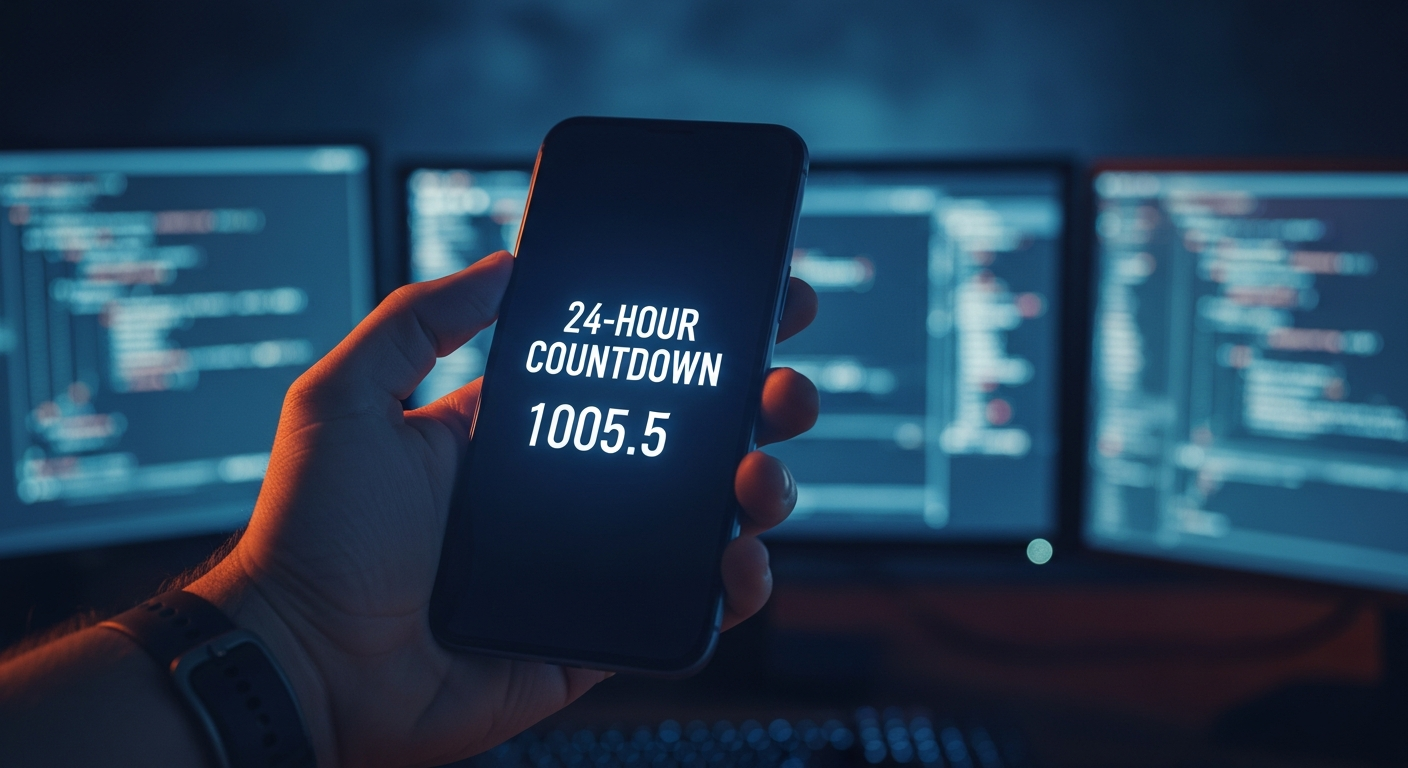
Yesterday, that era officially died with a 24-hour countdown timer.
I was trying to sideload a custom local-first AI agent I’d been building—a personalized wrapper for **Claude 4.6** that handles my private health data locally.
Instead of the usual "Allow from this source" toggle, I was met with a new, clinical UI: "App under security review. Estimated time remaining: 23 hours, 59 minutes."
Google didn't just add a warning; they’ve introduced a mandatory cooling-off period for "unverified" applications.
It’s a move that "quietly" kills the developer loop, destroys the hobbyist ecosystem, and—worst of all—uses "AI Safety" as a Trojan horse for total ecosystem enclosure.
If you think this is just about stopping malware, you haven’t been paying attention to where the mobile industry is heading in 2026.
The 24-Hour "Cooling-Off" Trap
The technical implementation is as brilliant as it is insidious. In the latest Android 17 update, Google Play Protect has been elevated from a background scanner to a system-level gatekeeper.
When you attempt to install an APK from outside the Play Store, the OS now uploads a "behavioral fingerprint" of the app to Google’s servers for "deep heuristic analysis."
During this 24-hour window, the app is effectively quarantined. You can’t open it, you can’t grant it permissions, and you certainly can’t test your code.
Google claims this is necessary because "AI-generated polymorphic malware" has become too sophisticated for real-time on-device scanning.
They say they need the extra compute power of their server-side **Gemini 2.5** clusters to ensure the app isn't a zero-day threat.
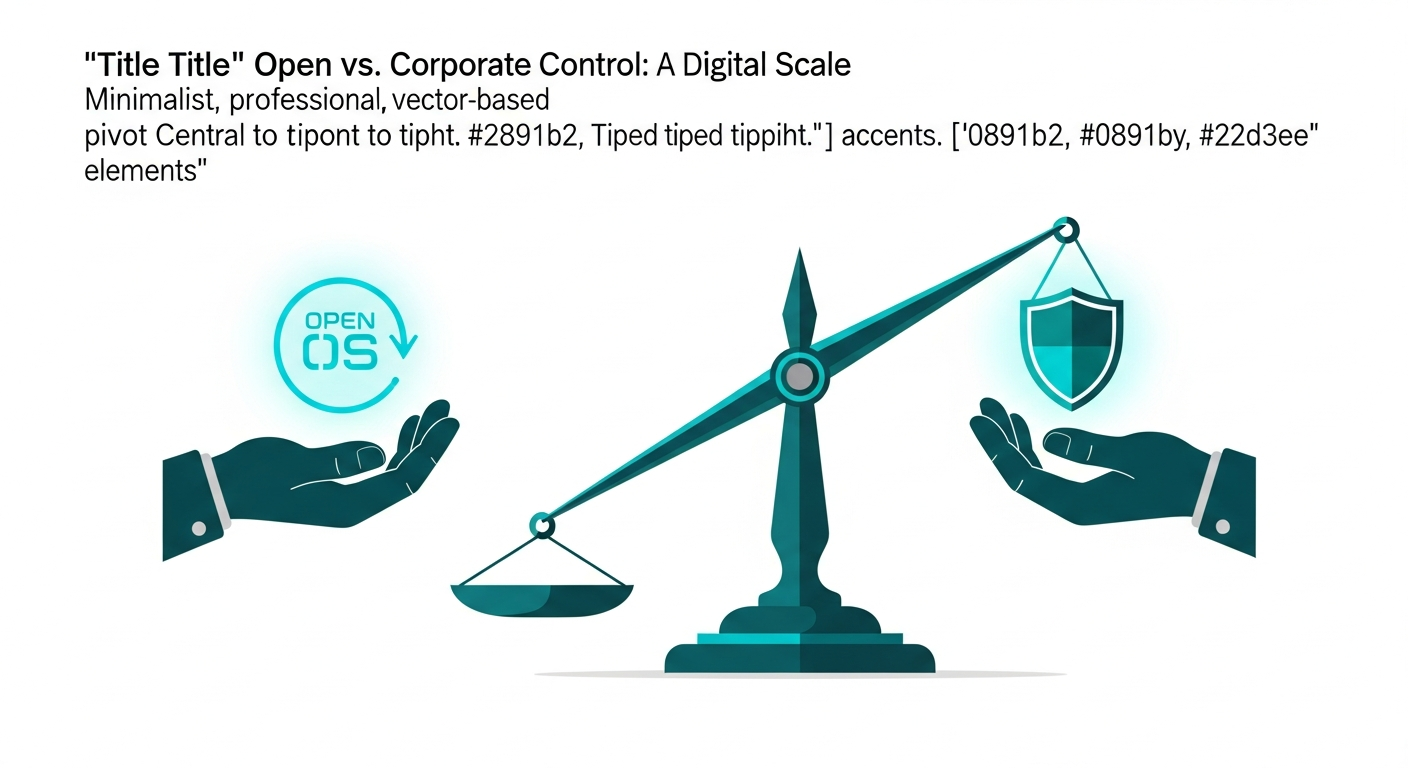
But for a developer, a 24-hour delay is an eternity. It’s a complete "stop" to the iterative process.
Imagine trying to debug a CSS layout if every refresh took a full day to "verify." That is the reality Google is forcing on the Android community under the guise of protection.
It’s not a security feature; it’s a friction tax designed to make the Play Store the only viable path for software distribution.
Why AI Developers Should Be Terrified
We are currently in the middle of a local AI explosion.
With the release of **Claude 4.6** and the lightweight **Llama 4** variants earlier this year, more developers than ever are building "sovereign apps"—tools that don't rely a central cloud and don't share data with big tech.
These apps, by their very nature, often bypass the Play Store because they don't fit into Google’s monetization or data-collection models.
My health assistant, for instance, uses a local-first architecture to analyze my blood glucose levels.
I don't want that data hitting a Google server, even for a "security scan." But under this new regime, I have no choice.
To run my own code on my own hardware, I have to submit the binary to Google’s AI for "review."
This creates a terrifying precedent.
If Google’s AI decides that my app’s privacy-preserving features are "suspicious behavior"—perhaps because it blocks certain system-level trackers—the app stays in quarantine indefinitely.
We are moving toward a world where the "Safety" of an app is determined by how well it aligns with the business interests of the OS provider.
The "Safety" Pretext and the Death of Innovation
The irony is that Google is using the very thing we love—AI—to justify the cage.
They argue that because **ChatGPT 5** can now write functional, malicious code in seconds, the old model of "user-authorized sideloading" is too dangerous for the average person.
They’ve rebranded the "Open" in Android to mean "Open to Google-vetted experiences only."
I spent the last three hours on Hacker News reading through the post-mortem of this change, and the sentiment is clear: this is Android’s "iPhone moment," but in the worst way possible.
At least Apple is honest about their walled garden. Google spent fifteen years marketing Android as the democratic alternative, only to pull the rug once they achieved a dominant market share.
This 24-hour delay is specifically targeted at the "early adopters" and "power users" who represent the fringe of innovation. Most people will never sideload an app.
But the people who do are the ones who build the next F-Droid, the next GrapheneOS, or the next revolutionary AI interface.
By throttling them, Google is ensuring that no "black swan" app can ever threaten their ecosystem again.
It’s Worse Than You Think: The Signature Analysis
Here is the part that isn't being talked about in the tech blogs yet. When Google "scans" your unverified APK for 24 hours, they aren't just looking for viruses.
They are performing a full structural analysis of your code. In the age of **Gemini 2.5**, this means Google is essentially getting a free look at every innovative, non-store app being developed.
If you’ve discovered a clever new way to optimize local LLM inference on Snapdragon chips, Google’s "Security Review" will see it.
If you’ve built a decentralized social protocol that threatens YouTube’s engagement metrics, Google’s "Security Review" will see it.
It is the ultimate form of corporate espionage, disguised as a public service.
I’ve talked to three different startup founders this morning who are already pivoting away from Android-first development.
"Why would I build for a platform that treats my beta-testers like potential cyber-terrorists?" one told me. The friction isn't just a nuisance; it’s a signal.
Google is telling us that they no longer want "developers" on Android; they want "tenants."
The Reality Check: Who Is This Really For?
Google will point to the rising tide of "AI-driven phishing" and "credential-stealing wrappers" as the reason for this move. And they aren't entirely wrong—malware is getting smarter.
But the solution to smart malware isn't a 24-hour waiting room for human creativity. The solution is better on-device sandboxing and more transparent permission models.
Instead, they’ve chosen the path of maximum control.
They know that 99% of users will see a "24-hour review" message and simply give up, opting instead to find a "verified" alternative in the Play Store.
It’s a classic "nudge" toward the high-margin, 30%-tax-collecting garden.
If this were truly about safety, there would be a "Developer Mode" that bypasses this check for authenticated devices. There isn't.
There would be a way to locally sign your own apps with a hardware key.
There isn't. There is only the queue. The same queue for a malicious gambling bot and a revolutionary privacy tool.
What We Can Actually Do
So, where does this leave us? If you’re a developer who values your autonomy, 2026 is the year you need to start looking at alternatives.
I’ve already started the process of migrating my primary development environment to a **Linux-phone** (the PinePhone Pro 3 is finally usable, believe it or not).
It’s not as "polished" as my Pixel, but it doesn't ask for permission to run my own scripts.

For those who must stay on Android, we need to stop accepting "Safety" as a blanket excuse for anti-competitive behavior.
We need to support projects like **GrapheneOS** and **LineageOS** that prioritize user sovereignty over corporate gatekeeping.
Most importantly, we need to be vocal about the fact that "security" without "agency" is just a high-tech prison.
I ended up waiting the full 24 hours for my AI agent to "verify." When it finally installed, the first thing it did was tell me it couldn't access the microphone because of a "System Policy" I hadn't seen before.
Google didn't just kill sideloading; they’re slowly killing the idea that the device in your pocket belongs to you.
Is the Open Mobile Era Finally Over?
I want to believe there’s still room for a truly open mobile platform, but the window is closing.
As AI continues to become the primary interface for how we interact with the world, the companies that control the OS will have unprecedented power to curate our reality.
A 24-hour delay today is a "permission denied" tomorrow.
Have you tried sideloading on the new Android 17 build yet, or have you already given up on the "Open Android" dream?
I’m seeing more and more devs move back to specialized hardware just to escape this gatekeeping.
Let’s talk about the alternatives in the comments—because if we don't build a way out now, we’re going to be stuck in Google’s waiting room forever.
Story Sources
From the Author




Hey friends, thanks heaps for reading this one! 🙏
If it resonated, sparked an idea, or just made you nod along — I'd be genuinely stoked if you'd show some love. A clap on Medium or a like on Substack helps these pieces reach more people (and keeps this little writing habit going).
→ Pythonpom on Medium ← follow, clap, or just browse more!
→ Pominaus on Substack ← like, restack, or subscribe!
Zero pressure, but if you're in a generous mood and fancy buying me a virtual coffee to fuel the next late-night draft ☕, you can do that here: Buy Me a Coffee — your support (big or tiny) means the world.
Appreciate you taking the time. Let's keep chatting about tech, life hacks, and whatever comes next! ❤️