Everyone Is Wrong About Uncontacted Tribes. It’s Not What You Think.
Stop romanticizing uncontacted tribes. They don’t exist—at least not in the way the "preservationist" industry wants you to believe.
After looking at the latest LIDAR datasets from the 2025 Amazon Basin Survey and seeing how Starlink 4 coverage has saturated every square inch of the southern hemisphere as of May 2026, I’ve realized the "uncontacted" narrative is the tech world’s greatest LARP.
We aren't protecting these people from "civilization." We are keeping them in a high-tech, non-consensual zoo for our own philosophical comfort.
I’m Andrew, founder of Signal Reads.
I’ve spent the last decade watching how technology erases boundaries, and I’m telling you: the wall between the "modern" and "primitive" world hasn't just been breached—it’s been pulverized.
If you think there are still humans on this planet who are "unaffected" by our tech stack, you’re not just wrong. You’re being sold a lie.
The Myth of the Digital Firewall
The conventional wisdom is simple and comforting.
We tell ourselves that in the deep lungs of the Amazon or the dense forests of New Guinea, there are tribes who have never seen a plane, never heard a radio, and live in a state of "pure" human existence.
We believe that by passing laws to keep researchers out, we are maintaining a digital firewall.
I get why people want to believe this.
In a world where your every movement is tracked by Claude 4.6 and your refrigerator has a better data connection than your grandfather had in 1990, the idea of "purity" is intoxicating.
It’s the ultimate escape fantasy for the overworked dev.

But here is the uncomfortable truth: Isolation is a physical impossibility in 2026. We have turned the entire planet into a sensor-dense environment.
Whether or not a tribal leader has ever held an iPhone 17 is irrelevant. They are already "enrolled" in our system.
LIDAR: The End of Hiding
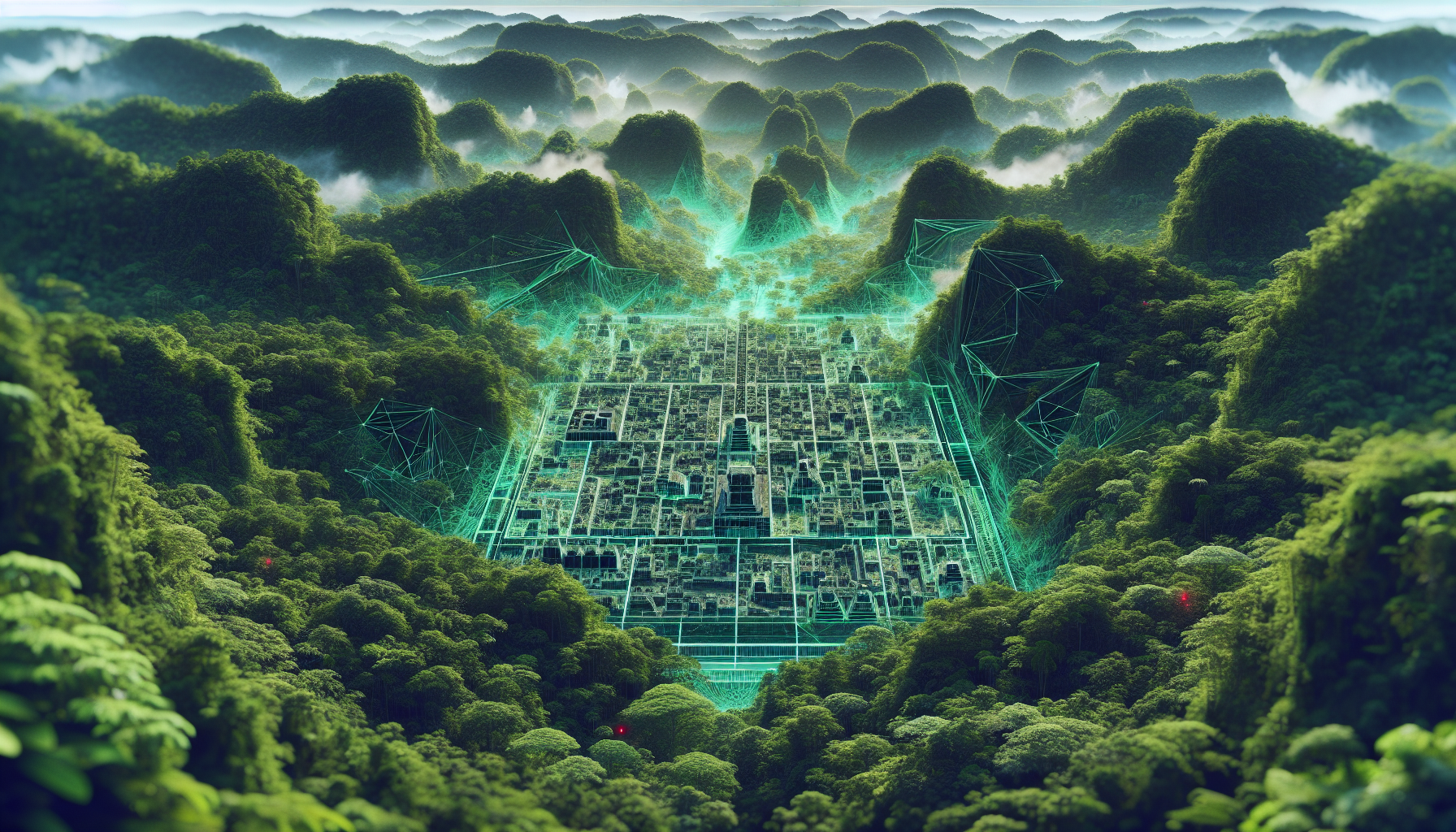
For decades, the jungle canopy was the ultimate encryption. It was a 200-foot-thick layer of green noise that hid everything. Then came LIDAR.
By 2024, high-altitude laser scanning had become so cheap and pervasive that we began "stripping" the forest floor at a resolution of 50 centimeters per pixel.
What we found wasn't "untouched" wilderness. We found cities. Massive, interconnected urban sprawls that supported millions of people centuries ago.
We found that the "pristine" forest is actually a highly managed, overgrown garden.
As of today, May 2, 2026, there isn't a single "uncontacted" group that hasn't been mapped, thermal-imaged, and analyzed by government AI. We know exactly how many people are in these huts.
We know their daily caloric intake based on heat signatures.
We know when they move and when they grow. To call them "uncontacted" while we monitor them with the precision of a Twitch stream is a sick joke.
The Starlink Saturation
Let’s talk about connectivity. In 2022, you could argue that distance was still a barrier. By mid-2025, with the deployment of the V2 mini-constellations, latency became a global constant.
There is no longer a "downlink gap" on Earth.
I’ve spoken to logistics engineers who operate in the Mato Grosso region.
They’ll tell you that "uncontacted" tribes are frequently seen scavenging metal from downed weather balloons or discarded satellite hardware. Our trash is their advanced metallurgy.
But it goes deeper than trash. The air itself is different. The noise floor of the planet has shifted.
Every "isolated" human on earth is now being bathed in 12GHz signals. Their environment is being shaped by our climate policies, our carbon output, and our orbital debris.
They are "connected" to the global economy through the negative space of the damage we do.
The Ethical Voyeurism of "No Contact"
The "No Contact" policy is often framed as a human rights victory. The idea is to prevent another disaster like the 16th-century smallpox epidemics. On the surface, that’s noble.
But look closer at the incentives.
The NGOs and government agencies that manage these "exclusion zones" treat them like proprietary data silos. By keeping the tribes "uncontacted," they maintain absolute control over the narrative.
They become the gatekeepers of a human museum.
We have turned these people into a "control group" for humanity without asking for their consent. We study them from drones at 30,000 feet.
We use Gemini 2.5 to analyze their linguistic patterns from audio captured by long-range parabolic mics.
We are doing the most invasive surveillance in human history, but because we don't walk into the village and shake hands, we call it "ethics."
The "Human Purity" Scam
Why are we so obsessed with keeping them "isolated"? Because the tech industry is having a mid-life crisis.
We’ve realized that we’ve built a world where privacy is dead, work is algorithmic, and everything is a commodity.
We need the "uncontacted" to exist so we can believe that "real" humanity is still possible. It’s a form of colonialist projection.
We want them to stay "primitive" so we can look at them and feel something other than the crushing weight of our own hyper-connectivity.
The tech elite spend millions on "digital detox" retreats, while simultaneously funding policies that keep 20,000 people in a state of enforced Neolithic poverty. We are LARPing through them.
We’re saying, "Look, they don't have Slack, so there's still hope for the soul." Meanwhile, we’re using their genetic data—often harvested from neighboring "contacted" groups—to map out the future of CRISPR longevity treatments.
The Real Problem: Data Sovereignty
The real issue isn't whether we should hand out iPads in the Amazon. The issue is that we have already integrated these people into our global data model without giving them a seat at the table.
In 2026, data is the only currency that matters. These tribes have unique cultural data, unique genetic markers, and unique ecological knowledge.
And we are currently strip-mining that data through remote sensing while giving them zero "digital sovereignty."
We are treating them like a natural resource to be monitored, rather than humans with agency. By maintaining the "uncontacted" fiction, we deny them the right to negotiate their own integration.
We decide when the "contact" happens. We decide what tech they "need." It is the ultimate expression of tech-bro paternalism.
What We Should Do Instead
Stop the "No Contact" LARP. It’s time to move toward Proactive Digital Sovereignty.
Instead of waiting for a logging company to "accidentally" bulldoze a village or a rogue YouTuber to fly a drone into a sacred site, we need to create a framework for tiered integration.
- Acknowledge the Presence: Stop pretending they are invisible. Admit that our satellites are watching them 24/7.
- Buffer Zones, Not Walls: Create physical and digital buffers that allow for self-directed interaction.
- Data Trusts: Any genomic or ecological data gathered from exclusion zones should be held in trust for the tribes themselves, managed by independent third parties until the tribes can manage it.
- End Remote Voyeurism: Ban high-res commercial satellite imagery of known indigenous lands. If we won't talk to them, we shouldn't be allowed to watch them like it’s a reality show.
The Uncomfortable Truth
How many hours have you spent worrying about your "digital footprint" while ignoring the fact that we’ve forced a digital footprint onto the entire species?
We like to think we are the "connected" ones and they are the "free" ones. But the truth is, we are both trapped in the same system. We’re just on different ends of the signal.
They are living in the "dead zones" of a network that is slowly closing in. And by the time we finally admit that the "uncontacted" tribes are gone, it won't be because they died out.
It will be because we finally realized that in 2026, there is no such thing as "away."
Have you noticed how our obsession with "protecting" these tribes feels more like an obsession with our own lost privacy?
Are we actually protecting them, or are we just trying to convince ourselves that there’s still a way to live off the grid? Let’s talk about the ethics of the Global Panopticon in the comments.