Everyone Is Wrong About Sam Altman. This Secret Is Worse Than You Think.

Stop treating AI CEOs like secular gods.
I’ve spent the last three years watching Sam Altman steer the most powerful ship in human history, and today’s headlines just proved what I’ve been shouting since the GPT-4 release: **we’ve built a $100 billion industry on the fragile foundation of a single human ego.**
The 2024 allegations that continue to haunt the company's reputation—allegations of sexual abuse by a family member against Sam Altman—remain a visceral gut punch.
But if you’re focusing only on the scandal, you’re missing the bigger, more dangerous truth.
**OpenAI has become a Single Point of Failure (SPF) for the entire global economy, and we are all paying the price for our collective worship of the "Tech Prophet."**
I’ll be the first to admit I was wrong. I thought the board-room coup of 2023 was the wake-up call we needed to diversify our dependencies.
Instead, we doubled down, tied our enterprise stacks to ChatGPT 5, and waited for the next "miracle" from the man in the charcoal sweater. Today, that miracle looks more like a nightmare.
The Architect Model Is Dead
For the last decade, Silicon Valley has been obsessed with the idea of the "Visionary Architect." We want a Steve Jobs, an Elon Musk, or a Sam Altman to tell us what the future looks like so we don't have to build it ourselves.
**We traded institutional governance for charismatic leadership because it felt faster.**
But speed is a liability when the vehicle is heading toward a cliff. By April 2026, OpenAI isn't just a research lab; it's the operating system for thousands of companies.
**When the CEO of the world’s most influential AI company is hit with allegations this severe, it doesn’t just damage a reputation—it destabilizes the technical infrastructure of the modern world.**
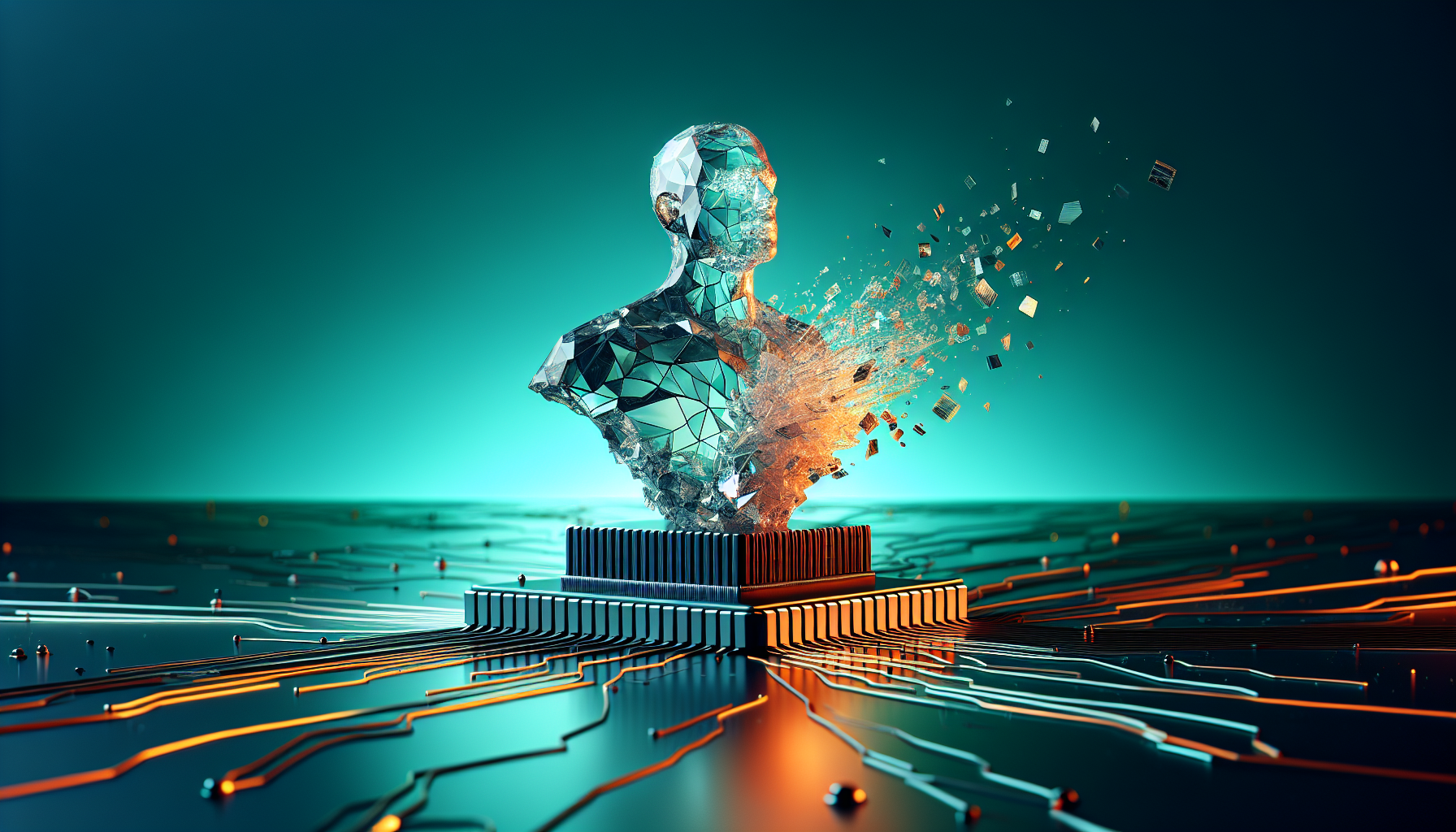
The "Secret" that nobody wants to acknowledge is that OpenAI’s current structure is fundamentally incompatible with the stakes of AGI.
We are trying to build the most significant technology in human history using a corporate governance model that’s more fragile than a Series A social media startup.
The Transparency Trap
We’ve fallen into what I call **The Transparency Trap**.
We assumed that because OpenAI talked about "safety" and "alignment," the people at the top were somehow inherently more aligned than the rest of us.
We confused PR-driven ethics with structural accountability.
The reality is that "Alignment" has always been a top-down directive at OpenAI.
If the person at the very top is embroiled in a crisis that calls their fundamental character into question, **every "safety" filter and ethical guideline they’ve signed off on becomes a subject of intense skepticism.**
I’ve seen this pattern before in founder-led companies.
The cult of personality creates a blind spot where critical feedback is seen as "slowing down the mission." In the context of AGI, that blind spot isn't just a business risk—it’s a civilizational one.
A Framework for the Post-Altman Era
We need a new mental model for how we interact with Artificial Intelligence. We cannot continue to treat AI as a product delivered by a prophet.
We need to move toward **The Three Pillars of Decentralized Intelligence.**
1. The Institutional Void
OpenAI lacks the institutional robustness of a legacy tech giant or a government agency.
When Microsoft or Google faces a leadership crisis, the machine keeps humming because the power is distributed across thousands of senior VPs and decades of process.
**OpenAI is still, at its core, a 2015-era startup with a 2026-era global impact.**
2. The API Dependency Crisis
If your business logic is 90% dependent on OpenAI’s proprietary models, you are currently holding a bag of "Altman Risk." Today's news should be a catalyst for every CTO to **aggressively diversify into Claude 4.6 and Gemini 2.5.** Competition isn't just about price anymore; it's about institutional stability.
3. The Open-Source Inevitability
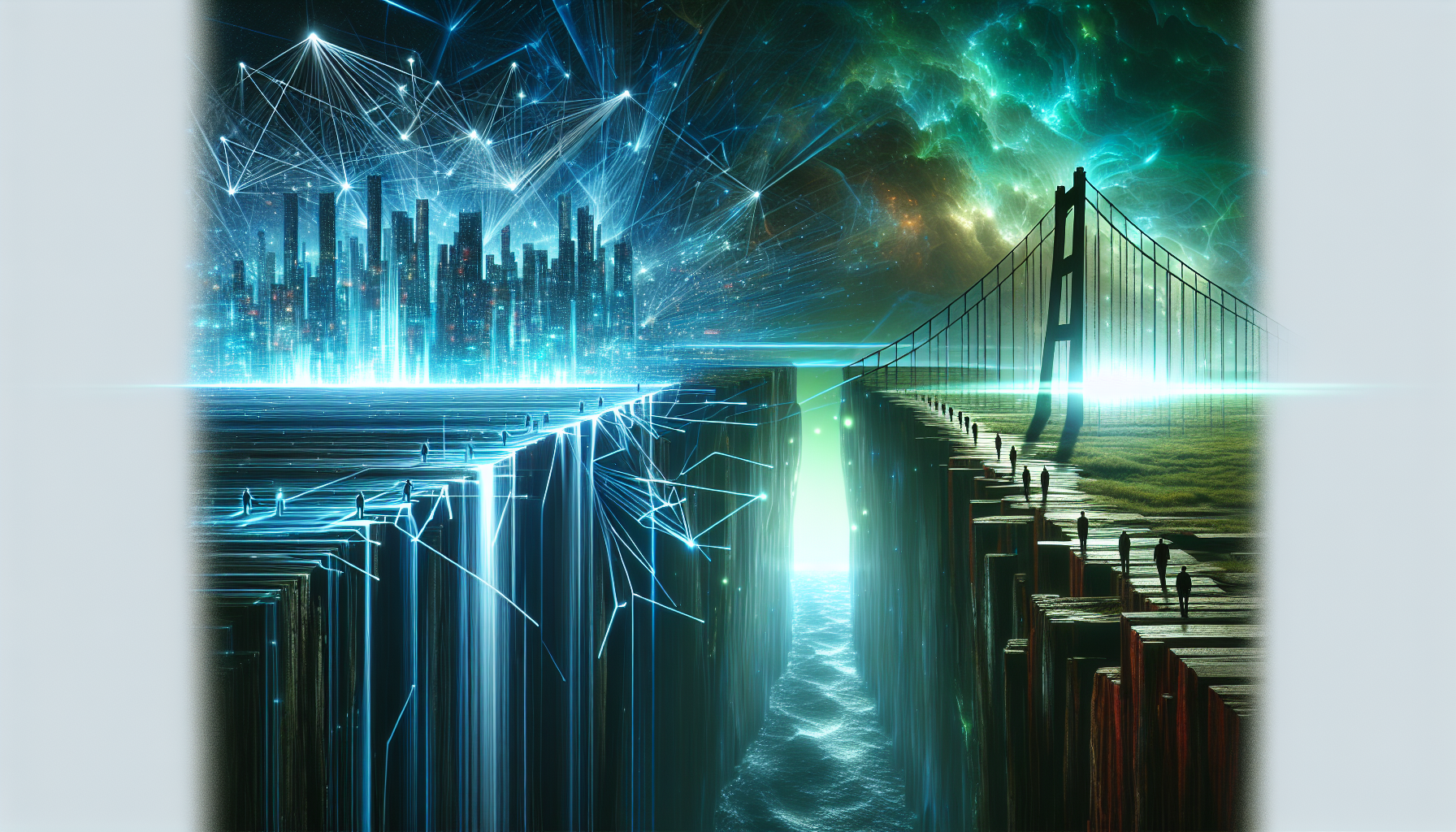
The only way to truly "align" AI is to take it out of the hands of the few and give it to the many.
**Llama 4 and its descendants are no longer just "alternatives"—they are the only path to an AI future that isn't beholden to the personal lives of Silicon Valley elites.**
What This Means for Your Career
If you’re a developer or a founder, the "Altman Secret" is a warning shot. For years, we’ve been told that the "moat" is the model. Today, we see that the moat is actually a house of cards.
**The most valuable skill in 2027 won't be "prompt engineering" for ChatGPT—it will be "Model-Agnostic Architecture."**
If you aren't building systems that can switch between Claude, Gemini, and local Llama instances in under five minutes, you are building on sand. The era of the "OpenAI Developer" is over.
We are entering the era of the **Sovereign Developer.**
I’m already seeing the shift in the Signal Reads community. Founders are quietly moving their production workloads to more "boring" companies with stable boards.
They’ve realized that a 10% performance boost from GPT-5 isn't worth the 100% risk of a leadership implosion.
The Bigger Picture: Silicon vs. Soul
We have to learn to separate the silicon from the creator. The math behind Transformer architectures and the petabytes of training data don't belong to Sam Altman. They belong to humanity.
**The tragedy of OpenAI is that they’ve convinced us the technology requires the man.**
It doesn't. AGI will happen whether Sam Altman is in the corner office or a courtroom.
The question is whether we will have the courage to build a governance system that reflects the importance of the technology. **We need an AI industry that doesn't break when a human being does.**
I’ve spent a lot of time thinking about why we let it get this far. It’s because it was easy. It was easy to believe in a hero.
But heroes are a luxury we can no longer afford when the stakes are this high.
Have you already started moving your stack away from OpenAI, or are you waiting to see how the board reacts this time? Let’s talk in the comments.
**Andrew** — Founder of Signal Reads. Builder, reader, occasional contrarian.
***
Story Sources
From the Author




Hey friends, thanks heaps for reading this one! 🙏
Appreciate you taking the time. If it resonated, sparked an idea, or just made you nod along — let's keep the conversation going in the comments! ❤️