Everyone Is Wrong About OPEC. UAE Just Quietly Quit.
I was sitting in a cafe in Dubai’s International Financial Centre (DIFC) last week when my phone lit up with a message from a contact at ADNOC, the UAE’s national oil company.
The text was just three words: "The ties broke."
For decades, the Organization of the Petroleum Exporting Countries (OPEC) has been the most powerful "group project" in human history, a cartel that literally decided the temperature of the global economy.
But on April 29, 2026, the project officially fractured. The United Arab Emirates (UAE) has quietly, but decisively, quit.
The Notification That Changed Everything
If you’ve been watching the headlines, you might think this is just another spat over oil production quotas.
Everyone is wrong. This isn't a dispute about how many barrels of Murban crude are being pumped into the Suez; it is a fundamental pivot in how a nation-state views its own future.
"We’ve spent fifty years being a gas station with a flag," a senior strategist at a major Abu Dhabi sovereign wealth fund told me over an encrypted call.
"By 2027, we want to be the world’s most important server farm. You can’t build a Silicon Valley of the Sands while your hands are tied by a 1960s-era cartel."
The UAE’s exit is the first major geopolitical "hard fork." Like a developer leaving a bloated legacy project to launch a lean, high-performance startup, Abu Dhabi has realized that OPEC’s goals no longer align with its roadmap.
Riyadh wants to keep prices high to fund its "Vision 2030" mega-projects; Abu Dhabi wants to pump as much as possible, as fast as possible, to fund its transition into an AI-first superpower.
The End of the "Group Project"
To understand why this matters to you—whether you're a developer in San Francisco or an engineer in Berlin—you have to look at the math. OPEC operates on a "solidarity" model.
When demand drops, everyone cuts production to keep prices high.
But the UAE has spent billions of dollars increasing its production capacity to five million barrels a day.
Under OPEC rules, they were being forced to leave nearly 40% of their potential revenue in the ground. In a world where the energy transition is accelerating, Abu Dhabi has reached a cold, calculated conclusion: the "last barrel of oil" should be theirs.
"It’s a classic prisoner’s dilemma," says Sarah Al-Mansoori, a former energy analyst who now consults for tech-centric VC firms in the region.
"If you know the world is eventually moving away from oil, you don't wait for the price to collapse. You sell everything you can right now to buy the future."
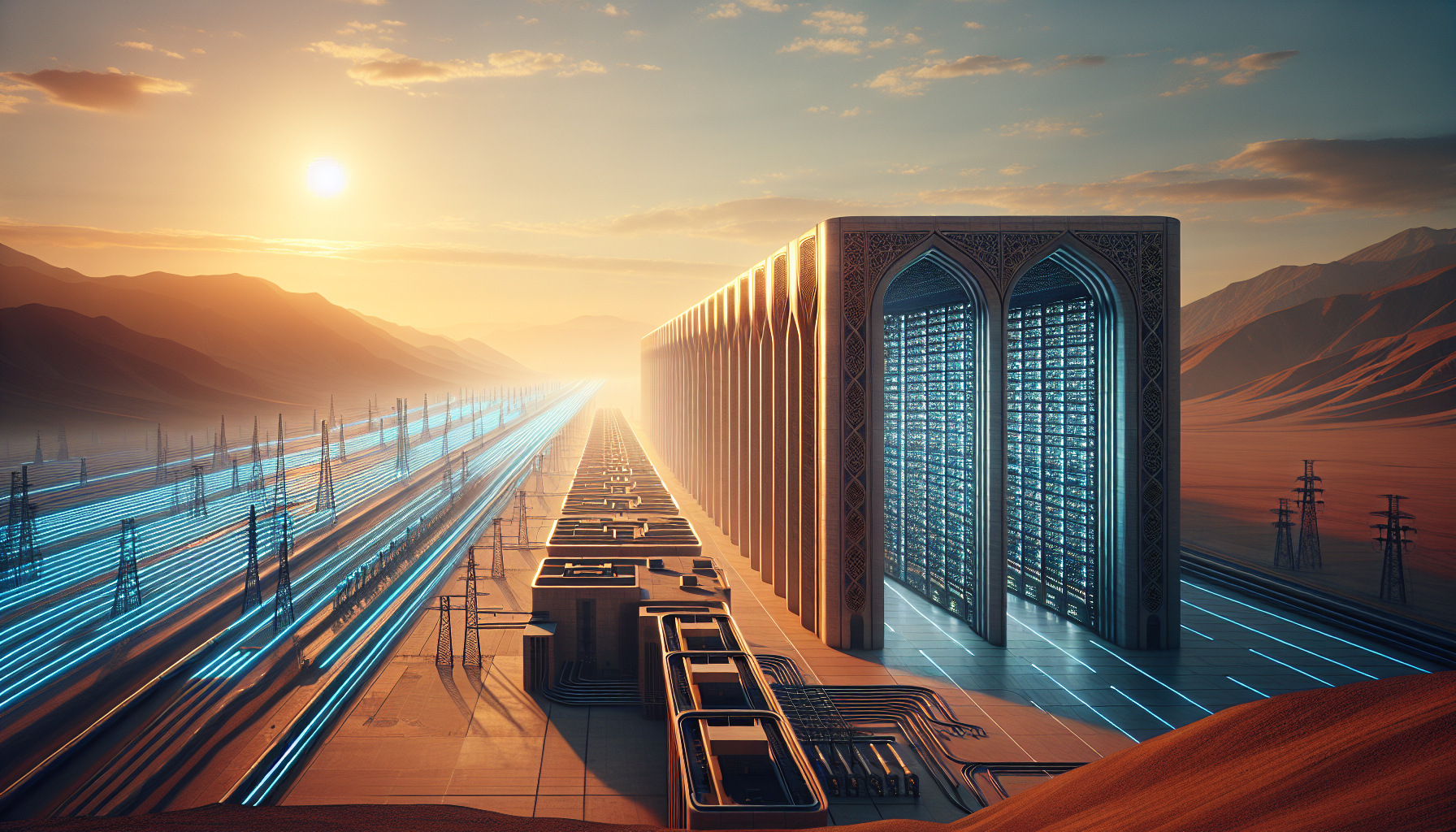
That "future" isn't more real estate or taller skyscrapers. It’s compute. The UAE is currently in a frantic race to secure enough Nvidia B200 chips and the energy required to run them.
By leaving OPEC, they have unlocked the cash flow needed to outspend almost any other nation on the planet for AI infrastructure.
Why Riyadh is Furious (and Why Abu Dhabi Doesn't Care)
The tension between the UAE and Saudi Arabia has been simmering for years, but it reached a boiling point this morning.
For Saudi Crown Prince Mohammed bin Salman, the UAE’s exit is a direct threat to his ability to stabilize the market.
If the UAE pumps at will, the price of oil could drop significantly. For Saudi Arabia, which needs oil at roughly $80 a barrel to break even on its ambitious projects, this is a catastrophe.
For the UAE, which can produce a barrel for less than $10, it’s a competitive advantage.
"Riyadh is playing a defensive game, trying to preserve the value of a declining asset," says a senior DevOps engineer at a Series B AI startup in Dubai. "Abu Dhabi is playing an offensive game.
They’ve seen what Claude 4.6 and ChatGPT 5 are doing to the demand for electricity, and they realized that oil is just a battery for the real currency: intelligence."
The disagreement isn't just about money; it's about identity. Saudi Arabia wants to remain the leader of the Arab world through traditional energy dominance.
The UAE, meanwhile, is positioning itself as the "Switzerland of AI"—a neutral, high-tech hub that provides the compute and energy that the rest of the world’s LLMs will depend on by 2028.
The AI Connection: From Crude to Compute
It sounds like a stretch to link an oil cartel exit to your VS Code plugins, but the connection is direct.
The most significant bottleneck for the next generation of AI—Gemini 2.5 and its successors—is no longer just data; it’s power.
The UAE is currently building some of the largest data centers on earth, powered by a mix of their Barakah nuclear plant and massive solar arrays.
But building those facilities costs hundreds of billions.
By quitting OPEC, the UAE can maximize its oil revenue right now to ensure that by 2030, they aren't just selling oil to China, but selling inference time to the entire world.
"We are seeing the birth of 'Energy-as-a-Service' at a sovereign level," the ADNOC contact explained. "When we pump more oil today, we aren't just fueling cars in 2026.
We are buying the GPU clusters that will define the 2030s."
This is the "Quiet Quit" that the West missed.
While we were arguing about carbon taxes, the UAE realized that the fastest way to a green, tech-driven economy was to burn through their fossil fuel reserves as aggressively as possible while they still have value.
The Data Behind the Divorce
The evidence of this shift has been hiding in plain sight.
Over the last 26 months—since early 2024—the UAE’s investment in non-oil sectors has outpaced its oil investment for the first time in history.
- Sovereign Wealth Shift: The Mubadala Investment Company has redirected 60% of its new capital into "Deep Tech" and AI infrastructure since the start of 2025.
- Production Surplus: The UAE’s internal data shows they have been "accidentally" over-pumping their OPEC quotas for three consecutive quarters.
- The "MGX" Factor: The creation of MGX, a multi-billion dollar AI investment firm, was the final signal. You don't build a fund that size if you're planning on staying in a restrictive production cartel.
"If you look at the 2026 budget, the 'oil' line item is being treated as a liquidation event," says Al-Mansoori.
"They are treating their oil fields like a legacy server that needs to be decommissioned while you migrate to the cloud."
The market’s reaction has been swift. Oil prices dipped 4% on the news, but the stocks of companies building infrastructure in the Middle East surged.
The message is clear: the era of the "Stable Cartel" is over, and the era of the "Sovereign Tech Startup" has begun.
What This Means for Your Energy Bill in 2027
So, what does this mean for the average person reading this on their phone?
In the short term, the UAE’s exit could lead to a supply glut that keeps energy prices lower than they would have been under a unified OPEC.
But the long-term implication is more complex. As the UAE pivots to AI, they are essentially withdrawing from the global "oil management" team. This makes the energy market more volatile.
We are moving from a world of "Managed Scarcity" to a world of "Hyper-Competitive Extraction."
"By mid-2027, the idea of a 'global oil price' might feel quaint," says a London-based energy trader who views the exit as a disaster.
"We’re going to have a fragmented market where the UAE is just one of many 'rogue' producers focused on their own internal tech roadmaps."
For the tech industry, this is a massive win. A UAE that is "unlocked" from OPEC is a UAE that is desperate to spend money on tech partnerships, talent, and infrastructure.
If you're an engineer looking for the next "frontier," it might not be in Palo Alto; it might be in Abu Dhabi.
The Last Barrel of Oil
The closing scene of this drama isn't a boardroom in Vienna; it’s the skyline of Abu Dhabi at 3:00 AM.
While the rest of the world sleeps, the glow from the new data centers in the desert is getting brighter.
The UAE didn't quit OPEC because they hated the other members. They quit because they realized that the game has changed. In 1976, power was found in the ground.
In 2026, power is found in the weights of a neural network.
"It's a bittersweet moment," the ADNOC contact told me before hanging up. "We built this country on the back of OPEC. But you can't sail into the future if you're still anchored to the past."
The UAE is betting everything on the idea that oil is a "depleting asset" and intelligence is an "appreciating one." It’s a gamble that will redefine the next decade of global power.
And they aren't waiting for Riyadh’s permission to play.
Have you noticed your trust in global institutions slipping as nations start acting more like tech startups, or is this just a natural evolution of the "compute-first" world?
Let's talk in the comments.