Data centers in space makes no sense - A Developer's Story
Why Everyone's Wrong About Space Data Centers (And Why They'll Happen Anyway)
The idea sounds like something from a late-night tech bro brainstorming session: "What if we put data centers... in space?"
Yet here we are in 2026, watching serious companies invest serious money into orbital computing infrastructure. The European Union just announced funding for space data center research.
Startups are raising millions. Even Microsoft is exploring the concept.
The critics aren't wrong — the physics are brutal, the economics are questionable, and the technical challenges are staggering.
But they're missing something crucial about why this seemingly absurd idea keeps gaining momentum.
The Case Against Orbital Computing
Let's start with the obvious problems that make engineers roll their eyes.
**The physics are unforgiving.** Getting one kilogram to low Earth orbit costs about $2,000 with SpaceX's most efficient rockets. A typical data center server weighs 20-30 kilograms.
That's $60,000 just to launch a single server — before accounting for cooling systems, power infrastructure, or radiation shielding.
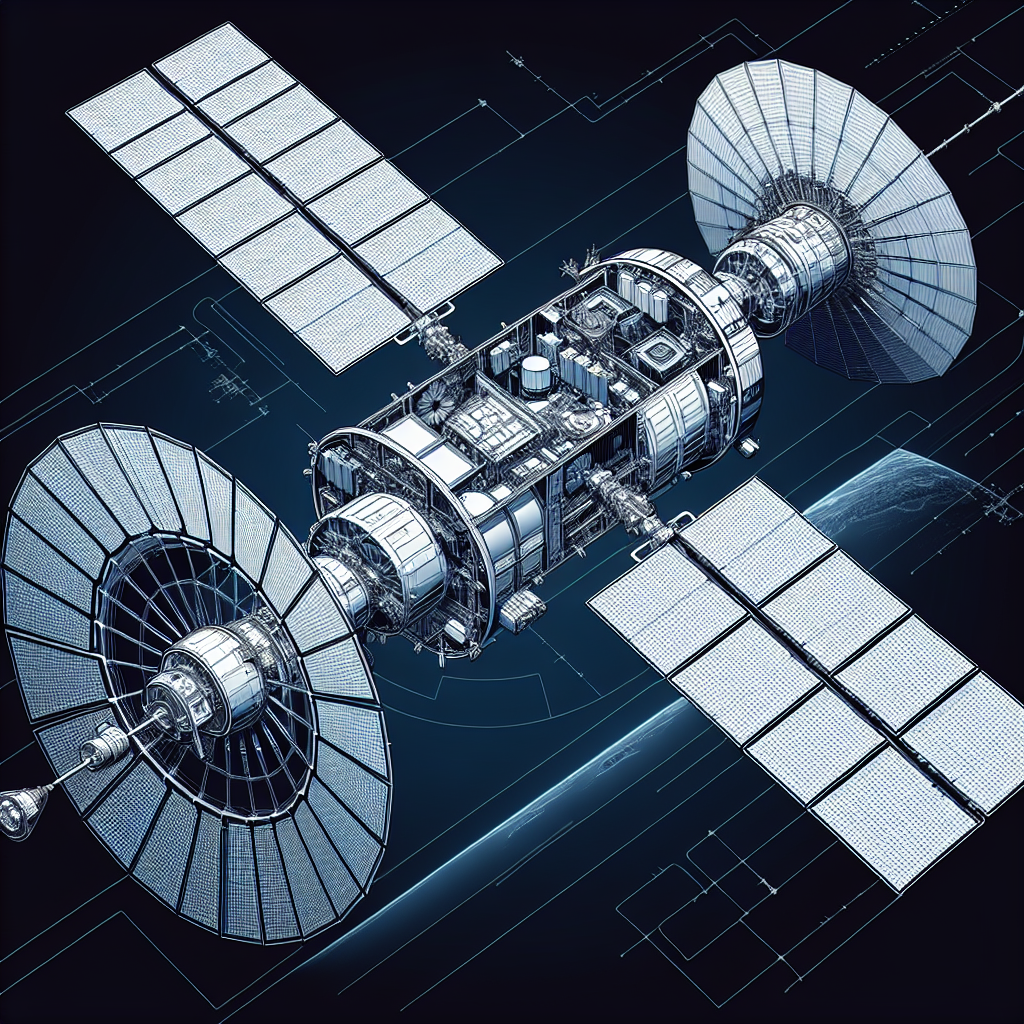
Compare that to terrestrial costs: you can build an entire server rack on Earth for what it costs to launch one server to space.
**Heat dissipation becomes a nightmare.** Data centers generate enormous amounts of waste heat.
On Earth, we use air conditioning, water cooling, or clever geographic placement (hello, Arctic data centers).
In space, there's no air or water for convection cooling. You're stuck with radiation cooling, which is painfully inefficient for high-density computing.
The International Space Station uses radiator panels the size of school buses just to handle its modest heat load. Now imagine cooling thousands of GPUs running AI workloads.
**Latency kills the dream.** Even in low Earth orbit at 550 kilometers, you're looking at minimum round-trip times of 7-10 milliseconds just for the signal to travel up and back.
Add processing time and you're easily at 20-30ms minimum latency.
That might work for batch processing or cold storage, but it's useless for anything requiring real-time response. Your space-based ChatGPT would feel like dial-up internet.
The Hidden Logic of Space Computing
So why are smart people pursuing this anyway?
The answer lies in understanding what specific problems space-based computing actually solves — problems that have nothing to do with replacing terrestrial data centers.
**Energy abundance changes everything.** A solar panel in space receives 8-10 times more energy than the same panel on Earth. No atmosphere, no weather, no night (if positioned correctly).
The economics of compute shift dramatically when electricity becomes essentially free and unlimited.
This isn't theoretical. Back in 2023, the California Institute of Technology successfully beamed solar power from space to Earth.
The physics work.
**Regulatory arbitrage becomes physical.** Data sovereignty laws are becoming increasingly complex.
GDPR, China's data localization requirements, India's data protection bills — navigating this maze costs billions in compliance and infrastructure duplication.
Space offers something unique: true jurisdictional neutrality. International space law, governed by the Outer Space Treaty, creates a regulatory environment that no Earth-based location can match.
**The killer app isn't what you think.** Everyone assumes space data centers would serve Earth-based users. But what if Earth isn't the primary customer?
SpaceX alone is launching 50+ satellites per month. By 2030 — just four years from now — we'll have over 100,000 active satellites.
Each one generates data. Each one needs processing power.
The space economy itself is becoming the customer.
The Technical Path Forward
The engineering challenges are real, but they're not insurmountable.
**Modular design changes the equation.** Instead of launching traditional servers, companies are developing space-native computing architectures.
Think specialized ASICs optimized for radiation tolerance and power efficiency, not repurposed terrestrial hardware.
Loft Orbital is already doing this with their satellite infrastructure-as-a-service model. They're proving that space-based computing can work when designed correctly from the ground up.
**Edge computing in orbit makes more sense.** Rather than replacing cloud data centers, space computing could extend them.
Satellite imagery processing, for instance, currently requires downloading terabytes of raw data to Earth for analysis.
Processing that data in orbit and only transmitting results could reduce bandwidth requirements by 100-1000x.
For earth observation companies spending millions on ground station bandwidth, the economics suddenly work.
**Manufacturing in space flips assumptions.** Varda Space Industries just manufactured pharmaceuticals in orbit and successfully returned them to Earth.
Made In Space (now Redwire) 3D prints components on the ISS.
Once we can manufacture computing components in space using asteroid materials, launch costs become irrelevant.
This sounds like science fiction, but it's closer than most realize — probably 15-20 years out rather than 50.
The Real Business Case
The companies investing in space data centers aren't stupid. They see specific opportunities that critics miss.
**Sovereign wealth funds want options.** Countries without reliable power grids or stable geography (think island nations threatened by climate change) are genuinely interested in space-based infrastructure.
It's expensive, but so is losing your entire digital infrastructure to a typhoon.
Singapore, despite its technical sophistication, faces real constraints on data center growth due to land and power limitations. Space offers a long-term solution.
**Defense applications drive funding.** The U.S. Space Force's budget grew 15% last year to $30 billion.
They need secure, resilient computing infrastructure that can't be targeted by terrestrial attacks.
Military contracts have a way of making seemingly impossible economics work. The internet itself emerged from DARPANET.
GPS was military-only for decades.
**The AI training bottleneck creates opportunities.** Training large language models requires massive compute clusters that strain power grids.
Microsoft's deal to restart Three Mile Island for AI training shows how desperate the situation has become.
If space solar power delivers on its promise, the combination of unlimited energy and cooling could make orbital AI training facilities economically viable for specific high-value models.
What Happens Next
The next five years will be crucial.
**2025-2026** will see the first dedicated computing experiments on commercial space stations. Axiom Space's station modules will include data processing capabilities.
These will be small-scale tests, but they'll provide real data on reliability and performance.
**2027-2028** expect the first commercial space data center demonstrators. These won't be profitable, but they'll prove the concept works.
Think of them as the space equivalent of early Bitcoin mining — economically questionable but technically fascinating.
**2029-2030** is when things get interesting. If space solar power demonstrations succeed and Starship reduces launch costs below $500/kg, the business case shifts dramatically.
We could see the first operational space data centers serving actual customers.
The customers won't be consumer apps or traditional enterprises.
They'll be space companies needing orbital processing, governments wanting secure infrastructure, and research institutions processing satellite data.
The Uncomfortable Truth
Here's what the critics get wrong: space data centers don't need to make sense by terrestrial standards. They need to make sense for space-based use cases.
The global space economy is projected to reach $1.8 trillion by 2035. That's larger than the current cloud computing market.
As economic activity shifts beyond Earth, computational infrastructure will follow.
Yes, the physics are challenging. Yes, the economics are questionable with current technology.
But dismissing space data centers because they don't work with today's constraints is like dismissing the internet in 1985 because dial-up was too slow.
The question isn't whether space data centers make sense today. The question is whether we're building the infrastructure for today's economy or tomorrow's.
And tomorrow's economy won't be confined to Earth.
---
Story Sources
From the Author


Hey friends, thanks heaps for reading this one! 🙏
If it resonated, sparked an idea, or just made you nod along — I'd be genuinely stoked if you'd show some love. A clap on Medium or a like on Substack helps these pieces reach more people (and keeps this little writing habit going).
→ Pythonpom on Medium ← follow, clap, or just browse more!
→ Pominaus on Substack ← like, restack, or subscribe!
Zero pressure, but if you're in a generous mood and fancy buying me a virtual coffee to fuel the next late-night draft ☕, you can do that here: Buy Me a Coffee — your support (big or tiny) means the world.
Appreciate you taking the time. Let's keep chatting about tech, life hacks, and whatever comes next! ❤️