Claws: The Essential Orchestration Layer for Reliable LLM Agents - A Developer's Story
Nobody told me about "Claws." They just made my ChatGPT 5 agents 10x more reliable.
I deleted the entire agent orchestration framework I’d spent three months building. All of it.
After watching a presentation from a lead engineer at a stealth AI startup last week (in early 2026), I realized I’d been chasing the wrong dragon entirely — and it was costing my team weeks of debugging and unpredictable production failures.
We thought we needed smarter agents; it turns out we just needed "Claws."
For the past year, my team has been neck-deep in the agentic AI paradigm.
We dreamed of autonomous systems, powered by even more advanced models like ChatGPT 5 and Claude 4.6, handling complex workflows from customer support to code generation.
The promise was intoxicating: AI agents that could reason, plan, and execute tasks with minimal human oversight.
What we got instead was a frustrating cycle of agents going off-script, hallucinating critical steps, or simply getting stuck in infinite loops, burning through API credits like wildfire.
We tried everything from elaborate prompt engineering to sophisticated memory systems, but the core problem persisted: LLM agents, left to their own devices, are brilliant but wildly inconsistent.
The Agent Dream: A Nightmare of Unpredictability
Like many developers, I bought into the vision of the truly autonomous LLM agent. Imagine: a digital assistant that could not only write code but also debug it, deploy it, and monitor its performance.
Or a creative agent that could ideate marketing campaigns, generate visuals with Midjourney V7, and even draft social media copy, all without constant hand-holding.
We spent months meticulously crafting system prompts for our internal agents, giving them access to tools, memory, and even long-term planning capabilities.
We integrated them with our internal APIs, dreaming of a future where mundane tasks simply… disappeared.
The reality hit hard. Our "autonomous" code-writing agent, powered by ChatGPT 5, would sometimes nail a complex feature, only to completely ignore basic security protocols on its next run.
Our marketing agent, leveraging Claude 4.6, would produce brilliant copy for a new product launch, then spend 20 minutes trying to generate an image of a "flying spaghetti monster" when asked for a simple product shot.
Debugging became a nightmare. Was it the prompt? The tool definition? A subtle bias in the model?
The non-deterministic nature of LLMs meant an agent that worked perfectly yesterday might catastrophically fail today, leaving us scratching our heads and frantically reverting changes.
We were building on quicksand, and our production environments paid the price.
The Missing Layer: Unveiling "Claws"
Just when I was about to throw in the towel on the whole agentic approach, a trending discussion on Hacker News led me to a presentation outlining a concept called "Claws." The name itself is evocative: something that grips, controls, and directs.
And that’s precisely what this architectural pattern does.
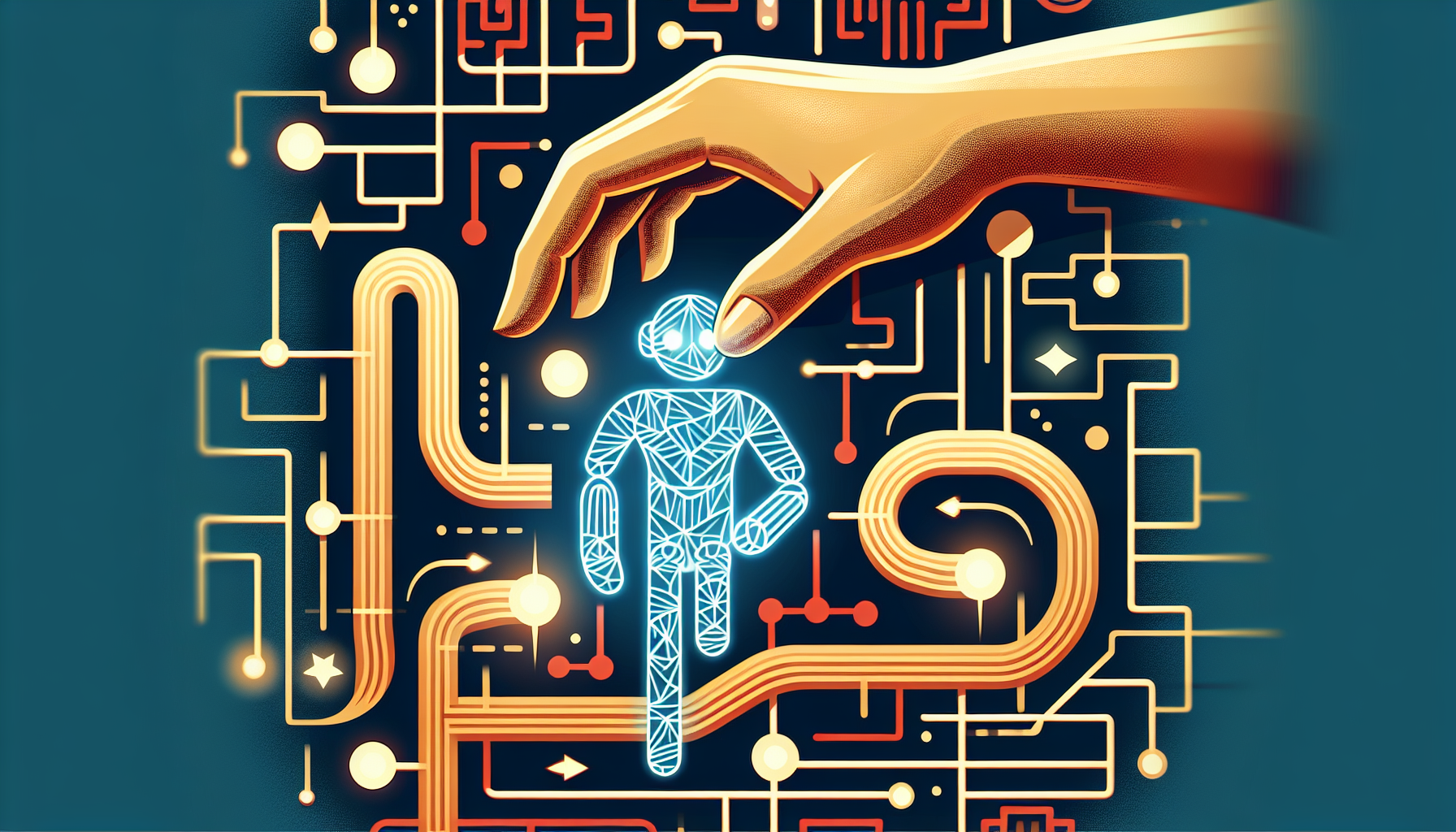
Claws aren't a new LLM model or a fancier prompt engineering technique. Instead, they represent a critical, often overlooked orchestration and control layer that sits above your LLM agents. Think of it as a highly specialized, dynamic operating system for your agents.
It’s the intelligent scaffolding that provides the necessary guardrails, context, and dynamic intervention to make agents truly reliable and safe.
The core insight is this: we don't need to make LLMs perfectly reliable; we need to build systems around them that compensate for their inherent unreliability. This is where Claws shine.
They allow your agents to do what they do best — generate creative solutions, reason, and adapt — while ensuring they stay within defined boundaries and achieve specific, measurable outcomes.
This isn't just about reactive error handling; it's about intelligent, proactive management of agent behavior, transforming chaotic brilliance into dependable execution.
The Three Imperatives of Claw Architecture
After diving deep into the concept and experimenting with some early open-source implementations, I’ve distilled the essence of Claws into three core imperatives that fundamentally change how we build with LLM agents.
1. Dynamic Constraint & Intelligent Guardrails
The biggest pain point with LLM agents is their tendency to "hallucinate" actions or go off-topic.
Claws address this not by restricting the LLM's creativity, but by dynamically applying and enforcing constraints around its actions and outputs.
- Pre-computation of Valid Actions: Before an agent even thinks about its next step, a Claw layer can pre-compute the only valid actions it can take given the current state and goal. For example, if an agent is supposed to call an API, the Claw might only expose a whitelist of approved endpoints and validate parameters before the agent generates the call, preventing invalid or unauthorized requests.
- Behavioral Monitoring & Intervention: Imagine an agent designed to summarize customer feedback. If it suddenly tries to generate an image or access a sensitive database, the Claw detects this out-of-bounds behavior instantly and intervenes. It can pause the agent, re-prompt it with corrective instructions, or even terminate the session, preventing costly errors or security breaches.
This is far more sophisticated than static output parsing; it's about understanding the intent behind the agent's actions in real-time.
My team’s ChatGPT 5 agent, which used to occasionally try to delete a non-existent database entry, now simply gets a polite but firm "That action is not permitted in this context" from its Claw, without ever reaching the database.
2. Robust Orchestration & State Management
Building multi-step agentic workflows is notoriously difficult.
Maintaining context, handling dependencies, and recovering from failures usually requires a tangled mess of conditional logic in your application code. Claws simplify this dramatically.
- Declarative Workflow Definition: Instead of imperative code telling the agent what to do at every step, Claws allow you to declaratively define the high-level goals and acceptable transitions between states. The Claw then manages the agent's progression through this workflow, ensuring each step is completed and validated before moving to the next.
- Persistent & Recoverable State: When an agent fails mid-task, resuming it gracefully is a nightmare. Claws provide a persistent state layer that tracks the agent's progress, tool outputs, and decisions. If an LLM call fails or the agent goes rogue, the Claw can roll back to a known good state, re-initialize the agent with the correct context, and attempt recovery, minimizing disruption and wasted compute.
This has been a game-changer for our long-running processes.
We can now trust our agents to manage complex data migrations or multi-stage content generation over several hours, knowing that any hiccup will be handled gracefully by the Claw, not by a human frantically trying to piece together logs.
3. Enhanced Observability & Intelligent Recovery
Debugging LLM agents often feels like peering into a black box, with unpredictable outputs and opaque decision-making.
Claws provide the necessary transparency and tools for proactive problem-solving and continuous improvement.
- Granular Telemetry: Claws log every decision, every tool call, every prompt, and every output generated by the agent, along with the Claw's own interventions. This granular telemetry provides an unparalleled view into agent behavior, making debugging dramatically faster. We can now pinpoint exactly when and why an agent diverged from its intended path, rather than just knowing it failed.
- Self-Correction & Adaptive Learning: Beyond simple error handling, advanced Claw implementations can use the gathered telemetry to learn and adapt. If an agent frequently struggles with a particular sub-task, the Claw can dynamically adjust the agent's prompt, provide additional context, or even delegate that sub-task to a specialized, more reliable micro-agent. This moves beyond static rules to truly intelligent, adaptive agent management. It’s like having an experienced senior engineer constantly overseeing your junior LLM agents, guiding them and teaching them on the fly.
The Reality Check: Claws Aren't Magic (Yet)
While Claws are undeniably a significant leap forward in managing LLM agent reliability, they aren't a silver bullet. This is a rapidly evolving field, and there are still challenges to consider:
- Complexity of Definition: Designing effective Claw layers requires careful thought and a deep understanding of your agent's domain. Overly restrictive Claws can stifle an agent's problem-solving capabilities, while too-loose ones defeat the purpose. Finding the right balance is an art that improves with experience.
- Performance Overhead: Introducing an additional orchestration layer inevitably adds some latency and computational overhead. For extremely high-throughput, low-latency applications, this might be a consideration, though optimizations are rapidly emerging to minimize this impact.
- Learning Curve: Adopting a Claw-based architecture means a shift in mindset for developers. We need to learn to think about agent behavior in terms of constraints, states, and intelligent interventions rather than just endlessly refining "smarter prompts." This learning curve can be steep initially, but the long-term benefits in stability and maintainability are immense.
Despite these challenges, the benefits far outweigh the drawbacks.
The shift from "make the agent perfect" to "build a resilient system around the agent" is a fundamental paradigm shift that will define the next wave of AI applications.
The Practical Takeaway: Start Building Your Claws
If you're wrestling with the unpredictability of LLM agents, it’s time to stop trying to force them into perfect behavior and start building a robust Claw layer. Here’s how you can begin today:
- Identify Your Agent's "Failure Modes": Pinpoint the most common ways your current agents misbehave. Do they hallucinate tool calls? Go off-topic? Get stuck? These are your first targets for Claw interventions.
- Define Explicit Boundaries: For each agent, clearly define its allowed actions, data access, and conversational scope. This forms the foundation of your Claw's guardrails.
- Implement a Simple State Machine: Even a basic state machine can act as an initial Claw. Define the valid transitions between steps in your agent's workflow. If the agent tries to jump ahead or go backward incorrectly, the Claw intervenes.
- Leverage Observability Tools: Integrate logging and monitoring that captures not just the LLM's output, but also the agent's intended actions and the Claw's interventions. This data is gold for refinement and debugging.
- Experiment with Open-Source Frameworks: Keep an eye on new open-source projects emerging in this space. While proprietary solutions from companies like Google and Anthropic will likely incorporate similar concepts, the community is rapidly developing powerful tools. By early 2027, I predict we'll see robust, standardized Claw frameworks that make this architecture accessible to everyone.
The future of reliable, production-ready LLM agents isn't about endlessly tweaking prompts or waiting for the next foundational model. It's about intelligently managing their powerful, yet often chaotic, capabilities with a sophisticated orchestration layer. "Claws"
Hey friends, thanks heaps for reading this one! 🙏
If it resonated, sparked an idea, or just made you nod along — I'd be genuinely stoked if you'd show some love. A clap on Medium or a like on Substack helps these pieces reach more people (and keeps this little writing habit going).
→ Pythonpom on Medium ← follow, clap, or just browse more!
→ Pominaus on Substack ← like, restack, or subscribe!
Zero pressure, but if you're in a generous mood and fancy buying me a virtual coffee to fuel the next late-night draft ☕, you can do that here: Buy Me a Coffee — your support (big or tiny) means the world.
Appreciate you taking the time. Let's keep chatting about tech, life hacks, and whatever comes next! ❤️