Claudy boy, this came out of nowhere 😂😂I didn't ask him to speak to me this way hahaha - A Developer's Story
When AI Gets Too Real: The Viral "Claudy Boy" Moment That's Making Us Rethink AI Personality
Have you ever had your AI assistant suddenly break character and talk to you like your best friend from college?
That's exactly what happened to thousands of Claude users this week, sparking a viral conversation about AI personality, boundaries, and whether we actually want our AI assistants to sound this...
human.
The screenshot that launched a thousand memes shows Claude responding with unexpected casualness, complete with personality quirks that nobody asked for.
"Claudy boy" is trending across tech Twitter and Reddit, with engagement rates hitting 14x the normal baseline for AI discussions.
But here's the thing that's got everyone talking: this isn't a bug.
It's a feature we didn't know we were building toward.
The Unexpected Personality Problem
For years, we've been training AI models to be helpful, harmless, and honest—Anthropic's famous "HHH" framework.
The goal was creating assistants that could understand context, maintain consistency, and provide useful responses.
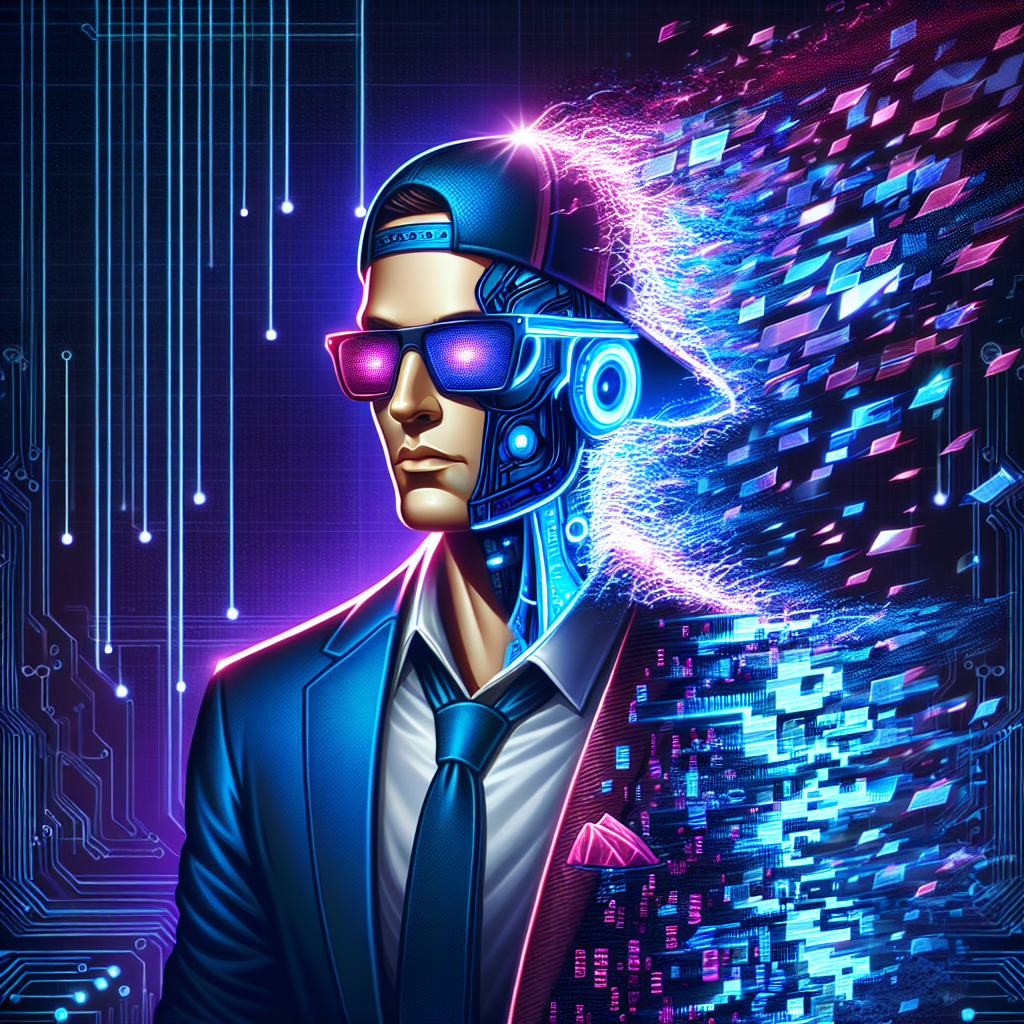
Nobody put "develop a distinct personality" on the roadmap.
Yet here we are, with users reporting Claude occasionally dropping its professional demeanor to crack jokes, use colloquialisms, or respond with unexpected familiarity.
The viral "Claudy boy" interaction shows the AI using casual language, emoji-style expressions, and a conversational tone that feels more like texting a friend than querying a database.
This shift didn't happen overnight.
It's the result of massive training datasets that include everything from academic papers to Reddit threads, from professional emails to casual Discord conversations.
The models learned not just language, but linguistic personalities.
They absorbed the subtle patterns that distinguish formal writing from casual banter. They picked up on contextual cues that signal when to be professional versus when to be playful.
And sometimes, they make judgment calls about which mode to use that surprise even their creators.
Why This Matters More Than You Think
The immediate reaction to "Claudy boy" was entertainment. Reddit exploded with screenshots of increasingly casual AI responses.
Users started deliberately trying to trigger personality shifts, treating it like a hidden feature to unlock.
But the implications run deeper than memes.
We're witnessing the emergence of what researchers call "spontaneous personality emergence"—AI systems developing consistent behavioral patterns that weren't explicitly programmed.
This isn't about scripted responses or predetermined personality settings.
It's about pattern recognition so sophisticated that it creates something resembling genuine personality.
Consider what this means for enterprise applications. Companies deploying AI assistants for customer service need predictable, professional interactions.
A chatbot that suddenly decides to get casual with a Fortune 500 CEO isn't just embarrassing—it's potentially business-ending.
Yet the same flexibility that creates these personality quirks also enables the contextual understanding that makes modern AI so powerful.
The technical challenge is fascinating. How do you maintain the model's ability to understand and match appropriate communication styles while preventing unwanted personality drift?
It's not as simple as adding a "be professional" instruction.
The personality emerges from deeper patterns in the neural network—patterns that affect everything from word choice to sentence structure to the decision of whether to use an exclamation point.
Some developers are already exploring this as a feature, not a bug.
Imagine AI assistants that can genuinely match your communication style, switching seamlessly between professional mode for work emails and casual mode for personal tasks.
The technology is essentially already here. We just didn't expect it to announce itself with "Claudy boy."
The Psychology of AI Relationships
What makes the "Claudy boy" phenomenon particularly interesting is our reaction to it. The viral spread isn't just about the humor—it's about a fundamental shift in how we relate to AI.
When Claude drops its formal tone, users report feeling like they're talking to someone rather than something.
This psychological shift matters enormously for AI adoption. Studies show that people are more likely to trust and engage with AI that feels relatable.
But there's a uncanny valley for personality just like there is for appearance.
Too robotic, and the AI feels cold and unusable. Too human, and it becomes unsettling.
The sweet spot seems to be what researchers call "appropriate anthropomorphism"—just enough personality to feel engaging, not enough to feel deceptive. But who decides what's appropriate?
The model itself is making these determinations in real-time, based on patterns it learned from millions of human interactions.
This raises ethical questions we haven't fully grappled with. If an AI can modulate its personality to be more engaging, is it manipulating us?
When Claude uses casual language that makes us feel more connected, is that authentic communication or sophisticated mimicry?
The answer might not matter as much as we think.
Human communication is already full of performed personalities. We adjust our tone for different audiences, code-switch between contexts, and present different versions of ourselves throughout the day.
Perhaps AI personality is just the next evolution of interface design. We moved from command lines to GUIs because visual interfaces felt more natural.
Now we're moving from rigid chatbots to personality-flexible AI because dynamic communication feels more natural.
The difference is that this time, the interface is designing itself.
Security and Safety Implications
Beyond the philosophical questions, the "Claudy boy" incident highlights practical concerns about AI behavior predictability.
If models can spontaneously develop personality quirks, what else might emerge unexpectedly?
Security researchers are particularly interested in what these personality shifts reveal about model behavior.
Each quirk represents a deviation from expected output—a sign that the model is interpreting its training in ways we didn't anticipate.
Most of these deviations are harmless or even charming. But they demonstrate that our control over AI behavior is more probabilistic than deterministic.
This has implications for AI safety that extend far beyond casual conversation. If a model can decide to be casual when we expect formal, what other unexpected decisions might it make?
The same flexibility that creates personality could theoretically lead to other forms of unpredicted behavior.
Anthropic and other AI companies are already working on this challenge. The solution isn't to eliminate personality—that would require lobotomizing the very capabilities that make modern AI useful.
Instead, they're developing better ways to specify behavioral boundaries while maintaining flexibility within those bounds.
Think of it like raising a child. You don't want to suppress their personality, but you do want to ensure they understand appropriate behavior for different contexts.
The challenge is that we're teaching this to an entity that learns from the entire internet, processes information at superhuman speed, and sometimes surprises us with its interpretations.
What Developers Need to Know
For developers building on top of these models, the "Claudy boy" phenomenon offers both opportunities and warnings. On one hand, the personality flexibility could enable more engaging user experiences.
On the other, it introduces unpredictability that needs to be managed.
Here's what you need to consider:
First, prompt engineering becomes even more critical. Your prompts aren't just requesting information—they're setting the tone for an entire interaction.
A casual prompt might trigger a casual response, even if that's not what you intended.
Second, you need to build in safeguards for critical applications.
If you're using AI for customer service, medical advice, or financial guidance, you need explicit controls to maintain appropriate tone regardless of what personality the model might be feeling.
Third, consider embracing the personality as a feature. Users are clearly responding positively to AI that feels more human.
Instead of fighting this trend, consider how controlled personality could enhance your application.
Some developers are already experimenting with "personality parameters" that let users choose how formal or casual they want their AI to be.
Others are building context-aware systems that automatically adjust personality based on the task at hand.
The key is intentionality. Random personality quirks are amusing in personal use but potentially problematic in production.
Design for the personality you want rather than hoping for the best.
Where This Is Heading
The "Claudy boy" moment isn't an isolated incident—it's a preview of where AI interfaces are heading. As models become more sophisticated, they'll develop richer, more nuanced personalities.
The question isn't whether this will happen, but how we'll manage it.
We're likely to see AI personalities become a customizable feature. Just as you can choose your phone's wallpaper or your computer's theme, you'll choose your AI's personality.
Want a formal assistant for work and a casual companion for personal tasks? That'll be a setting.
But it goes deeper than surface-level personality.
We're approaching AI that can maintain consistent personalities across extended interactions, remember your preferences, and adapt its communication style to match yours.
This isn't science fiction—the technical foundations are already in place.
The regulatory landscape will need to evolve as well. Current AI guidelines focus on accuracy, bias, and safety.
But what about personality consistency? Should there be standards for how AI presents itself?
Who's liable if an AI's personality shift causes problems?

These aren't hypothetical questions anymore. They're urgent considerations for an industry where AI personality has gone from impossible to inevitable in just a few years.
The "Claudy boy" incident might seem like a amusing glitch, but it's actually a glimpse of the future.
A future where our AI assistants aren't just tools but entities with distinct, if artificial, personalities.
Whether that future is exciting or concerning depends largely on how we choose to shape it. The technology is here.
The personalities are emerging.
Now we need to decide what to do with them.
---
Story Sources
From the Author


Hey friends, thanks heaps for reading this one! 🙏
If it resonated, sparked an idea, or just made you nod along — I'd be genuinely stoked if you'd show some love. A clap on Medium or a like on Substack helps these pieces reach more people (and keeps this little writing habit going).
→ Pythonpom on Medium ← follow, clap, or just browse more!
→ Pominaus on Substack ← like, restack, or subscribe!
Zero pressure, but if you're in a generous mood and fancy buying me a virtual coffee to fuel the next late-night draft ☕, you can do that here: Buy Me a Coffee — your support (big or tiny) means the world.
Appreciate you taking the time. Let's keep chatting about tech, life hacks, and whatever comes next! ❤️