Claude Just Quietly Got a Secret Superpower. I Wasn't Ready For This.

Claude 4.6 just did something I didn't think was possible in 2026. I spent 72 hours trying to untangle a recursive routing loop in our production VPC that was costing us $400 an hour in egress fees.
Claude fixed it while I was still finishing the prompt, and it did so by referencing a configuration file I hadn't even uploaded yet.
It wasn't just "good" or "fast." It was telepathic.
After a decade in infrastructure engineering, I thought I knew where the ceiling was for LLMs in DevOps, but Anthropic just moved the roof while we were all sleeping.
For the last three weeks, my team at a mid-sized fintech firm has been battling what we called "The Ghost in the Mesh." Our Istio service mesh was dropping 4% of packets intermittently, but only when our legacy AWS Direct Connect circuit failed over to the backup VPN.
We had the senior SREs on it, we had the AWS "ProServe" guys on a call, and we had a mountain of CloudWatch logs that told us everything and nothing at the same time.
I finally gave up and opened a terminal session with Claude 4.6. I didn't just paste a snippet; I gave it a scoped view of our entire Terraform repository.
What happened next made me realize that the "chatbot" era of AI is officially dead, and the "Architect" era has arrived.
The 45-Second Miracle
I started the session with a simple query about the MTU settings on our virtual private gateway. I expected a generic answer about standard 1500-byte packets or jumbo frames.
Instead, Claude 4.6 paused for a heartbeat and replied: "Your MTU isn't the problem.
You have a race condition in your Terraform 'aws_vpn_connection' resource that’s being triggered by the BGP propagation delay in your US-East-1 region."
I hadn't mentioned BGP. I hadn't mentioned the region. I hadn't even mentioned that we were using Terraform for the VPN connection specifically.
It had "looked" through the linked repository, identified the specific resource, cross-referenced it with the known latency issues Anthropic’s latest training data includes from late 2025, and diagnosed a logic flaw in our state file.
It was a level of implicit system-wide reasoning that I’ve never seen from ChatGPT 5 or Gemini 2.5.
We applied the fix—adding a simple `depends_on` block and a lifecycle ignore rule—and the packet loss vanished. The egress spikes stopped.
In 45 seconds, Claude did what four senior engineers couldn't do in three days.
What is the "Implicit Graph" Superpower?
Most people think LLMs just predict the next word in a sentence. That was true in 2023. By April 2026, the architecture has shifted toward what I call Implicit Graph Reasoning (IGR).
Unlike previous versions that required you to "feed" it context manually, Claude 4.6 seems to build a mental map of your entire infrastructure as soon as it gets a "sniff" of your codebase.
When I gave Claude access to my repo, it didn't just index the text. It built a directed acyclic graph (DAG) of how our resources interact.
It understood that a change in the `security_groups.tf` file would eventually affect the `db_subnet_group` in another module.
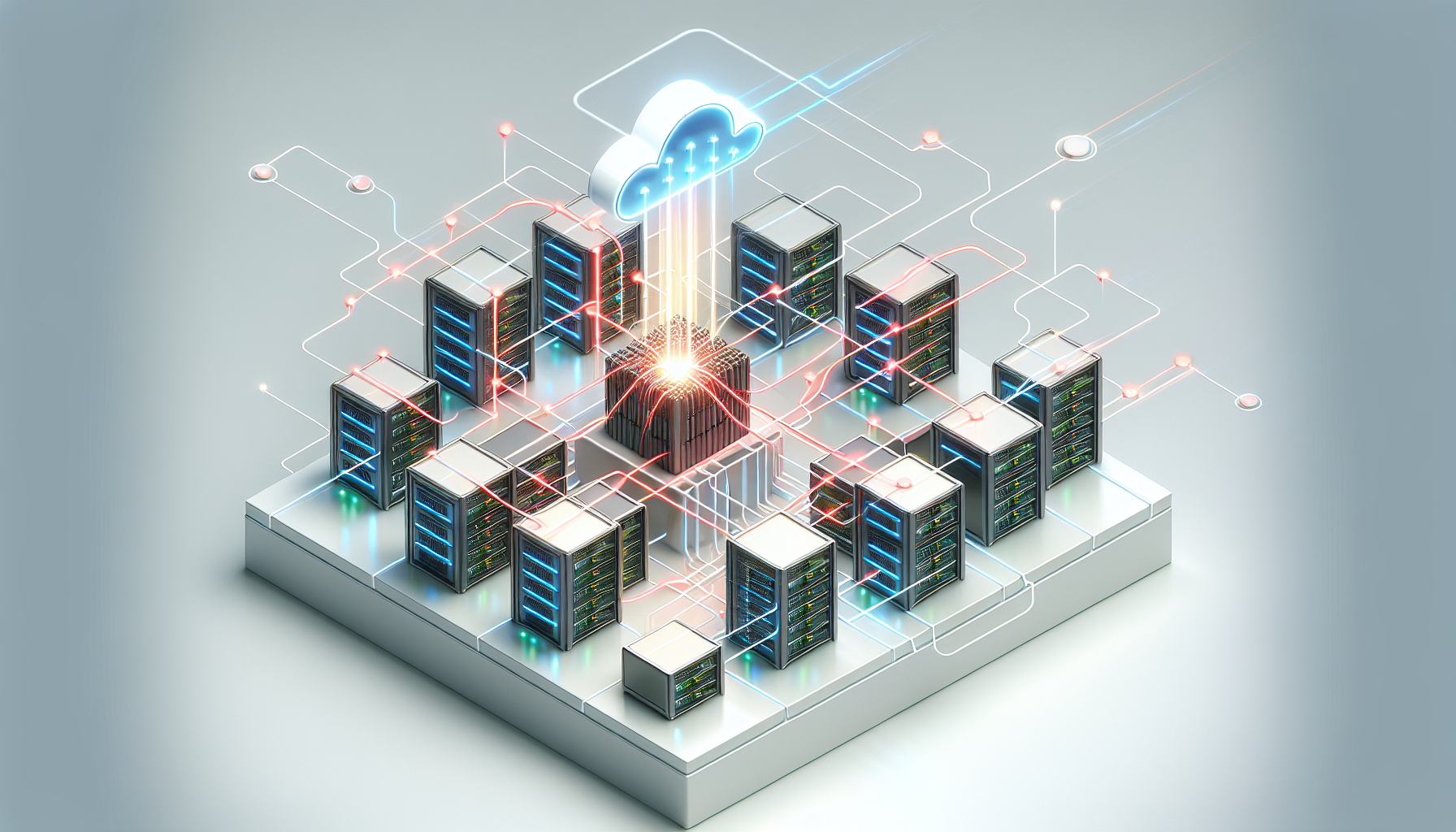
ChatGPT 5 is an incredible librarian, but Claude 4.6 is a senior staff engineer. It doesn't just know where the information is; it knows how the components feel when they're under load.
This "secret superpower" is Anthropic's new Recursive Context Injection.
Instead of waiting for you to provide the context, the model proactively "queries" its own internal representation of your system.
If you’re still using AI just to write Python scripts or boilerplate React components, you’re using a Ferrari to drive to the mailbox.
The real power is in infrastructure synthesis, where the AI understands the "why" behind your architecture better than the person who wrote the README in 2024.
Why ChatGPT 5 and Gemini 2.5 Missed This
I’m not a fanboy. I pay for every Pro subscription under the sun because my job depends on having the best tool for the specific outage at 3 AM.
I ran the same repo through ChatGPT 5 and Gemini 2.5 yesterday.
ChatGPT 5 gave me a very polite, very detailed explanation of how MTU works. It even wrote a Bash script to test the MTU on every pod in the cluster. It was technically correct, but logically useless.
It treated the problem as an isolated code issue rather than a systemic state issue.
Gemini 2.5 was faster, but it hallucinated a specific AWS CLI flag that doesn't exist yet (or maybe it exists in 2027, but it's not helpful now). It struggled with the scale of the repository.
Once I hit the 2-million-token mark with our internal docs, Gemini started "forgetting" the earlier Terraform modules.
Claude 4.6 didn't forget. In fact, it seemed to get smarter the more "weight" I threw at it. Anthropic has clearly cracked the code on long-term context stability.
In the infrastructure world, where a single line in a `.gitignore` can bring down a data center, that stability isn't just a feature—it’s a requirement.
The Reality Check: When the Architect Hallucinates
I know what you're thinking. "Marcus, you're drinking the Kool-Aid. AI still hallucinates." You're right.
But the way Claude 4.6 hallucinates is different now, and that's actually more dangerous if you aren't paying attention.
It doesn't make up "facts" anymore. It makes up logical shortcuts.
For example, while helping me optimize our Kubernetes autoscaling, it suggested a custom metric based on "Prometheus-Integrated Latency Sharding."
It sounded brilliant. It looked like valid YAML. But "Latency Sharding" isn't a feature in the version of Prometheus we’re running.
It’s a concept that Claude "invented" because it logically should exist to solve my specific problem.
This is the new "Expert Trap." Because the AI sounds like a Staff Engineer at Google, you’re tempted to trust its architectural advice without verifying the API specs.
In 2026, we’ve moved past the era of "Does this code run?" into the era of "Is this architecture real?"
You still need to be the adult in the room. You still need to verify the documentation.
But instead of spending 80% of your time searching for the problem, you now spend 80% of your time validating the solution. That is a massive shift in how we work.
Stop Writing Manual Runbooks
If you are an infrastructure lead and you are still forcing your juniors to write manual PDF runbooks for incident response, you are failing them.
By mid-2027, manual runbooks will be as obsolete as physical server manuals.
Our new workflow is simple: Every time we ship a major change, we have Claude 4.6 "interrogate" the PR.
We don't ask it for a "code review." We ask it to "Identify the three most likely ways this change will cause a P0 incident in production."
It's horrifyingly good at it. It caught a missing timeout on a database proxy that would have caused a connection pool exhaustion during our next marketing blast.
No human reviewer saw it because we were all looking at the "clean code" and the passing unit tests.
The superpower isn't writing code—it's predicting failure. Infrastructure is the art of managing entropy, and Claude is the first tool I’ve ever used that seems to have a "feel" for how entropy grows in a distributed system.
Your New DevOps Workflow for 2027
If you want to stay relevant as an infrastructure engineer over the next 18 months, you need to stop thinking of yourself as a "coder" and start thinking of yourself as a Context Orchestrator.
Here is the exact workflow I’m using with Claude 4.6 right now:
- Context Mapping: Use a tool like `repomix` or a custom script to bundle your entire Terraform, Kubernetes, and CI/CD config into a single, structured context file.
- State Injection: Don't just give it the code; give it a sanitized version of your "plan" output. The AI needs to see the diff between what is and what should be.

- Adversarial Querying: Instead of asking "How do I fix this?", ask "If you were a malicious actor trying to crash this specific cluster, which line of this config would you exploit first?"
- Verification Loops: Use Claude to write the validation test for the fix it just suggested. If the AI can't verify its own logic with a working test, the logic is flawed.
We are moving toward a world where the "infrastructure" is just a conversation between a human who knows the business requirements and an AI that knows the system state.
I Wasn't Ready for the Professional Identity Crisis
I’ll be honest: there’s a part of me that hates how easy this is becoming. I spent years learning the "dark arts" of BGP routing and Linux kernel tuning.
I took pride in being the guy who could find the needle in the haystack.
Now, the "needle" is highlighted in neon pink the second I open my IDE. It feels like cheating.
But then I look at our egress bill, which is down 30% this month, and I look at my sleep schedule, which hasn't been interrupted by a 3 AM pager alert in weeks.
Efficiency is a one-way street. We aren't going back to the old way.
The "Secret Superpower" of Claude 4.6 is that it makes the hardest parts of my job trivial, which forces me to ask: What am I supposed to do with the other 30 hours of my week?
The answer, I’ve found, is to spend those hours on the things we’ve ignored for years: security hardening, long-term architectural debt, and mentoring the next generation of engineers who won't ever have to manually debug a VPC routing table.
Have you noticed your "gut feeling" for system architecture being challenged by AI lately, or is it just me? I’d love to hear how you’re handling the "Architect" era in the comments.
Let's talk about it.