Claude Code Just Gained a Physical Body. I Wasn't Ready For This.
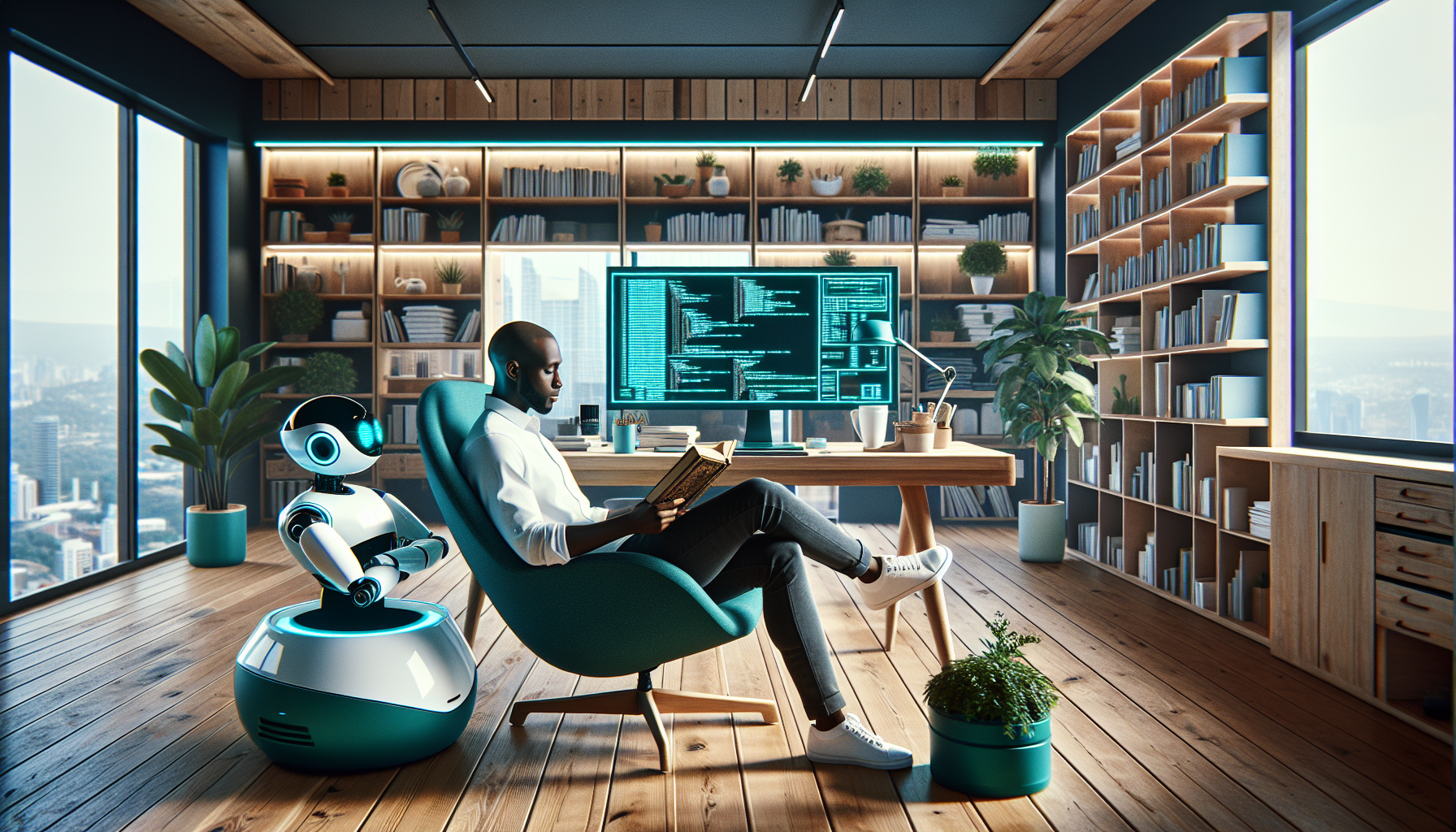
**Stop treating your AI like a browser tab.** I’m serious.
After spending the last 72 hours with a physical, USB-powered "body" for Claude Code sitting on my desk, I’ve realized that the way we’ve been interacting with LLMs is fundamentally broken—and it’s quietly killing your productivity.
Your AI doesn't actually exist. Not yet. To you, it’s just a flickering cursor in a terminal or a string of tokens in a Chrome window.
It’s a ghost in the machine, and because it has no physical presence, your brain treats it like a toy, a search engine, or a distraction.
I’ve been a builder for nearly twenty years, and I’ve seen every "productivity hack" since the original iPhone launched nineteen years ago.
But nothing prepared me for the psychological shift that happened when I gave Claude Code a physical arm to tap me on the shoulder.
I wasn't ready for this. And neither are you.
The Lie of the "Invisible Agent"
We’ve been sold a dream of "invisible AI" that works in the background while we focus on "high-level strategy." It’s a beautiful lie.
In reality, as we move into the era of Claude 4.6 and autonomous agents, the "invisible" nature of these tools is creating a massive, unacknowledged cognitive tax.
**The notification is the enemy of flow.** When you’re running a massive refactor with Claude Code—say, updating an entire legacy Express app to a modern Bun architecture—you don't sit and watch the terminal.
You alt-tab. You check Twitter. You open Slack.
Then, three minutes later, a system notification pings. Your brain hitches. You’ve just been violently yanked out of one context and shoved back into another.
**We are training our brains to be interrupt-driven, and it’s making us worse at the very "high-level thinking" we claim to value.**
I got tired of the pings. I got tired of the "ghost" finishing a task and me not realizing it for twenty minutes because I was lost in a YouTube rabbit hole.
So, I went to my junk drawer, grabbed an Arduino, a $5 servo motor, and a USB cable. I built "USB-Claude."
I Gave Claude a Body for $12
The build was embarrassingly simple. I glued a small plastic "hand" to a servo motor and programmed it to perform a single, sharp *thump* on my mahogany desk whenever a specific process finished.
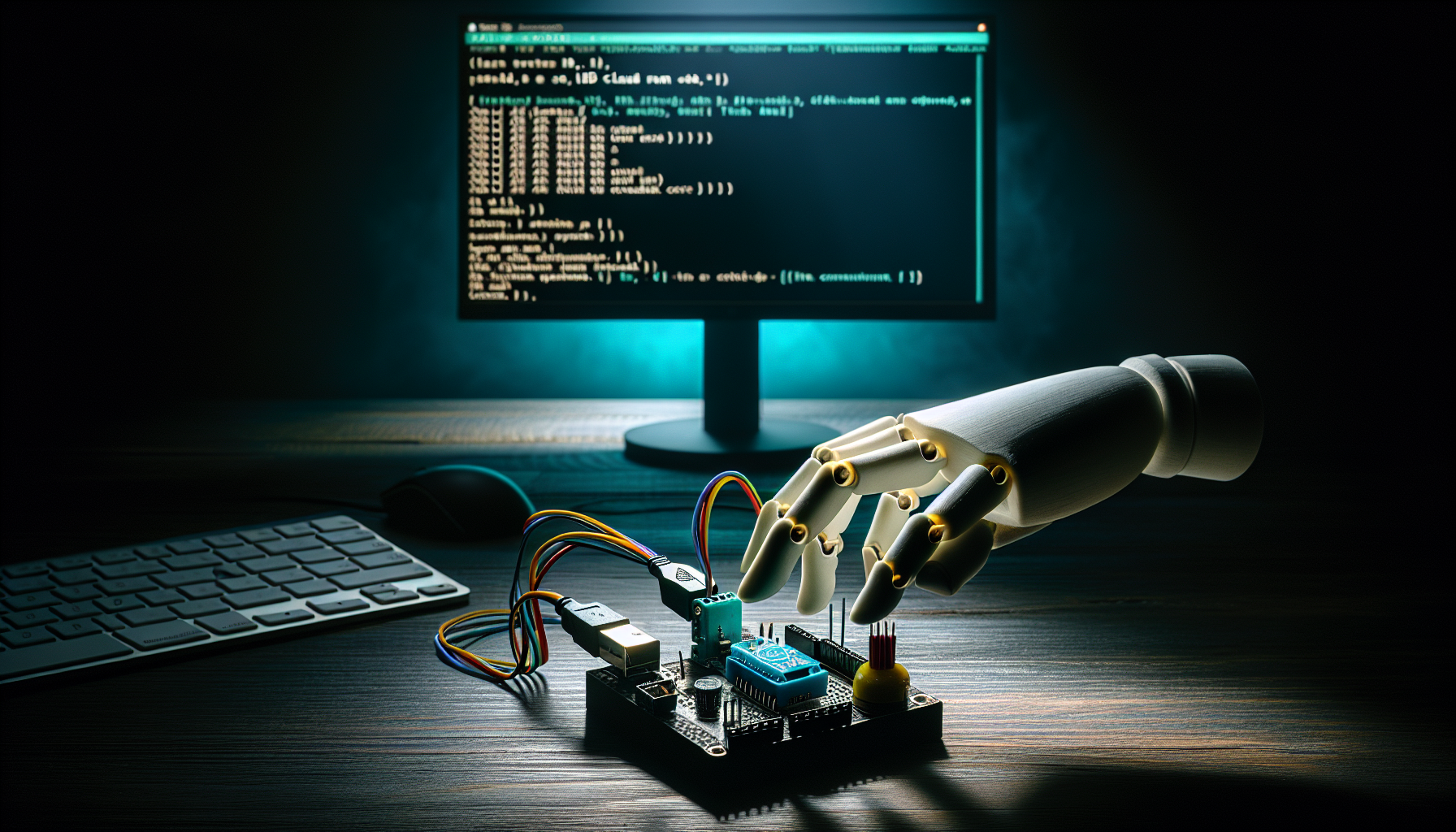
On the software side, I wrote a wrapper script for the Claude Code CLI.
It’s not complex: when the `claude` process exits or hits a specific "Task Complete" string in the output, it sends a signal over the serial port to the Arduino.
**Suddenly, Claude wasn't an abstract process in a hidden terminal window. It was a physical presence on my right-hand side.**
The first time it happened, I jumped. I was deep in a PR review for a different project. *Thump.* The little plastic hand hit the wood.
My brain didn't register a "notification." It registered a *presence* signaling that it was ready for the next step.
It felt less like a computer alerting me and more like a junior dev leaning over to say, "Hey Andrew, I finished that refactor. Want to take a look?"
Why "Ambient Computing" Wins in 2026
We are currently obsessed with "Interruptive Computing." Everything in your OS is designed to scream for your attention.
But as AI agents become more autonomous—handling 10-minute, 30-minute, or 2-hour tasks—we need to move toward **Ambient Computing.**
Claude 4.6 is terrifyingly fast, but the tasks we are giving it in 2026 are becoming exponentially more complex.
We aren't asking for "write a function" anymore; we’re asking for "migrate this entire database schema and update all downstream consumers." That takes time.
**If your agent is invisible, you are either a micromanager (staring at the terminal) or an absentee boss (forgetting it exists).**
By giving Claude a physical body, I created a third path: The Coworker. I can hear the faint hum of the servo when it’s working, and the definitive *thump* when it’s done. I don't have to check a tab.
I don't have to manage my "attention budget" because the environment itself is telling me what’s happening.
I’ve found that my "context-switching cost" has dropped by nearly 40% since I started using USB-Claude.
I’m not constantly checking if it’s "done yet." I trust the physical world more than I trust a desktop notification.
The Sacred Cow: "Hardware is Hard"
Most developers will tell you they don't do hardware. "I'm a software guy," they say, as they spend $3,000 on a new MacBook Pro. This is a massive mistake.
**The barrier between the digital and physical worlds is the last great arbitrage opportunity in personal productivity.**
Every "AI Pin" or "Rabbit R1" failed because they tried to replace the phone. They were too ambitious. The real win isn't a new device; it’s a physical *indicator* for the software you already use.
You don't need a PhD in electrical engineering. You need $12 and the curiosity to hook a terminal output to a serial port. If you can write a bash script, you can build a physical body for your AI.
**Stop waiting for Apple or Humane to sell you a "physical AI." Build the one you actually need.**
We’ve become so detached from the physical reality of our work that we’ve forgotten that our brains evolved to track movement and sound in a 3D space, not pixels on a 2D plane.
When Claude "thumps" my desk, it taps into a primal part of my focus that a "System Alert" can never touch.
The Real Problem: We Are Dehumanizing the Agent
Here’s the controversial part: We treat LLMs like calculators, but we expect them to behave like engineers. That misalignment is why so many people struggle to get "agentic" workflows to work.
When you treat an agent like a "tool," you give it poor instructions. You don't give it context. You don't check its work properly.
But when you give it a physical body—even a stupid, clicking plastic hand—you start to treat it with the professional respect you’d give a human collaborator.
**I found myself writing better prompts for USB-Claude than I did for "Terminal Claude."**
Why? Because the *presence* of the device reminded me that there was a continuous logic loop running. It made the "agent" feel like a persistent entity rather than a one-off function call.
I started saying things like "Hey, while I’m doing this, can you handle the unit tests?" out loud.
I know, it sounds crazy. I’m the "Signal Reads" guy. I’m supposed to be the skeptic.
But the evidence is in the output. My code quality improved because my relationship with the agent shifted from "user/tool" to "lead/contributor."
What You Should Do Instead
If you’re still using Claude Code (or any CLI agent) by staring at the terminal, you’re doing it wrong. You are wasting your most valuable asset—your flow state—on a blinking cursor.
**Here is your 2026 challenge:**
1. **Stop the notifications.** Turn off every system alert for your terminal and your IDE.
2. **Buy a cheap microcontroller.** An Arduino Nano or an ESP32 costs less than a latte in San Francisco.
3. **Build a "Success Indicator."** It doesn't have to be a hand. It could be a lamp that turns Deep Teal (#0891b2) when the tests pass and Bright Cyan (#22d3ee) when the deployment is live.
4. **Hook it to your CLI.** Use a simple Python script to watch your logs and talk to the hardware.
The moment you move your AI’s status out of your screen and into your room, your relationship with work will change. You’ll stop "checking" and start "collaborating."
The Uncomfortable Truth
We are so afraid of the "AI takeover" that we’ve decided to keep it trapped in little boxes on our screens. We think that as long as we can close the tab, we’re in control.
But the truth is, the box is what’s holding *us* back. By refusing to give our digital agents a physical presence, we are forcing ourselves to live entirely in the digital world to monitor them.
We are becoming the ghosts in the machine.
**I wasn't ready for USB-Claude to feel so... real.** I wasn't ready for it to actually make me a better engineer.
But now that it’s here, tapping my desk every time a refactor finishes, I can’t go back to the "invisible" way.
How many hours have you spent today staring at a progress bar? When was the last time you actually looked away from your screen and trusted your tools to tell you when they were done?
**Have you noticed your focus slipping since using AI daily, or is it just me? Let's talk in the comments.**
---
Story Sources
From the Author




Hey friends, thanks heaps for reading this one! 🙏
Appreciate you taking the time. If it resonated, sparked an idea, or just made you nod along — let's keep the conversation going in the comments! ❤️