Antirender: remove the glossy shine on architectural renderings - A Developer's Story
The Anti-Glossy Revolution: Why Architects Are Stripping Away the Shine from Their Renderings
What if the most honest thing an architect could do is show you exactly how bland your future building might look on a rainy Tuesday afternoon?
That's the provocative question behind Antirender, a new tool that's gaining traction by doing something counterintuitive: making architectural visualizations look worse.
Or rather, making them look real.
In an industry where photorealistic renderings have become increasingly detached from reality — populated by impossibly beautiful people, perfect weather, and lighting conditions that exist only in dreams — Antirender strips away the gloss to reveal what buildings actually look like when humans inhabit them.
The Rendering Industrial Complex
For decades, architectural visualization has been on an arms race toward hyperrealism.
What started with hand-drawn perspectives evolved into CAD wireframes, then basic 3D models, and finally today's photorealistic renderings that rival Hollywood CGI.
Modern architectural firms spend tens of thousands of dollars on visualizations that look more like scenes from a utopian sci-fi film than actual buildings.
Walk through any city and you've seen them — those massive billboards showing gleaming towers filled with laughing professionals, tree-lined plazas bathed in golden hour light, and retail spaces so inviting they seem to glow from within.
These images sell billions of dollars worth of real estate every year.
But there's a growing disconnect between these idealized visions and built reality.
The problem isn't just aesthetic disappointment when buildings fail to live up to their renderings. It's that these visualizations actively shape what gets built.
Developers make decisions based on these images. City councils approve projects based on them.
Communities accept or reject developments based on how they look in these perfect moments frozen in time.
The result? Buildings designed to look good in renderings rather than function well in reality.
"We've created a feedback loop where the rendering has become more important than the building," notes architect and critic Kate Wagner, who has written extensively about "rendering realism" and its discontents.
The tools meant to help us visualize buildings have instead created a parallel reality where architecture exists primarily as images.
Enter the Anti-Aesthetic
Antirender approaches this problem with brutal honesty.
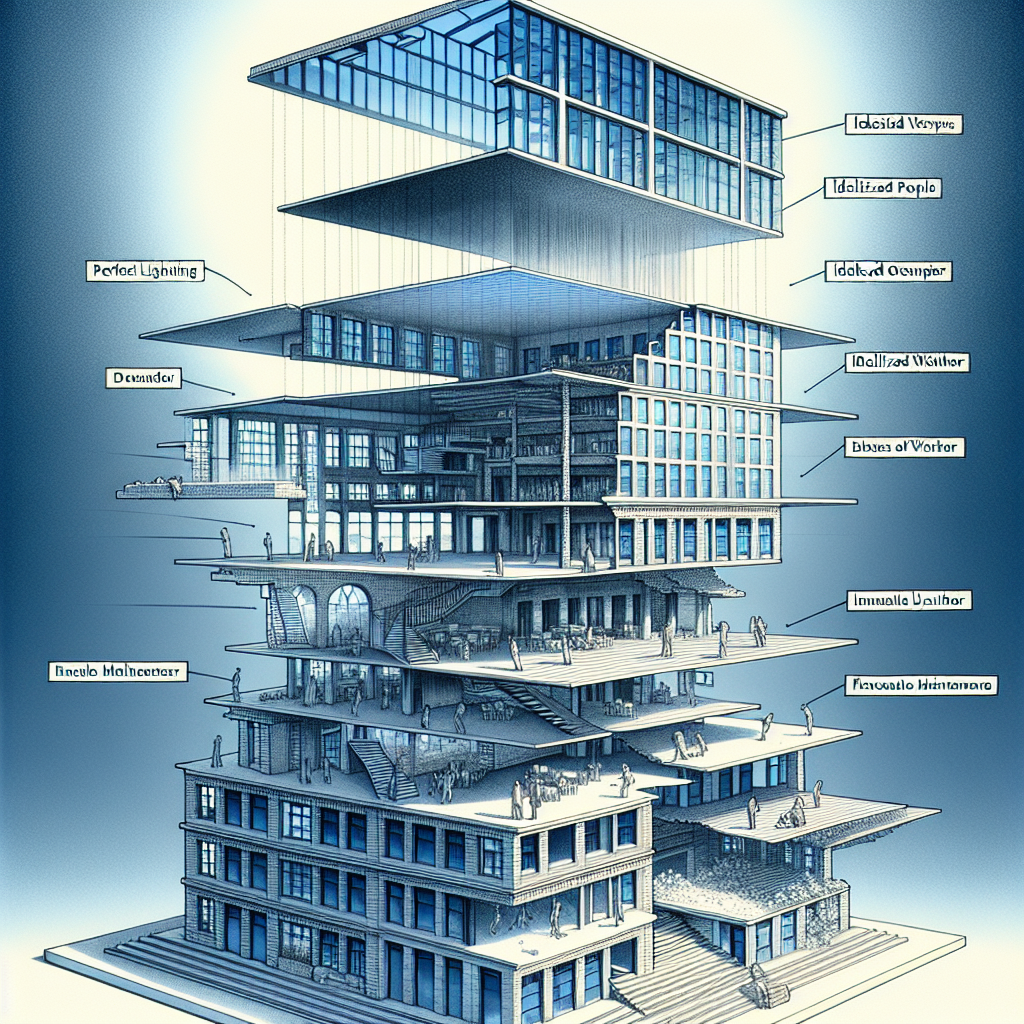
The tool, which integrates with standard architectural software, applies what its creators call "reality filters" to traditional renderings.
Instead of adding lens flares and atmospheric effects, it subtracts them.
Instead of perfect lighting, it shows buildings under overcast skies.
Instead of curated crowds of models, it populates spaces with realistic human behavior — people checking phones, carrying shopping bags, looking tired.
The technical implementation is surprisingly sophisticated. Antirender uses machine learning models trained on thousands of photographs of actual buildings in use.
It understands how materials weather over time, how shadows fall on cloudy days, how crowds actually move through spaces.
But the real innovation isn't technical — it's conceptual.
By deliberately degrading the visual appeal of renderings, Antirender forces viewers to evaluate buildings on different criteria. Does this space still work when it's not bathed in golden light?
Is this plaza inviting even on a gray day? Will people actually want to be here when it's not staged for a photograph?
The tool offers multiple "reality modes" that architects can apply:
**Weather Variations** show buildings across different conditions — rain, snow, overcast skies, harsh midday sun. Materials look different when wet.
Shadows disappear on cloudy days. These variations reveal whether a design relies too heavily on ideal conditions.
**Time Decay** simulates how buildings age. Concrete stains.
Metal oxidizes. Glass gets dirty.
Plants grow or die. This mode projects buildings five, ten, or twenty years into the future, showing how today's pristine vision becomes tomorrow's urban reality.
**Human Chaos** replaces carefully placed model citizens with realistic crowd behavior. People cluster in unexpected places.
Trash appears. Delivery trucks block views.
Skateboarders colonize stairs. This mode reveals how human behavior might subvert architectural intentions.
**Mundane Moments** perhaps the most radical mode, shows buildings during their most boring times. Tuesday afternoon.
Early Sunday morning. The depths of winter.
These are the moments that comprise most of a building's existence, yet they never appear in traditional renderings.
The Developer's Perspective
For software developers, Antirender represents a fascinating case study in counter-intuitive design.
The entire software industry has spent decades optimizing for visual appeal. We add animations, polish interfaces, and obsess over pixel-perfect designs.
Antirender does the opposite — it actively makes things look worse to serve a higher purpose.
This approach parallels emerging trends in software development. Consider the rise of brutalist web design, which strips away unnecessary decoration.
Or the popularity of terminal-based interfaces among developers who prefer function over form. Or the growing backlash against "dark patterns" that use visual appeal to manipulate user behavior.
Antirender's technical architecture also offers lessons for developers. The tool doesn't replace existing workflows — it augments them.
Architects can still create traditional renderings for marketing purposes, but now they have a tool for reality-checking their designs.
The machine learning pipeline is particularly clever.
Rather than trying to generate photorealistic images from scratch (a computationally expensive process), Antirender applies learned transformations to existing renderings.
This approach is faster, more predictable, and easier to control.
The team has also open-sourced key components, allowing developers to build similar "reality filters" for other domains.
Imagine applying the same concept to UI mockups, showing how interfaces look with real data instead of lorem ipsum.
Or to product photography, showing items as they appear after normal use.
Industry Implications and Resistance
The architectural establishment has responded to Antirender with a mix of curiosity and hostility.
Progressive firms have embraced it as a tool for more honest communication with clients.
"We've started showing both versions — the marketing rendering and the Antirender version," says Sarah Chen, a partner at a San Francisco architecture firm.
"Clients appreciate the honesty. It actually builds trust."
Some cities are even considering requiring "reality-checked" renderings for public projects.
The idea is to prevent the kind of bait-and-switch that often occurs with public architecture — beautiful renderings that secure approval, followed by value-engineered buildings that look nothing like what was promised.
But there's significant pushback from parts of the industry that depend on aspirational imagery.
Real estate developers worry that realistic renderings will make projects harder to sell.
"You're asking us to sell reality when our competitors are selling dreams," one developer complained at a recent industry conference.
"That's not a fair fight."
There's also concern about the tool's assumptions about what constitutes "reality." Whose reality does Antirender represent?
The algorithm trained on photographs of existing buildings might perpetuate current patterns of use rather than imagining new possibilities.
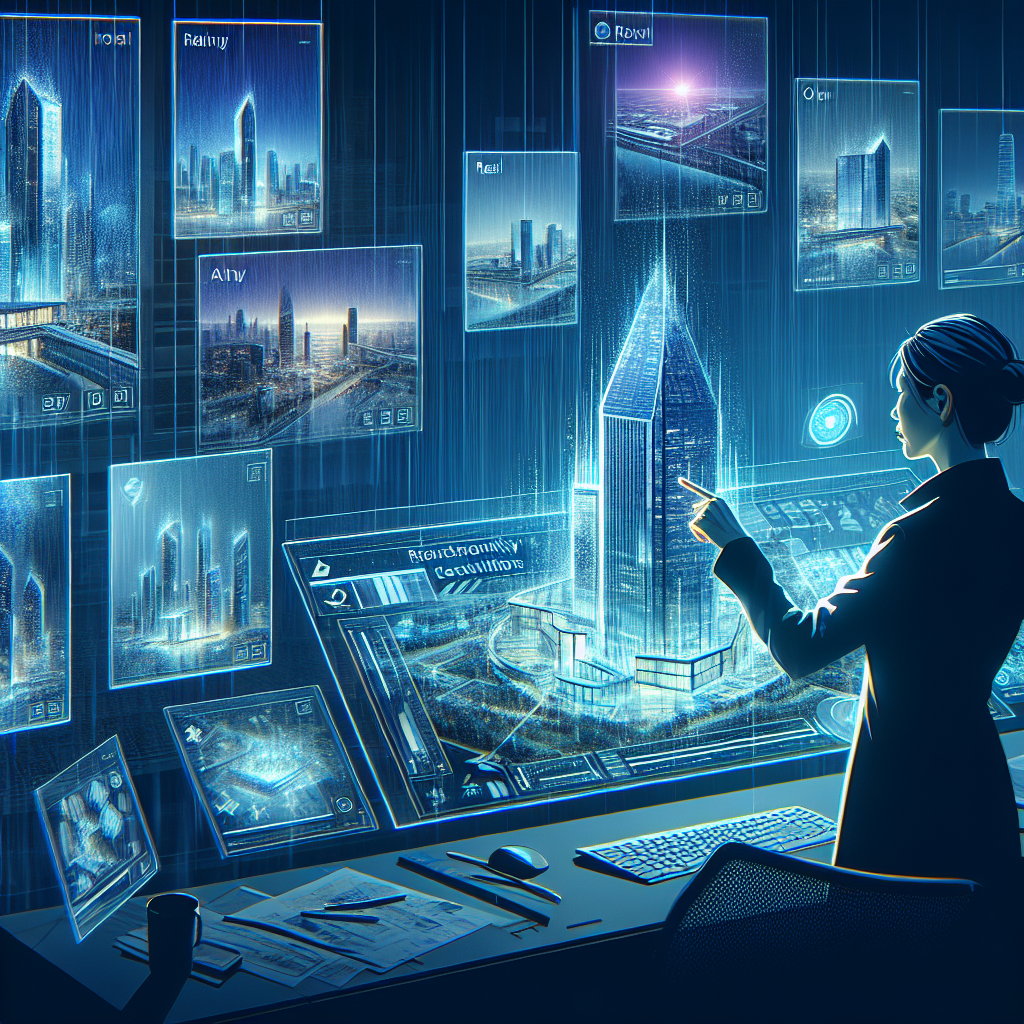
Critics argue that architecture has always been about vision and aspiration. Buildings should inspire and uplift.
If we only show mundane reality, do we lose the ability to imagine better futures?
The Broader Tech Pattern
Antirender fits into a larger pattern in technology: tools that subtract rather than add.
We're seeing this across domains. Distraction-free writing apps that remove features.
Minimalist phones that do less than their predecessors. Social networks that limit rather than expand functionality.
This represents a maturation of digital tools. Early software competed on feature lists — more functions, more options, more capabilities.
But mature software often succeeds by doing less, better.
For developers, this suggests opportunity. What other domains could benefit from "anti-tools" that strip away rather than add?
What other industries rely on glossy unreality that could use a dose of truth?
There's potential for:
- **Anti-Instagram**: Photo sharing that shows unfiltered reality
- **Anti-LinkedIn**: Professional networking without the performance
- **Anti-Dating Apps**: Matching based on mundane compatibility rather than curated profiles
The technical challenges are significant but surmountable. The real challenge is cultural — convincing people that less polished might actually be more valuable.
What's Next for Architectural Honesty
Antirender is likely just the beginning of a broader reckoning in architectural visualization.
As climate change makes weather more extreme, showing buildings only in perfect conditions becomes increasingly irresponsible.
As cities grapple with inequality, renderings that show only wealthy inhabitants feel tone-deaf.
As remote work reshapes urban cores, visualizations need to account for different patterns of use.
The next evolution might involve:
**Dynamic renderings** that change based on time, weather, and season — not just as static images but as living simulations that show buildings across their full lifecycle.
**Participatory visualization** where community members can populate renderings with their own experiences and expectations, creating more democratic visions of future spaces.
**Climate-honest rendering** that shows buildings during heat waves, floods, and other extreme weather events that are becoming more common.
The technology exists to create these tools. Machine learning models can simulate complex environmental conditions.
Game engines can create interactive, explorable spaces. The question is whether the industry is ready to embrace this level of honesty.
For developers and technologists, Antirender offers a powerful reminder: sometimes the most innovative thing we can do is make things worse — if "worse" means more honest, more realistic, and ultimately more useful.
The glossy shine on architectural renderings isn't just an aesthetic choice. It's a form of communication that shapes our built environment.
By stripping away that shine, Antirender isn't just changing how buildings look in images.
It's changing how we think about the relationship between vision and reality.
---
Story Sources
From the Author


Hey friends, thanks heaps for reading this one! 🙏
If it resonated, sparked an idea, or just made you nod along — I'd be genuinely stoked if you'd show some love. A clap on Medium or a like on Substack helps these pieces reach more people (and keeps this little writing habit going).
→ Pythonpom on Medium ← follow, clap, or just browse more!
→ Pominaus on Substack ← like, restack, or subscribe!
Zero pressure, but if you're in a generous mood and fancy buying me a virtual coffee to fuel the next late-night draft ☕, you can do that here: Buy Me a Coffee — your support (big or tiny) means the world.
Appreciate you taking the time. Let's keep chatting about tech, life hacks, and whatever comes next! ❤️