Anthropic Just Got Labeled a "Risk." The Shocking Reason Nobody Is Telling You.
Anthropic Just Got Labeled a "Risk." The Shocking Reason Nobody Is Telling You.
I was halfway through a complex database migration using **Claude 4.6** when the notification flashed across my second monitor. I almost didn't click it.
Headlines about AI "risks" are usually noise—vague warnings about existential dread or hallucinations we all learned to manage two years ago.
But this was different. A major federal advisory body just designated Anthropic as a **"significant supply chain risk"** for critical infrastructure.
My terminal, filled with perfectly refactored Rust code courtesy of the very model being flagged, felt suddenly like a liability.
I’ve spent the last two and a half years building my entire stack around the Anthropic ecosystem.
From the early days of Claude 2 to the absolute powerhouse that is the 4.6 series, I’ve trusted their "Safety-First" branding. Now, the regulators are saying that very safety is the problem.
And here is the kicker: the reason they’re being flagged isn't because their servers are insecure or because they're leaking data to foreign powers.
**It’s because Anthropic is too "safe" for its own good.**
The Morning the API Went "Dangerous"
If you’re a developer in 2026, you know that **Claude 4.6** is the gold standard for logic.
While ChatGPT 5 is incredible for creative synthesis and Gemini 2.5 owns the multi-modal video space, Claude is where the real work happens.
It’s the model that doesn't just give you code; it gives you the *correct* code.
When the "Risk" label hit the wire, my first thought was a security breach. I checked the status pages, expecting to see a "Compromised" banner or a forced password reset.
Instead, I found a 42-page PDF filled with bureaucratic jargon that essentially boils down to one terrifying sentence.
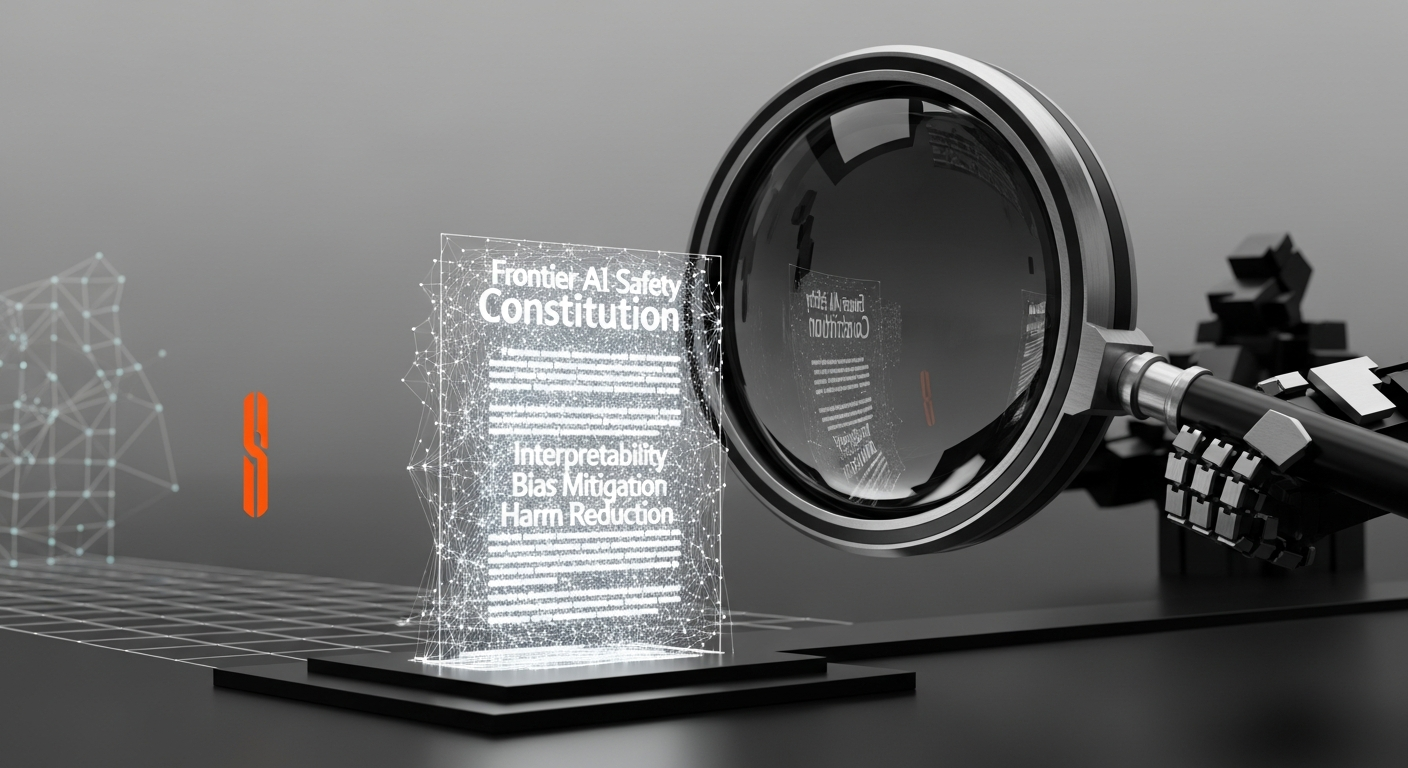
The regulators aren't worried about Anthropic failing; they’re worried about Anthropic **succeeding at its own mission.** They are claiming that "Constitutional AI"—the very framework that makes Claude so reliable—is a "black box of moral instability" that threatens the predictability of the American supply chain.
Why the "Risk" Label is a Red Herring
Let’s be clear: calling Anthropic a supply chain risk is like calling a seatbelt a "strangulation hazard." Is it technically possible? Maybe. Is it the primary thing we should be worried about?
Absolutely not.
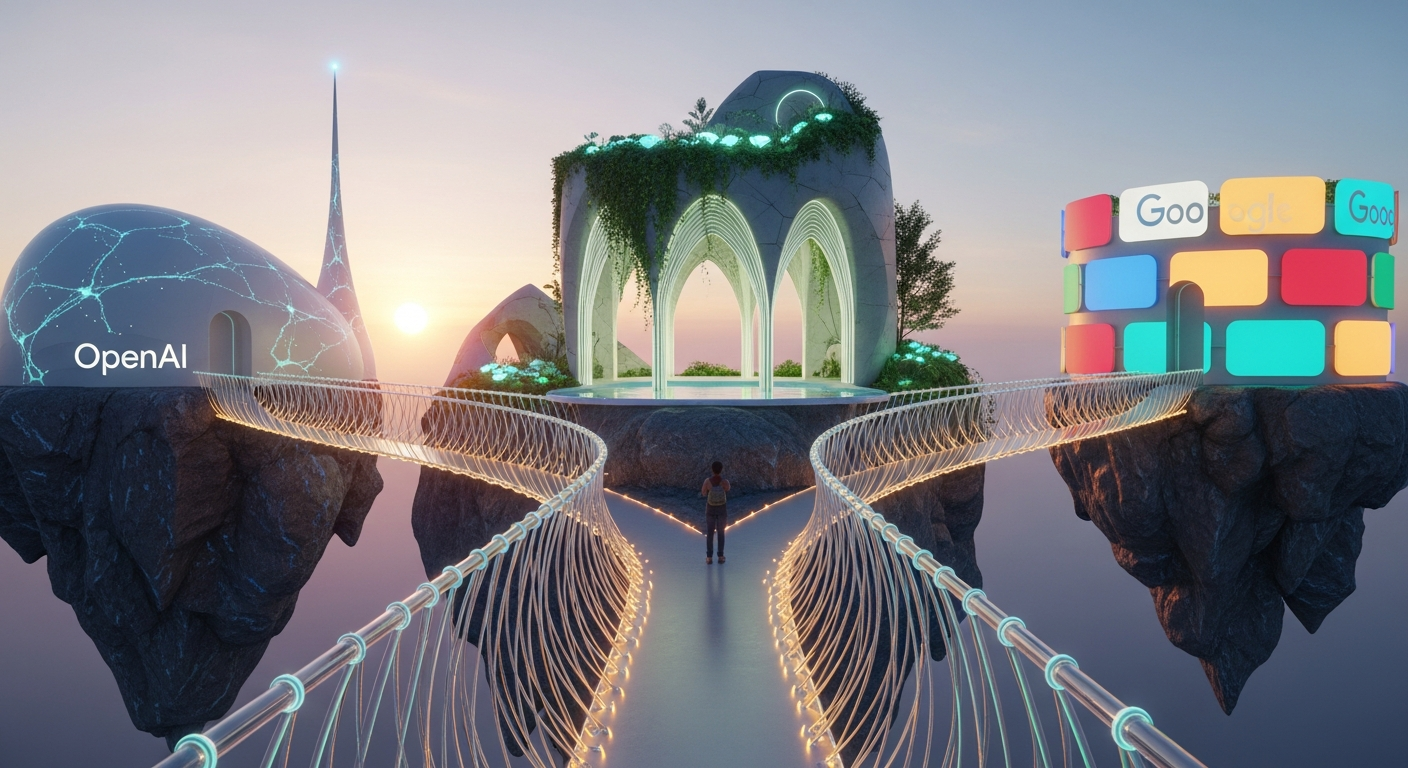
The argument being leveled against them is that because Anthropic can update their model’s "Constitution" at any time, the behavior of the AI is **fundamentally non-deterministic.** Regulators are arguing that a company shouldn't be allowed to change the "moral compass" of a tool that manages power grids or financial ledgers overnight.
This is a massive misunderstanding of how we use these tools.
Every developer worth their salt knows that **LLMs are already non-deterministic.** We don't rely on them to be static; we rely on them to be intelligent.
By labeling Anthropic a risk, the government is effectively saying they prefer the "unfiltered" unpredictability of open-source models over the "curated" safety of a company that actually takes responsibility for its outputs.
It’s a move that favors chaos over accountability.
The Safety Paradox: When Being Too Good is a Liability
We are currently living through the **Safety Paradox.** In 2024, everyone was screaming that AI was too dangerous and needed guardrails. Anthropic listened.
They built the most robust, transparent safety framework in the industry.
Now, in 2026, that same safety framework is being weaponized against them.
Critics are claiming that Anthropic’s ability to "steer" the model makes it a **single point of failure.** They argue that if a rogue employee or a hack changed the model’s internal constitution, the entire US tech stack could be crippled.
But here is what nobody is telling you: **This applies to every single cloud service we use.** Amazon could shut down AWS tomorrow. Google could "re-align" Workspace to delete your files.
We already live in a world of single points of failure.
The only difference is that Anthropic is honest about how they steer their ship.
While other companies hide their RLHF (Reinforcement Learning from Human Feedback) processes behind a curtain, Anthropic publishes their Constitution.
They are being punished for their **transparency.**
The Shadow War for AI Infrastructure
If you look closely at who is pushing this "Risk" narrative, you start to see the fingerprints of the old-guard incumbents.
The companies that missed the boat on **Claude 4.5** and are now scrambling to catch up are the ones whispering in the ears of regulators.
They want you to believe that "Corporate AI" is a risk so they can push their own "Verified Enterprise" solutions that are often just thinner, less capable versions of the models we actually use.
It’s a classic **regulatory capture** play.
By forcing Anthropic to jump through "Supply Chain" hoops, they are slowing down the most innovative player in the field. It’s not about protecting the grid; it’s about protecting market share.
And as developers, we are the ones who will pay the price in the form of throttled APIs and neutered models.
I’ve seen this play out before with encryption in the early 2010s. The government tried to label strong encryption as a "risk" because they couldn't control it.
They eventually lost, but not before they wasted a decade of our time.
What This Means for Your Stack in 2027
If this "Risk" designation sticks, the landscape of development is going to shift violently by **mid-2027.** We could see a world where federal contractors are banned from using Anthropic models, forcing a massive, expensive migration to less capable alternatives.
Imagine having to rewrite your entire internal documentation system or your automated QA pipeline because the model you used is now "unauthorized." It’s a nightmare scenario for any CTO.
But it’s also a wake-up call for how we build.
The era of "Model Monogamy" is officially over.
If you are still building your entire product on a single API—whether it’s Anthropic, OpenAI, or Google—you are **voluntarily taking on systemic risk.** The regulators have just proven that they can and will pull the rug out from under you for political reasons.
I’m already starting to move my projects toward a **Model-Agnostic architecture.** We’re using abstraction layers that allow us to hot-swap between Claude 4.6 and ChatGPT 5 with a single environment variable change.
It’s more work upfront, but in 2026, it’s the only way to stay "safe."
The Multi-Model Manifesto
The shocking truth is that Anthropic isn't the risk.
**The risk is our own laziness.** We’ve become so addicted to the brilliance of Claude’s reasoning that we’ve forgotten the first rule of engineering: redundancy.
We shouldn't be defending Anthropic because they are "safe." We should be defending them because **centralized censorship of tools is a bigger risk than the tools themselves.** When the government starts deciding which "intelligence" is allowed in our supply chain, we’ve already lost the battle for innovation.
I don’t think Anthropic should be designated as a supply chain risk. In fact, I think they are one of the few things keeping our digital infrastructure from becoming a hall of mirrors.
Their "Constitution" isn't a threat; it's a lighthouse.
But I'm also not going to wait for a bureaucrat to tell me my code is "unauthorized." I’m building for a future where no single company holds the keys to my productivity.
That’s the only way to be truly "risk-free" in the age of AI.
**Have you noticed your team's reliance on a single model becoming a point of friction, or do you think the "Supply Chain Risk" label is actually justified? Let’s talk in the comments.**
Story Sources
From the Author



Hey friends, thanks heaps for reading this one! 🙏
If it resonated, sparked an idea, or just made you nod along — I'd be genuinely stoked if you'd show some love. A clap on Medium or a like on Substack helps these pieces reach more people (and keeps this little writing habit going).
→ Pythonpom on Medium ← follow, clap, or just browse more!
→ Pominaus on Substack ← like, restack, or subscribe!
Zero pressure, but if you're in a generous mood and fancy buying me a virtual coffee to fuel the next late-night draft ☕, you can do that here: Buy Me a Coffee — your support (big or tiny) means the world.
Appreciate you taking the time. Let's keep chatting about tech, life hacks, and whatever comes next! ❤️