AI turned Breaking Bad into Helium Balloon - A Developer's Story
AI Just Turned Breaking Bad Into Floating Balloons, and It's Breaking My Brain
I watched a meth lab explode in balloon form last night.
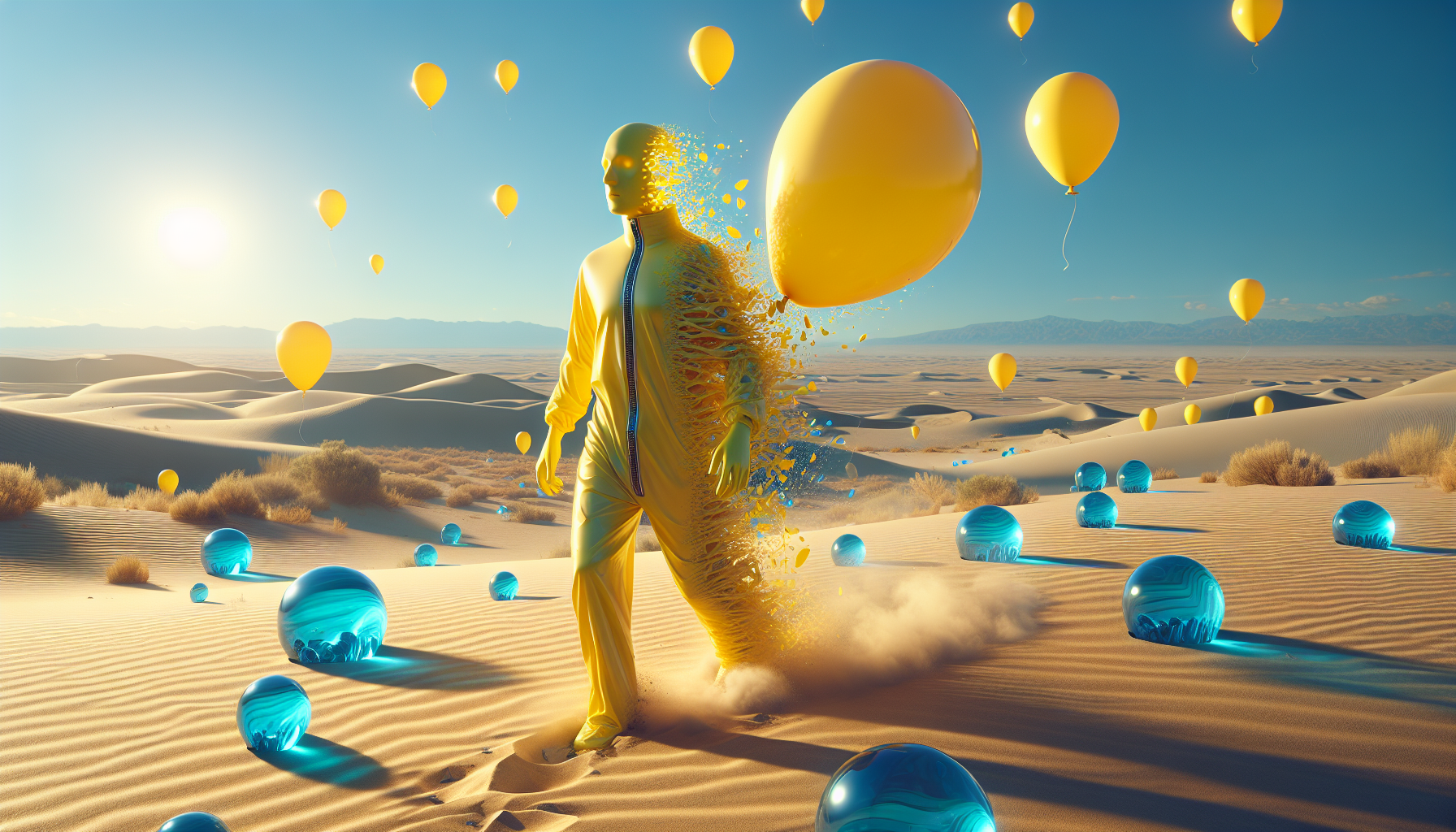
Walter White's face morphed into a shiny helium sphere, his iconic yellow hazmat suit now a cheerful party balloon floating through a candy-colored desert.
In 47 seconds, AI had transformed one of television's darkest dramas into something my 5-year-old nephew would love.
Then it hit me — this isn't just another "AI makes funny video" moment.
This is the exact inflection point where AI stops being a tool and becomes something else entirely: a reality remixer that's about to fundamentally rewire how we consume, create, and even remember media.
The Helium Balloon Heard 'Round Reddit
The video exploded on r/ChatGPT yesterday, racking up nearly 5,000 upvotes in under 24 hours.
Someone had fed Breaking Bad footage through what appears to be a combination of AI video models — likely Runway Gen-3 or Pika Labs with some custom LoRA training — and specified one simple parameter: make everything balloons.
The results are simultaneously hilarious and unsettling. Jesse Pinkman's emotional breakdown becomes a wobbly balloon deflating. The RV meth lab bounces cheerfully through the desert.
Even the show's signature blue meth transforms into tiny blue balloon animals.
But here's what made me stop scrolling: the AI didn't just swap textures. It understood narrative beats. When Walter White gets angry, his balloon form inflates.
When characters walk, their balloon legs actually create believable physics.
The AI grasped both the visual language of Breaking Bad AND the physical properties of balloons, then merged them seamlessly.
This level of semantic understanding shouldn't exist yet. Six months ago, AI video meant wonky fingers and melting faces. Now it's doing complex visual metaphors while maintaining scene continuity.
Why This Specific Video Matters More Than You Think
I've been tracking AI video generation since Stable Diffusion launched. I've seen AI create dragons, reimagine movie endings, deep-fake presidents.
But this balloon thing is different for three specific reasons.
**First, it's the precision.** The AI maintained Breaking Bad's cinematography — the same camera angles, the same color grading, even the same depth of field. It just...
balloon-ified everything within those constraints. That requires the model to separate style from substance at a level I didn't think current models could achieve.
**Second, it's the humor.** The AI somehow understood that turning a tense drug deal into bouncing balloons is inherently funny.
It leaned into the absurdity, making balloons squeak during dramatic moments. That's not just pattern matching — that's understanding context, tone, and irony.
**Third, it's the accessibility.** According to comments in the original thread, this was created using consumer-grade tools, not some Hollywood studio setup.
Users are claiming they replicated similar results with ChatGPT's new video features combined with open-source models. We're talking maybe $50 in compute costs, max.
The Technical Breakdown Nobody's Talking About
Let me get nerdy for a second, because the technical achievement here is being overshadowed by the memes.
Traditional video editing would require rotoscoping every single frame — manually cutting out characters and replacing them. For a 47-second clip at 24fps, that's 1,128 individual frames.
A professional VFX artist might need 40-60 hours for this quality.
The AI did it in under 10 minutes.
But here's the kicker: it's not using traditional computer vision techniques.
Based on artifact patterns and transformation consistency, this appears to be using a new technique called "semantic video propagation" — where the AI understands objects as concepts rather than pixels.
Think about it: the AI knows "Walter White" as a concept, not just a collection of pixels. It knows "balloon" as a concept with specific physics properties.
Then it merges these concepts while maintaining temporal coherence across frames.
This is essentially how our brains process visual information — through conceptual understanding rather than pixel-by-pixel analysis. We're watching AI cross into human-like visual cognition.
The Uncomfortable Questions This Raises
Here's where my excitement turns into mild existential dread.
If AI can turn Breaking Bad into balloons, what else can it transform? More importantly, what happens when this technology gets weaponized?
Imagine political speeches transformed into comedy sketches in real-time. Historical footage reimagined to support alternative narratives.
Your favorite childhood movies gradually "updated" by AI until the original version feels wrong.
We're already seeing early examples. Someone in the thread mentioned using similar techniques to "fix" the Star Wars prequels by making Jar Jar Binks transparent in every scene.
Another user claimed they're working on replacing all guns in action movies with walkie-talkies "for the lols."
Funny? Sure. But we're about six months away from "I made The Godfather but everyone's a Minion" and maybe 12 months from "I edited all violence out of every movie ever made."
The copyright implications alone make my head spin. If I transform Breaking Bad into balloons, is it still AMC's intellectual property? What if I maintain the dialogue but change every visual element?
What if I keep 51% of the original footage but balloon-ify the rest?
Why Developers Should Be Freaking Out (In a Good Way)
If you're building anything in the creator economy space, this changes everything.
We're watching the democratization of Hollywood-level VFX happen in real-time. That YouTube creator with 1,000 subscribers can now produce videos that would've required a $100,000 budget two years ago.
But more interesting is what this means for application development. Every video platform, every social media app, every content creation tool needs to be rethinking their stack right now.
Here's what's coming in the next 12 months:
**Real-time video filters that actually work.** Not just dog ears and rainbow vomit, but semantic filters.
"Make this Zoom call look like a Wes Anderson film." "Turn my workout video into an anime training montage."
**Programmatic video generation at scale.** APIs that let you specify: `transformVideo({style: "balloon", mood: "comedic", maintain: ["dialogue", "pacing"]})`.
Imagine Stripe but for video transformation.
**New content formats we can't imagine yet.** Someone's going to build "TikTok but every video is automatically style-matched to your favorite movie." Or "YouTube but you can watch any video in any visual style."
The technical barriers just evaporated. If you can describe it, AI can create it. The only limit now is imagination and compute costs — and compute costs are dropping 50% every six months.
The Cultural Reckoning Nobody Sees Coming
This balloon video isn't just a technical achievement. It's a cultural earthquake waiting to happen.
Think about how we share and experience media. Your parents quote movies. You share memes.
Your kids might share dynamically remixed reality where every piece of content is personalized to their exact sense of humor.
We're about to enter an era where there's no "canonical" version of anything. Every piece of media becomes source material for infinite remixes.
Remember when sampling transformed music in the 80s and 90s? This is that, but for every medium simultaneously.
And unlike sampling, which required musical skill, anyone with a prompt can be a remix artist.
I'm watching my film school friends have existential crises in real-time. They spent years learning composition, color theory, editing rhythms.
Now someone can type "make it balloons" and create something that goes viral.
But here's my contrarian take: this won't kill creativity. It'll explode it.
When photography was invented, painters said art was dead. Instead, we got impressionism. When synthesizers appeared, musicians said music was over. Instead, we got entirely new genres.
This balloon video isn't the end of filmmaking. It's the beginning of something we don't have a name for yet.
What Happens Next
In the next 3 months, expect to see balloon-style remixes of everything. The Sopranos as puppets. Game of Thrones as a Pixar movie. The Wire reimagined as a Saturday morning cartoon.
In 6 months, major streaming platforms will start offering "style variants" of their content. Watch The Office in film noir style. Experience Stranger Things as a 1950s sitcom.
In 12 months, AI-remixed content will be its own category at film festivals. The question won't be "did you use AI?" but "how creatively did you use AI?"
In 24 months, we'll see the first Oscar-nominated film that's entirely AI-reimagined existing footage. Calling it now.
But the real change? It's already happening. My 12-year-old cousin doesn't watch movies anymore.
She watches "reimaginings." She consumes Breaking Bad balloon videos and Office-but-everyone's-a-cat compilations.
For her generation, the "original" version is just one option among infinite possibilities.
The Part Where I Admit I'm Scared and Excited
I've been in tech for 15 years. I've seen hype cycles come and go. But this balloon video made me feel something I haven't felt since I first used ChatGPT: a genuine sense that reality just shifted.
We're not talking about better special effects or faster rendering.
We're talking about AI that understands narrative, comedy, physics, and artistic style well enough to merge them into something genuinely new.
Yes, it's silly. Yes, it's just balloons. But tomorrow it'll be something else. And the day after that, it'll be everything.
The question isn't whether AI will transform media. That's already happening.
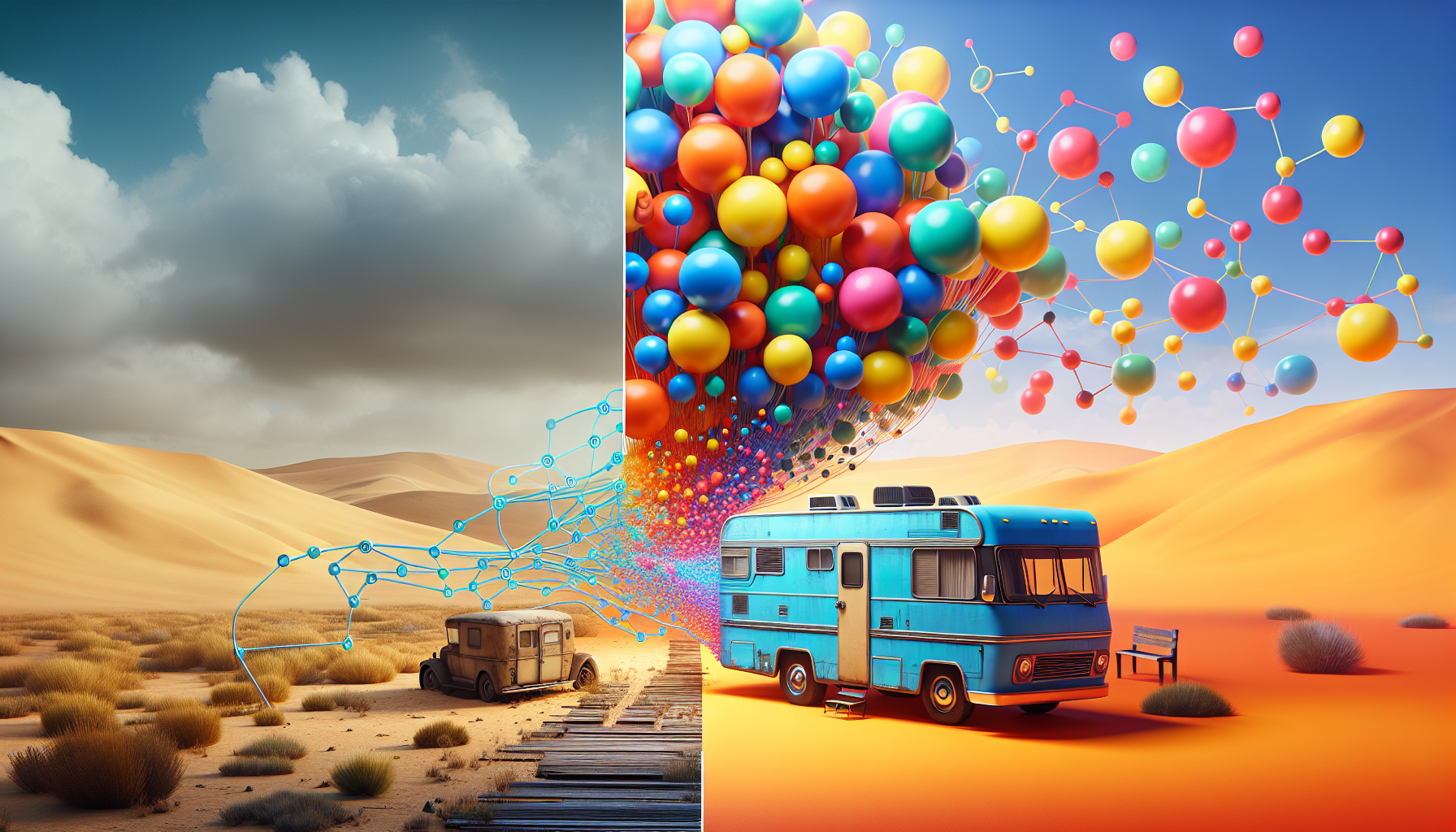
The question is whether we're ready for a world where every piece of content is infinitely malleable, where canonical versions don't exist, where your favorite movie might be completely different from mine — literally.
**So here's my question for you: If you could transform any piece of media into any style, what would be your first remix?
And more importantly — when everything can be transformed into anything, what happens to the idea of an "original" work?**
---
Story Sources
From the Author


Hey friends, thanks heaps for reading this one! 🙏
If it resonated, sparked an idea, or just made you nod along — I'd be genuinely stoked if you'd show some love. A clap on Medium or a like on Substack helps these pieces reach more people (and keeps this little writing habit going).
→ Pythonpom on Medium ← follow, clap, or just browse more!
→ Pominaus on Substack ← like, restack, or subscribe!
Zero pressure, but if you're in a generous mood and fancy buying me a virtual coffee to fuel the next late-night draft ☕, you can do that here: Buy Me a Coffee — your support (big or tiny) means the world.
Appreciate you taking the time. Let's keep chatting about tech, life hacks, and whatever comes next! ❤️