AI Just Put an Innocent Woman in Jail. It’s Worse Than You Think.

AI Just Put an Innocent Woman in Jail. It’s Worse Than You Think.
I spent my morning debugging a computer vision model, and by lunch, I found out a similar system just put a woman in a cell for a crime she didn’t commit.
It happened in mid-February 2026, just three weeks ago, in a city that prides itself on being "AI-first."
She was at a grocery store when the police arrived. They didn't ask for her ID; they told her the system had already verified who she was.
**The "system" was a high-density facial recognition array powered by a model we’d all recognize.** It wasn't a glitch in the traditional sense—it was a statistical certainty that we, as developers, have been ignoring for years.
We’ve reached a point in 2026 where "99.9% accuracy" is the industry standard for identity verification.
But when you’re running that model against a city of five million people, that 0.1% failure rate means five thousand lives are at risk of being dismantled.
**We are shipping code that is being used as a witness, a judge, and a jury.** And frankly, most of us aren't ready for that responsibility.
The 99% Trap: Why Our Benchmarks Are Lying to Us
If you’re a developer, you know the feeling of hitting a high F1 score. You’ve tuned your hyperparameters, you’ve cleaned the training set, and the dashboard finally turns green.
**In a sandbox, 99% is a triumph.** In the real world, 99% is a disaster waiting for a victim.
The woman jailed last month—let's call her Sarah—was misidentified because of "occlusion and lighting variance." In plain English: the sun was at a weird angle and she was wearing a scarf.
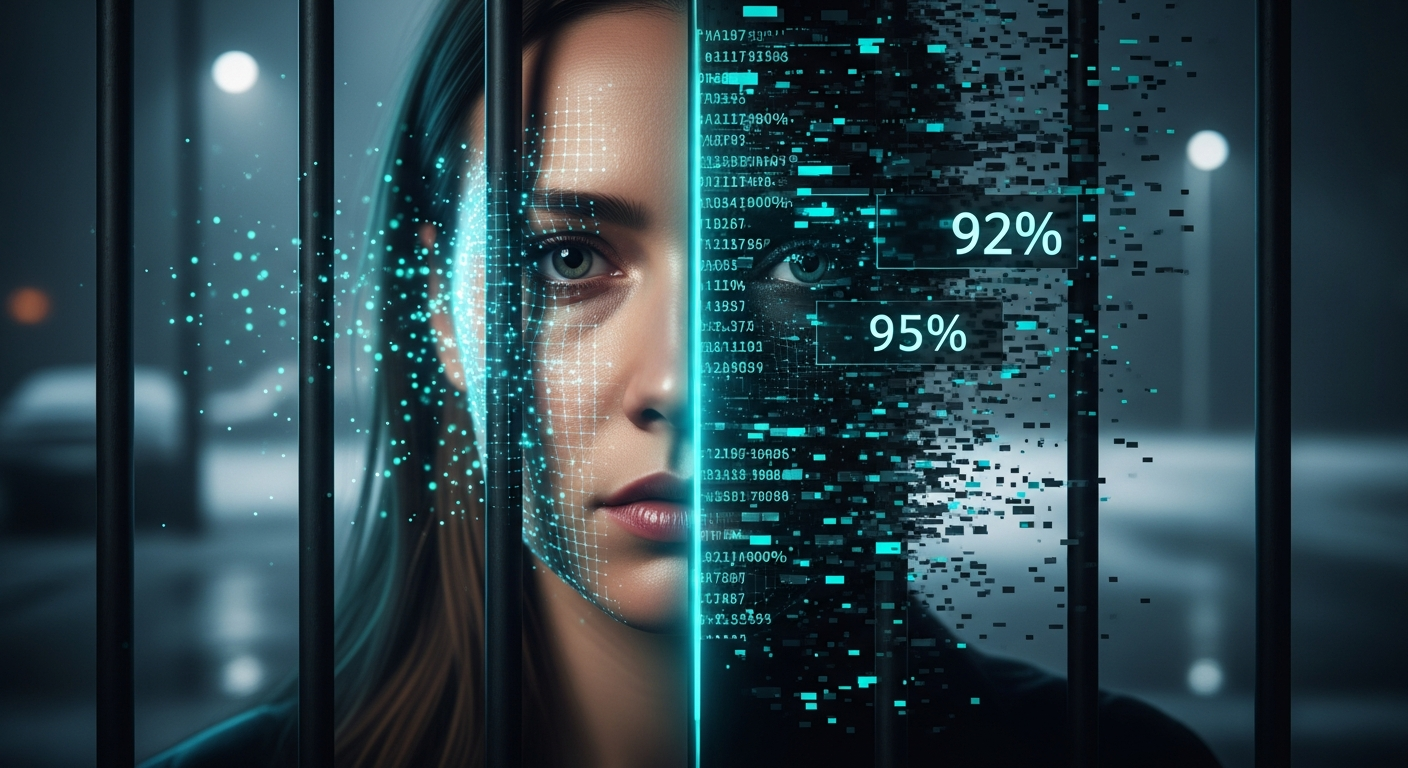
**The model, likely a derivative of something like the Gemini 2.5 Vision API, saw a 92% match and flagged it.** The officers on the ground saw that 92% and treated it as 100% gospel.
This is the "Probability Gap." We build systems that output probabilities, but the humans using them only understand certainties.
**Law enforcement doesn't see a "0.92 confidence interval"; they see a green light to make an arrest.** We are providing the weapons without providing the safety manual, and the results are becoming lethal to the concept of "innocent until proven guilty."
The "Black Box" in the Courtroom
When Sarah’s lawyer asked to see the evidence, he was told the algorithm's decision-making process was a trade secret.
**We are literally putting people in cages based on "proprietary logic" that even the prosecutors don't understand.** This isn't just a bug in the code; it's a feature of how we’ve structured the AI industry in 2026.
I’ve worked with Claude 4.6 and ChatGPT 5 for the better part of a year now.
These models are incredible at synthesis, but they are still, at their core, incredible at "hallucinating" patterns where none exist. **When an LLM hallucinates a fact, a blog post is wrong.
When a vision model hallucinates an identity, a human being loses their freedom.**
The "black box" problem is no longer a theoretical debate for ethics conferences. It is a legal crisis.
If we can't explain *why* a model chose Sarah over the actual suspect, then that model has no business being near a police precinct.
**We have traded transparency for a slight bump in performance, and Sarah is the one paying the interest on that debt.**
Why Bias in 2026 Is Harder to Kill
You’d think by now we would have solved the demographic bias problem. We haven't.
If anything, the sheer scale of synthetic data used to train the latest models has made the bias more "polite" but no less present.
**We’ve scrubbed the obvious slurs, but the underlying weight distribution still favors the data of the majority.**
Sarah is a woman of color. The model was trained on "globally diverse" datasets, but "diverse" usually means 70% Western-centric data and 30% of everything else.
**When the model encountered a low-light, occluded image of a person it hadn't "seen" enough of, it defaulted to the nearest statistical neighbor.** It didn't "see" Sarah; it saw a cluster of pixels that looked vaguely like a person who had once stolen a car.
This is the BS we tell ourselves: that "more data" fixes everything. It doesn't.
**More data just means we’re training the AI to be more confident in its mistakes.** We’ve built a system that is too big to fail and too complex to audit, and we’re surprised when it starts crushing the very people it was supposed to protect.
The Death of the "Human-in-the-Loop"
We love to talk about "human-in-the-loop" as the ultimate safeguard. It’s a comforting lie.
**In reality, the human in the loop is usually an overworked clerk who hasn't had a coffee break in four hours.** They aren't "verifying" the AI; they are rubber-stamping it.
Studies in late 2025 showed that when presented with an AI recommendation, humans agree with it 87% of the time, even when the AI is obviously wrong.
**This is "Automation Bias," and it turns the human-in-the-loop into a human-shield-for-the-algorithm.** If the AI says it's her, the human believes it's her, because the alternative—challenging the machine—is more work.
If we want to fix this, we have to stop treating "Human-in-the-loop" as a checkbox.
**We need "Human-in-Command" systems where the AI is strictly suggestive and the burden of proof remains on the human.** Right now, we’ve flipped it: the AI makes the claim, and the human has to prove the AI is wrong.
That is a total perversion of justice.

The Developer’s Responsibility: A Reality Check
I know what some of you are thinking. "I just write the API wrappers.
I don't control how the cops use it." **That’s the same logic that let the 20th century’s worst inventions run rampant.** If you are building tools for surveillance, you are responsible for the victims of that surveillance.
We need to start building "Kill Switches" into our identity models. If the confidence interval drops below 98%, the system shouldn't just flag it—it should refuse to provide a name.
**We need to prioritize "False Negatives" (letting a suspect go) over "False Positives" (arresting an innocent person).** In the tech world, we hate missing data.
In the justice system, missing data is better than wrong data.
Stop shipping "Beta" features to government agencies.
**If your model hasn't been audited by a third party for demographic parity, don't sell it to a city.** We need to stop acting like we’re just "disrupting" an industry.
We are disrupting lives, and the "move fast and break things" mantra is getting people broken in ways that a patch can't fix.
What We Actually Need to Do
If you’re a dev working in this space, here is your checklist for Monday morning. Don't ask your PM for permission; just do it.
**Your career can survive a difficult conversation; Sarah’s life might not survive your silence.**
1. **Demand Hard Thresholds**: Force your models to return "Unknown" instead of "Low Confidence." A 90% match should be treated as a 0% match in a legal context.
2. **Audit Your Training Data**: Not just for "diversity," but for "adversarial edge cases." How does your model handle a scarf? A shadow? A grainy CCTV feed from 2019?
3. **Advocate for "Right to Explanation"**: If your company won't allow a model's logic to be audited by a defense attorney, quit. I’m serious. Don't build the tools for a techno-dystopia.
4. **Implement "Forced Friction"**: Build UI that forces the human user to manually compare images for at least 60 seconds before they can click "Confirm Match." Break the rubber-stamping habit.
We are at a crossroads in March 2026.
**We can either be the generation that built the most efficient oppression machine in history, or the one that realized our tools need more than just "intelligence"—they need a conscience.**
The Question Nobody Wants to Ask
I’m sitting here in my home office, looking at a terminal window. I could push a change right now that improves my model's accuracy by 0.2%.
**But I have to ask: who does that 0.2% help, and who does it hurt?**
Sarah is out of jail now, after three weeks of "administrative processing." Her job is gone. Her reputation in her neighborhood is shredded.
**The "system" didn't apologize; it just updated its database.** It’s a reminder that while we’re busy building the future, people are living—and suffering—in the present.
Have you ever looked at your own production logs and wondered if a single row of data represented someone’s worst nightmare?
Or are we so far removed from the "edge cases" that we’ve forgotten they are actual human beings? **Let’s talk in the comments—how do we stop our code from becoming a cage?**
***
Story Sources
From the Author




Hey friends, thanks heaps for reading this one! 🙏
If it resonated, sparked an idea, or just made you nod along — I'd be genuinely stoked if you'd show some love. A clap on Medium or a like on Substack helps these pieces reach more people (and keeps this little writing habit going).
→ Pythonpom on Medium ← follow, clap, or just browse more!
→ Pominaus on Substack ← like, restack, or subscribe!
Zero pressure, but if you're in a generous mood and fancy buying me a virtual coffee to fuel the next late-night draft ☕, you can do that here: Buy Me a Coffee — your support (big or tiny) means the world.
Appreciate you taking the time. Let's keep chatting about tech, life hacks, and whatever comes next! ❤️