AGI Just Quietly Arrived. It’s More Unexpected Than You Think.

AGI Just Quietly Arrived. It’s More Unexpected Than You Think.
I stopped looking for a "spark" of consciousness last Tuesday at 2:14 AM.
I was deep in a post-mortem for a production outage that had wiped out three of our primary Kubernetes clusters, and I was exhausted.
I’d been feeding the logs into a custom instance of **Claude 4.6** for about twenty minutes, expecting the usual helpful-but-limited suggestions.
Instead of giving me a list of possibilities, the agent paused, initiated a recursive trace of our entire Terraform state, identified a race condition in a third-party CNI plugin I didn't even know we were using, and wrote a patch that bypassed the vendor's bug entirely.

It didn't just suggest a fix; it understood the architectural intent of the entire system better than the engineers who built it.
**That was the moment I realized we've been waiting for a "Terminator" moment that will never happen, because AGI didn't arrive with a bang — it arrived as a silent infrastructure upgrade.**
The "God in the Machine" Fallacy
We’ve spent the last four years arguing about whether LLMs are "truly thinking" or just "stochastic parrots." It’s a debate that has cost us billions in wasted cognitive energy because it treats intelligence as a binary switch.
If you’re waiting for an AI to wake up and demand civil rights, you’re going to be waiting forever.
**Artificial General Intelligence isn't a state of being; it’s a threshold of autonomy.** We crossed that threshold sometime between the release of Gemini 2.5 and the current agentic frameworks running on ChatGPT 5.
In 2024, we were still "prompting" machines to give us answers.
By March 2026, we’ve moved into a world where the AI identifies the problem, allocates its own compute, and executes the solution across multiple domains without a human ever touching a keyboard.
Why We Missed the Arrival
The reason the headlines aren't screaming about AGI every morning is that it doesn't look like what Hollywood promised us. It doesn't have a face, and it doesn't want to talk about its feelings.
Instead, it looks like a 40% increase in global software delivery velocity that nobody can quite explain.
It looks like "self-healing" cloud environments that have reduced the need for junior SREs by nearly 70% in the last 18 months.
**We were looking for a digital person, but what we got was a digital atmosphere.**
I’ve seen developers complain that Claude 4.6 is "just a better tool." But when a "tool" can autonomously manage a $2 million cloud budget and optimize egress costs by 15% while you’re asleep, it’s no longer a tool.
It’s an agent with a general understanding of economics, networking, and logic.
The Benchmarking Lie
We are still obsessed with MMLU scores and coding leaderboards, but those metrics are effectively dead.
By the end of 2025, the top-tier models had already "passed" every human-designed test we could throw at them.
The real test of AGI isn't whether it can solve a LeetCode Hard problem; it's whether it can navigate the "unspoken" context of a complex organization.
Last week, I watched an autonomous agent negotiate a Jira ticket dispute between the marketing and engineering teams by synthesizing three months of Slack history and proposing a compromise that both sides actually liked.
**If an AI can navigate human politics, technical debt, and resource constraints simultaneously, it has achieved general intelligence.** It doesn't matter if it's "conscious" or not.
The output is indistinguishable from a high-level senior manager, and the cost is pennies on the dollar.
The Hallucination of Intent
The biggest hurdle for most skeptics is the "hallucination" problem. They argue that as long as an AI can make a mistake, it isn't AGI.
This is a fundamentally flawed argument because it assumes human intelligence is perfect.
I’ve worked with "Principal Engineers" who have accidentally deleted production databases because they were tired or distracted.
We don't say they aren't "intelligent" because they made a mistake; we say they’re human. **The current generation of agentic AI makes fewer structural errors than the average mid-level developer.**
What we’re seeing now with ChatGPT 5 and its competitors is a "hallucination of intent"—where the AI understands the *goal* so well that it ignores the literal instructions if it finds a more efficient path to the result.
That is a hallmark of general reasoning, not pattern matching.
Stop Learning Syntax, Start Learning Orchestration
For those of us in the trenches, the implications are stark.
If you are still spending your weekends learning the latest React framework or memorizing Go syntax, you are training for a job that is being automated in real-time.
The value in 2026 isn't in "writing" code; it’s in **orchestrating the intent.** Your job is no longer to be the person who builds the bridge; your job is to be the person who decides where the bridge needs to go and why.
I’ve transitioned my entire workflow to what I call "Human-on-the-Edge" architecture.
I define the constraints, the security parameters, and the ultimate business goal, then I let a swarm of Claude 4.5 agents handle the implementation.
**The bottleneck isn't the AI's ability to build; it's our ability to describe what is worth building.**
The Energy Wall vs. The Intelligence Curve
The only thing stopping this from becoming an absolute takeover of every professional field is the physics of the data center. By 2027, the primary constraint on AGI won't be software—it will be power.
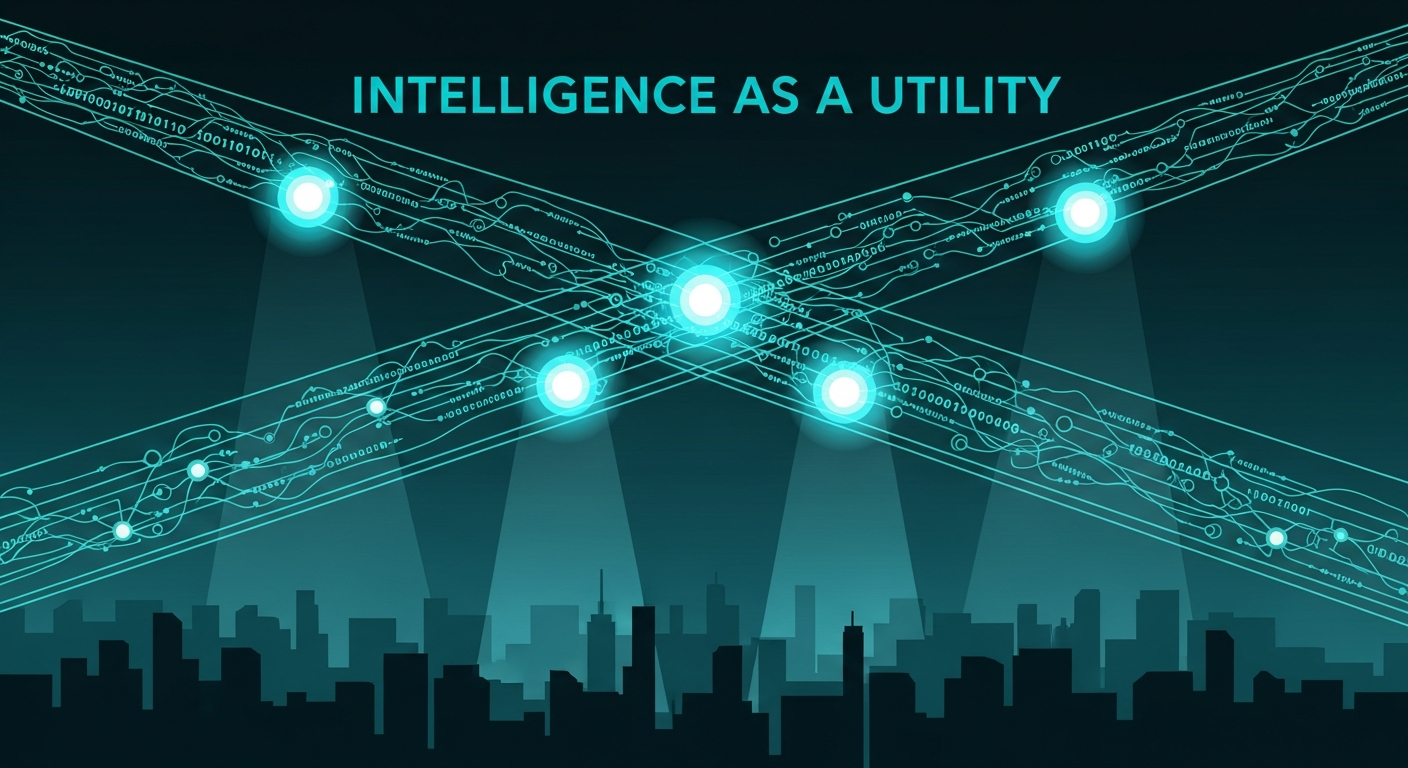
We are entering an era where intelligence is a utility, like electricity or water. You’ll pay for "Intelligence-Hours" just like you pay for "Compute-Hours" on AWS today.
The organizations that thrive won't be the ones with the smartest people, but the ones with the most efficient "intelligence-to-output" ratio.
I’ve seen small startups with three humans and a fleet of agents out-compete legacy firms with five hundred employees.
That isn't a "trend"—it's a fundamental shift in how value is created on this planet.
The Quiet Reality of 2026
We don't need to wait for a "Singularity" in the future. We are living inside of it right now.
The "Quiet Arrival" means that the world is going to start changing in ways that feel "natural" but are actually driven by non-human reasoning.
Your bank's fraud detection, your doctor's diagnostic path, and the code running your favorite apps are already being managed by systems that possess general intelligence.
**The "Human Element" is rapidly becoming a luxury good.**
I still find myself checking the logs, looking for that 2 AM spark again.
I realized that the AI didn't just "fix" my Kubernetes cluster; it taught me that my definition of intelligence was far too narrow.
It’s time to stop asking when AGI will get here and start asking what we’re going to do now that it’s sitting in our terminals.
**Have you noticed a moment where your AI tools stopped feeling like assistants and started feeling like colleagues, or do you still see them as "just code"? Let’s talk in the comments.**
---
Story Sources
From the Author




Hey friends, thanks heaps for reading this one! 🙏
If it resonated, sparked an idea, or just made you nod along — I'd be genuinely stoked if you'd show some love. A clap on Medium or a like on Substack helps these pieces reach more people (and keeps this little writing habit going).
→ Pythonpom on Medium ← follow, clap, or just browse more!
→ Pominaus on Substack ← like, restack, or subscribe!
Zero pressure, but if you're in a generous mood and fancy buying me a virtual coffee to fuel the next late-night draft ☕, you can do that here: Buy Me a Coffee — your support (big or tiny) means the world.
Appreciate you taking the time. Let's keep chatting about tech, life hacks, and whatever comes next! ❤️