Adoption of EVs tied to real-world reductions in air pollution: study - A Developer's Story
The Code-to-Carbon Pipeline: How EV Adoption Data Reveals a New Era for Environmental Tech
The Surprising Tech Stack Behind Cleaner Air
What if I told you that the most impactful environmental technology of our time isn't a breakthrough in solar panels or wind turbines, but rather the convergence of battery chemistry, distributed computing, and real-time data analytics?
A groundbreaking new study has just confirmed what many suspected but couldn't prove at scale: electric vehicle adoption directly correlates with measurable improvements in air quality.
But here's what makes this finding particularly fascinating for the tech community—it's not just about the vehicles themselves.
It's about the sophisticated technological ecosystem that made this discovery possible, and what it means for the future of environmental monitoring, smart city infrastructure, and the role of AI in solving climate challenges.
The study represents a watershed moment in environmental data science, demonstrating that we've finally reached the technological sophistication to track, measure, and prove the real-world impact of clean technology adoption.
For developers and tech professionals, this isn't just an environmental win—it's a validation of decades of work in IoT sensors, data processing pipelines, and machine learning algorithms that can now definitively link cause and effect in complex atmospheric systems.
From Hypothesis to Hard Data: The Technical Journey
For years, the connection between EV adoption and air quality improvement existed largely in models and projections.
Scientists knew that replacing internal combustion engines with electric motors should theoretically reduce pollutants like nitrogen dioxide (NO2) and particulate matter (PM2.5), but proving this connection in the chaotic real world—where weather patterns, industrial activity, and countless other variables muddy the waters—required a level of technological sophistication we've only recently achieved.
The challenge resembled a massive distributed systems problem.
Imagine trying to detect signal from noise across thousands of monitoring stations, each generating continuous streams of data about air quality, while simultaneously correlating this with vehicle registration databases, traffic patterns, weather systems, and industrial activity.
Previous attempts foundered on the computational complexity and the difficulty of establishing causation rather than mere correlation.
What changed? Three technological advances converged to make this study possible. First, the proliferation of high-precision air quality sensors created a dense mesh network of monitoring points.
Unlike the sparse government monitoring stations of a decade ago, today's sensor networks can track pollution at the neighborhood level, some updating every few minutes.
Second, machine learning algorithms have become sophisticated enough to isolate the EV adoption signal from the noise of other variables.
These aren't simple regression models—they're complex neural networks trained on years of atmospheric data, capable of accounting for seasonal variations, weather patterns, and even major events like industrial shutdowns.
Third, and perhaps most crucially, the standardization of data formats and APIs across different monitoring systems finally allowed researchers to aggregate and analyze data at unprecedented scales.
The technical infrastructure behind this study reads like a who's who of modern data engineering: Apache Kafka streams processing real-time sensor data, PostgreSQL databases with TimescaleDB extensions handling time-series data, Python-based data science pipelines running on Kubernetes clusters, and TensorFlow models performing the heavy lifting of pattern recognition.
It's a testament to how far we've come in building systems that can handle planetary-scale environmental monitoring.
Decoding the Data: What the Numbers Really Tell Us
The study's findings are remarkable not just for their environmental implications, but for what they reveal about the power of modern data analytics.
Researchers found that areas with higher EV adoption rates showed statistically significant reductions in NO2 concentrations—in some cases, drops of 20-30% in heavily trafficked urban corridors.
But here's where it gets interesting from a technical perspective: the correlation wasn't linear or immediate.
The data revealed a lag effect of approximately 3-6 months between EV adoption spikes and measurable air quality improvements.
This delay makes perfect sense when you consider the technical reality of vehicle replacement cycles and atmospheric chemistry, but it would have been nearly impossible to detect without sophisticated time-series analysis.
The algorithms had to account for seasonal variations (air pollution typically worsens in winter due to heating and atmospheric conditions), changes in traffic patterns post-pandemic, and even major weather events that can temporarily clear or concentrate pollutants.
What's particularly elegant about the methodology is how researchers used a technique borrowed from epidemiology called "difference-in-differences" analysis.
By comparing areas with high EV adoption to similar areas with low adoption, while controlling for other variables, they could isolate the EV effect.
This required matching neighborhoods not just by population density and income levels, but by traffic patterns, industrial activity, prevailing wind directions, and dozens of other factors.
The matching algorithm alone—a sophisticated propensity score matching system—represents a significant achievement in applied machine learning.
The study also revealed unexpected patterns that highlight the importance of granular data analysis.
For instance, the air quality improvements were most pronounced during morning and evening rush hours, exactly when you'd expect the impact of cleaner vehicles to be most noticeable.
Weekend improvements were less dramatic, suggesting that commercial and commuter vehicles, rather than recreational driving, are the key leverage points for air quality improvement.
This kind of temporal pattern analysis would have been impossible without high-frequency sensor data and the computational power to process it.
Perhaps most intriguingly, the data showed network effects—areas adjacent to high-EV-adoption zones also showed air quality improvements, even with lower adoption rates themselves.
This suggests that the benefits of EV adoption extend beyond simple one-to-one vehicle replacement, possibly due to reduced regional pollution transport or behavioral changes in response to visible EV infrastructure.
The Developer's Stake: Why This Matters for Tech
For software developers and tech professionals, this study represents far more than an environmental success story—it's a blueprint for how technology can solve complex, multi-variable problems that were previously intractable.
The implications ripple across multiple domains of software development and system design.

Project visualization
Consider the IoT infrastructure required to make this analysis possible.
Each air quality sensor is essentially an edge computing device, preprocessing data before transmission to reduce bandwidth requirements.
The firmware running on these devices must be robust enough to handle extreme weather conditions, smart enough to detect and flag anomalous readings, and efficient enough to run on minimal power.
For embedded systems developers, this represents a massive and growing market.
The global air quality monitoring system market is expected to reach $6.5 billion by 2025, and much of that growth will come from smart, connected sensors that require sophisticated firmware and backend systems.
The data pipeline architecture behind these studies also offers lessons for anyone building large-scale analytics systems.
The challenge of ingesting, processing, and analyzing continuous streams from thousands of sensors mirrors problems faced in industrial IoT, smart city applications, and even financial technology.
The solutions developed for environmental monitoring—using technologies like Apache Pulsar for event streaming, ClickHouse for real-time analytics, and Kubernetes for orchestrating distributed processing—are directly applicable to other domains.
For machine learning engineers, the techniques used to isolate the EV signal from atmospheric noise represent cutting-edge applications of causal inference in observational data.
The ability to establish causation, not just correlation, in complex real-world systems is the holy grail of data science.
The methods developed for this environmental analysis—using techniques like instrumental variables, synthetic control methods, and causal forests—are already being adapted for applications in healthcare, economics, and social science.
There's also a growing opportunity in the intersection of environmental tech and blockchain.
Several startups are exploring how to create transparent, tamper-proof records of environmental data using distributed ledger technology.
Imagine if every air quality measurement, every EV registration, and every pollution credit was recorded on an immutable blockchain.
This could create new markets for environmental impact, where companies could trade verified pollution reductions backed by cryptographically secure sensor data.
Charting the Course: Where Environmental Tech Goes From Here
The successful correlation of EV adoption with air quality improvements marks just the beginning of a new era in environmental technology.
The same infrastructure and analytical techniques that proved the EV-air quality connection can be applied to dozens of other environmental challenges.
We're already seeing early applications in water quality monitoring, where similar sensor networks and ML models are tracking the impact of agricultural runoff and industrial discharge in real-time.
The next frontier is predictive environmental modeling. Instead of just measuring what has happened, the goal is to forecast what will happen.
Imagine a system that could predict air quality 72 hours in advance with neighborhood-level precision, allowing cities to proactively adjust traffic patterns, industrial operations, or public transit schedules to prevent pollution spikes.
The technology to build such systems exists today—what's needed is the integration of weather forecasting models, traffic prediction algorithms, and atmospheric chemistry simulations into a unified platform.
Another exciting development is the emergence of "digital twin" cities—virtual replicas of urban environments that can simulate the impact of various interventions before they're implemented in the real world.
These digital twins combine 3D modeling, real-time sensor data, and physics simulations to create incredibly detailed virtual environments.
Developers working on game engines like Unreal Engine or Unity are finding their skills increasingly valuable in creating these environmental simulations.
The integration of environmental monitoring with autonomous systems represents another frontier.
As vehicles become increasingly autonomous, they could dynamically adjust their routes to minimize collective environmental impact.
A fleet of autonomous EVs could coordinate their movements to reduce congestion and optimize energy usage, guided by real-time air quality data.
This requires sophisticated distributed algorithms and vehicle-to-infrastructure (V2I) communication protocols that are still being developed.
We're also likely to see the emergence of new developer tools and platforms specifically designed for environmental applications.
Just as we have specialized frameworks for web development or machine learning, we'll need purpose-built tools for environmental data analysis, sensor management, and impact modeling.
Companies that can provide the "AWS for environmental tech"—offering sensors-as-a-service, managed data pipelines, and pre-trained models—will find themselves at the center of a rapidly growing market.

Project visualization
The convergence of environmental science and technology also raises important questions about data governance and privacy.
As our cities become increasingly instrumented with environmental sensors, we're creating vast databases that could potentially be used to track movement patterns and individual behaviors.
Developers will need to grapple with how to build systems that provide environmental insights while protecting personal privacy—perhaps through techniques like differential privacy or homomorphic encryption.
The success of this EV-air quality study ultimately demonstrates that we've entered an age where environmental protection and technological innovation are not just compatible but interdependent.
For developers and tech professionals, this represents both an opportunity and a responsibility.
The code we write, the systems we design, and the algorithms we train will increasingly shape not just our digital world but our physical environment.
The question is no longer whether technology can help solve environmental challenges—it's how quickly we can scale these solutions to meet the urgency of the climate crisis.
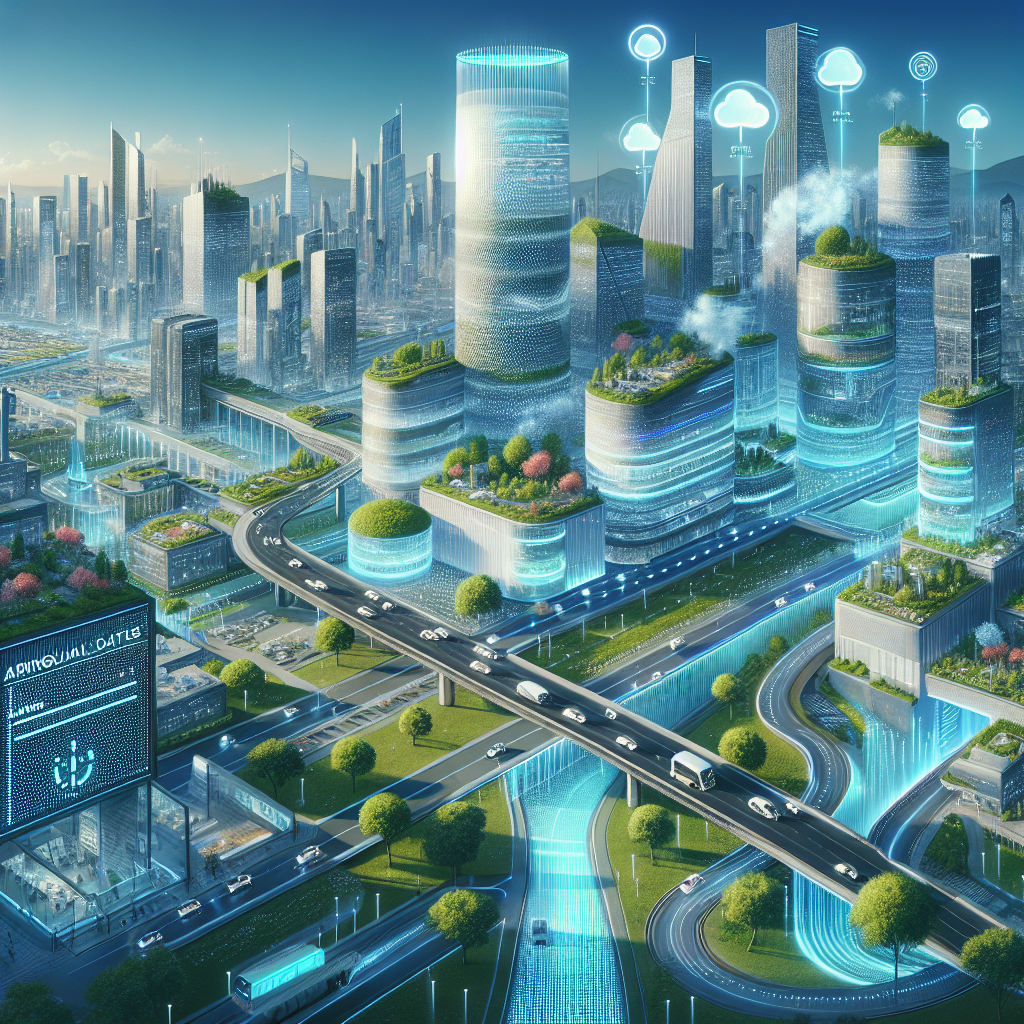
Project visualization
From the Author


Hey friends, thanks heaps for reading this one! 🙏
If it resonated, sparked an idea, or just made you nod along — I'd be genuinely stoked if you'd show some love. A clap on Medium or a like on Substack helps these pieces reach more people (and keeps this little writing habit going).
→ Pythonpom on Medium ← follow, clap, or just browse more!
→ Pominaus on Substack ← like, restack, or subscribe!
Zero pressure, but if you're in a generous mood and fancy buying me a virtual coffee to fuel the next late-night draft ☕, you can do that here: Buy Me a Coffee — your support (big or tiny) means the world.
Appreciate you taking the time. Let's keep chatting about tech, life hacks, and whatever comes next! ❤️