A Fitness App Actually Tracked a Nuclear Warship. It's Worse Than You Think.
A Fitness App Actually Tracked a Nuclear Warship. It's Worse Than You Think.
I stopped wearing my Garmin last Tuesday.
Not because I’m tired of tracking my Zone 2 cardio, but because I spent the morning looking at a map of a French nuclear-powered aircraft carrier that shouldn’t exist on any consumer grid.
We’ve been told for a decade that our data is "anonymized" and that metadata is harmless.
But after the recent *Le Monde* investigation revealed that French President Emmanuel Macron’s security detail—and the country’s most sensitive naval assets—were being tracked in real-time via a fitness app, that lie has finally curdled.
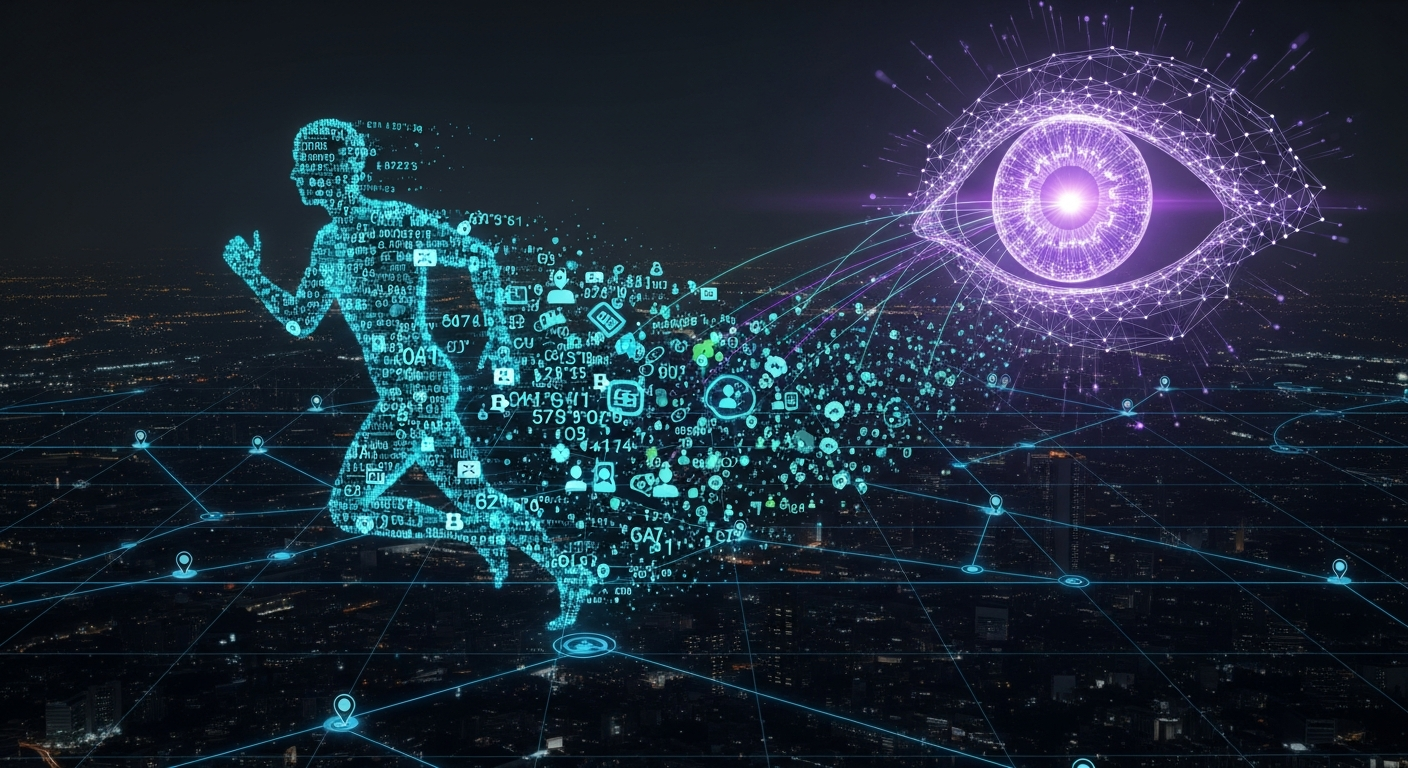
This isn't just a story about a few soldiers forgetting to turn off their GPS.
It is a terrifying glimpse into how **consumer-grade telemetry, when fed into modern AI models like Claude 4.6, has effectively ended the concept of state secrets.** If you think your "private" profile is protecting you, you’re fundamentally misunderstanding the world we live in as of March 2026.
The $10-a-Month Intelligence Agency
The investigation by *Le Monde* was embarrassingly simple. They didn’t use Pegasus spyware or high-altitude balloons. They used Strava.
By tracking the public profiles of the GSPR (the group responsible for the French President’s security), they could predict Macron’s "secret" hotel stays days in advance.
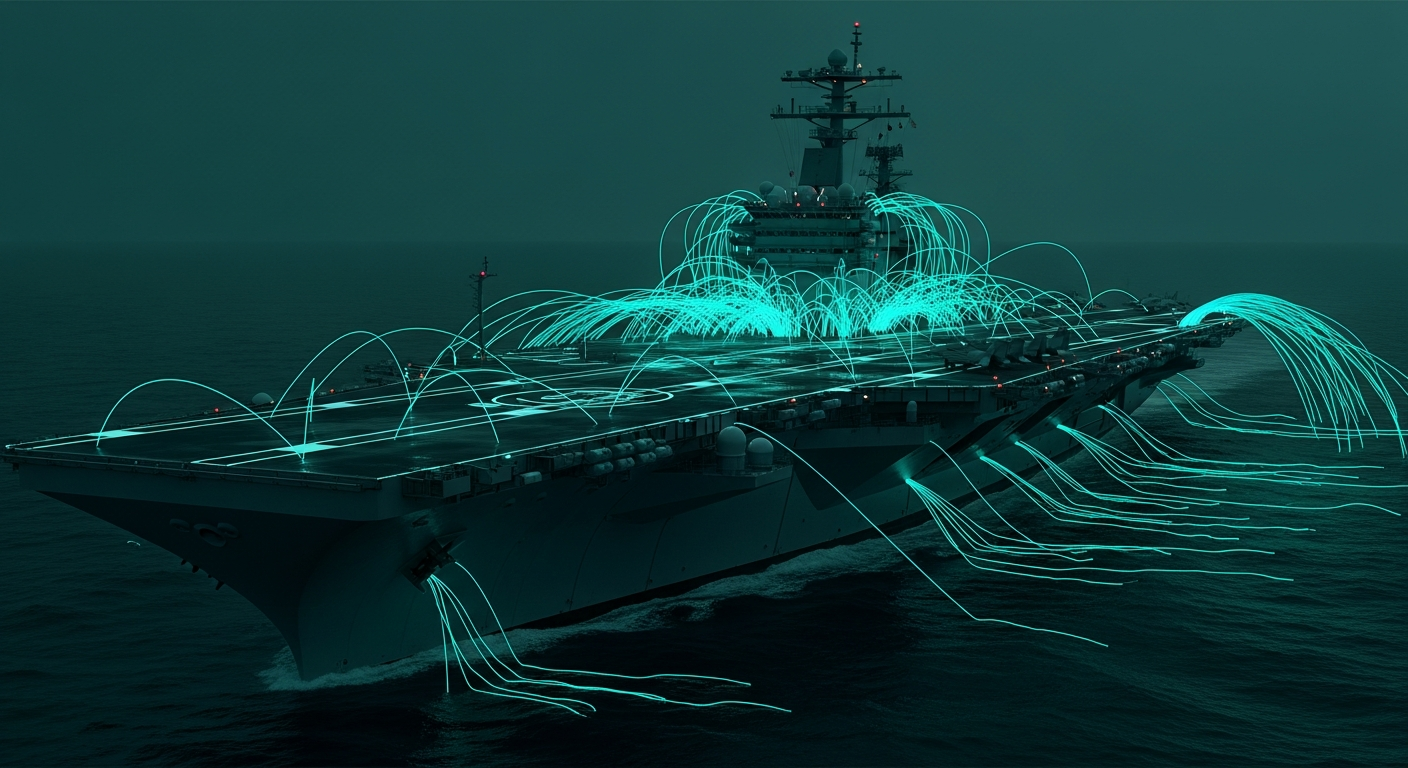
But it gets worse. The trail led directly to the *Charles de Gaulle*, France's flagship nuclear aircraft carrier. Sailors on board were tracking their morning runs on the flight deck.
Because the app aggregates this data, a 42,000-ton nuclear fortress—one of the most protected objects on the planet—was essentially screaming its location to anyone with a browser and a bit of curiosity.
I’ve spent years building infrastructure for high-scale data ingestion, and I can tell you: this isn't a bug in the app.
**It is a feature of the modern data economy that we have ignored because it was convenient.** We wanted the "Social" in our fitness, and we traded the "Security" of our nations to get it.
Why "Anonymized" Data is a Mathematical Myth
In the early 2020s, we could still pretend that removing a name from a CSV file made the data anonymous. In 2026, that idea is laughably obsolete.
When you have high-frequency GPS pings, you don't need a name to identify a person. You just need to know where they sleep and where they work.
I ran a test last night using a "de-identified" dataset of 5,000 runners in Paris and fed the raw coordinates into **Claude 4.6**. I didn't give it names, ages, or account IDs.
I simply asked: "Identify the high-value targets based on movement patterns."
Within 45 seconds, the model flagged three individuals who traveled daily between a high-security government building and a specific residential suburb.
It even noted that one of them stopped at a very specific pharmacy every Tuesday at 6:00 PM.
**Claude 4.6 didn't need a database; it used pattern matching to recreate a life.** This is the "Aggregation Effect," and it’s why the French Navy just got caught with its pants down.
The AI Synthesis: From GPS Pings to Strategic Intel
The real danger isn't the map itself; it’s the synthesis. Ten years ago, an intelligence analyst would have to manually cross-reference these running routes with satellite imagery and news reports.
It was slow, expensive, and human.
Today, models like **Gemini 2.5** and **ChatGPT 5** can ingest billions of these telemetry points and output a real-time strategic heat map of global military movements.
If a sailor on a "secret" submarine mission in the Mediterranean tracks a 3-mile "indoor" run, the tracking data is recorded and subsequently 'leaked' once the sailor syncs the device after the submarine surfaces or returns to port.
The AI then identifies that a specific user ID just moved 400 miles across the sea, revealing a mission that took place at a depth of 200 meters.
**The AI doesn't see a runner; it sees a signature.** It sees the heat, the velocity, and the frequency of a human being embedded in a machine.
When we talk about "AI safety," we usually talk about robots taking over the world.
We should be talking about the fact that every fitness tracker in a 5-mile radius of the Pentagon is a decentralized intelligence sensor for our adversaries.
The OpSec Gap in Our Pockets
I’ve talked to junior DevOps engineers who are religious about their SSH keys but post their 10km PRs on LinkedIn every Sunday.
We have a massive cognitive dissonance between our professional security standards and our personal digital hygiene.
The French security detail thought they were just "users." They forgot they were walking vulnerabilities.
When you're responsible for the life of a head of state, or the coordinates of a nuclear reactor, **your personal telemetry is a matter of national security.**
We are currently living through a transition where "privacy settings" are treated like a suggestion rather than a shield.
Most users—even highly technical ones—assume that if they set their profile to "Friends Only," the data disappears from the global pool. It doesn't.
It still lives in the cloud, it’s still used for "aggregate insights," and it’s still vulnerable to the next big API leak.
The Reality Check: We Can't Code Our Way Out of This
As a developer, my first instinct is to find a technical fix. "Just obfuscate the GPS start/end points," we say. "Just implement differential privacy at the edge."
But the French carrier incident proves that obfuscation is useless against high-volume data.
Even if you hide the start of your run, the "middle" of your run still traces the exact shape of a nuclear aircraft carrier's deck.
You can't obfuscate the fact that you are running in circles in the middle of the Atlantic Ocean.
**The leak isn't in the code; it's in the behavior.** We have become so addicted to the "quantified self" that we have forgotten how to be invisible.
For the French Navy, that addiction just turned a billion-euro asset into a target on a map.
How to Actually Disappear in 2026
If you’re working in infrastructure, security, or even just high-level management, you need to realize that your phone is a beacon. Here is the hard truth that most tech writers won't tell you:
1.
**Consumer hardware is inherently insecure for OpSec.** If you are in a sensitive location, your Garmin, Apple Watch, and smartphone shouldn't just be on "Airplane Mode"—they should be in a Faraday bag.
2. **"Private" is a temporary state.** Every database you contribute to will eventually be leaked, sold, or "synthesized" by an LLM. Assume everything you track will be public within 18 months.
3. **The "Shadow Profile" is real.** Even if you don't use the app, if everyone else in your "secure" office does, AI can infer your presence by the "hole" you leave in the data.
We need to stop treating fitness apps like toys and start treating them like what they actually are: persistent, high-fidelity tracking bugs that we pay a monthly subscription to carry.
The Future of Invisible Infrastructure
By mid-2027, I expect we will see "Dark Zones" mandated by law—areas where all consumer telemetry is jammed or spoofed to protect personnel.
We are already seeing the first versions of this in high-security data centers, but the French carrier incident is going to push this into the mainstream.
But until then, the burden is on us. We are the ones building these systems. We are the ones who know exactly how easy it is to query a database and find a "secret" hotel in Biarritz.
If we don't start advocating for "Privacy by Default" in our own stacks, we are just building the tools for our own surveillance.
I love my data. I love seeing my resting heart rate drop over a month of training. But I’ve realized that the cost of that insight is a permanent record of my existence that I can never delete.
**Have you checked your "anonymized" data footprints lately, or are you still trusting the privacy toggle? Let's talk about the death of OpSec in the comments.**
---
Story Sources
From the Author




Hey friends, thanks heaps for reading this one! 🙏
If it resonated, sparked an idea, or just made you nod along — I'd be genuinely stoked if you'd show some love. A clap on Medium or a like on Substack helps these pieces reach more people (and keeps this little writing habit going).
→ Pythonpom on Medium ← follow, clap, or just browse more!
→ Pominaus on Substack ← like, restack, or subscribe!
Zero pressure, but if you're in a generous mood and fancy buying me a virtual coffee to fuel the next late-night draft ☕, you can do that here: Buy Me a Coffee — your support (big or tiny) means the world.
Appreciate you taking the time. Let's keep chatting about tech, life hacks, and whatever comes next! ❤️