A few random notes from Claude coding quite a bit last few weeks - A Developer's Story
The Claude Coding Experience: What Developers Are Learning After Weeks in the AI Trenches
Hook
Something fundamental shifted when developers started spending entire workdays with Claude as their coding companion.
Not the promised revolution of "AI replacing programmers"—that tired narrative missed the mark entirely.
Instead, what emerged from thousands of hours of real-world usage is far more nuanced and arguably more transformative: a new model of human-AI collaboration that's reshaping how code gets written, reviewed, and understood.
The collective experiences shared across developer forums reveal patterns that marketing materials never captured—the frustrations, the surprising wins, and most importantly, the techniques that actually work when you're deep in a codebase at 2 AM trying to debug a race condition.
Background
The arrival of Claude 3.5 Sonnet in June 2024 marked a turning point in AI-assisted development.
While GPT-4 had already established the viability of LLMs for coding tasks, Claude brought something different to the table: a combination of stronger reasoning capabilities, better context retention, and what developers describe as a more "thoughtful" approach to code generation.
The model's 200,000 token context window meant entire codebases could be analyzed in a single conversation, fundamentally changing how developers approach complex refactoring tasks.

Project visualization
But the real story isn't in the specifications—it's in the adoption patterns. Unlike previous AI coding tools that developers tried and abandoned, Claude has shown unusual staying power.
GitHub's recent data shows that developers using AI assistants are now spending an average of 55% of their coding time with AI collaboration, up from just 12% a year ago.
More tellingly, the nature of that collaboration has evolved from simple autocomplete to complex architectural discussions.
The shift happened gradually, then suddenly. Early adopters started with simple tasks—generating boilerplate, writing tests, explaining legacy code.
But as developers built mental models of Claude's capabilities and limitations, usage patterns became increasingly sophisticated.
Developers began treating Claude less like a search engine and more like a junior developer who happens to have read every programming book ever written but needs careful guidance on project specifics.
This evolution coincided with significant improvements in the underlying models.
Claude's ability to maintain context across long conversations, understand project-specific conventions, and reason about trade-offs has created a new category of "AI-native" development workflows.
These aren't the workflows that tool vendors imagined—they're the ones developers invented through trial and error, documented in countless Reddit threads, Discord conversations, and yes, those "random notes" that bubble up on Hacker News.
Key Details
The most striking pattern emerging from developer experiences is what might be called "context crafting"—the art of structuring information for optimal AI comprehension.
Developers report that spending 10 minutes crafting a detailed prompt often saves hours of back-and-forth clarification.
One senior engineer at a fintech startup described their approach: "I write prompts like I'm onboarding a new team member.
Here's our architecture, here's our conventions, here's what we're trying to achieve, and here's what we absolutely cannot break."
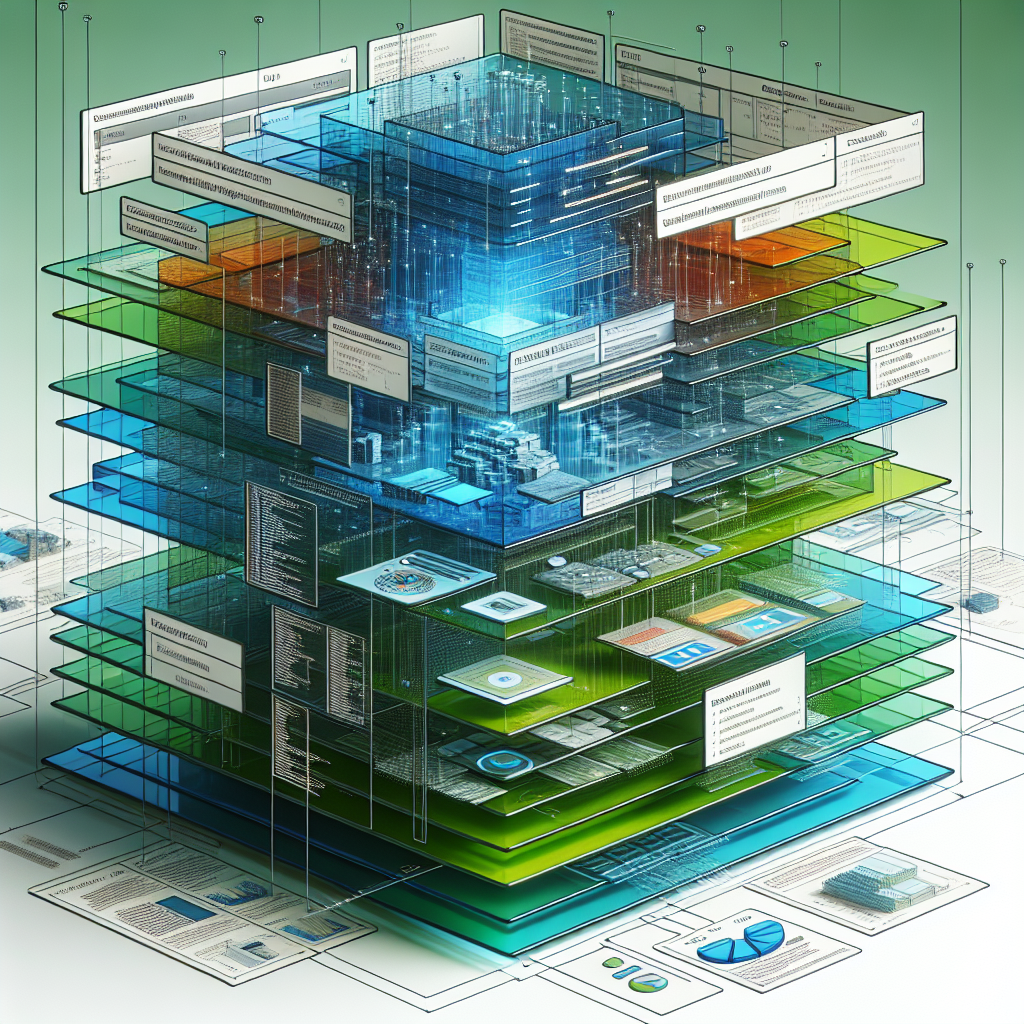
Project visualization
This isn't the "prompt engineering" of early GPT days—it's more akin to technical writing. Successful developers have learned to provide Claude with what amounts to a mental model of their system.
They include not just the code to be modified, but the surrounding context: database schemas, API contracts, business logic constraints, and even team coding standards.
The investment in context pays dividends when Claude generates code that actually fits into the existing architecture rather than creating technically correct but practically useless solutions.
Another crucial discovery: Claude excels at tasks developers hate but struggles with tasks developers love.
It's exceptional at writing comprehensive test suites, generating documentation, refactoring for consistency, and implementing standardized patterns.
One developer noted: "Claude wrote better integration tests in an afternoon than our team had produced in six months.
Not because it's smarter, but because it's patient enough to consider every edge case methodically."
The limitation patterns are equally instructive.
Claude consistently struggles with highly creative problem-solving, understanding undocumented business logic, and making architectural decisions that require understanding organizational dynamics.
As one architect put it: "Claude can't tell you whether microservices are right for your team—that requires understanding your team's capabilities, your deployment infrastructure, and your organizational politics."
Performance optimization represents a particularly interesting middle ground.
Claude can identify obvious optimization opportunities and implement well-known patterns, but it often misses subtle performance implications that experienced developers spot intuitively.
Several developers report a workflow where they use Claude to generate multiple implementation approaches, then benchmark them manually—leveraging AI for exploration while maintaining human judgment for selection.

Project visualization
The error patterns are perhaps most telling. When Claude makes mistakes, they tend to be subtly wrong rather than obviously broken.
It might use an outdated API, make incorrect assumptions about state management, or implement patterns that work in isolation but fail at scale.
This has led to a new debugging skill: "Claude debugging"—the ability to quickly identify and correct AI-generated code's characteristic failure modes.
Implications
The immediate implication is a dramatic shift in what constitutes developer productivity.
Traditional metrics like lines of code written or tickets closed are becoming increasingly meaningless when a developer can generate hundreds of lines of tested, documented code in minutes.
The new productivity lies in problem definition, architecture decisions, and quality assurance—tasks that require human judgment but benefit enormously from AI assistance.
This shift is creating a new category of "AI-amplified" developers who are neither traditional programmers nor prompt engineers, but something novel.
They combine deep technical knowledge with the ability to effectively delegate to AI, knowing precisely what to delegate and what to retain.
Companies that recognize and cultivate this skill set are seeing productivity gains that dwarf the incremental improvements of traditional tooling upgrades.
The security implications are profound and underappreciated. Every line of AI-generated code represents a potential security surface that wasn't directly reasoned about by a human.
While Claude generally produces secure code when properly prompted, the sheer volume of AI-generated code entering production systems creates new categories of risk.
Security teams are scrambling to develop new review processes that can handle the volume while maintaining quality standards.
Perhaps most significantly, the widespread adoption of AI coding assistants is accelerating the standardization of development practices.
When thousands of developers use the same AI model, trained on similar codebases, certain patterns become universal.
This isn't necessarily negative—it's reducing the cognitive load of switching between projects and making code more maintainable.
But it does raise questions about innovation and diversity in technical approaches.
The economic implications extend beyond individual productivity.
Companies are restructuring teams around AI-assisted workflows, with some reporting that smaller teams with AI assistance outperform larger traditional teams.
This isn't leading to the massive layoffs some predicted, but rather to a reallocation of human effort toward higher-level concerns: system design, user experience, and business logic.
What's Next
The trajectory points toward increasingly sophisticated human-AI collaboration models.
The next generation of development environments won't just integrate AI—they'll be designed around it from the ground up.
Imagine IDEs that maintain running mental models of your entire codebase, automatically suggesting refactoring opportunities, identifying potential bugs before they're written, and even participating in code reviews with context-aware commentary.
The key evolution will be in persistence and learning. Current models treat each conversation as isolated, but developers are already experimenting with ways to maintain context across sessions.
Future systems might maintain project-specific fine-tuning, learning your team's conventions, understanding your architecture's evolution, and even predicting future requirements based on past patterns.
The competitive dynamics are shifting rapidly.
Anthropic's Claude, OpenAI's GPT models, and emerging competitors are locked in a race not just for better performance, but for better integration with developer workflows.
The winner won't necessarily be the most capable model, but the one that best fits into the messy reality of software development—understanding version control, respecting existing code styles, and integrating with the vast ecosystem of development tools.
The human side of this evolution is equally important.
Educational institutions are scrambling to update curricula, focusing less on syntax and more on system design, AI collaboration, and critical evaluation of generated code.
The next generation of developers won't need to memorize API signatures—they'll need to understand how to architect systems that are both AI-generated and human-maintainable.
---
Story Sources
From the Author


Hey friends, thanks heaps for reading this one! 🙏
If it resonated, sparked an idea, or just made you nod along — I'd be genuinely stoked if you'd show some love. A clap on Medium or a like on Substack helps these pieces reach more people (and keeps this little writing habit going).
→ Pythonpom on Medium ← follow, clap, or just browse more!
→ Pominaus on Substack ← like, restack, or subscribe!
Zero pressure, but if you're in a generous mood and fancy buying me a virtual coffee to fuel the next late-night draft ☕, you can do that here: Buy Me a Coffee — your support (big or tiny) means the world.
Appreciate you taking the time. Let's keep chatting about tech, life hacks, and whatever comes next! ❤️