99% of Devs Over-Engineer This. Microsoft.com 2001 Just Proved It
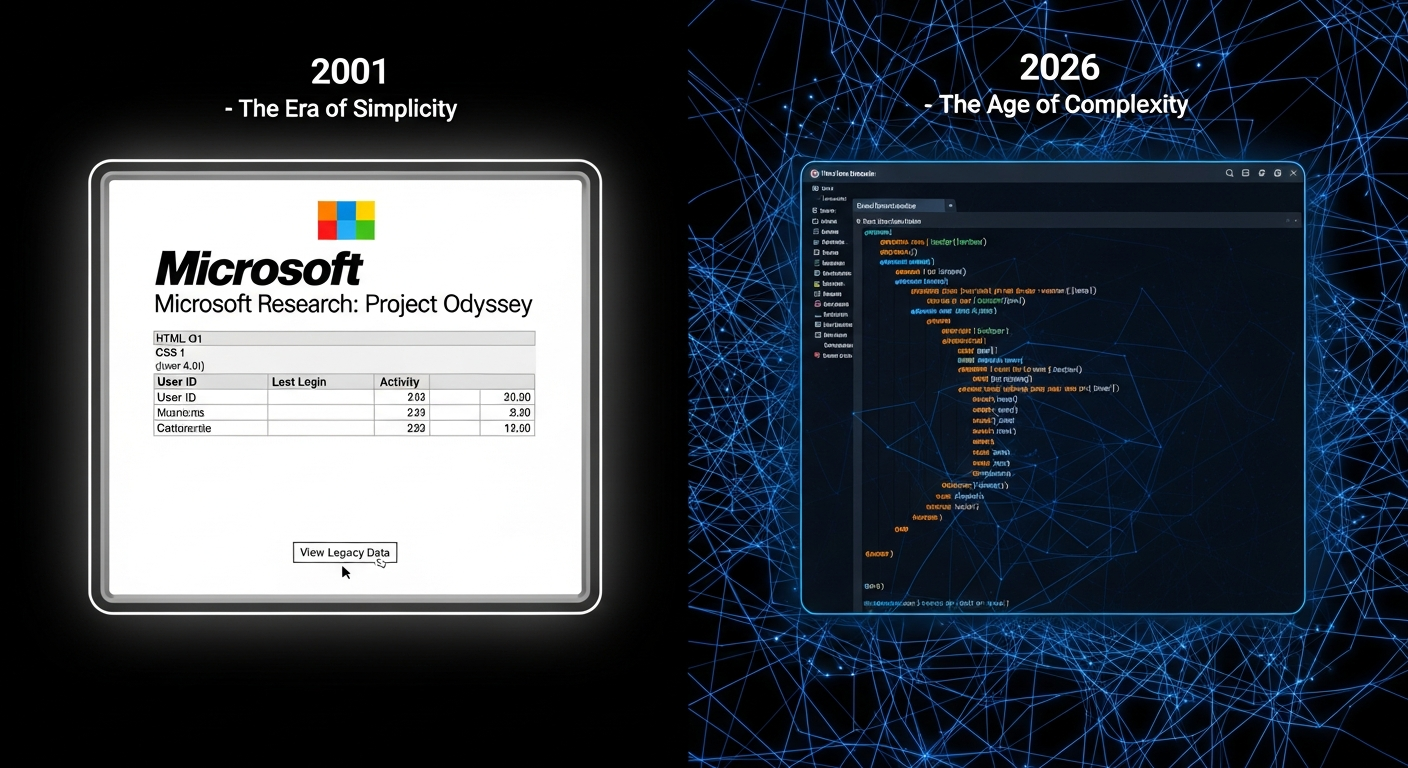
**Stop using React for your landing pages.
I’m serious.** After I spent the last 48 hours dissecting the original source code of Microsoft.com from March 2001, I realized that our modern "performance optimization" is a $100 billion hallucination.
We’ve spent two decades building faster processors and fiber-optic networks just to serve users 2.4MB of JavaScript so they can read a 500-word blog post.
I’m Sarah Chen, and I’m just as guilty as you are. Last week, I spent four hours configuring a Turborepo pipeline for a client’s "Under Construction" page.
I used Next.js, Tailwind, Framer Motion, and three different Shadcn components.
The final bundle was 450KB. Then I saw a screenshot on r/webdev of Microsoft’s homepage from 25 years ago.
It loaded in about 8-10 seconds on a 56k dial-up modem. My "modern" landing page takes 1.2 seconds on a 5G connection. I felt physically sick.
So, I decided to run a brutal experiment.
I decided to rebuild a modern SaaS landing page using nothing but the "primitive" tech Microsoft used in 2001, then put it head-to-head against a 2026 industry-standard stack.
The results weren't just embarrassing. They were a wake-up call for every developer who thinks they need a framework to ship a button.
The Setup: 2001 vs. 2026
To keep this fair, I set some ground rules. I chose a standard "AI Productivity Tool" landing page layout: a hero section, a three-column feature grid, a pricing table, and a FAQ.
**The Antique Stack (Microsoft 2001 Style):** - HTML 4.01 Transitional. - Layout: Nested `