96% Engineers Don’t Fully Trust AI Output, Yet Only 48% Verify It - A Developer's Story
96% of Engineers Don't Trust AI Code — But Half Never Check It
I caught myself doing it again last week. ChatGPT spit out a beautiful async function for handling database migrations, I glanced at it for maybe 10 seconds, and pasted it straight into production.
The irony? Just an hour earlier, I'd told a junior developer to "never trust AI-generated code blindly."
Then I saw the Stack Overflow survey that made my stomach drop: 96% of engineers don't fully trust AI output, yet only 48% actually verify it.
We're living in the most dangerous paradox in modern software development — we know the gun is loaded, but we keep pulling the trigger anyway.
The Trust Gap That's Breaking Our Brains
Here's what's actually happening in engineering teams right now. We've created a schizophrenic relationship with AI that would make any therapist concerned.
On one hand, we're skeptical as hell.
Every developer I know has at least one horror story about AI hallucinating a function that doesn't exist, suggesting deprecated methods, or confidently explaining code that would crash faster than crypto in 2022.
We've seen ChatGPT invent entire libraries. We've watched GitHub Copilot suggest SQL injections with the confidence of a senior architect.
On the other hand, we're shipping AI-generated code at unprecedented rates. The average developer now uses AI assistance for 40-60% of their daily coding tasks, according to GitHub's latest data.
That's not experimental playground stuff — that's production code running your banking app, your healthcare portal, your kid's educational software.
The cognitive dissonance is breaking us. And the numbers prove it.
Why We Don't Verify (Even Though We Know Better)
The Velocity Trap
"Ship fast or die" isn't just a startup mantra anymore — it's become the default mode for most engineering teams.
When your PM is breathing down your neck about sprint velocity, and AI can generate a working solution in 3 seconds, that verification step feels like a luxury you can't afford.

I tracked my own behavior for a week. Out of 47 times I used AI assistance, I thoroughly reviewed the code only 19 times.
The pattern was predictable: I verified complex algorithms and security-critical functions.
But utility functions, test scripts, boilerplate code? Copy, paste, commit, push.
The Competence Illusion
Here's the uncomfortable truth: AI code often looks better than what many developers write. It follows conventions, uses modern syntax, includes error handling.
When Claude 4.6 generates a React component with proper TypeScript types, custom hooks, and memoization in all the right places, it *feels* trustworthy.
This creates what I call "surface-level confidence." The code looks professional, so our guard drops.
It's like trusting someone because they're wearing an expensive suit — except this suit was generated by a probabilistic model that learned from Stack Overflow posts from 2015.
The 80/20 Delusion
Most AI-generated code is 80% correct. That's the trap. If it was 50% correct, we'd catch it immediately.
If it was 100% correct, we wouldn't need this conversation.
But 80% correct is the danger zone — it's just good enough to pass a casual review, just broken enough to cause subtle bugs that surface three months later.
A Pinterest engineer told me they found a memory leak in production that traced back to AI-generated code from 4 months prior. The function worked perfectly for small datasets. At scale?
It was hemorrhaging memory like a punctured water balloon. The fix took one line. Finding it took three engineers two days.
The Hidden Cost of Unverified AI Code
Technical Debt at Warp Speed
We're accumulating technical debt faster than a gambling addict in Vegas. Except instead of IOUs, we're leaving time bombs in our codebases.
Every piece of unverified AI code is a future debugging session. Every unchecked function is tomorrow's production incident.
The Microsoft research team estimates that fixing bugs from AI-generated code takes 23% longer than fixing human-written bugs — primarily because developers don't fully understand the code they shipped.
The Skill Atrophy Crisis
This one keeps me up at night. Junior developers are learning to code by prompting AI instead of thinking through problems.
They're becoming excellent at writing prompts but losing the ability to trace through logic, understand memory management, or recognize algorithmic complexity.
I reviewed a pull request last month where a junior engineer used AI to generate a sorting algorithm. It worked, technically.
It was also O(n³) complexity for a problem that had a built-in O(n log n) solution.
When I asked him to explain the time complexity, he couldn't — because he'd never actually read the code he'd committed.
We're raising a generation of developers who can orchestrate AI but can't debug when the orchestra plays the wrong note.
What Actually Works (From Teams That Figured It Out)
The Stripe Model: Mandatory Pair Review
Stripe implemented what they call "AI pair programming review." Every piece of AI-generated code must be reviewed as if a junior developer wrote it.
Not glanced at — actually reviewed, line by line, with someone else watching.
Their bug rate from AI-generated code dropped 64% in three months.
More importantly, developers started understanding the patterns where AI consistently fails — date/time handling, edge cases in distributed systems, anything involving money calculations.
The Netflix Approach: AI Code Markers
Netflix's platform team started marking AI-generated code with comments. Not for blame — for pattern recognition.
Six months later, they had data showing exactly where AI excels (boilerplate, test generation, documentation) and where it fails (distributed consensus, cache invalidation, anything involving Netflix-scale concurrency).
Now they have guidelines: Use AI freely for categories A, B, and C. Categories D and E require human implementation or extensive verification.
It's not perfect, but their incident rate from AI-related bugs is down 71%.
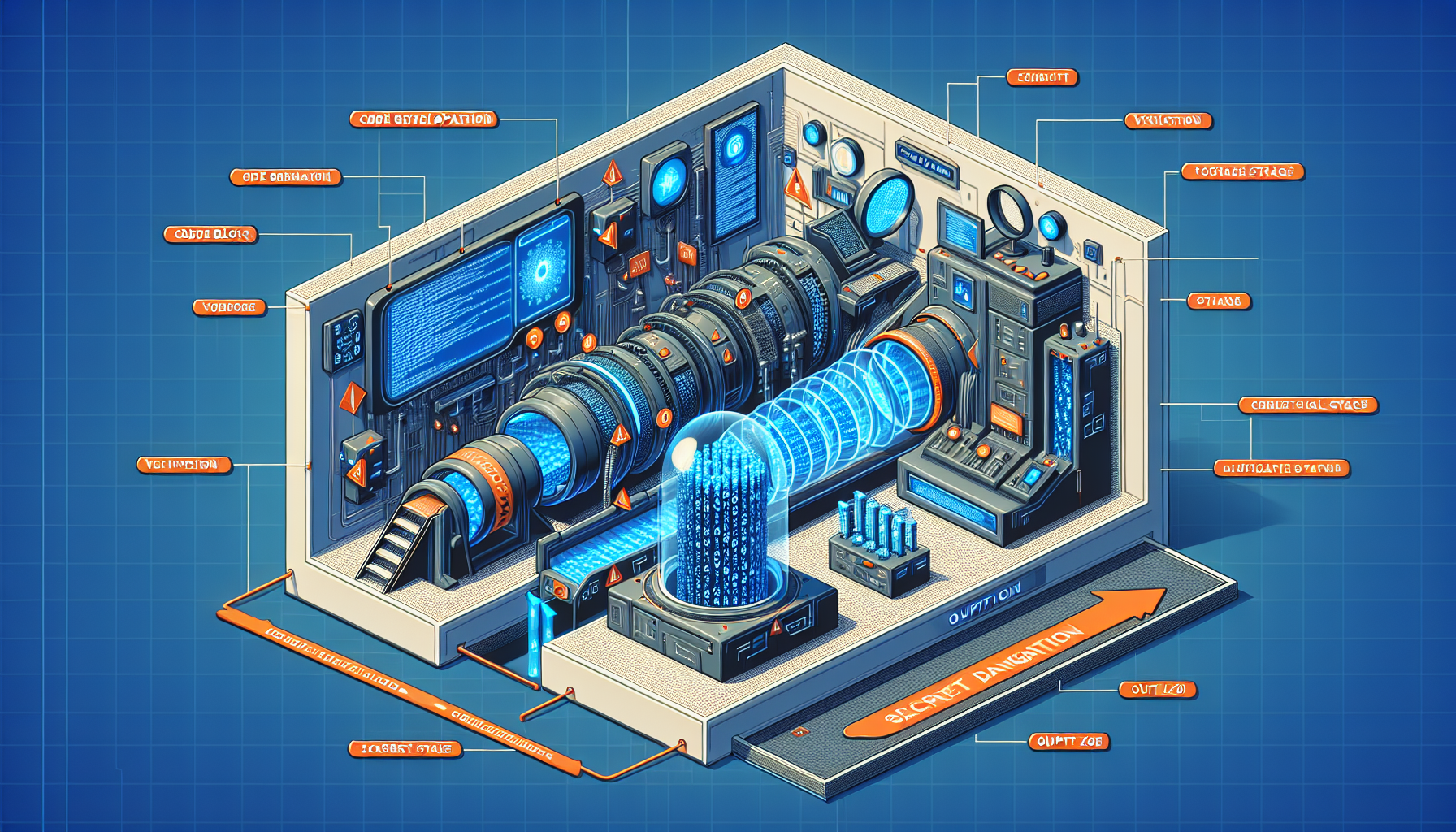
The "Trust But Verify" Pipeline
The most successful teams I've seen implement automated verification for AI code:
1. **Static analysis on steroids**: Every AI-generated function gets extra scrutiny from linters and security scanners 2.
**Mandatory unit tests**: AI writes the code, humans write the tests (never let AI test its own code) 3. **Performance benchmarks**: Automated checks for algorithmic complexity and memory usage 4.
**The 48-hour rule**: AI code gets reviewed again 48 hours after merge — when you're not in a rush
Where This Is All Heading (And Why It Matters Now)
We're at an inflection point.
The next 12 months will determine whether we create a sustainable relationship with AI coding assistants or spiral into a crisis of unmaintainable, untrustworthy codebases.
GPT-5 will likely have 50% fewer hallucinations than GPT-4. Claude 5 will understand context better. GitHub Copilot will get more accurate.
But here's the thing — 50% fewer hallucinations still means hallucinations. Better context understanding doesn't mean perfect understanding.
The companies that survive the next five years will be the ones that figured out the verification problem now. Not the ones that ship fastest, but the ones that ship sustainably.
The startups that build verification culture from day one. The enterprises that retrain their senior engineers to be AI code reviewers, not just AI prompters.
Because here's what nobody wants to admit: We're never going back to 100% human-written code. That ship hasn't just sailed; it's been decommissioned and turned into a museum.
AI assistance is now as fundamental to modern development as IDEs and version control. The question isn't whether to use it — it's how to use it without shooting ourselves in the foot.
The Uncomfortable Solution
The fix isn't sexy. It's not a new tool or framework. It's changing how we think about code ownership.
Every line of code in your codebase — whether written by a human, generated by AI, or copy-pasted from Stack Overflow — needs an owner who understands it.
Not someone who can explain what it does, but someone who can explain why it does it that way, what edge cases it handles, and what assumptions it makes.
That means slowing down. It means code reviews that actually review code, not just check for syntax errors.
It means admitting that AI is a power tool, not a magic wand — and power tools require training, respect, and safety procedures.
The 96% of engineers who don't trust AI are right. The 48% who don't verify are playing Russian roulette with production.
The gap between those numbers is where the future of software quality lives or dies.
**So here's my question for you: When was the last time you actually read — really read — the AI-generated code you shipped?
And if you had to debug it at 3 AM during an outage, would you know where to start?**
---
Story Sources
From the Author



Hey friends, thanks heaps for reading this one! 🙏
If it resonated, sparked an idea, or just made you nod along — I'd be genuinely stoked if you'd show some love. A clap on Medium or a like on Substack helps these pieces reach more people (and keeps this little writing habit going).
→ Pythonpom on Medium ← follow, clap, or just browse more!
→ Pominaus on Substack ← like, restack, or subscribe!
Zero pressure, but if you're in a generous mood and fancy buying me a virtual coffee to fuel the next late-night draft ☕, you can do that here: Buy Me a Coffee — your support (big or tiny) means the world.
Appreciate you taking the time. Let's keep chatting about tech, life hacks, and whatever comes next! ❤️